


Weeks of brinkmanship in the east of Ukraine have now turned into what was before then unthinkable to many. Russia, the country with the highest number of nuclear warheads, has launched what appears to be an invasion of the interior of Ukraine. After just one day of fighting there is no longer any doubt that Europe has descended into potentially the most dangerous conflict since the Second World War.
The world is still far from a return to the level of bloodshed seen in the early 20th century, and these terrible developments have rightly resulted in intense calls for de-escalation and diplomacy. But making a loud-enough case for restraint will not be easy. A horrible effect of war, borne out by history, is that it immediately makes interstate rivalries harder to solve. It is very difficult to call for dialogue once the bombs have started dropping.
-
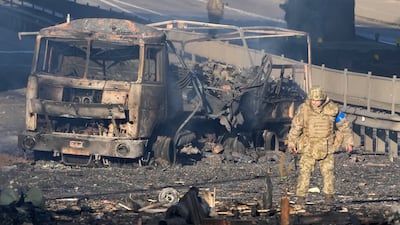
A Ukrainian soldier walks past the shell of a burnt military vehicle, on a street in Kiev. AP -
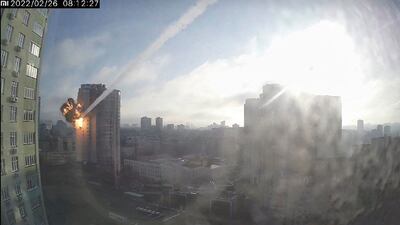
A screengrab from CCTV footage shows a missile hitting a residential building in Kiev. Reuters -
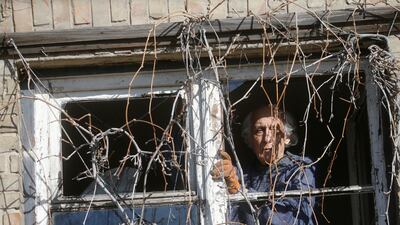
A man inspects a broken window, after shelling carried out by Russian troops in the Ukrainian capital. Reuters -
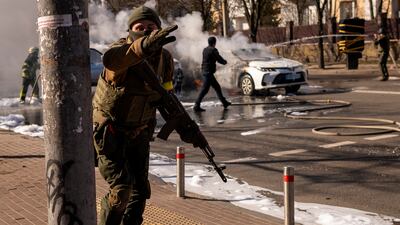
Ukrainian soldiers take positions outside a military centre as two cars burn on a street in Kiev. AP -

Medical specialists transport a woman, who was wounded in the shelling of an apartment building, to an ambulance, as her husband looks on. Reuters -
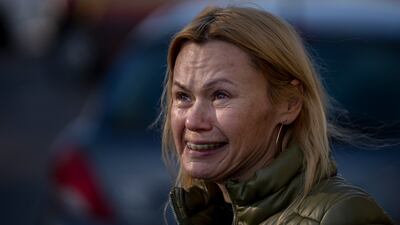
A woman outside her apartment building after it was damaged by a rocket, in Kiev. AP -
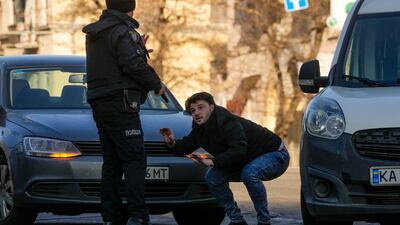
A Ukrainian police officer detains a driver on a street in Kiev. AP -
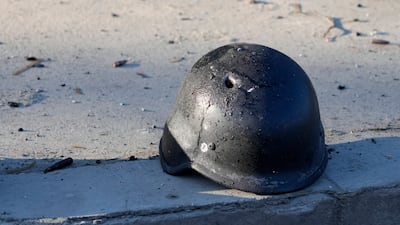
A soldier's helmet with a bullet hole on a street in the Ukrainian capital. AP -
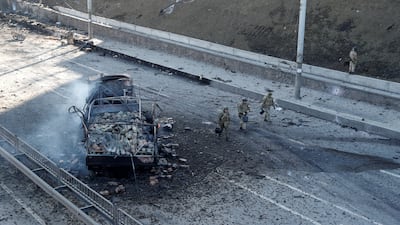
Ukrainian soldiers walk by a damaged vehicle, at the site of fighting with Russian troops, in Kiev. Reuters -
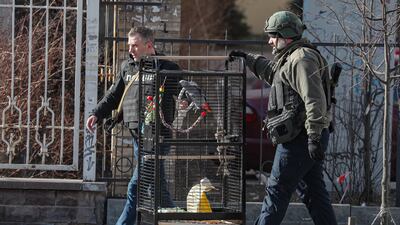
Ukrainian policemen move parrots to safety after a high-rise apartment block was damaged by shelling in Kiev. EPA -
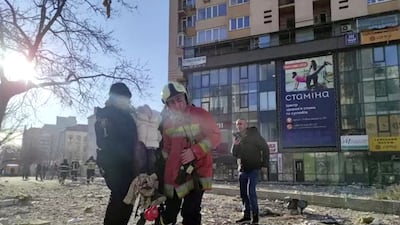
A screengrab from a video shows rescue workers carrying a person at the site of a damaged multi-storey residential building, south-west of the Ukrainian capital. Reuters -
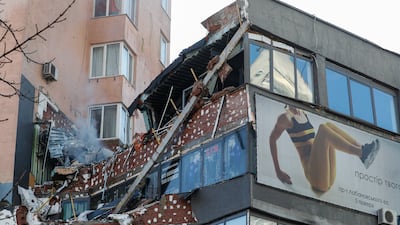
A building damaged by shelling carried out by Russian troops in Kiev. EPA -
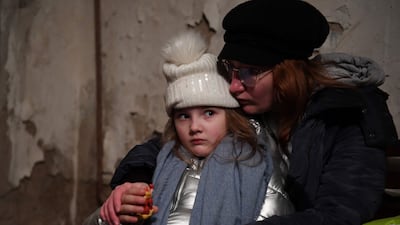
Helga Tarasova comforts her daughter Kira Shapovalova as they wait in an underground shelter during a bombing alert in Kiev. AFP -
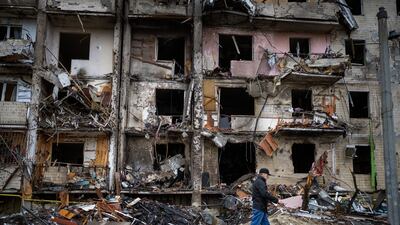
A man walks past a building damaged by a rocket attack in the Ukrainian capital. AP -

Emergency services workers near an apartment building damaged by shelling in Kiev. Reuters -
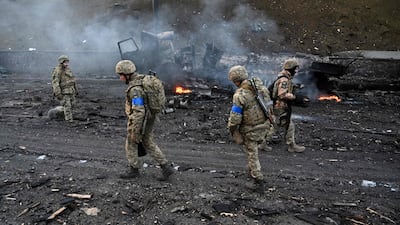
Ukrainian soldiers collect unexploded shells in the capital. AFP -
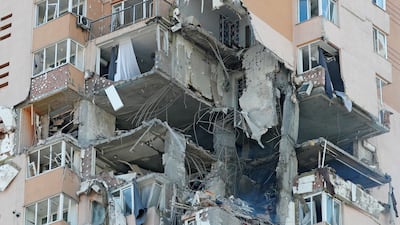
An apartment building damaged by shelling in Kiev. Reuters -
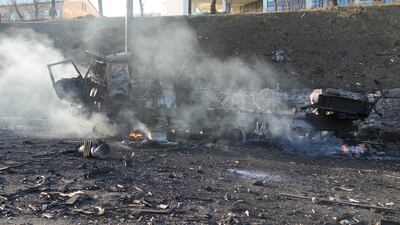
Debris of a burnt military truck on a street in Kiev. AP -
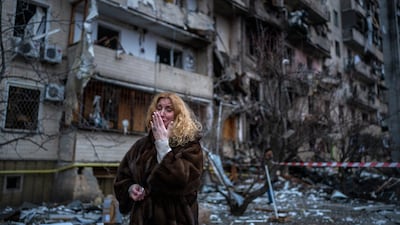
Natali Sevriukova stands next to her home after a rocket attack in Kiev, Ukraine. AP -
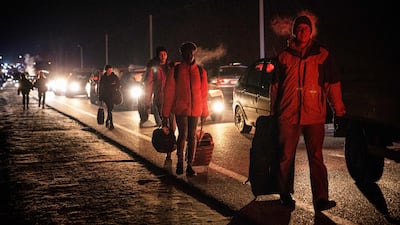
People on foot and in cars move to cross from Ukraine to Poland at the Korczowa-Krakovets border crossing following the Russian invasion of Ukraine. AFP -
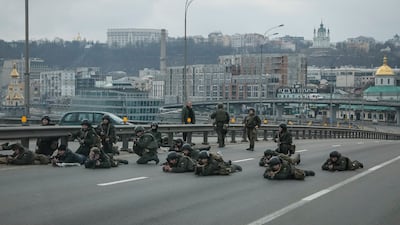
Servicemen from the Ukrainian National Guard in central Kiev. Reuters -
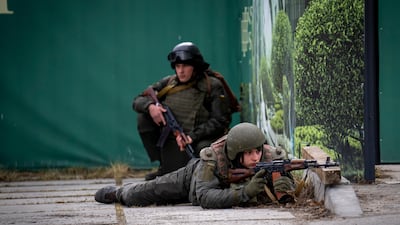
Ukrainian soldiers in downtown Kiev after Russian troops reached the outskirts of the capital. AP Photo -
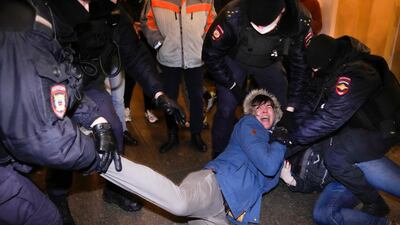
Police officers detain demonstrators in St. Petersburg, Russia. Hundreds of people gathered in Moscow and St. Petersburg on Thursday, protesting against Russia's attack on Ukraine. Similar protests took place in other Russian cities, and activists were also arrested. AP Photo -
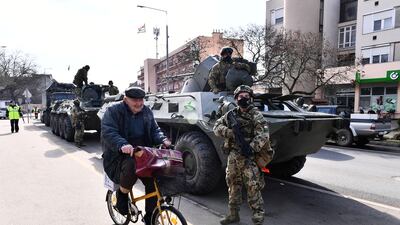
Hungarian troops in Vasarosnameny, close to the border with Ukraine, prepare to help refugees. AP Photo -
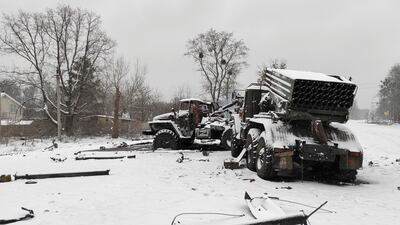
Wrecked Russian army rocket launchers in Kharkiv, Ukraine. Reuters -

The aftermath of a rocket attack in Kiev. AP Photo -
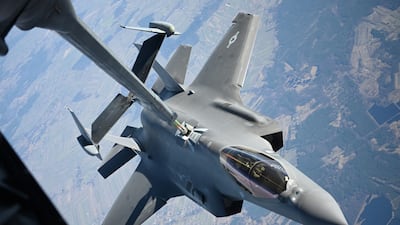
A US Air Force jet refuels over Poland. Reuters -
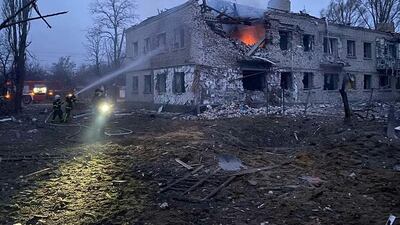
Devastation after shelling in Ukraine's Luhansk enclave. Reuters -
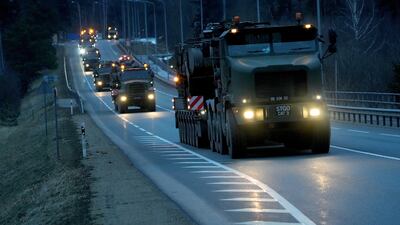
The Royal Welsh Battlegroup from the UK makes its way to Estonia. Reuters -
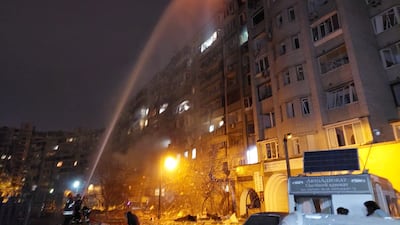
Firefighters tackle a blaze in a building in Kiev. AFP -
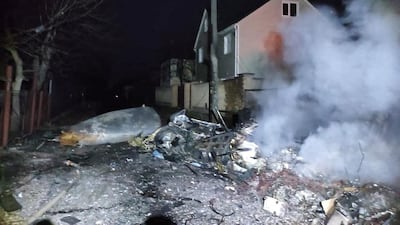
The wreckage of an unidentified aircraft in a residential area in Kiev. Reuters -
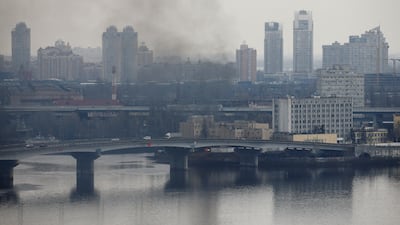
Smoke rises near the Ukrainian Defence Ministry in Kiev. Reuters -
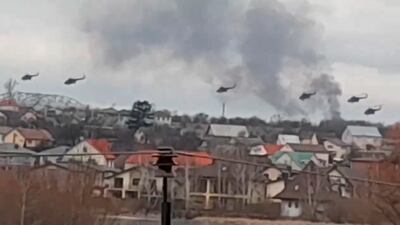
Russian military helicopters fly over the Ukrainian capital. AP -
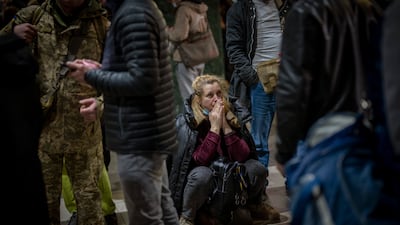
An anxious wait to board a train to leave Kiev as the attack loomed. AP Photo -
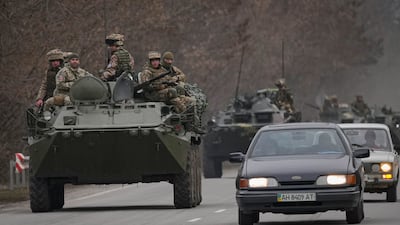
Ukrainian servicemen on tanks in the Donetsk region, eastern Ukraine. AP Photo -
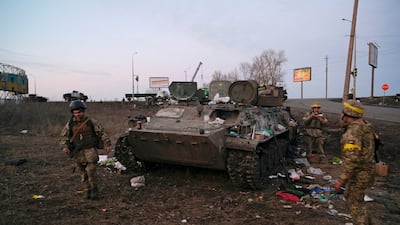
Ukraine troops said this destroyed armoured vehicle outside Kharkiv belonged to the Russian army. Reuters -
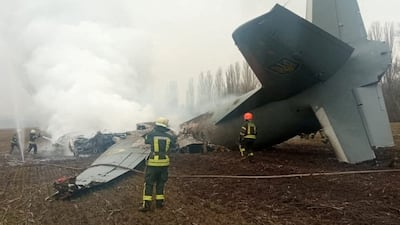
Rescuers at the crash site after a Ukraine armed forces Antonov aircraft was shot down in Kiev, according to the Ukrainian authorities. Reuters -
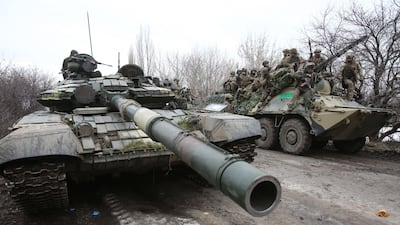
Ukrainian tanks that aim to repel an attack by the Russian military in the Luhansk enclave of Ukraine. AFP -

A Ukrainian State Border Guard Service base is ablaze after heavy shelling near Kiev. Reuters -
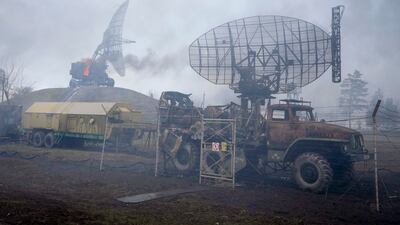
Damaged radar at a Ukrainian military plant outside Mariupol. Officials in Kiev say Russian troops have rolled into the country from the north, east and south. AP Photo -
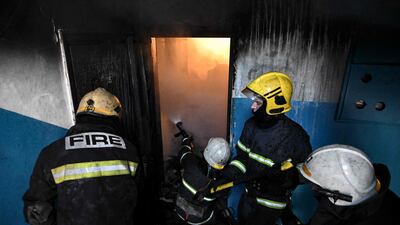
Firefighters attend a blaze after bombing in the eastern Ukrainian town of Chuguiv, as Russian armed forces appeared to be bombarding Ukraine from several directions. AFP -
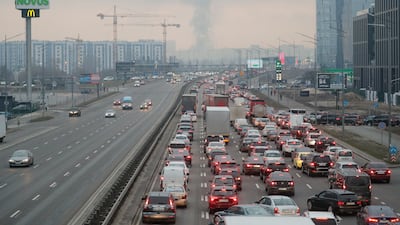
A traffic jam in Kiev, with many Ukrainians leaving their capital after Russian troops entered. EPA -
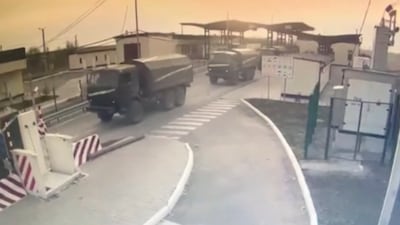
The Border Service of Ukraine released CCTV footage purporting to show Russian military vehicles passing a checkpoint to drive into Crimea. AP -
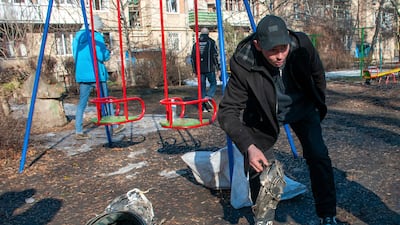
A man picks up fragments of military materiel on the street after an apparent Russian strike in Kharkiv, Ukraine. AP -
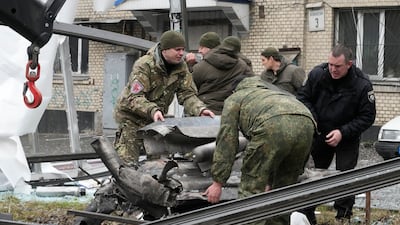
Workers load the debris of a rocket on to a lorry in the aftermath of Russian shelling in Kiev. AP -
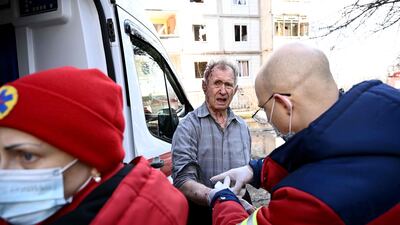
Emergency staff treat an injured man after bombing in Chuguiv. AFP -
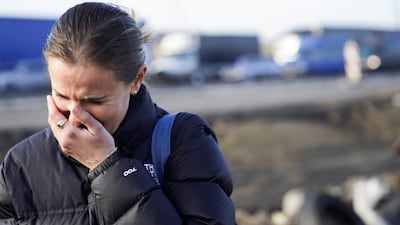
An American woman in distress after crossing the border to flee the violence in Ukraine, in Medyka, Poland. Reuters -
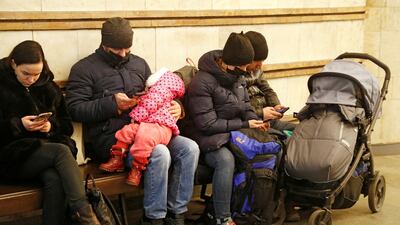
People take shelter in a Kiev subway station, after Russian President Vladimir Putin authorised a military operation in eastern Ukraine. Reuters -
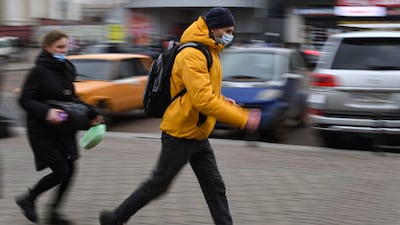
People in a rush near Kiev-Pasazhyrskyi railway station in the Ukrainian capital. AFP -
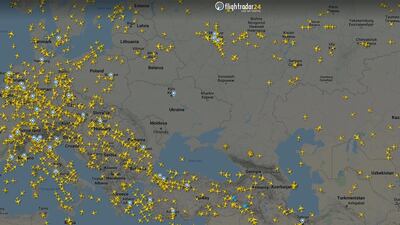
A Flightradar24.com screengrab shows a dearth of civilian aircraft in Ukrainian airspace after the Russian invasion. AP -
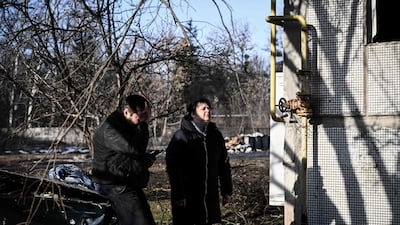
The aftermath of bombing in Chuguiv. AFP -

A Ukrainian rocket launcher vehicle prepares for action. Reuters -
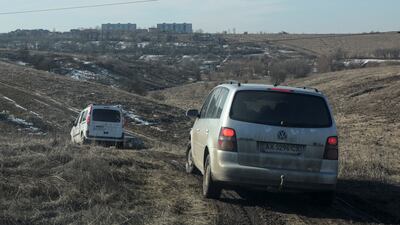
Cars are driven across a field to leave the city of Kharkiv. Reuters -
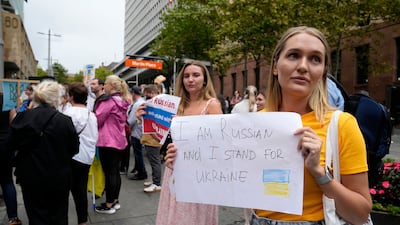
People chant, carry placards and wave Ukrainian flags as they gather in Sydney, to demonstrate against Russian attacks on its neighbour. AP -
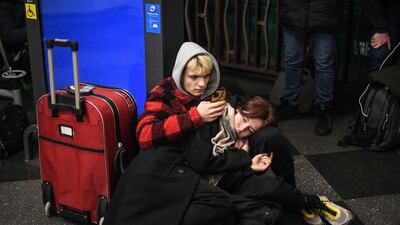
People with many of their belongings packed take shelter in a Metro station in Kiev. AFP -
Emergency services at the scene of an explosion at a military unit building in Kiev. EPA -
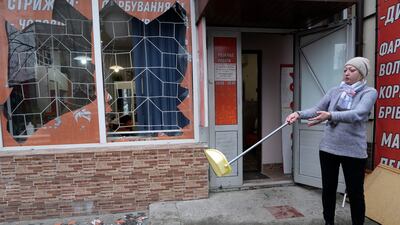
A Kiev resident sweeps up debris after Russian shelling. AP -
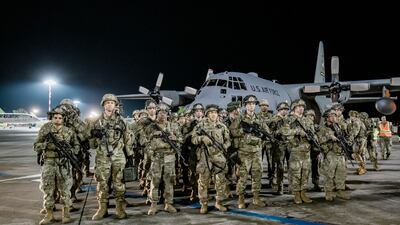
The first 40 soldiers of the 173rd US Army Airborne Brigade step off a military plane in Latvia. EPA -

More damage from shelling in Kiev. AP -
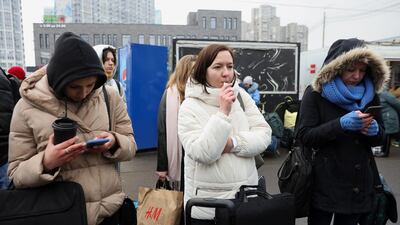
People wait at a bus station to travel to western parts of Ukraine, after violence in the east. Reuters -
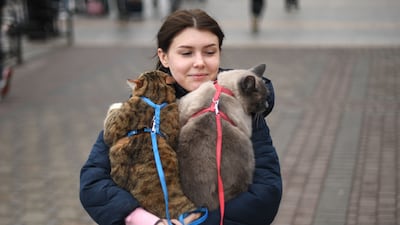
A woman carries her cats in a quest for a safe haven. AFP -
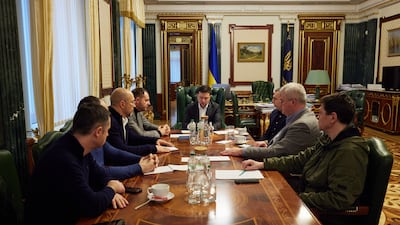
Ukrainian President Volodymyr Zelenskyy holds an urgent government meeting in Kiev to discuss the next step. AFP -
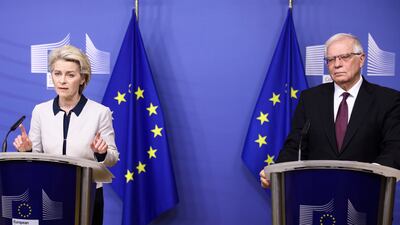
European Commission President Ursula von der Leyen and foreign policy chief Josep Borrell give a joint statement in Brussels, updating the press about the situation in Ukraine. EPA -
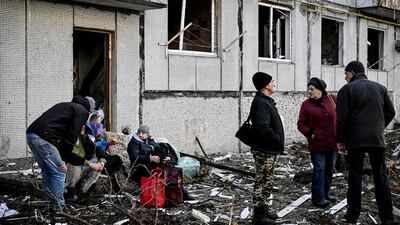
People survey the damage after bombing in Chuguiv. AFP -

A building on fire in Chuguiv. AFP


Even ascertaining the truth that forms a basis for negotiations becomes difficult to find. As US Senator Hiram Warren Johnson said during the First World War, "the first casualty of war is the truth". We do not know the true extent of today's and yesterday's losses, and uncovering them will be difficult in a conflict in which misinformation has proven a key weapon.
One of the few early certainties is that the international community is almost unanimous in its calls for peace. In one of the most severe remarks in his tenure, UN Secretary General Antonio Guterres used social media to implore: "Under the present circumstances, I must change my appeal: President Putin, in the name of humanity, bring your troops back to Russia. This conflict must stop now.”
Such direct statements are warranted. Many thousands of lives are on the line with no immediate clear end in sight to the crisis. Thoughts must now must be with those most in danger. If long-term diplomacy has failed in this instance, emergency aid does not have to. As roads out of Ukraine's capital are log-jammed with people trying to flee, neighbouring countries should be willing to open their doors to what could well become another refugee crisis for the continent. Germany has already pledged to help its Eastern European neighbours in the event of an influx. Countries that are not directly affected by the huge movement of people should understand this is more than Europe's problem, but a humanitarian one in which the entire international community should chip in.
-
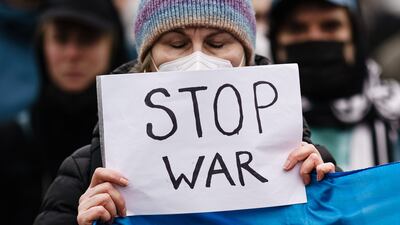
A woman holds a placard during a protest against Russia's military operation in Ukraine, in front of the Brandenburg Gate in Berlin, Germany. EPA -
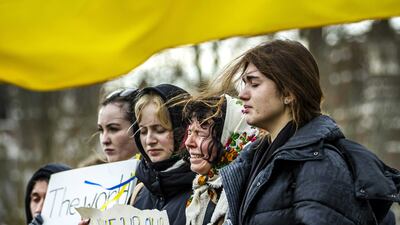
People carry Ukrainian flags and signs reading 'Stop War' and 'Stop Russia' as they protest at the Russian embassy in the Hague, the Netherlands. EPA -
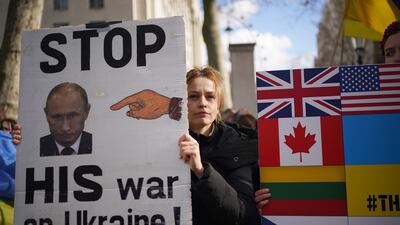
Ukrainians hold a protest against the Russian invasion of Ukraine outside Downing Street in London. PA -
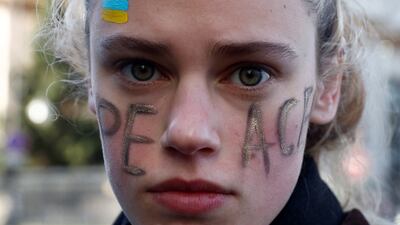
A woman takes part in an anti-war protest in front of the Russian embassy in Paris. AFP -
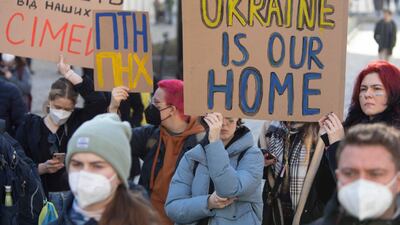
Demonstrators in front of the Austrian Ministry of Foreign Affairs in Vienna. AFP -
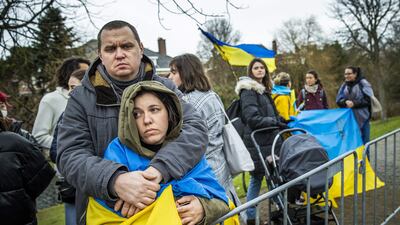
A protest outside the Russian embassy in the Netherlands. AFP -
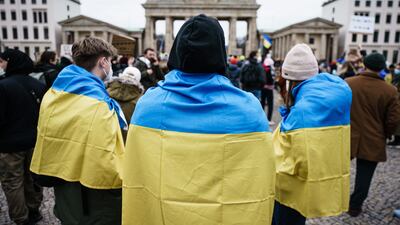
People wear the Ukrainian national flag during a protest in front of the Brandenburg Gate in Berlin. EPA -
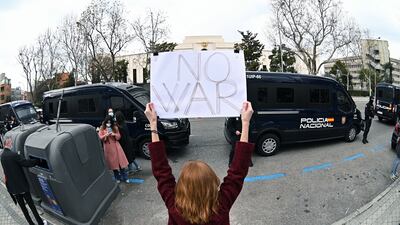
A woman holds a placard as people protest outside the Embassy of the Russian Federation in Madrid, Spain. EPA -
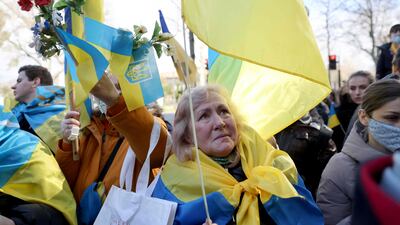
Ukrainian citizens protest in front of the Russian embassy in Paris. AFP -
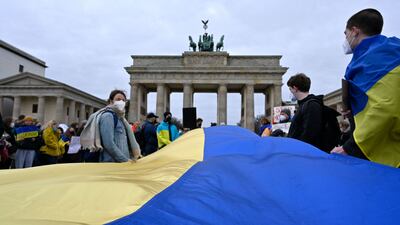
Demonstrators with Ukrainian flags in front of the Brandenburg Gate in Berlin. AFP -
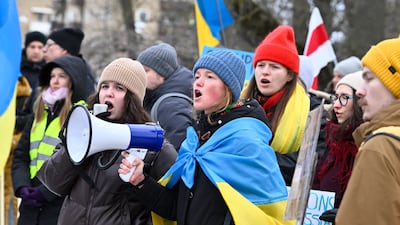
A protest against Russia's military operation in Ukraine outside the Russian Embassy in Stockholm, Sweden. EPA -
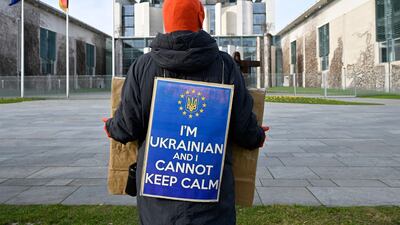
A demonstrator in front of the German Chancellery in Berlin. AFP


And while it will be tested in the upcoming weeks, a sense of global resolve for solidarity and a peaceful way out is there. A statement by Kenya's ambassador to the UN has gone viral – he draws on the coexistence of diversity and broad peace found across Africa’s borders, in spite of them having been drawn up by colonial powers, to build a case against the invasion of sovereign Ukraine. The crisis is reminding the whole world, not just the West, of the value of self-determination, global solidarity and the international order.
This awareness is perhaps even more acute in a world that has been dealing with the pandemic, another global crisis solvable only through co-operation. What is particularly tragic about the situation in Ukraine, however, is that it was much easier to prevent than any pandemic.
And while it will be a lot harder to put a full stop to it now, it is still possible. A monumental change hit Europe on Thursday. Another is needed, in the form of a swift retreat from the battlefield towards the negotiating table.

