


In 2020, Covid-19 killed 2 million people, cementing its status as one of the deadliest diseases in decades. Fighting it has required an unprecedented diversion of medical resources and minds. Thankfully, it appears that, at least in some parts of the world, the worst is over.
The fight for better health, however, is not. Cancer killed even more people in 2020 – 10 million to be precise, accounting for just under one in six deaths worldwide. World Cancer Day represents a moment to reflect on the burden the disease still exerts on the world, how the pandemic has aggravated it and where to look for hope.
At first glance, the latter might seem distant. First and foremost, mortality rates in cancer patients infected with Covid-19 were significantly higher. Even more complex to manage will be the pandemic’s secondary effects on them.
A key one is diagnosis. Many people will get delayed diagnoses due to backlogs, if they get them at all. According to the Cancer Research, a British charity, a disproportionately high number of people will simply not realise they have the disease, either because they have normalised symptoms, or because they are being treated by non-oncological doctors, due to disruptions to cancer screening, as well as a reluctance to access physical medical care for fear of contracting Covid-19. According to one US study, new cancer diagnoses fell by 13 per cent in 2020. It is not hard to see why; it also found that colonoscopies, critical for detecting colorectal cancer, decreased by 45 per cent.
-

Patients have the best chance for successful treatment if cancer is diagnosed early. -
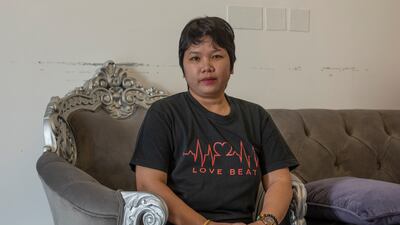
Jennifer Esto, who works as a cook in Abu Dhabi, said she was told she had breast cancer in 2020. Vidhyaa Chandramohan / The National -
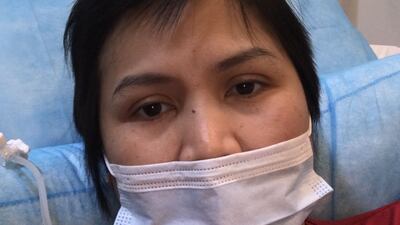
Joylyn Hantig, 41, is hoping to get the final all-clear for breast cancer in the coming months. Photo: Joylyn Hantig -
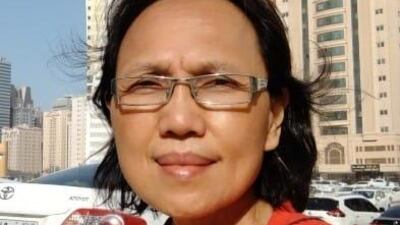
Leodina Fernandez is recovering from thyroid cancer. She said this was possible with the help she received from the Friends of Cancer Patients charity. Photo: Leodina Fernandez -

Rahima Shabinaz, pictured here with her husband, said her life has improved significantly after receiving treatment for leukemia. Photo: Rahima Shabinaz -

Dr Sawsan Al Madhi, director general of the Friends of Cancer Patients UAE charity, says early detection is crucial in preventing a severe case of cancer. Photo: Dr Sawsan Al Madhi -
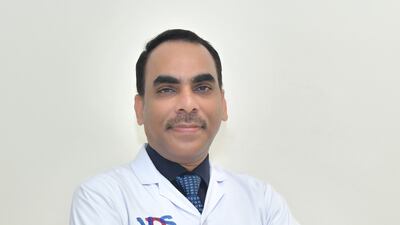
Dr Ali Ayoob Valiyaveettil, gastrointestinal surgery consultant with Burjeel Medical City, Abu Dhabi, expects major advancements in the battle against cancer in the coming years. Photo: Burjeel Medical City, Abu Dhabi


As the burden of Covid-19 is lifted, doctors will be faced with significant backlogs. Urgency, funding and harnessing modern approaches will be crucial to working through them. This could be where hope starts to creep in. Crisis spurs technological advances, and many of the pandemic’s lessons could be used to fight cancer.
The success of the Oxford-AstraZeneca viral vector vaccine against Covid-19 has been used by scientists in the UK to develop an anti-cancer one. Indeed, the mRNA technology behind the Pfizer and Moderna vaccines was first developed as a possible means to treat cancer. Its development would never have been as fast if it wasn’t for Covid-19.
And efforts not linked to the pandemic have also been seeing good results. Recent findings show that CAR T-cell therapy could constitute a cure for a number of blood cancers. Last year, the EU launched its “Beating Cancer Plan”, which, among other initiatives will allocate more than $4.5 billion to tackle the disease. The bloc has good form when it comes fighting the disease, being an early pioneer of laws controlling tobacco and other hazardous materials. On Wednesday, US President Joe Biden announced plans to reduce its death rate by at least 50 per cent over the next quarter century.
On an individual level, many of the strategies to mitigate risk from Covid-19 also help fight cancer, be they boosting immunity through a healthy diet, exercise or quitting smoking. Perhaps, the education of Covid-19 could turn out to be the biggest weapon against cancer of all.
We are far off from being in a position to bid farewell to upcoming World Cancer Days. But diseases, even the deadliest, can be beaten, and we should all support and laud the patients, carers, doctors, medical teams and scientists working to do so.



