


It is an uncomfortable fact that so much of the technology we take for granted often came about because of war. For doctors and scientists the world over, Covid-19 is a devastating battle that will not be going away anytime soon. It has, however, driven vast technological progress, be it the previously unimaginable speed at which Covid-19 vaccines were developed, or the pace at which some countries acted to bring a deadly disease under relative control.
Perhaps the most enduring effect of the pandemic on medicine will be how treatment is accessed. Lockdowns and the need for social distancing put unprecedented barriers between patients and medical professionals. Faced with this challenging situation, tele-medicine is showing its early potential.
The UAE is set to reach an important milestone on the journey towards a high-tech health sector. Last week, the Ministry of Health and Prevention, along with the Abu Dhabi’s Department of Health, Emirates Health Services and Dubai Health Authority, joined forces to create the Riayati platform, a national medical records database that will improve patient care and make medical services more efficient. It is a key moment in the country's progress towards what Abdulla bin Mohammed Al Hamed, Chairman of the Department of Health Abu Dhabi, calls a "unified E-healthcare system". It will allow doctors quick access to patients' medical records, speeding up diagnoses and prescriptions. Patients will be able to take greater control of their care and see which bodies and professionals have access to their records. A unified digital infrastructure for medical data helps patients, healthcare providers and medical institutions in a country with ample choice for where to get treatment.
-

-

A laboratory technician studies a slide under a microscope at Al Borg Medical Laboratories in Abu Dhabi. Irene García León for The National -

Staff work at the hematology unit of Al Borg Medical Laboratories in Abu Dhabi. Irene García León for The National -
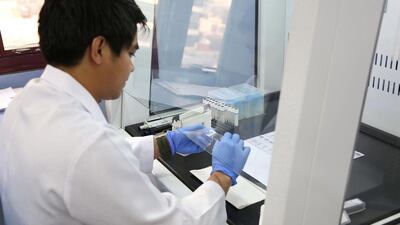
A laboratory technician handles medical samples for testing at the Al Borg Medical Laboratories in Abu Dhabi. Irene García León for The National -
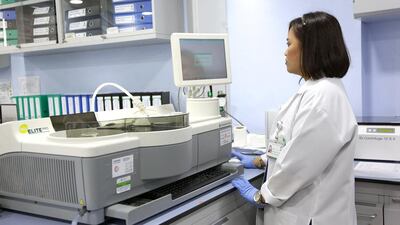
A staff monitors the results of a test at the hematology unit of Al Borg Medical Laboratories in Abu Dhabi. Irene García León for The National -
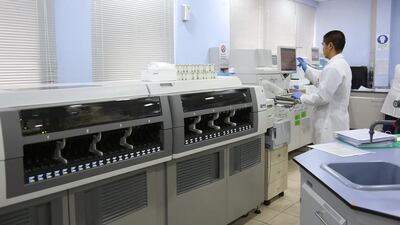
Staff work on the immunology unit of Al Borg Medical Laboratories in Abu Dhabi. Irene García León for The National -
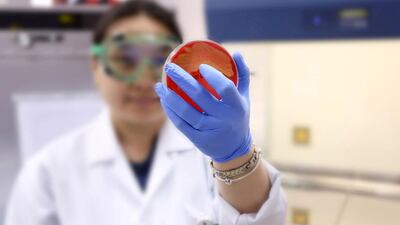
A laboratory technician handles samples for testing at the microbiology unit of Al Borg Medical Laboratories in Abu Dhabi. Irene García León for The National -
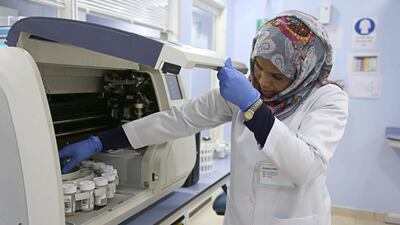
A technician at the histopathology unit of Al Borg Medical Laboratories in Abu Dhabi. Irene García León for The National


High-tech medicine has proven its value throughout the region. Israel, for instance, rolled out the fastest Covid-19 vaccination programme in the world, thanks in large part to its highly centralised and digitised healthcare system and patient records database, data from which was shared to help manufacturers gauge the efficacy of their vaccines. A similarly efficient system helped the UAE build early capacity by quickly opening field hospitals and, crucially, a vast testing and vaccine infrastructure. As a result, the UAE has among the highest vaccination rates in the world.
Despite pockets of excellence, the Middle East has some of the lowest-performing healthcare systems around. Under 3 per cent of people have received one Covid-19 vaccine dose in Sudan. In Yemen, it is under 2 per cent. These disparities are the result of long-term challenges. Healthcare is an early victim of political instability, and in many parts of the Middle East there are simply not enough doctors, even where there is historic expertise. Despite Egypt training 15 per cent more medics per capita than the US, the country still falls well below WHO recommendations on that front; attractive packages and better work conditions overseas are understandable draws. Lebanon has witnessed a devastating brain drain, including of its top healthcare professionals
Fortunately, technology is starting to give doctors ways to access even the most isolated patients. Appointments over the internet might not be perfect, but they are far better than nothing. And when even that proves challenging, the rise of "doctorless" healthcare apps is another reason to have optimism. The challenges facing the Middle East's healthcare systems have been long in the making, but the innovation being pursued in centres of excellence such as the UAE could be of major significance in a region where healthcare's prognosis is still poor.

