


Every day, people across the tropical and subtropical world have to live with the threat of a diverse array of diseases that are often unheard of elsewhere. Known as "neglected tropical diseases" (NTDs), they are parasitic and bacterial conditions that affect 1.7 billion people a year, including more than a billion children. Yearly in Africa, this is more than malaria and Aids combined.
NTDs are typically less dangerous than better-known tropical diseases, such as malaria, which killed more than 400,000 people in 2019. But they still have terrifying consequences.
One is river blindness, or onchocerciasis, in which a parasitic infection caused by a worm causes a great deal of skin irritation and, in some cases, blindness. It tends to affect people living close to fast-flowing rivers, and happens mostly in African countries.
-
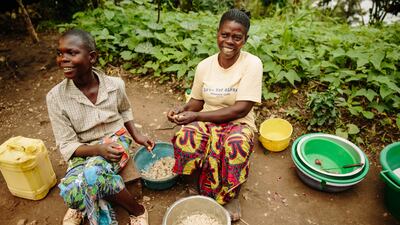
Toyota Mksiyura, right, from the Democratic Republic of Congo, who suffers from severe swelling in her feet caused by lymphatic filariasis. The UAE's Reach Campaign is aimed at tackling neglected tropical diseases. Photo: End Fund -
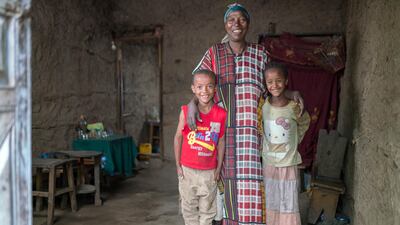
Ethiopian Kasech Fantu, who suffers from elephantiasis, with her children. Neglected tropical diseases are little known in the wider world but devastating for sufferers. Photo: The Carter Centre -

Daniel Boakye, a researcher working with The End Fund, is one of the world's foremost experts on black flies. The UAE began its Reach initiative mainly to help eliminate river blindness and lymphatic filariasis, which are caused by parasitic worms carried by flying insects. Photo: End Fund -
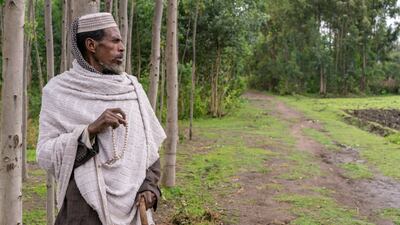
Farmer Lelamo Mukhtar had to sell his land and could not work anymore after he became ill with lymphatic filariasis. Photo: End Fund -
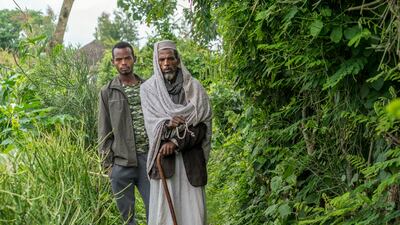
Mr Mukhtar with his son Fouwad, who has taken over farming and supporting the family after his father became ill. Photo: End Fund -
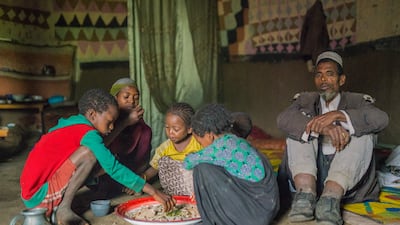
Mr Mukhtar with some of his 10 children. Photo: End Fund -
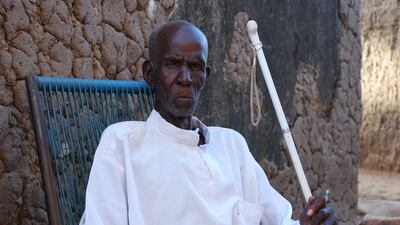
Malian Moce lost his eyesight over thirty years ago to river blindness. More than 200 million people globally require treatment for the disease, one of the leading causes of preventable blindness. Photo: End Fund -
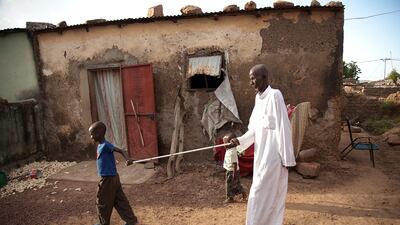
Moce is now receiving treatment. Photo: End Fund


Another is lymphatic filariasis, also caused by worms, which in this case enter the human lymph system, causing swelling that can render a person permanently unable to work. In some places, the disfigurement often leads to social ostracisation, too.
What makes the situation all the more tragic is that these illnesses are thought to be relatively simple to eradicate. And yet today, so many remain at risk.
The UAE, along with a few other actors, is trying to help. It recently announced a new project, the Reach Campaign’s 50 Days to Transform 5 Million Lives initiative, a national fundraising effort that seeks to eradicate both river blindness and lymphatic filariasis from a number of countries.
“Transform” is the key word. Ridding the region of these diseases does more than save lives; it protects futures, too. Years of education and work can be lost to caring for sick family members, a burden disproportionately felt by women.
This perpetuates a social pattern in which the economic and educational development needed to boost public health is constantly set back. With Covid-19 still a major threat in these regions – vaccination rates in the developing world are far behind those in richer countries – this disruption is only getting worse. And even when the pandemic subsides, how can potential victims be confident that the need to solve these neglected diseases will not, once again, be forgotten? That is why international efforts such as the UAE's matter so much.
There is hope that the world might now, more than ever, have the tools and confidence to make progress on the issue. Experience fighting Covid-19 could be applied to ending other illnesses, a point stressed in the 2021 Goalkeepers Report released by the Bill & Melinda Gates Foundation. Hardship, the report states, led to "breathtaking innovation", such as the development of Covid-19 vaccines in a year, rather than the usual 10 to 15.
And even with Africa's deadliest diseases, 2021 has not been all bad. Last week, the World Health Organisation for the first time approved a vaccine for use against malaria, which has the potential to save the lives of tens of thousands of children a year. This is a significant step forward.
Science, then, is offering answers, even for conditions that for too long have fallen into obscurity. Now it is up to more fortunate people and countries to use new lessons to end an era of inexcusable neglect.

