


It is little surprise that after years of social and economic decline, Iraqis have resorted to mass protests. They have been going on for years, and have at points been met with lethal force. Their calls for change have been largely ignored by Iraq’s divided elites. But the protest movement celebrated a rare victory when one of its key demands was met in the form of early parliamentary elections, which were held on Sunday.
Holding an election is one thing. Achieving a meaningful result is another. Voters faced a hard choice on Sunday – one that will likely prolong the country's political stalemate. More than 3,200 candidates were in the running for 329 seats. Few inspired much interest or presented distinct manifestos. Many represented the status quo that Iraqis have been protesting against.
This did not stop fanfare from the international community, who mustered one of the biggest election-monitoring operations in history. Iraq's UN Special Representative, Jeanine Hennis-Plasschaert, had said months previously that the vote had “the potential to be different” from previous ones. According to her, five times as many UN personnel were engaged in supporting the process as did in 2018. The UN led anti-misinformation and social media campaigns to advocate against a boycott. Polling was reviewed by an independent party. And last week, Australia, Canada, Denmark, Finland, Germany, Italy, the Netherlands, New Zealand, Norway, Sweden, the UK and US issued a statement saying: “This early election is an opportunity for Iraqi voters to democratically determine their future.”
-
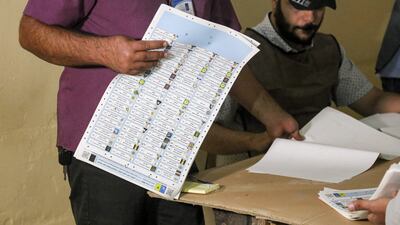
Iraqi election officials conduct a manual count of votes from a ballot box picked at random as part of the verification process for the electronic count, at a polling station in the central city of Karbala. AFP -
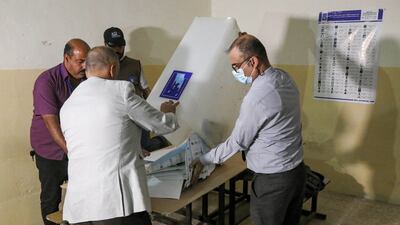
Iraqi election officials in Karbala. AFP -
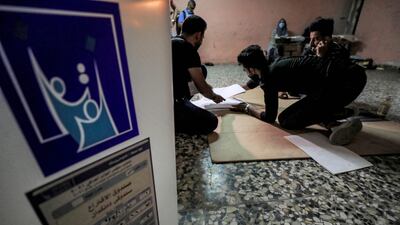
Iraqi election officials conduct a manual count of votes at a polling station in the capital Baghdad. AFP -
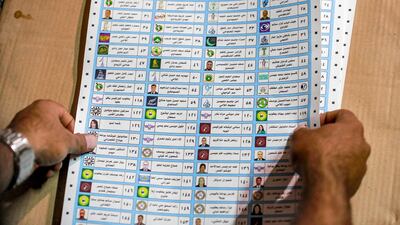
Iraqi election officials check data at a polling station in Baghdad. AFP -
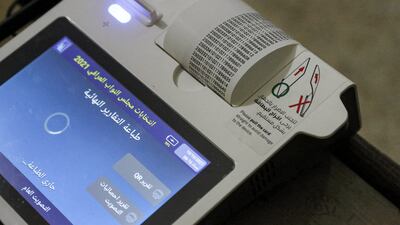
Iraqi officials print out the electronic count of votes at a polling station in Karbala. AFP -
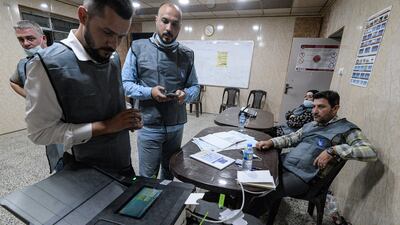
Iraqi election officials conduct the electronic count of votes at a polling station in the northern city of Mosul. AFP -
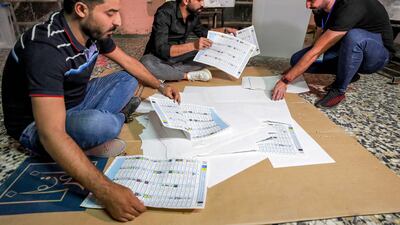
Iraqi election officials count votes at a polling station in Baghdad. AFP -
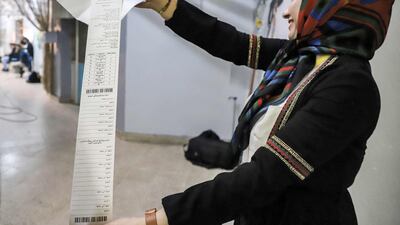
An Iraqi election official holds a printout of the electronic count of votes at a polling station in the north-eastern city of Sulaymaniyah in Iraq's autonomous Kurdistan region. AFP -

Iraqi officials print out the electronic count of votes at a polling station in the north-eastern city of Sulaymaniyah. AFP -
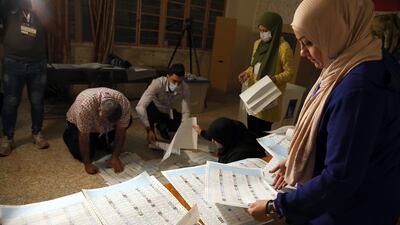
Iraqi election committee staff members count votes at the end of the parliamentary election day at a polling station in Baghdad's Karada district. EPA -
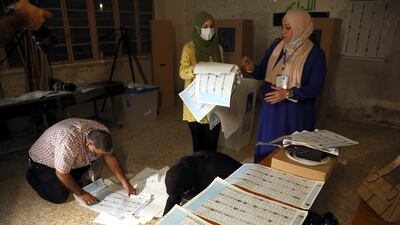
Iraqi election committee staff members count votes to elect 329 new members of the Council of Representatives. EPA -
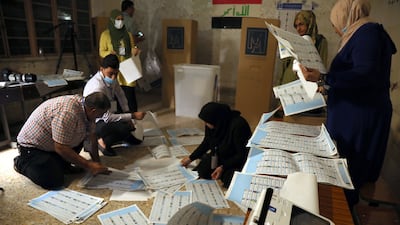
Iraq's Independent High Electoral Commission is expected to announce the results of Sunday's election within two days. EPA -
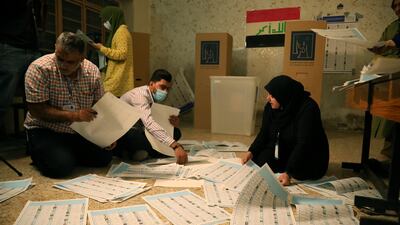
Iraqi election committee staff members count votes at the end of Sunday's parliamentary election day at a polling station in Baghdad's Karada district. EPA -
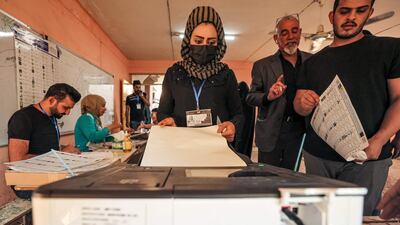
A woman voter casts her vote at a polling station in Baghdad. AFP -
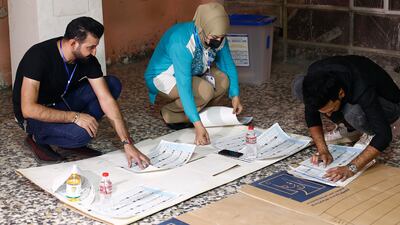
Election workers count ballots at a polling station in Baghdad at the end of voting in parliamentary elections. AP -
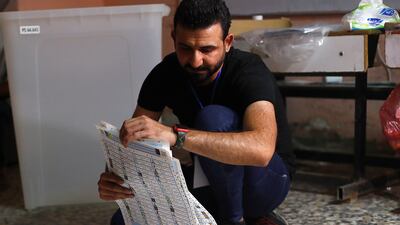
An election worker counts ballots after polls close. Parliamentary elections were held months ahead of schedule in response to a popular uprising against corruption and mismanagement. AP


Iraqis appear to have been more reticent in their enthusiasm. Estimates suggest that just 41 per cent of eligible voters turned out, the lowest number of any of the five elections that Iraq has held since 2003. Reasons for this could include fears over Covid-19 and the safety of polling stations, despite a huge national security operation to guard them.
However, disaffection is likely the biggest culprit. Since 2003, Iraqi governments have too often been "unity" ones, made up of a crippling number of different parties from all over the ideological spectrum, making it very difficult for administrations to pursue meaningful, distinct policies. Furthermore, ministerial and governmental posts were given out based largely on sectarian and ethnic divides and political calculations, rather than experience or knowledge. This malaise has done little to root out corruption and address the many issues facing Iraqis. Material challenges during the vote itself, such as reports of a new biometric system of voting ID cards glitching in Basra, will have inspired little faith that a flawed election carries the weight to address longstanding issues.
For Iraq, an election that allows for the peaceful transfer of power represents some success, particularly one in which the people had some procedural say. And Iraq has had five such elections now. But progress is not about the timing of elections, rather faith that they mean something. Unfortunately, this week's vote has been far from representative. In light of this, the international community must adjust its engagement in building Iraq's governing institutions to drive longer-term change and address factors behind Iraqis' lack of belief in their governing system. Hope might be easy in the run-up to a vote everyone wants to succeed. Realism in the aftermath of an underwhelming finale is harder, but crucial.

