

Protest movements have a habit of coalescing around emblematic figures. These personalities matter, and often become the symbols of the change that they want to inspire. In Tunisia's 2011 uprising, it was the self-immolation and eventual death of Mohamed Bouazizi, a street vendor, that struck a chord with young people across the Middle East, so frustrated by corruption and lack of opportunity.
On the other side of the region, Iraq's protest movement, which started in 2019, was galvanised by a number of figures and the ideas they espoused. With each violent crackdown, its supporters learn how threatening reactionary parties find their ideals. Today, a year on from his assassination, the country will be remembering scholar Hisham Al Hashimi, one of the movement's most high-profile casualties.
-
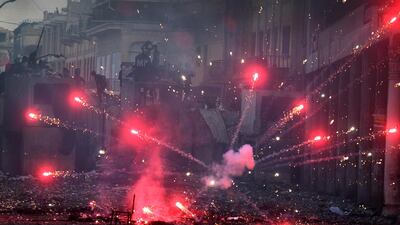
Iraqi protesters throw fireworks during clashes with anti-riot police forces at the Al Rasheed street in central Baghdad. EPA -
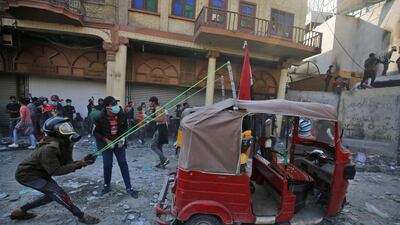
An Iraqi demonstrator uses a slingshot affixed to a tuk tuk car amid clashes with security forces in the capital Baghdad's al-Rasheed street near al-Ahrar bridge during ongoing anti-government demonstrations. AFP -

Security forces try to disperse anti-government protesters during clashes in Baghdad. AP Photo -
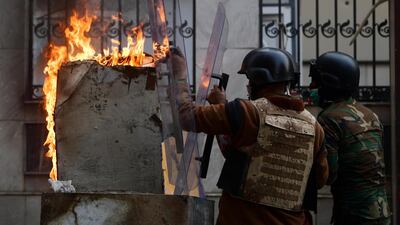
Iraqi anti-riot police forces clash with anti-government protesters at the Al Rasheed street in central Baghdad. EPA -
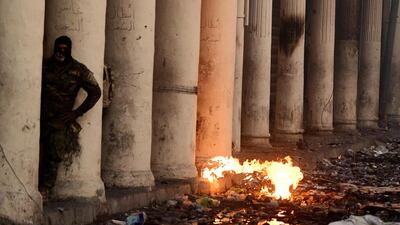
A member of Iraqi anti-riot police forces takes cover during clashes with anti-government protesters at the Al Rasheed street in central Baghdad. EPA -
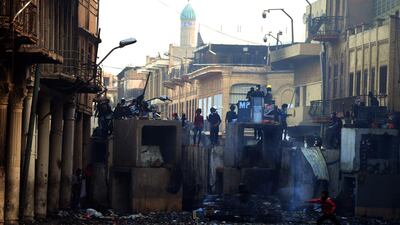
Iraqi protesters clash with anti-riot police forces at the Al Rasheed street in central Baghdad. EPA -
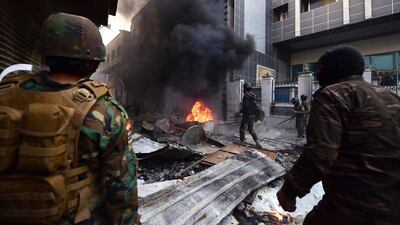
Iraqi anti-riot police forces clash with anti-government protesters at the Al Rasheed street in central Baghdad. EPA -
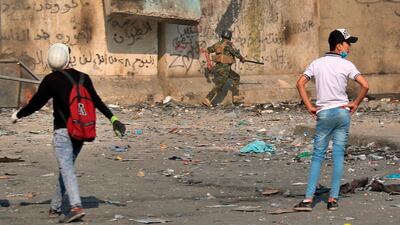
A soldier runs for cover while anti-government protesters throw stones and Molotov cocktails during clashes on Rasheed Street, Baghdad. AP Photo -
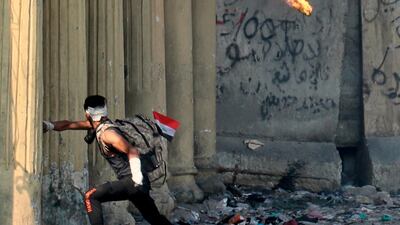
An anti-government protester throws a Molotov cocktail toward riot police during clashes on Rasheed Street, Baghdad. AP Photo -
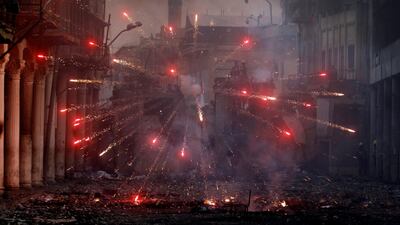
Iraqi demonstrators throw fireworks towards Iraqi security forces during the ongoing anti-government protests in Baghdad. REUTERS -
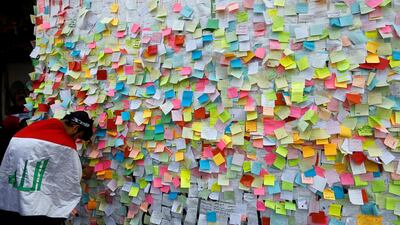
An Iraqi demonstrator pastes a note with his wish at a wall of wishes, during ongoing anti-government protests, at the building called 'the Turkish Restaurant Building', in Baghdad. REUTERS


Al Hashimi was fighting his cause peacefully in archives, libraries and even in the Twitter inboxes of journalists and protesters, helping them in their work but also imploring them to think of their own safety. In turn, his supporters followed him not by arming themselves, but by reading, debating and pouring out into the streets.
Ideological extremes have turned Iraq into a battleground against the will of so many citizens, who after decades of strife want a stable country. A leader such as Al Hashimi stood out as the people's moderate, brave advocate. He despised violence and wanted dialogue. When he was killed by masked gunmen in the streets of Baghdad, he paid the ultimate price for railing against the bloodshed that plagues his country.
Today's government remains largely incapable of reigning in malicious groups, whether it is the remnants of ISIS or parties in a complex network of Iran-backed militias. However, the bulwark against militant groups is public opinion, despite the fact that these groups base their legitimacy on what they claim to be high levels of partisan support.
Al Hashimi exposed this falsehood for what it was. He represented the vast majority of Iraqis who rejected sectarianism and non-state actors. While he was among the most famous victims of the violence, there have been many others. Ihab Al Wazni, an activist, was killed just last May in Karbala. Countless other activists and reporters have met the same fate. In October 2019, when the most intense demonstrations of the past few years erupted, more than 700 protestors were thought to have been killed.
Holding murderers to account will be a slow process. But peaceful protesters and activists, who are building a strong civic society and identity, have the eventual solution. And while they may not have guns, they do have permanent role models prepared to sacrifice a great deal for the cause of reason, moderation and inclusiveness.
Protests in Iraq are likely to die down for the summer, as temperatures climb as high as 50°C. But with each wave of demonstrations that comes and goes, Iraqi citizens are thrashing out an identity for their movement. A year on from his death, Al Hashimi's friends, family, colleagues and supporters can seek comfort in the fact that his ideals live on in a growing movement that encompasses all corners of Iraqi society.

