
In 2001, Leonard Lauder, then chairman of Estee Lauder, coined the term ‘lipstick index’. He was referring to what he saw as the resilience of makeup sales in times of economic hardship, an affordable indulgence for women who otherwise might be cutting back.
After all, when things are tough, women feel that a dash of lipstick can do wonders for their morale – and I am no exception.
But this time, women have bucked the lipstick index. Early in the pandemic amid the growing economic difficulties, sales of lipstick started to plummet. After all, if you're staying home, who needs lipstick and makeup?
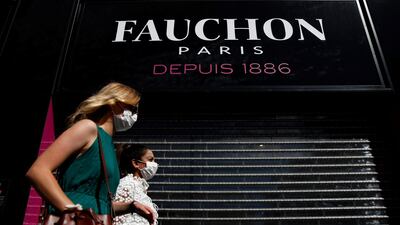
As the new normal set in and face masks became the norm, there was talk of a 'mascara index’. With sales of eye makeup rising, women seemed to shift their beauty focus to the area of their face that was actually visible.
In the context of the pandemic, Estee Lauder’s current chief executive has said that the lipstick index has been substituted by "the moisturiser index".
The view is that while the current period may not reflect a huge interest in people's desire to stock up on lipstick, moisturisers still remain a reliable index of consumption trends.
Moisturisers, however, fill a very different need in women’s grooming routine. It is one of those cosmetic products that are not about the gaze of another. Moisturisers have nothing to do with how women present themselves to the outside world. It is more personal, it is about care for oneself.
In many ads for moisturisers though there is still the shameful message conveyed that using moisturiser can stop ageing, as though growing old is the great crime of our era.
Despite some of these ageist campaigns, during the pandemic, something radical started to happen with regard to women and beauty.
We are seeing the beginnings of an important shift – women are discarding unattainable beauty standards, to which they are constantly subjected and to which they would, in a pre-pandemic world, have had to strive to achieve at all costs.
This year has caused, however minor, a shift in perception – to not judge women based on their appearance. If this perception gained wider acceptance, it would free women from all the pressure and judgment that comes with adhering to these unattainable standards of beauty.
Trying to keep up and appearing constantly beautiful can be a second career for a lot of women, especially those who have more public-facing jobs. It costs money and time, and the payback is often poor self-esteem and constant, unwarranted judgment. Many of us women accept this and spend our lives too conscious, if not ashamed, of our faces and bodies, feeling as if our looks define who we are, our worth and the success we will achieve in life.

Critics of patriarchy describe this as commodifying women, ascribing value based on looks. Critics of capitalism say that the market benefits from women being kept in this state of anxiety; self-doubt as a way to keep up sales of cosmetics and makeup.

At the intersection of the capitalism and patriarchy, there is talk of how women being encouraged to enter the workplace provides companies with a stream of cheaper labour as men famously, in several if not most industries, are paid more than their equally-competent women colleagues.
Add to this the pressures women face to be well-dressed and well-groomed. This essentially means women, as compared to men, put disproportionate amounts of their income back into the consumer economy.
One can't help but think the system is rigged so that the majority of women do not rise to the same ranks of power as men, and many continue to be judged on their looks rather than on their work or talent.
Now, given the pandemic, there is no longer a physical workplace as we knew it. As a result, working women, broadly speaking, don't need to ‘put their face on’ or wear uncomfortable high heels to the office.
In these past few months, they have been freed of such constraints and have been able to, for the most part, do things for themselves, look beautiful and feel good for themselves rather than out of a societal expectation of how they should appear.
Going back to negative perceptions of ageing, hair is a great example. At least anecdotally, I know many women who this year decided to go grey rather than keep dyeing their hair, and they expressed this as a form of liberation.
For so many women, their chances of living a successful life are so utterly defined by their looks, that this shift – from presenting oneself in a certain way to the outside world to focusing more on self-care – is a significant moment.
This is an opportunity for women to take control of their image and reject the pressures placed disproportionately on them. It is a chance to think about the self rather than others, something that too many women are socialised out of from a young age. It is a chance for women to assert that it is who they are that matters, rather than what they look like.
Shelina Janmohamed is the author of Love in a Headscarf. Her latest book is The Extraordinary Life of Serena Williams

