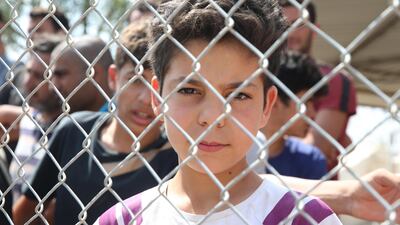

The conflict in Syria is entering its its tenth year. Ten years of war, suffering and grief. And it’s still not over. Syrians continue to live in fear and despair, their future held hostage. While the war forced half the population to flee their homes in the past decade, those who stayed behind are facing an unprecedented economic crisis and the threat of coronavirus.
At the fourth Brussels Conference on “Supporting the future of Syria and the region” on June 29 and 30, more than 80 countries, regional and international organisations and UN agencies are sitting around a virtual roundtable to address all of the key dimensions of the Syrian crisis: political, humanitarian, financial and regional. We are reaffirming our strong support for UN efforts for a political solution to the conflict and for the terms of UN Security Council Resolution 2254. A political solution, reached through a UN-mediated, inclusive, Syrian-led and Syrian-owned dialogue, is the only way of achieving sustainable peace in Syria. The alternative is ever more misery caused by the obstinate determination of the long-discredited regime.
-
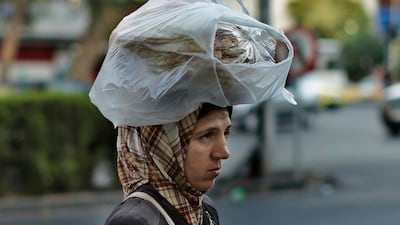
After nearly a decade of war, Syria is crumbling under the weight of a repressive, corrupt ruling elite, a pandemic and an economic downslide compounded by western sanctions. AP Photo -
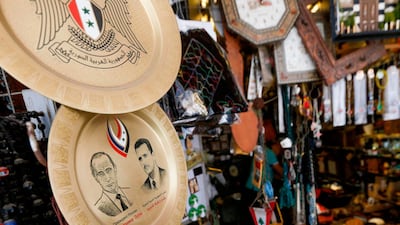
Souvenir plates bearing the Syrian flag and the portraits of Russian President Vladimir Putin and Syrian President Bashar Al Assad are pictured in a shop in a bazaar in old Damascus. AFP -
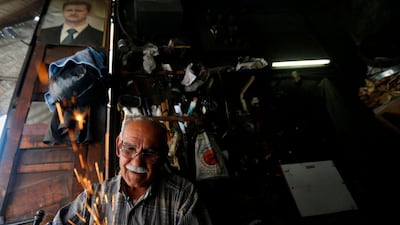
A man works in his metal workshop beneath a portrait of Syrian President Bashar Al Assad in old Damascus earlier this week. AFP -
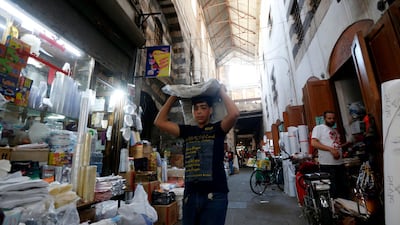
A Syrian boy carrying textiles is pictured in the bazaar in old Damascus. AFP -
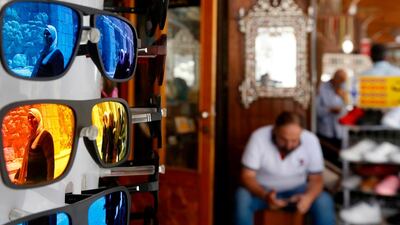
A Syrian shopkeeper waits for customers in a bazaar in old Damascus. AFP -
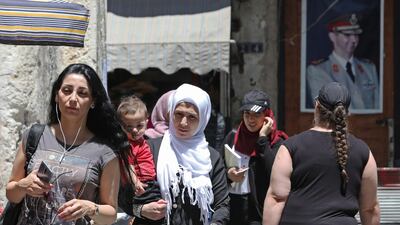
Syrians walk in old Damascus in front of a portrait of Syrian President Bashar Al Assad. AFP -
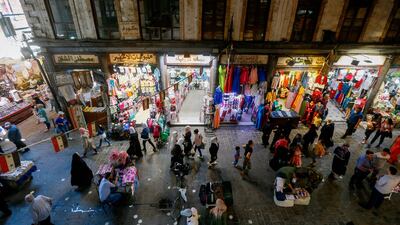
Syrian shoppers walk in the bazaar in old Damascus. AFP -
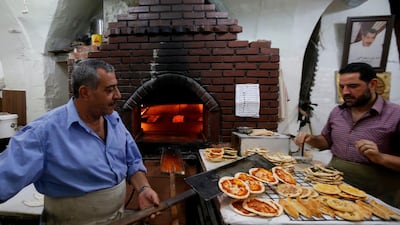
Syrian men work in their bakery in old Damascus. AFP -
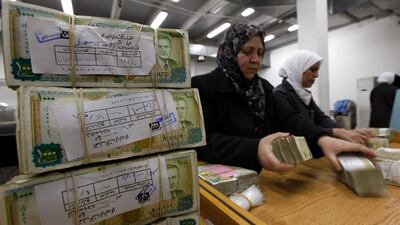
Employees stack packets of the Syrian pound in the Central Syrian Bank in Damascus. AP Photo -

An anti-Assad regime demonstration under way in Suweida, southern Syria, in early June 2020. AFP


This year, on top of being the worst humanitarian crisis since the Second World War, Syria is close to economic collapse. The regime’s mismanagement of the economy and widespread corruption, the financial crisis in neighbouring Lebanon and the coronavirus pandemic have brought Syria’s economy to its knees. The situation is dire. Syria faces its highest inflation rate ever, alongside a record devaluation of its national currency. Eight in 10 Syrians reportedly live in poverty and even top-tier salary earners are left with little real purchasing power. Basic goods are becoming scarce; food and medicine are starting to become unaffordable to ordinary people.
Syrians want the same things as every person and family anywhere else in the world: personal security, jobs and a future for their children. In other words, they need prospects for the future. The EU and its member states have been supporting Syrians everywhere since the start of the conflict. Over €20 billion has been provided in humanitarian, stabilisation and resilience assistance since 2011 – for Syrians in Syria and in support of the neighbouring countries.
We are very grateful for the solidarity shown by Jordan, Lebanon and Turkey, in particular. They are looking after more than 5.6 million Syrian refugees. These countries are struggling with complex domestic situations; they continue to need assistance to meet the growing needs of both the refugees and their own people. The EU is also helping them. Our assistance in response to the Syrian crisis does not only benefit Syrian refugees but also the Lebanese, Jordanian and Turkish people to create job opportunities, infrastructure (including schools) as well as better health and water services.
-
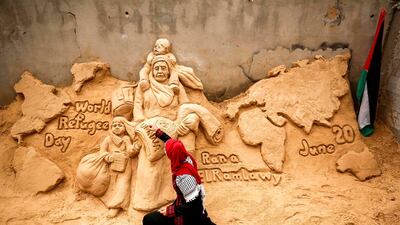
Palestinian sand sculptor Rana Ramlawi finishes a new artwork creation commemorating World Refugee Day, a day dedicated by the United Nations General Assembly to raising awareness of the situation of refugees throughout the world, in Gaza City, depicting a woman carrying a child and a sack of flour bearing the logo of the United Nations Relief and Works Agency for Palestine Refugees (UNRWA) with a child behind holding a jerry can of water, all standing before a map of the world. Nearly one-third of refugees registered by the UNRWA, more than 1.5 million individuals, live in 58 recognised refugee camps in the Gaza Strip and the West Bank including East Jerusalem, in addition to Jordan, Lebanon, and Syria. AFP -
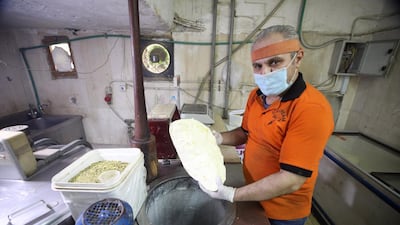
Syrian Migrant Yasser, aka Abo Aly, who feld from the armed conflict in Syria, works at an ice cream workshop in Cairo, Egypt. Yasser came to Egypt in 2012 to escape the armed conflict in Syria, and he used to work in this field for 25 years at the Hamidiyeh market in Damascus. World Refugee Day is marked on 20 June each year to highlight the suffering of the tens of millions of people forced to flee their homes due to war or persecution. EPA -
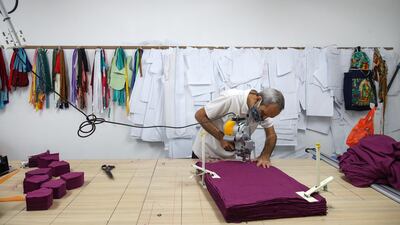
Qurbani, a 59-year-old an Afghan refugee who has been in Malaysia for four years, makes protective face masks in Kuala Lumpur, Malaysia. Refugee tailors make more than 7,000 sets of personal protection equipment (PPE) for medical frontliners in hospitals and clinics around Kuala Lumpur. World Refugee Day 2020 theme by United Nations High Commissioner for Refugees (UNHCR) is 'Every Action Counts' to celebrate refugees who are on the frontlines fighting this pandemic, their hosts and the aid workers supporting them. EPA -
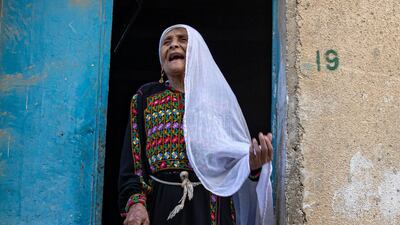
About ninety years old Palestinian refugee Halima Abdehadi Mhamed, gestures as she speaks to the journalist at her house door, in the Baqa'a Palestinian refugee urban camp, near Amman, Jordan. She is originally from Dhekrein near Hebron in what used to be Palestine, she left her village with her family to flee violence first in 1948 then moved again three times more, always further towards Jordan, until they reached the Baqa'a Palestinian refugee urban camp after the 1967 flair of violence. She worked as a farmer and has no direct family. The World Refugee Day is marked on 20 June. World Refugee Day is marked annually on 20 June. According to the UNHCR, more and more refugees today live in urban settings outside refugee camps. EPA -
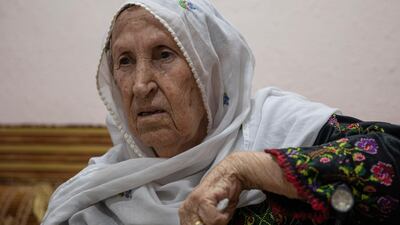
About 86 years old Palestinian refugee Hana Khalil Emselem Edieb sits in Baqa'a Palestinian refugee urban camp, near Amman, Jordan. Ms. Edieb is originally from Dawaymeh, a village near Hebron in what used to be Palestine, she left her village with her family to flee violence in 1948, they stayed on the move depending on the advance of violence until they reached Ariha in the Jordan valley where they settled for about 20 years, they ended up leaving it during the 1967 Arab-Israeli conflict to move to the Baqa'a Palestinian refugee urban camp. The family left with little, but still has the key to their old village home. World Refugee Day is marked annually on 20 June. According to the UNHCR, more and more refugees today live in urban settings outside refugee camps. EPA -
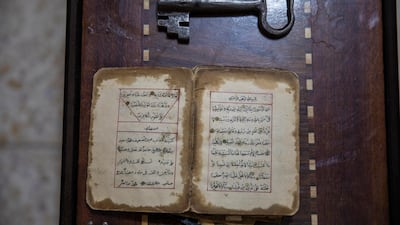
A 200 years old hand written copy of the Muslims holy book the Quran, and an old house key belonging to the family of Palestinian refugee Palestinian refugee Hana Khalel Emselem Edieb, on a table in Baqa'a Palestinian refugee urban camp, near Amman, Jordan. Ms. Abu Kecheck is originally from a village near Yafa in what used to be Palestine, she left her village with her family to flee expected violence first around 1948 but as an internally displaced person. She moved out again to Kuwait to follow her husband in 1960, but they had to leave Kuwait and move to to Baqa'a Palestinian refugee urban camp in the wake of the first Gulf War in 1990. World Refugee Day is marked annually on 20 June. EPA -
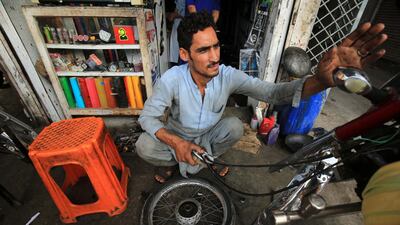
Aimal Khan, a 26 year- old Afghan refugee, who is living in Pakistan for years, works at motorcycle repairing workshop on the eve of the in Peshawar, KPK province, Pakistan. Pakistan hosts more than 1.5 million Afghan refugees and has repatriated more than one hundred thousand refugees back to their country in the last two years. EPA -
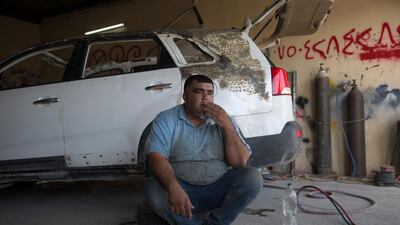
Ali Shaikhi, aged 33, smokes at work in Bahirka town, 8km north of Erbil, the capital of the Kurdistan Region, Iraq. Shaikhi fled from his Syrian hometown of Kobane to Erbil in 2012. His house was destroyed by the so-called 'Islamic State' (IS), also known as 'Isis,' when they attacked the city in northern Syria in 2014. He now works as a vehicle body repairer and has five children. Some 245,810 registered Syrian refugees live in the Kurdistan Region, according to the UNHCR. Many of them have a job, open shops, restaurants, or barbershops. World Refugee Day is marked annually on 20 June. According to the UNHCR, more and more refugees today live in urban settings outside refugee camps. EPA -

Twenty nine years old Syrian refugee Nacir looks at his Damascus home key and its chain with a photo of his mother as he talks about what he misses, at the UNHCR (UN Refugee Agency) and Johud (Jordanian Hashemite Fund for Humanitarian Development) run, Nuzha Community Support Center for refugees in Amman, Jordan. Nacir is originally from Damascus, Syria, he left in 2012 to flee raising violence for what he thought was a temporary time but has not returned since then. In Syria he was in a tourism hospitality school and was proudly ranked second in the whole country securing a job with a famous hotel chain in Damascus. Upon moving to Jordan he did all kinds of odd jobs and started volunteering to help other refugees adapt to their new lives, get training, rejoin school and started a training as baker. He is now an important member at the Nuzha Community Support Center for refugees, and works every day as a baker in a popular store bakery. He brought with him from Syria his collection of suit cuffs as he was only wearing suits before, a key to his family home with his mother's photo, Syrian money, his passport and the tie from his tourism and hospitably school uniform. World Refugee Day is marked annually on 20 June. According to the UNHCR, more and more refugees today live in urban settings outside refugee camps. EPA -
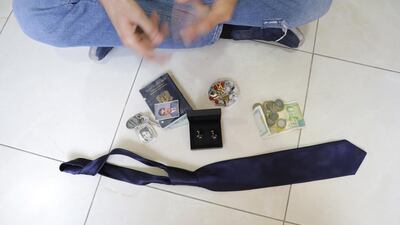
29 years old Syrian refugee Nacir shows the objects he brought with him from home in Syria, at the UNHCR (UN Refugee Agency) and Johud (Jordanian Hashemite Fund for Humanitarian Development) run, Nuzha Community Support Center for refugees in Amman, Jordan. Nacir is originally from Damascus, Syria, he left in 2012 to flee raising violence for what he thought was a temporary time but has not returned since then. In Syria he was in a tourism hospitality school and was proudly ranked second in the whole country securing a job with a famous hotel chain in Damascus. EPA -

Barkhodan Demir, aged 33, poses for a portrait with his family at home in Erbil, the capital of the Kurdistan Region, Iraq. Demir fled his hometown of Kobane after the so-called 'Islamic State' (IS), also known as 'Isis,' attacked the city in northern Syria in 2014, and destroyed his house. He came to Erbil, where he works as a tailor. He has no hope of being able to return home to Syria after so many years of conflict. Some 245,810 registered Syrian refugees live in the Kurdistan Region, according to the UNHCR. Many of them have a job, open shops, restaurants, or barbershops. World Refugee Day is marked annually on 20 June. According to the UNHCR, more and more refugees today live in urban settings outside refugee camps. EPA -
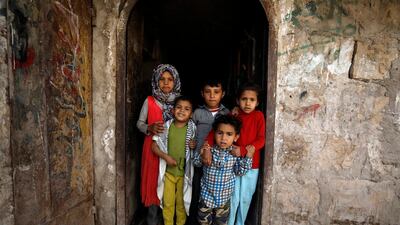
Yemeni displaced children gather at a rental houses in Sanaa, Yemen. World Refugee Day is marked annually on 20 June. According to the UNHCR, more and more refugees today live in urban settings outside refugee camps. Some crises have lasted so long that the tent camps became built-up urban areas. While some refugees depend on international help through NGOs, others start a new life, changing everything from occupation, to social status, to adapt to their new realities. EPA -
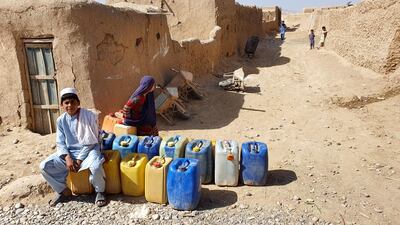
Afghan refugees wait to fill jerry cans with water from a community well at their refugee camp on the eve of World Refugees Days, in Pishin, Balochistan province, Pakistan, 19 June 2020. Pakistan hosts more than 1.5 million Afghan refugees and has repatriated more than one hundred thousand refugees back to their country in the last two years. World Refugee Day is marked annually on 20 June. EPA -
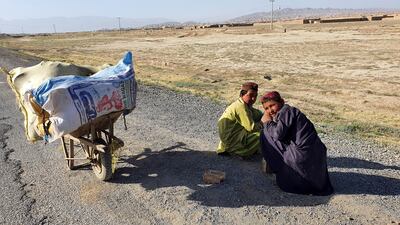
Afghan refugees pose for a photograph at their refugee camp on the eve of World Refugees Days, in Pishin, Balochistan province, Pakistan. Pakistan hosts more than 1.5 million Afghan refugees and has repatriated more than one hundred thousand refugees back to their country in the last two years. World Refugee Day is marked annually on 20 June. According to the UNHCR, more and more refugees today live in urban settings outside refugee camps. EPA -
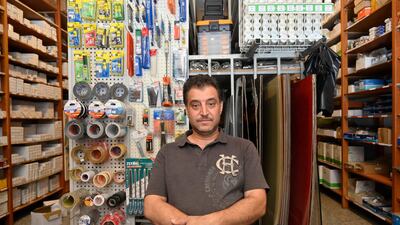
Syrian refugee Noureldin Moutaweh, 45, from eastern Ghouta, Syria, speaks during an interview as he works inside in a hardware store in Beirut, Lebanon. Noureldin Moutaweh, owner of a mobile shop in Syria, now working in a hardware store that is not related to his previous field of work but to be able to support his family which consists of his wife and 7 daughters. World Refugee Day is marked annually on 20 June. According to the UNHCR, more and more refugees today live in urban settings outside refugee camps. EPA -
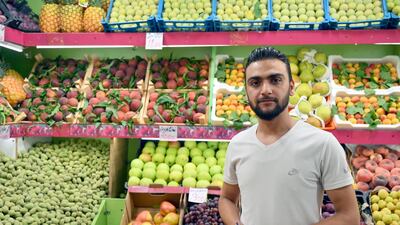
Syrian refugee Youssef Mustafa Akil, 22, from Idlib, Syria, speaks during an interview as he works inside a grocery store in Beirut, Lebanon. Youssef Mustafa Akil works in a grocery store in Beirut as he used to work as an Aluminum Carpenter in Syria. Due to the situation in Syria, my family and I had to migrate from Syria under very difficult circumstances. Our only hope was to return to our home country as we have been out since 2012/13. And now due to Caesar Act, we will not be able to go back. World Refugee Day is marked annually on 20 June. According to the UNHCR, more and more refugees today live in urban settings outside refugee camps. EPA -
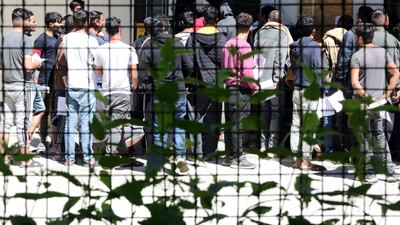
Migrants at the former military barracks in Blazuj, a suburb of Sarajevo, Bosnia and Herzegovina. According to the latest official data, there are currently more than 6,000 migrants in Bosnia and Herzegovina, who entered illegally in an attempt to reach some of the countries of Western Europe, mostly Germany, Italy and Austria. World Refugee Day is internationally observed on 20 June to raise awareness of the situation of refugees around the world. EPA -
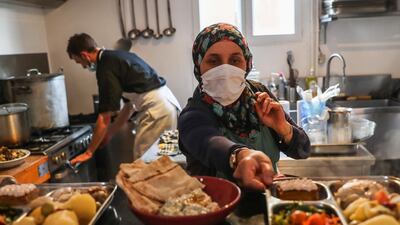
Entissar Jamous, a Syrian refugee helps to cook for the charity organization 'La Pagaille' in Paris, France. The 49-year-old does some voluntary activities in Paris. In Syria, she worked as a Dental Technician for 15 years. She left Syria to Lebanon in 2013, then arrived to Paris in 2015. Mother of three sons and one daughter, Jamous works hard to be integrated in the French community. She majored in Arabic Literature at university and graduated in 2019. And her message on World Refugee Day is: 'Like all refugees around the world, I have to live again. I appreciate life, and I like the sun, the moon, roses, and colors. I am a social person. I like talking to people, but language was a big problem. That pushed me to get over it with a lot of determination and hard work. I think I succeeded. Now, I pay more attention to finding a job. It is very difficult for me to work with my previous profession as a Dental Technician in France. That pushed me to go to the university, which I don’t think I will stop because it keeps me hanging on and loving this country more and more. I enjoyed studying Arabic literature in Paris, it gave me love and hope. EPA -
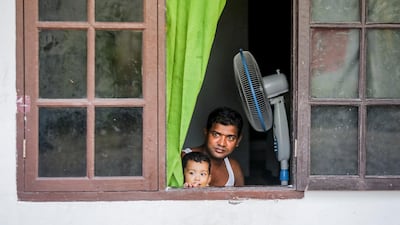
A Rohingya refugee plays with his son at a shelter ahead of World Refugee Day in Medan, North Sumatra, Indonesia. World Refugee Day is marked annually on 20 June. According to the UNHCR, more and more refugees today live in urban settings outside refugee camps. Some crises have lasted so long that the tent camps became built-up urban areas. EPA -
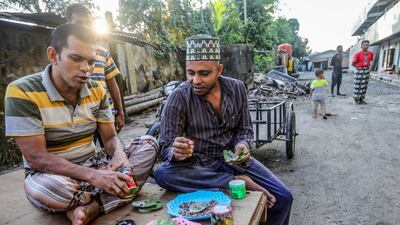
Rohingya refugees gather at a shelter ahead of World Refugee Day in Medan, North Sumatra, Indonesia. World Refugee Day is marked annually on 20 June. According to the UNHCR, more and more refugees today live in urban settings outside refugee camps. Some crises have lasted so long that the tent camps became built-up urban areas. While some refugees depend on international help through NGOs, others start a new life, changing everything from occupation, to social status, to adapt to their new realities. EPA -
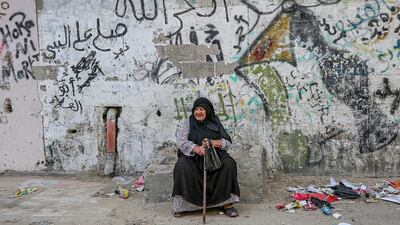
A Palestinian eldrely refugee woman sits outside her house in the streets of Khan Younis refugee camp in the Gaza Strip. World Refugee Day is marked on 20 June each year to highlight the suffering of the tens of millions of people forced to flee their homes due to war or persecution. Nearly one-third of the registered Palestine refugees, more than 1.5 million individuals, live in 58 recognized Palestine refugee camps in Jordan, Lebanon, the Syrian Arab Republic, the Gaza Strip and the West Bank, including East Jerusalem. EPA -
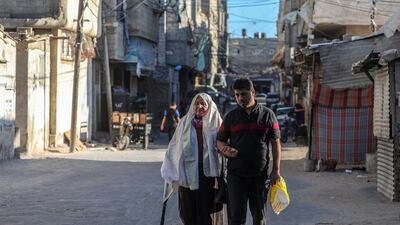
Palestinian refugee Amna Abu Mustafa, 88, born in 1932 in Beersheba, walks with her grandson near her house in the streets of Khan Younis refugee camp in the Gaza Strip. World Refugee Day is marked on 20 June each year to highlight the suffering of the tens of millions of people forced to flee their homes due to war or persecution. Nearly one-third of the registered Palestine refugees, more than 1.5 million individuals, live in 58 recognized Palestine refugee camps in Jordan, Lebanon, the Syrian Arab Republic, the Gaza Strip and the West Bank, including East Jerusalem. EPA -
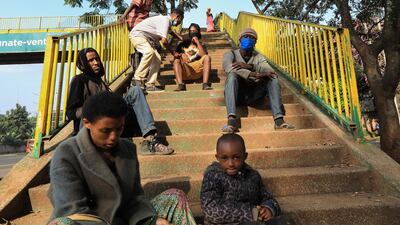
Refugees from different East African countries sit on the staircases of a footbridge where they sleep, ahead of World Refugee Day in Nairobi, Kenya. World Refugee Day is marked annually on 20 June to raise awareness of the situation of refugees around the world. According to the UNHCR, more and more refugees today live in urban settings outside refugee camps. Some crises have lasted so long that the tent camps became built-up urban areas. EPA -
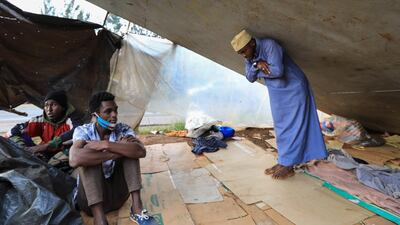
A Congolese refugee Muhamed Al-Ahadal (R), makes his evening prayers under a footbridge where he and other refugees sleep next to a highway, ahead of World Refugee Day in Nairobi, Kenya . World Refugee Day is marked annually on 20 June to raise awareness of the situation of refugees around the world. According to the UNHCR, more and more refugees today live in urban settings outside refugee camps. EPA -
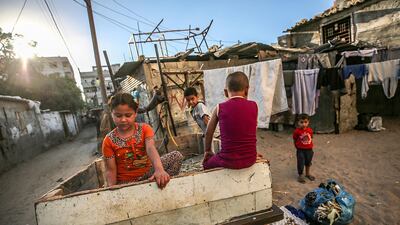
Palestinian refugees children play outside their family house in the streets of Khan Younis refugee camp in southern Gaza Strip . World Refugee Day is marked on 20 June each year to highlight the suffering of the tens of millions of people forced to flee their homes due to war or persecution. Nearly one-third of the registered Palestine refugees, more than 1.5 million individuals, live in 58 recognized Palestine refugee camps in Jordan, Lebanon, the Syrian Arab Republic, the Gaza Strip and the West Bank, including East Jerusalem. EPA -
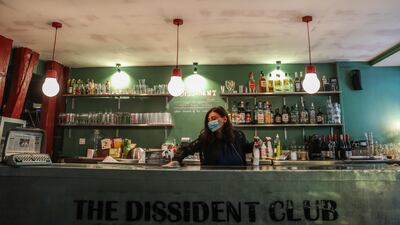
Sara Farid, 40 years old, works inside The Dissident Club which is managed by her and her husband Taha Siddiqui, in Paris, France . Taha Siddiqui, 35, and his wife Sara Farid, 40, are Pakistani refugees in France, they live in exile in Paris since February 2018 Paris, and have one son Miranshah, 7. On the morning of 10 January 2018, Pakistani military personnel carried out a failed abduction and possible assassination attempt when he was on his way to Islamabad airport for a flight to London. Siddiqui escaped during the kidnapping attempt, and the Pakistan Army subsequently accused him of speaking against the state, His so-called crime: he reports, comments and analyzes Pakistan Army and its role in the country and the region, without exercising any self-censorship, Siddiqui is an investigative journalist and opinion-writer, and has reported from South Asia and Afghanistan.
His works for many international media, Pakistani and Indian news organizations. His focus areas include civil-military affairs, terrorism, and human rights. In 2014, Siddiqui won the prestigious Prix Albert Londres (known as the French Pulitzer Prize) for his documentary on the spread of polio in Pakistan and Afghanistan. EPA -
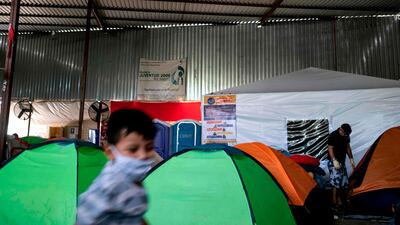
An asylum seeker stands next to a tent for COVID-19 suspects (background) as a child plays, at the Juventud 2000 migrant shelter in Tijuana, Baja California state, Mexico. Thousands of asylum seekers wait in Mexico for the US Departments of Justice and Homeland Security to resume the migration hearings after they were suspended due to the COVID-19 pandemic. The World Refugee Day is commemorated on June 20. AFP -

A girl carries a young child near their home at al-Shati camp for Palestinian refugees in the central Gaza Strip. June 20 marks World Refugee Day, a day dedicated by the United Nations General Assembly to raising awareness of the situation of refugees throughout the world. Some five million individuals are refugees registered with the UN Relief and Works Agency for Palestine Refugees (UNRWA), of whom more than 1.5 million (nearly one-third) live in 58 recognised refugee camps in the Gaza Strip and the West Bank including East Jerusalem, in addition to Jordan, Lebanon, and Syria. Palestine refugees are defined by the UNRWA as "persons whose normal place of residence was Palestine during the period 1 June 1946 to 15 May 1948, and who lost both home and means of livelihood as a result of the 1948 conflict." AFP -
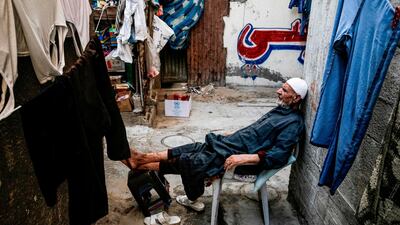
An elder Palestinian reclines his foot on a stool as he near his home at al-Shati camp for Palestinian refugees in the central Gaza Strip. June 20 marks World Refugee Day, a day dedicated by the United Nations General Assembly to raising awareness of the situation of refugees throughout the world. Some five million individuals are refugees registered with the UN Relief and Works Agency for Palestine Refugees (UNRWA), of whom more than 1.5 million (nearly one-third) live in 58 recognised refugee camps in the Gaza Strip and the West Bank including East Jerusalem, in addition to Jordan, Lebanon, and Syria. Palestine refugees are defined by the UNRWA as "persons whose normal place of residence was Palestine during the period 1 June 1946 to 15 May 1948, and who lost both home and means of livelihood as a result of the 1948 conflict." AFP -
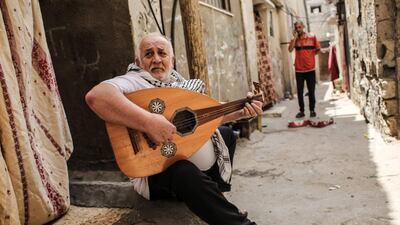
Tawfiq Shanaa, a 66-year-old man, plays the oud as he performs traditional Palestinian songs outside his house in the Rafah camp for Palestinian refugees in the southern Gaza Strip. June 20 marks World Refugee Day, a day dedicated by the United Nations General Assembly to raising awareness of the situation of refugees throughout the world. Some five million individuals are refugees registered with the UN Relief and Works Agency for Palestine Refugees (UNRWA), of whom more than 1.5 million (nearly one-third) live in 58 recognised refugee camps in the Gaza Strip and the West Bank including East Jerusalem, in addition to Jordan, Lebanon, and Syria. Palestine refugees are defined by the UNRWA as "persons whose normal place of residence was Palestine during the period 1 June 1946 to 15 May 1948, and who lost both home and means of livelihood as a result of the 1948 conflict." AFP -

Members of International Amnesty protest to demand the European Union a system to relocated the refugees, on the World Refugee Day in Madrid, Spain, 20 June 2020. World Refugee Day is marked annually on 20 June to raise awareness of the situation of refugees around the world. According to the UNHCR, more and more refugees today live in urban settings outside refugee camps. EPA


The EU Regional Trust Fund has helped communities in Lebanon and Jordan by providing basic income, access to health services and education and much more, ensuring that Syrian refugees and local hosts alike have a foundation to build a better future. In Turkey, the EU supports an emergency social safety net, the access of Syrian refugees to high quality Turkish health services, and school enrolment.
In Syria itself, we have been doing what we can to foster livelihoods, support communities and stimulate the very basics of economic life.
Since 2011, the EU has put sanctions in place, in response to the actions of the Syrian regime and its supporters. The goal of these measures is to put pressure on the regime to halt repression and to negotiate a lasting political settlement of the Syrian crisis in line with UNSC Resolution 2254, under UN auspices.
These sanctions target designated people and entities, not the population. They do not prevent the delivery of humanitarian aid or prohibit the export of food, medicine or medical equipment.
Today, we want to tell the Syrian people and the people of the countries hosting refugees that we know what they have been going through, that we care and that we will continue to stand by them.
We know that the Syrian refugees’ dearest dream is to go back home. We are ready to help make this happen once the conditions are in place. But, to what home? It is not realistic to expect refugees to return to the risk of being arrested, tortured or forced to fight a war they wanted to escape. The security of their life and property needs to be guaranteed. And we know that the stability necessary for the reconciliation and reconstruction of Syria will only come once the regime renounces brutality and embarks on a process of genuine political dialogue, backed with tangible changes and moves that will heal Syria’s wounds.
That was, is and remains our goal. Our motto is that the Syrian people must decide the future of Syria. As the EU, we will stand by them in doing so.
Josep Borrell is the High Representative of the European Union

