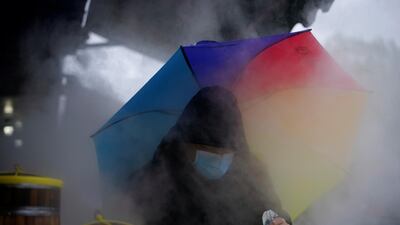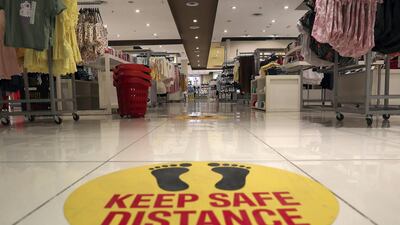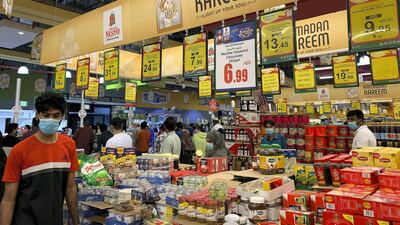
Over the past month, each trip I have taken to the supermarket has been a personal exercise in risk management. What day to go, what time to go, which supermarket? Chain A is busier, but chain B is better at enforcing physical distancing.
Once I am there, I calculate the risks associated with buying big versus getting in and out quickly. I even find myself speculating as to which aisle might be the most or least infectious. I read somewhere that customers spend the longest time in the hair and skincare section of supermarkets. Still, my intuition tells me that, during times of crisis, the confectionary aisle is the highest risk – I pick quickly and go. Once back home, there is the issue of what is the lowest-risk way to clean the shopping, and how and where to best store the reusable shopping bags?
Passengers wearing face masks are seen as the train stops at a railway station in Macheng, in China’s central Hubei province on March 27, 2020. AFP
A customer buys food from a steamed food stall in Jingzhou, after the lockdown was eased in Hubei province. Reuters
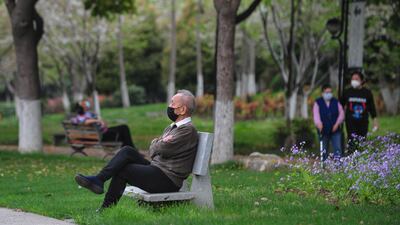
A man sits on a bench at a park in Wuhan, in China's central Hubei province on March 26, 2020. AFP
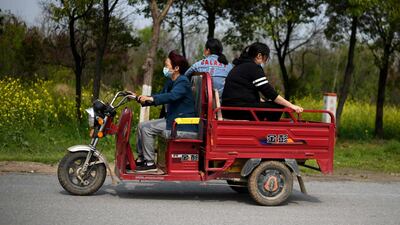
People wearing face masks ride on a motorised tricycle along a street in Huanggang, in China’s central Hubei province. AFP
A waitress carries meals out of the kitchen at a restaurant in Macheng in China’s central Hubei province on March 25, 2020. AFP
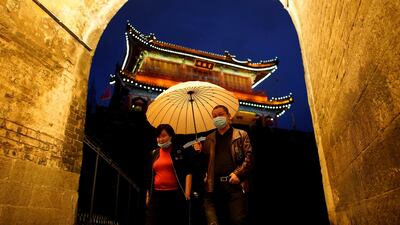
People wearing face masks walk through an ancient city wall in Jingzhou on March 26, 2020. Reuters
A man selects apples inside a supermarket in Wuhan on March 26, 2020. Reuters
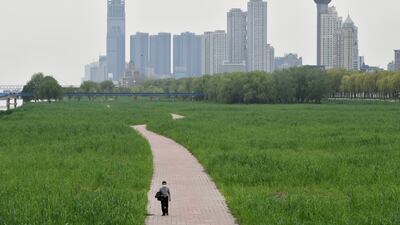
A man walks at a riverside park in Wuhan on March 26, 2020. Reuters
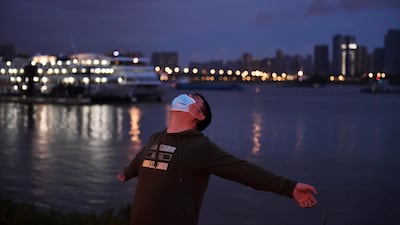
A man exercises at a riverside park by the Yangtze River in Wuhan on March 26, 2020. Reuters
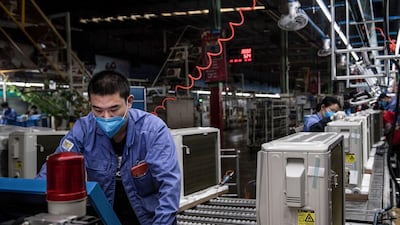
An employee works on an air conditioner production line at a Midea factory in Wuhan in China's central Hubei province on March 25, 2020. AFP
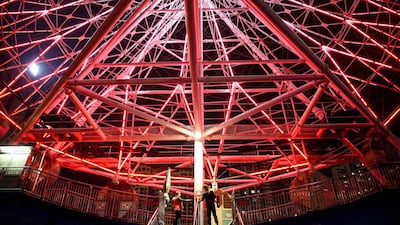
People prepare to ride on a ferris wheel at a theme park in Macheng on March 25, 2020. AFP
With an unseen adversary like a virus, uncertainty is heightened. The novel coronavirus responsible for Covid-19 is, as the name suggests, new, which further ramps up the uncertainty. We do not yet know everything about the illness, and occasionally we may need to get by on educated best-guesses. The British philosopher/psychologist, Dylan Evans, terms this kind of educated guesswork, risk intelligence: "a special kind of intelligence for thinking about risk and uncertainty".
Research has shown that risk intelligence is distinct from what we traditionally call general intelligence, or IQ. We can have a sky-high IQ but be dangerously low in RQ – or risk intelligence.
Similarly, if the emotionally intelligent can read the room, gauging how others are feeling, then those blessed with risk intelligence can estimate probabilities accurately while assessing the limits of their own knowledge. Knowing that we do not know can prevent us from becoming dangerously overconfident. One upshot of developing our risk intelligence – it can indeed be enhanced – is that it allows us to have a more functional relationship with uncertainty.
We know, however, from decades of research in cognitive psychology, that human decision-making under conditions of uncertainty is not great. We make systematic errors, often as a result of prioritising ease over effort and speed over accuracy. Such biases can be helpful in life-and-death situations: is it a stick or a venomous snake? However, given that most of us no longer live alongside venomous reptiles, our quick decisions frequently and unintentionally increase our risk of harm.
A passenger wears a mask while boarding a United Airlines flight at George Bush Intercontinental Airport last Sunday. AP Photo
A classic example of this irrational risk blindness occurred after the 9/11 attacks. For a year after the atrocity, Americans took to their cars for fear of flying. Driving, of course, is way riskier than flying. According to International Air Transport Association, there was just one major accident for every 5.4 million flights in 2018. And yet, blinkered to the relative risks of driving, US citizens took to the roads after 9/11 in higher numbers than previous years. Consequently, the number of road deaths increased that year. German research psychologist, Gerd Gigerenzer, puts the figure at an additional 1,595 road traffic-related deaths.
The thing is, many of us are now so focused on Covid-19 that the prospect of other harm befalling us has vanished from consciousness.
A youth jumps into the Mediterranean Sea at Al Manara ledge during a sunny day, in Beirut, Lebanon. EPA
Consider that each year 320,000 people drown. When being concerned about returning to public beaches or swimming pools, the risk intelligent would also be mindful of drowning risk. When returning to work, the risk intelligent will also be conscious of road traffic accident risk. This is not to, in any way, negate or diminish the risks associated with Covid-19. Still, it highlights how our intuitive risk assessments can become one-sided, biased and sub-optimal.
According to Statistica, a US-based provider of market and consumer data, around 5,084 people in the US choked to death on food in 2018. The odds of this happening are approximately one in 2,696, making eating food riskier than air travel. We do not fear food, nearly as much as air travel. But we do not really have a choice about eating, we do have a choice about air travel.
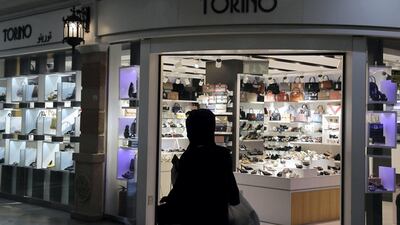
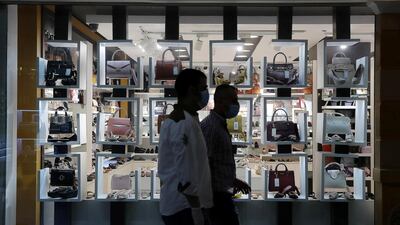
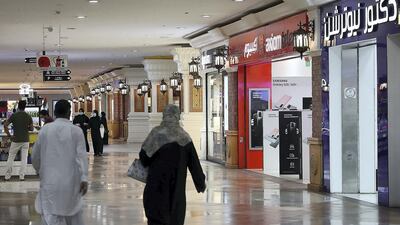
People wearing protective face masks a at the Al Naeem City Center in Ras Al Khaimah. UAE government lift the coronavirus restriction for the residents around the country. Pawan Singh / The National
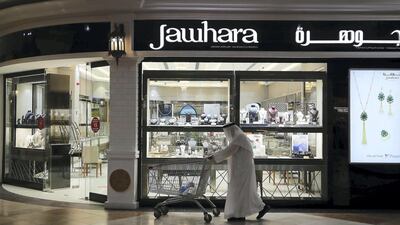
The Ras Al Khaimah Department of Economic Development has unveiled reopening procedures in line with other emirates that have relaxed stay-home orders and lifted curbs on trade and travel to bolster the economy. Pawan Singh / The National
Malls will operate from 10am to 8pm at 30 per cent capacity, but will deny entry to visitors aged above 60 or below 12.
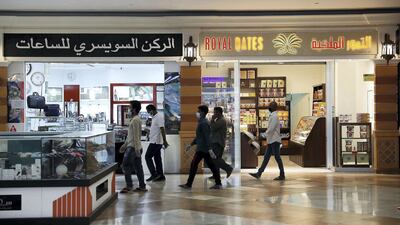
RAK, UNITED ARAB EMIRATES , May 28 – 2020 :- People wearing protective face mask as a preventive measure against the spread of coronavirus at the Al Naeem City Center in Ras Al Khaimah. UAE government lift the coronavirus restriction for the residents around the country. (Pawan Singh / The National) For News/Online/Stock/Instagram.
Cinemas, gyms, entertainment venues, common seating areas and prayer rooms within malls will remain closed.Pawan Singh / The National
Restaurants have also been told to operate at 30 per cent of their capacity, while tables must be spread apart with only four people allowed on one table. Pawan Singh / The National
Visitors must wear protective masks and gloves and are encouraged to bring their own bags. Pawan Singh / The National
Shoppers will be encouraged to use credit or debit cards to pay instead of cash and leave elevators for people with special needs. Only two people are allowed into lifts at a time. Pawan Singh / The National
RAK Services Department said people visiting beaches should wear masks and gloves, and keep a minimum distance of two meters from one another. Pawan Singh / The National
Gatherings of more than five people will not be allowed, even if they belong to a single family. Smoking, campfire and barbecues will be prohibited on the beaches. Pawan Singh / The National
This throws up another critical variable: personal responsibility. Often, what we fear more than an adverse outcome is being responsible for that outcome. I fear becoming ill with Covid-19, but I also hate the idea that I get it because of my own negligence or bad decision-making.
As many of us begin to return to work, we are going to need to deal with massive uncertainty. In some situations, we may need to gather further information from reliable sources and recalibrate our personal risk assessments. Keep the office door open or closed? Eat from the canteen or bring our own lunch? Use the elevator or stairs?
This involves weighing up multiple aspects of a situation. There will not be a one-size-fits-all formula. However, thinking about risk and how to reduce it, in each case, can help us keep ourselves and each other as safe as possible.
Justin Thomas is a professor of psychology at Zayed University

MATCH INFO
World Cup qualifier
Thailand 2 (Dangda 26', Panya 51')
UAE 1 (Mabkhout 45 2')
Ziina users can donate to relief efforts in Beirut
Ziina users will be able to use the app to help relief efforts in Beirut, which has been left reeling after an August blast caused an estimated $15 billion in damage and left thousands homeless. Ziina has partnered with the United Nations High Commissioner for Refugees to raise money for the Lebanese capital, co-founder Faisal Toukan says. “As of October 1, the UNHCR has the first certified badge on Ziina and is automatically part of user's top friends' list during this campaign. Users can now donate any amount to the Beirut relief with two clicks. The money raised will go towards rebuilding houses for the families that were impacted by the explosion.”
UAE currency: the story behind the money in your pockets
No one has ended a Premier League season quite like Sunderland. They lost each of their final 15 games, taking no points after January. They ended up with 19 in total, sacking managers Peter Reid and Howard Wilkinson and losing 3-1 to Charlton when they scored three own goals in eight minutes.
SUNDERLAND 2005-06
Until Derby came along, Sunderland’s total of 15 points was the Premier League’s record low. They made it until May and their final home game before winning at the Stadium of Light while they lost a joint record 29 of their 38 league games.
HUDDERSFIELD 2018-19
Joined Derby as the only team to be relegated in March. No striker scored until January, while only two players got more assists than goalkeeper Jonas Lossl. The mid-season appointment Jan Siewert was to end his time as Huddersfield manager with a 5.3 per cent win rate.
ASTON VILLA 2015-16
Perhaps the most inexplicably bad season, considering they signed Idrissa Gueye and Adama Traore and still only got 17 points. Villa won their first league game, but none of the next 19. They ended an abominable campaign by taking one point from the last 39 available.
FULHAM 2018-19
Terrible in different ways. Fulham’s total of 26 points is not among the lowest ever but they contrived to get relegated after spending over £100 million (Dh457m) in the transfer market. Much of it went on defenders but they only kept two clean sheets in their first 33 games.
Just as McDonald’s has the Big Mac, Jollibee has Spicy Chickenjoy – a piece of fried chicken that’s crispy and spicy on the outside and comes with a side of spaghetti, all covered in tomato sauce and topped with sausage slices and ground beef. It sounds like a recipe that a child would come up with, but perhaps that’s the point – a flavourbomb combination of cheap comfort foods. Chickenjoy is Jollibee’s best-selling product in every country in which it has a presence.
Milestones on the road to union
1970
October 26: Bahrain withdraws from a proposal to create a federation of nine with the seven Trucial States and Qatar.
December: Ahmed Al Suwaidi visits New York to discuss potential UN membership.
1971
March 1: Alex Douglas Hume, Conservative foreign secretary confirms that Britain will leave the Gulf and “strongly supports” the creation of a Union of Arab Emirates.
July 12: Historic meeting at which Sheikh Zayed and Sheikh Rashid make a binding agreement to create what will become the UAE.
July 18: It is announced that the UAE will be formed from six emirates, with a proposed constitution signed. RAK is not yet part of the agreement.
August 6: The fifth anniversary of Sheikh Zayed becoming Ruler of Abu Dhabi, with official celebrations deferred until later in the year.
August 15: Bahrain becomes independent.
September 3: Qatar becomes independent.
November 23-25: Meeting with Sheikh Zayed and Sheikh Rashid and senior British officials to fix December 2 as date of creation of the UAE.
November 29: At 5.30pm Iranian forces seize the Greater and Lesser Tunbs by force.
November 30: Despite a power sharing agreement, Tehran takes full control of Abu Musa.
November 31: UK officials visit all six participating Emirates to formally end the Trucial States treaties
December 2: 11am, Dubai. New Supreme Council formally elects Sheikh Zayed as President. Treaty of Friendship signed with the UK. 11.30am. Flag raising ceremony at Union House and Al Manhal Palace in Abu Dhabi witnessed by Sheikh Khalifa, then Crown Prince of Abu Dhabi.
December 6: Arab League formally admits the UAE. The first British Ambassador presents his credentials to Sheikh Zayed.
December 9: UAE joins the United Nations.
UAE currency: the story behind the money in your pockets
The internal combustion engine is facing a watershed moment – major manufacturer Volvo is to stop producing petroleum-powered vehicles by 2021 and countries in Europe, including the UK, have vowed to ban their sale before 2040. The National takes a look at the story of one of the most successful technologies of the last 100 years and how it has impacted life in the UAE.
The company offers payments/bribes to win key contracts in the Middle East
May 2017
The UK SFO officially opens investigation into Petrofac’s use of agents, corruption, and potential bribery to secure contracts
September 2021
Petrofac pleads guilty to seven counts of failing to prevent bribery under the UK Bribery Act
October 2021
Court fines Petrofac £77 million for bribery. Former executive receives a two-year suspended sentence
December 2024
Petrofac enters into comprehensive restructuring to strengthen the financial position of the group
May 2025
The High Court of England and Wales approves the company’s restructuring plan
July 2025
The Court of Appeal issues a judgment challenging parts of the restructuring plan
August 2025
Petrofac issues a business update to execute the restructuring and confirms it will appeal the Court of Appeal decision
October 2025
Petrofac loses a major TenneT offshore wind contract worth €13 billion. Holding company files for administration in the UK. Petrofac delisted from the London Stock Exchange
Mercer, the investment consulting arm of US services company Marsh & McLennan, expects its wealth division to at least double its assets under management (AUM) in the Middle East as wealth in the region continues to grow despite economic headwinds, a company official said.
Mercer Wealth, which globally has $160 billion in AUM, plans to boost its AUM in the region to $2-$3bn in the next 2-3 years from the present $1bn, said Yasir AbuShaban, a Dubai-based principal with Mercer Wealth.
“Within the next two to three years, we are looking at reaching $2 to $3 billion as a conservative estimate and we do see an opportunity to do so,” said Mr AbuShaban.
Mercer does not directly make investments, but allocates clients’ money they have discretion to, to professional asset managers. They also provide advice to clients.
“We have buying power. We can negotiate on their (client’s) behalf with asset managers to provide them lower fees than they otherwise would have to get on their own,” he added.
Mercer Wealth’s clients include sovereign wealth funds, family offices, and insurance companies among others.
From its office in Dubai, Mercer also looks after Africa, India and Turkey, where they also see opportunity for growth.
Wealth creation in Middle East and Africa (MEA) grew 8.5 per cent to $8.1 trillion last year from $7.5tn in 2015, higher than last year’s global average of 6 per cent and the second-highest growth in a region after Asia-Pacific which grew 9.9 per cent, according to consultancy Boston Consulting Group (BCG). In the region, where wealth grew just 1.9 per cent in 2015 compared with 2014, a pickup in oil prices has helped in wealth generation.
BCG is forecasting MEA wealth will rise to $12tn by 2021, growing at an annual average of 8 per cent.
Drivers of wealth generation in the region will be split evenly between new wealth creation and growth of performance of existing assets, according to BCG.
Another general trend in the region is clients’ looking for a comprehensive approach to investing, according to Mr AbuShaban.
“Institutional investors or some of the families are seeing a slowdown in the available capital they have to invest and in that sense they are looking at optimizing the way they manage their portfolios and making sure they are not investing haphazardly and different parts of their investment are working together,” said Mr AbuShaban.
Some clients also have a higher appetite for risk, given the low interest-rate environment that does not provide enough yield for some institutional investors. These clients are keen to invest in illiquid assets, such as private equity and infrastructure.
“What we have seen is a desire for higher returns in what has been a low-return environment specifically in various fixed income or bonds,” he said.
“In this environment, we have seen a de facto increase in the risk that clients are taking in things like illiquid investments, private equity investments, infrastructure and private debt, those kind of investments were higher illiquidity results in incrementally higher returns.”
The Abu Dhabi Investment Authority, one of the largest sovereign wealth funds, said in its 2016 report that has gradually increased its exposure in direct private equity and private credit transactions, mainly in Asian markets and especially in China and India. The authority’s private equity department focused on structured equities owing to “their defensive characteristics.”