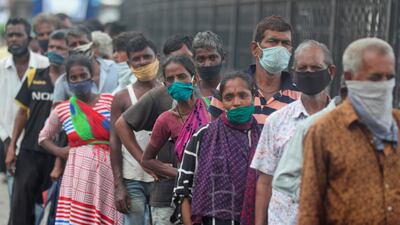
Before the Covid-19 outbreak, not all Indians could always rely on their government to provide clean water so they bought their own water-filter machines. For reliable electricity supply, some bought their own inverters and generators. For clean air, they bought their own air purifiers and masks. Now, as the pandemic rages, they are buying their own oxygen supplies. Individuals are having to make arrangements for their families' well-being, given the flaws in the healthcare system.
The Indian government has lately been promoting the idea of an economically self-reliant India. Self-reliance can indeed be found on the ground but in a more individual, "do-it-yourself" sense. Civil society groups, too, are coming to the help of those most in need, particularly migrant labourers.
From the beginning of India's eight-week lockdown in March, the state has not always been there to provide. After the media exposed the travails of migrant labourers having to walk home, it was the NGOs that first stepped in to provide food and water for them. A Bollywood actor, Sonu Sood, rallied his friends and helped to send more than 80,000 labourers back to their villages from the city of Mumbai. Thanks to his own contributions, donations from friends and some crowd-funding, he was able to pay for bus and train tickets and, in some cases, even flight tickets.
-
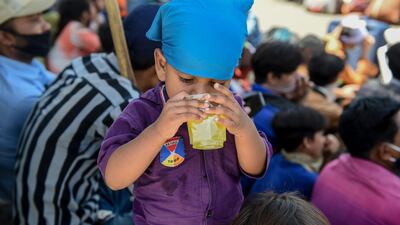
Migrant families wait to board buses going to the railway station to return by train to their hometowns after the government eased a nationwide lockdown, Ahmedabad on May 23. Sam Panthaky / AFP -
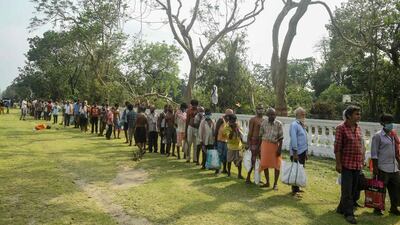
Migrant labourers queue to collect food distributed by locals at a roadside last month in Kolkata. Dibyangshu Sarkar / AFP -
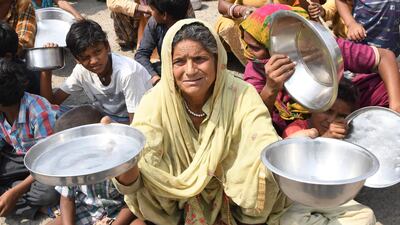
Families from Maharashtra hold out utensils to protest the lack of food in a slum area on the outskirts of Amritsar, Punjab, May 31. Narinder Nanu / AFP -
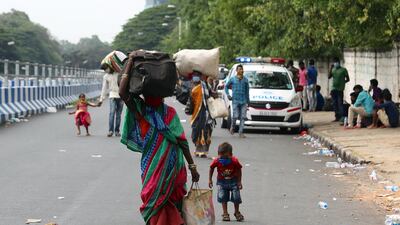
Benguluru, Karnataka, May 23. Jagadeesh NV/ EPA -
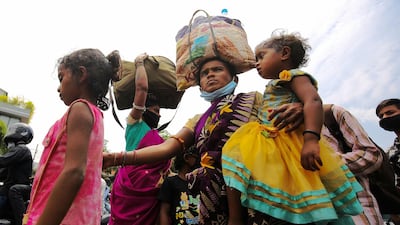
Indian migrant labourers arrive with their children to get train tickets at palace grounds, Benguluru, India, May 23. Jagadeesh NV/ EPA -
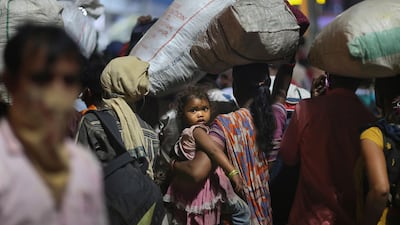
Migrant workers line up to board trains to their home states, at the railway station in Hyderabad, May 23. Mahesh Kumar A / AP -
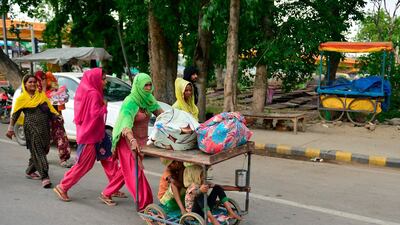
Labourers walk hoping for for transportation to go back to their hometowns, Allahabad on May 24. Sanjay Kanojia/ AP -
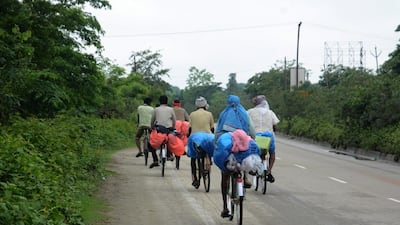
Workers on bicycles on their way to their native places in Bihar from Golaghat district, at Nalbari district of Assam, May 24. EPA -
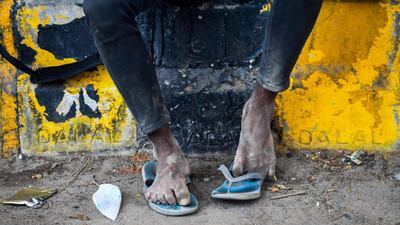
A migrant worker resting beside a street in Ghaziabad on the outskirts of New Delhi, May 20. Prakash Singh / AFP -
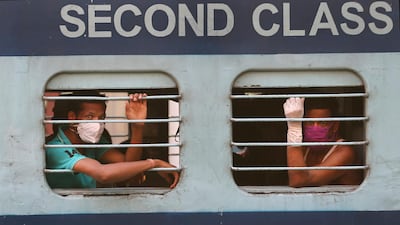
Indian migrant workers onboard a train in Hyderabad, India as they return to their villages, May 23. Mahesh Kumar A/ AP


In New Delhi, a group of lawyers set up an initiative called "Serving the Shramiks" – shramik in Hindi means labourer – and liaised with the Indian Railways and other government agencies to send home 100,000 labourers aboard special trains. On some of these trains, the state was unable to provide food for journeys that lasted as long as 40-50 hours. "Serving the Shramiks" worked with an NGO to provide bread, biscuits, fruit, rehydration salts and two litres of water for each passenger.
When the lawyers sought donations, Jyoti Pande Lavakare, an activist and writer, rightly said: "I will give a donation because you are doing great work, but what about the taxes I pay to this government to look after the needy?"
These days, the ultimate act of self-reliance is undertaken by Indians who can afford it: buying oxygen concentrator machines. The stories doing the rounds on social media of coronavirus-positive patients being turned away from hospitals are so disturbing that local residents' welfare associations are hiring these machines in case of an emergency. Families have been reportedly driving around the city, sometimes for days, just to find a hospital bed for someone who has developed breathing problems.
-
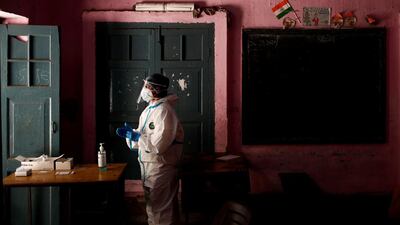
A medical worker waits for the next person to get tested at a school turned into a centre to conduct tests for coronavirus in New Delhi, India. Reuters -
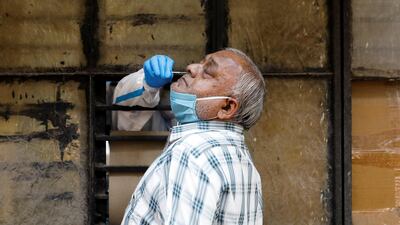
A medical worker collects a sample from a man at a school turned into a centre in New Delhi. Reuters -
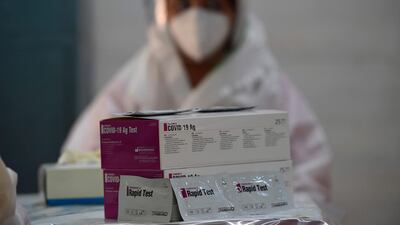
A medical worker waits for people to be tested with rapid antigen test (RAT) for the Covid-19 coronavirus in New Delhi. AFP -
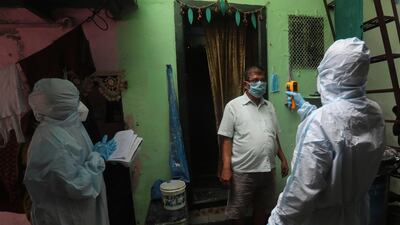
A doctor checks the temperature of a man during a free medical camp in Dharavi, one of Asia's largest slums, in Mumbai. AP -
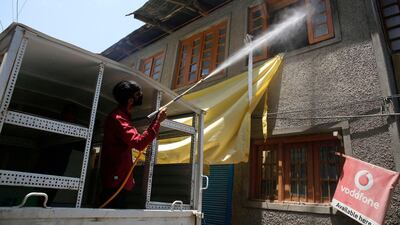
A government municipal worker sprays disinfectant in area during a funeral in Srinagar. EPA -
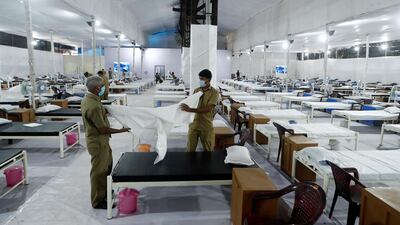
Workers prepare a bed at a recently constructed quarantine facility for patients diagnosed with the Covid-19 in Mumbai. Reuters -

A Hindu devotee performs rituals in Mumbai. AP -
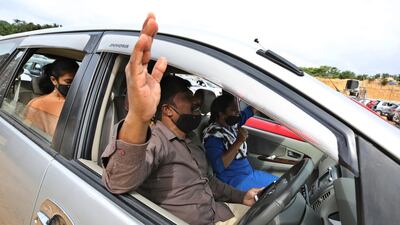
Faithful attend a drive-in mass in an open area of Bethel AG Church as part of maintaining social distancing to prevent the spread of coronavirus in Bengaluru. AP -
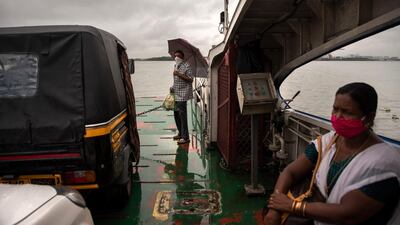
Commuters travel in a ferry during rain in Kochi, Kerala state. AP -
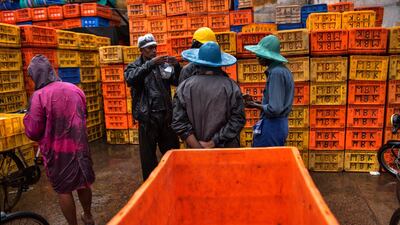
A man prepares to wear his mask as fish vendors chat on a rainy day in Kochi, Kerala state. AP -
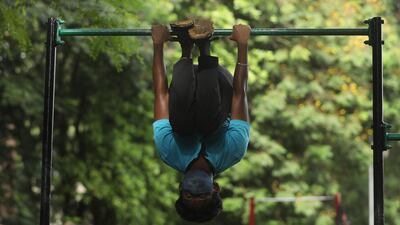
A boy exercises at a park after a few restrictions were relaxed during a lockdown in Mumbai. Reuters -
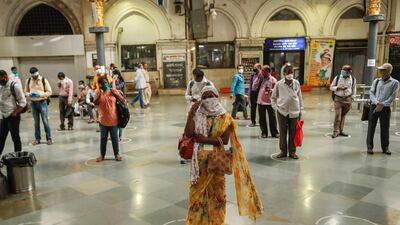
Commuters stand inside circles to maintain social distancing as they wait to board a train at a railway station after some restrictions were lifted in Mumbai. Reuters -
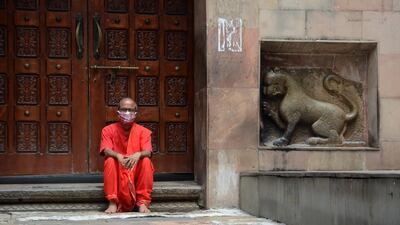
The President of Kamakhya Temple Committee in front of the main entrance gate of Kamakhya temple. AFP


One night, Meenakshi Prasad, a receptionist working in a clinic in New Delhi, began struggling to breathe. “She was turning blue, her chest was heaving violently and her eyes beginning to bulge, it was so sudden,” her son said. And even though her condition worsened, four "top" private hospitals turned her away.
It is hardly surprising then to hear stories of suppliers of oxygen machines in the city running out of stocks. If it is not residents' welfare associations snapping them up; it is families buying or renting them so that they at least have oxygen supplies at home during an emergency.
According to a report in The Times of India, morgues and crematoriums in New Delhi are deluged, and hospital beds are impossible to get even for the most well connected. But it has taken two months for Delhi Chief Minister Arvind Kejriwal to begin his government's hunt for stadiums, grounds and large buildings that can be repurposed as makeshift hospitals or quarantine centres.
Today, the city of 16 million has almost 60,000 coronavirus cases and it already feels as though a monstrous pestilence is stalking the streets. The question is, if and when infections soar to half a million by the end of July, as Deputy Chief Minister Manish Sisodia expects them to, what then?
Even affluent Indians realise that what had so far been unimaginable – the prospect of people dying in the street – is now conceivable. “You can have money. You can have connections and know influential people, but it doesn’t mean anything," said Rajiv Katria, adviser to a residents’ association in New Delhi. "You can still die waiting for a bed or oxygen.”
Meanwhile, even as the migrant labourers made their long journey home, their silence was telling. They did not protest, start a riot or seek attention. They kept their eyes fixed on the road ahead. There was little anger, for they have come to expect little.
In the absence of bus and train services, they organised their own transportation – on foot. And perhaps the greatest example of official indifference was that when the Indian Railways belatedly organised special trains, 85 per cent of the labourers – rendered homeless and jobless overnight – were made to pay for their tickets.
Amrit Dhillon is a freelance journalist based in New Delhi

