The effects of a huge explosion that rocked the Lebanese capital of Beirut on Tuesday are no doubt terrible and the human and economic costs heartbreaking.
The Lebanese government declared soon after the explosion, which occurred in the warehousing area of the city's port, that it was the result of some 2,700 tonnes of ammonium nitrate detonating. The ammonium nitrate had been stored in these warehouses since 2014, when a Moldovan-flagged ship transporting it from Georgia to Mozambique got stranded in Beirut, as she was not seaworthy. Her cargo was unloaded and apparently left in storage in Beirut's port for years.
But in the era of social media and smartphones, images and videos of the explosion were uploaded to Twitter within minutes for all to see. And so began the inevitable amateur theorising on the cause and motivation for the blast.
Given Lebanon’s fractious and often violent history, various theories started being bandied around, but most focused on the idea that this might be an air strike. Unsurprisingly, the culprit was quickly identified by online sleuths as Israel. Some even suggested that the mushroom cloud from the explosion indicated the use of a nuclear weapon – which would be the first use in anger of such a device since 1945.
The timing was auspicious to fuel such theories – Israel fired artillery shells over Lebanon's southern border last week, to thwart what it called an infiltration attempt by Hezbollah fighters. And just hours after the Beirut explosion, the Israel Defence Force announced that it had indeed launched an airstrike – but in Syria.
Other amateur detectives pointed to non-state actors to explain the unusual explosion. Lebanon has been the unfortunate host of some of the larger and more consequential non-state attacks in recent decades.
-

Emergency aid is loaded onto plane at Dubai airport on Wednesday to support Beirut after the port explosion. On Thursday, the UAE's leaders pledged millions more in in funding and tonnes of equipment for the relief effort. Chris Whiteoak / The National -
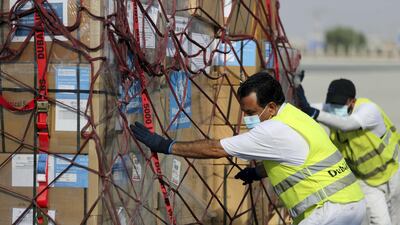
Aid includes medical equipment to treat injured patients and protect medical staff. Chris Whiteoak / The National -
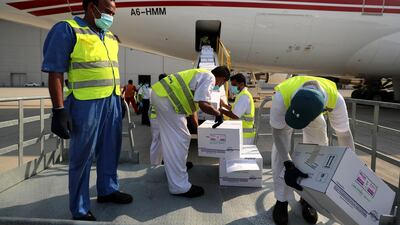
Aid is loaded on a plane to Lebanon at Dubai airport to support Beirut after the explosion. Chris Whiteoak / The National -

Aid is loaded on a plane to Lebanon at Dubai airport to support Beirut after the explosion, Dubai. Chris Whiteoak / The National -
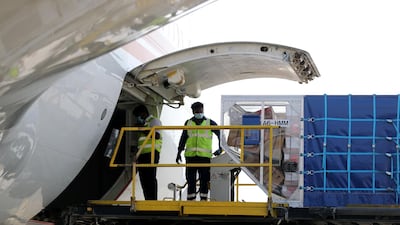
Aid is loaded on a plane to Lebanon at Dubai airport to support Beirut after the explosion. Chris Whiteoak / The National -
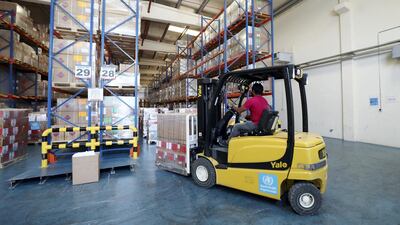
Staff from the WHO and Red Cross and Red Crescent sprung into action on Tuesday night as the death and injury toll in Beirut became clear. -
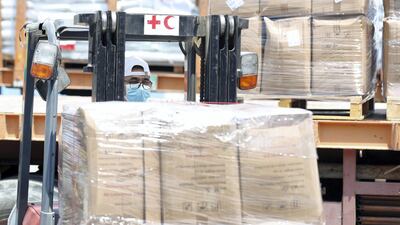
The first flight will carry 40 tonnes, mostly bandages, syringes and other medical equipment. Food shipments are expected to follow. -
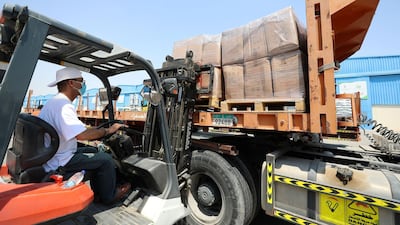
Medical aid is loaded on to a truck at International Humanitarian City in Dubai. All photos by Chris Whiteoak / The National -
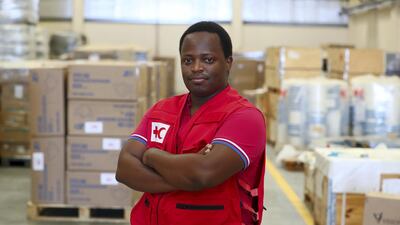
George Maina, warehouse manager for IFRC, pictured at Humanitarian City outside Dubai. -
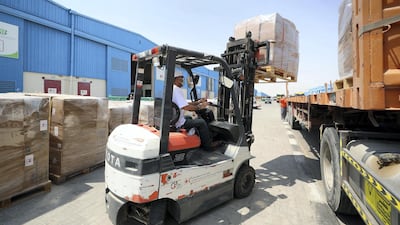
Staff worked quickly to prepare the shipment for a cargo flight on Wednesday afternoon. -
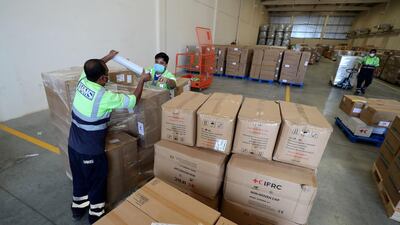
Staff worked quickly to prepare the shipment for a cargo flight on Wednesday afternoon. -
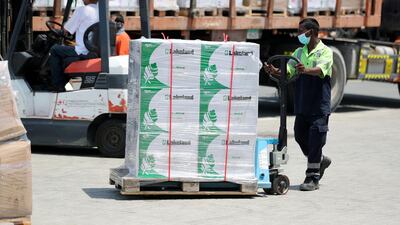
Staff worked quickly to prepare the shipment for a cargo flight on Wednesday afternoon. -
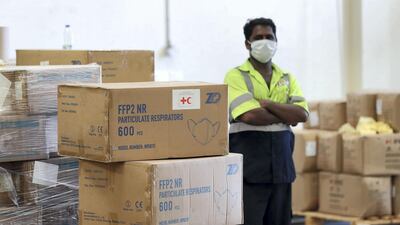
WHO, Red Cross and Red Crescent societies donated the shipment. -
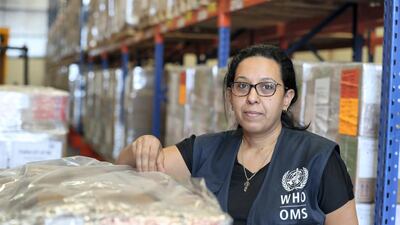
Nevien Attalla, operations manager for WHO's Dubai hub, said the shipment had to double in size once the scale of the situation became clear.


In October 1983, two truck bombs in Beirut killed 241 US service personnel and 58 French paratroopers in an attack attributed to Hezbollah. In February 2005, another truck bomb killed former Lebanese prime minister Rafik Hariri, helping to trigger the Cedar Revolution of that year that led to the withdrawal of Syrian troops from the country. The fact that the verdict from the more than decade-long international tribunal into Hariri's death is due on Friday only fuelled theories that it may be related to the former prime minister's death.
Attacks are not, unfortunately, a rare occurrence in Beirut. Dozens of explosions have occurred in recent years, targeting Hezbollah, Iranian assets, Lebanese politicians, the Lebanese Army, journalists, Alawites and many others. Lebanon’s internal rivalries, Syria’s state interests, and the Syrian war have all led to violence on the streets of Beirut.
Given this history, it is perhaps unsurprising that the usual suspects would be blamed – whether Israel, Syria or non-state actors. Remarks by US President Donald Trump on Tuesday night will only have fuelled such rumours, with the president suggesting that "great generals" had told him they "think it was an attack." But analysis of the details of the explosion suggest that, in fact, the Lebanese government's explanation is more likely to be correct.
While the advent of social media has turbo-charged the dissemination of wild theories about such events, it also allows considered analysis from a range of different sources in a short period of time. The crater caused by the explosion, for instance, allows for rough estimates of the size of the explosion by measuring its size and depth.
Similarly, footage of damage to buildings hundreds of metres away from the explosion enable a rough calculation of the blast overpressure – the pressure caused by the blast wave. Both data points suggest an explosion equivalent to hundreds of tonnes of TNT, orders of magnitude greater than any terrorist attack in history. The 1983 bombing in Beirut, which devastated the Marine barracks, involved the equivalent of less than 10 tonnes of TNT. More than 2,700 tonnes of ammonium nitrate could certainly create an explosion of that size.
The footage also provided other clues that suggested that ammonium nitrate may have been the source of the explosion – the red cloud seen is indicative of nitrogen dioxide, which is produced during an ammonium nitrate explosion. And the mushroom cloud does not necessarily suggest a nuclear explosion, even though in popular culture the two are inextricably linked.
-
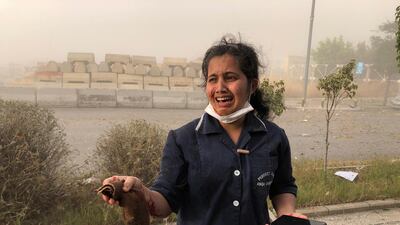
A migrant worker reacts in shock following an explosion at the Beirut port. EPA -
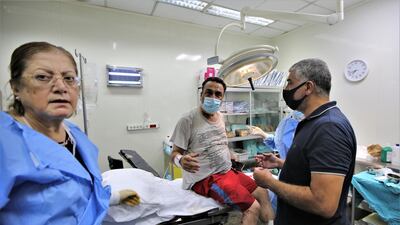
A man injured in the Beirut Port explosion receives treatment at Najjar Hospital in Al Hamra area in Beirut. EPA -

People injured in the Beirut Port explosion receive first aid at Najjar Hospital in Al Hamra area in Beirut. EPA -
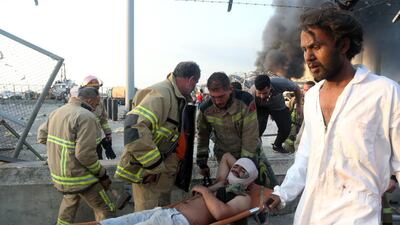
An injured man is rescued from the scene of an explosion at the Beirut port. EPA -
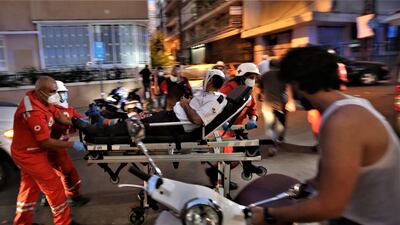
Medics shift an injured person from Najjar Hospital to another hospital in Al Hamra area in Beirut after port explosion. EPA -
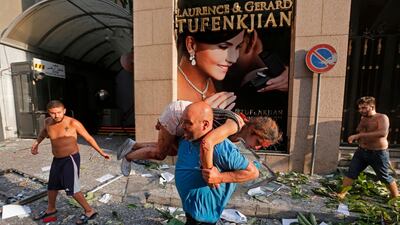
A man carries an injured girl while walking through debris in the Achrafiyeh district in Lebanon's capital Beirut. AFP -
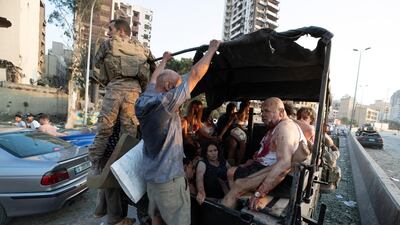
Injured people are rescued after a massive explosion in Beirut. AP Photo -
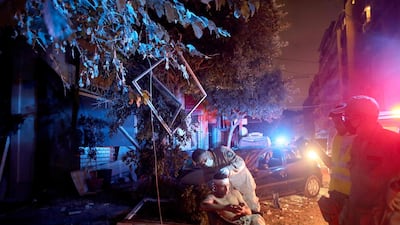
A rescue worker tends to an injured man following an explosion at the port of Beirut. AFP -

An injured man sits outside American University of Beirut medical centre following an explosion in Beirut. Reuters -
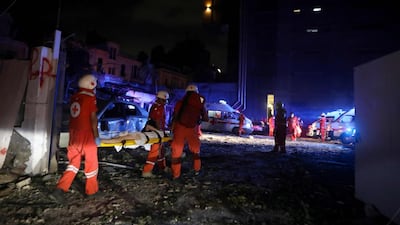
Lebanese Red Cross officers carry an injured woman following an explosion at the port of Beirut. AFP -
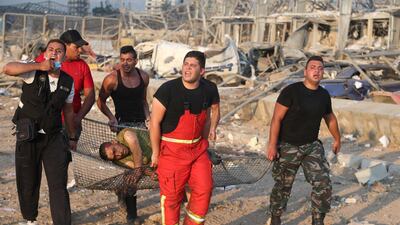
An injured man is taken from the scene of explosion at the Beirut port. EPA -
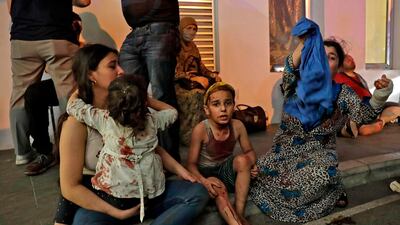
Wounded people wait to receive help outside a hospital following the explosion in Beirut. AFP -
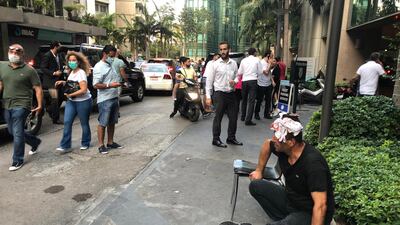
An injured man sits in shock on the pavement following an explosion at the Beirut port. EPA -
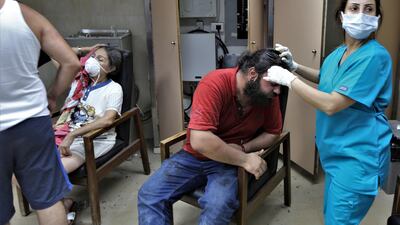
People injured in the Beirut port explosion receive first aid at Najjar Hospital in Al Hamra area in Beirut. EPA -

A man tries to walk in the mud near the scene of explosion at the Beirut port. EPA


Mushroom clouds are formed when an explosion creates a hot bubble of gas that rises and expands quickly, which can occur either through a nuclear device ionising the air around it or a conventional explosion emitting large amounts of gas. Similar clouds were seen when a fertiliser plant exploded in Texas in 2013, for instance.
Images also began to circulate on social media of a warehouse, with its doors open, storing large bags labelled ‘Nitropill HD’, suggesting the contents may have been ammonium nitrate prills (small pellets), a common form of production for ammonium nitrate when used in fertilisers or for mining explosives. The markings on the doors of the warehouse appear to match the doors of the warehouse in Beirut’s port where the explosion occurred.
Video of the explosion also appeared to show a series of smaller explosions occurring between the two much larger explosions. These smaller explosions could be owing to fireworks, munitions or smaller amounts of ammonium nitrate detonating.
75 years since the Hiroshima attack
The evidence currently available thus appears to corroborate the government’s explanation. There does appear to have been a store of ammonium nitrate in Beirut’s warehousing district and the physical characteristics of the blast are similar to what one would expect when such a large amount of ammonium nitrate explodes. This makes an air strike highly unlikely. A terrorist group could theoretically have been made aware of the ammonium nitrate storage and decided to detonate the store to create havoc but such an indiscriminate attack would be very unlike any of Beirut’s previous targeted attacks.
The most likely explanation is therefore an accidental detonation of poorly stored ammonium nitrate. The question that remains, then, is why such a large amount of ammonium nitrate was kept for so long in the port in unsafe conditions. Was it bureaucratic negligence, international legal complications or something else? No doubt the online theorists will soon speculate.
Christian Le Miere is founder of the strategic consultancy Arcipel and Associates. He was a senior adviser to an entity in Abu Dhabi and a senior fellow at the International Institute for Strategic Studies, in London

