

On Tuesday, a court in Syria handed down death sentences to former president Bashar Al Assad, his brother Maher Al Assad and security official Atif Najib, along with six other former regime officials, on charges of murder and torture. For many Syrians, it was a landmark moment. The ruling, which was handed down in absentia for the Assad brothers, marks a symbolic acknowledgment of decades of repression, torture and mass killing.
Yet despite the news being welcomed by most Syrians, the ruling also felt heavy and loaded. An old quote attributed to the American writer Lois McMaster Bujold came to mind: “The dead cannot cry out for justice. It is a duty of the living to do so for them.”
The word that has stayed with me this week is “duty”. A duty to justice bears down heavily in Syria. During a visit to the country of my mother last year, it seemed to me to be one of the most pressing matters on people’s minds. While in Damascus, I attended a conference themed “The Path to Justice”, where the question many in the audience asked was: “How quickly can we expect justice?” This was hardly surprising.
In a nation where so many have suffered personal, tragic losses for more than 15 years, the duty of justice doesn’t sit only with the judges or prosecutors, but with the living relatives and friends of those who have been denied it for so many years.
We tend to think of justice as a destination. A verdict that, when delivered, will mean it is served. The guilty are named, and the case is closed. This week was a useful reminder of how much messier it can be or feel.
Several questions came to mind on Tuesday. Is this the right form of justice? Who gets to decide what accountability looks like? Is a death sentence a fair result? And does it all even matter after hundreds of thousands have died, after millions have been displaced, after families have spent years searching for loved ones who will never come home? Can it ever be enough?
Following the announcement, a Syrian colleague and I considered letting out a “zalghouta”, the traditional ululation used to celebrate joyous occasions. It’s how many Syrians across the country reacted to the ruling.
Instead, we thought about all the children, women and men who never lived to see this day. The prisoners tortured in Sednaya. The parents who died not knowing where their children were buried. The families who are still waiting to identify the remains of loved ones from the mass graves, among the many atrocities and injustices committed with the purpose of keeping the Assad regime in power.
No court ruling can return those lives. No sentence can restore stolen childhoods or erase decades of fear. That is why justice itself can often feel unjust. Its purpose is not to undo the past, of course; that is impossible. Its purpose is to acknowledge it.
What we often overlook when pursuing justice is how prepared we should be for just how unsatisfying it can be when it’s delivered.
I’ve also had to remind myself this week that justice is often a means to establish a public record that “these crimes happened” and that “these people were responsible”. Perhaps that is the true duty of justice.
-
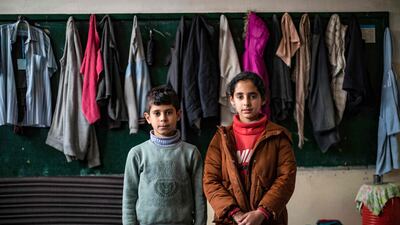
Twins Maha, right, and Mohammad Al Obaid, 11, were born in 2011, the year the Syrian war started. Displaced from Ras Al Ain in north-east Syria three years ago, they are pictured at a school on the outskirts of north-eastern city Hassakeh. All photos: AFP -
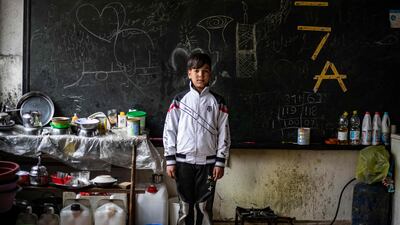
Nimr Alaywi, 11, who was also displaced from Ras Al Ain three years ago, at a school near Hassakeh. -
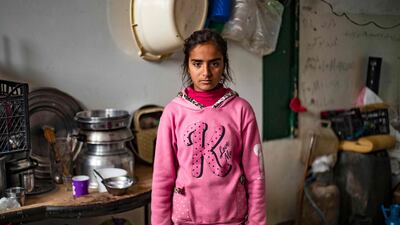
Amani Mahmud, 11, whose family fled Ras Al Ain, pictured at the school near Hassakeh. According to some estimates, 13.3 million Syrians have fled their homes since the civil war began on March 15, 2011. -
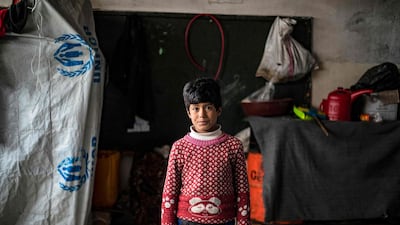
Mohammad Issa, 11, who was also displaced from Ras Al Ain, at the school near Hassakeh. -
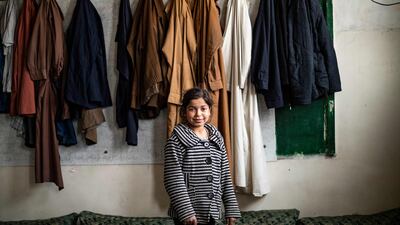
Assil Alaywi, 11, whose family also fled Ras Al Ain for Hassakeh three years ago. Ras Al Ain was the scene of heavy fighting for much of the conflict. -
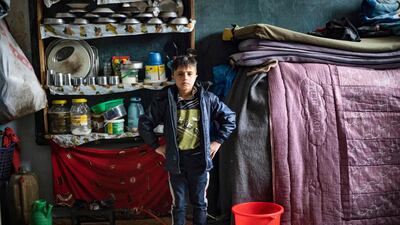
Yazan Khodr, 11, at the school near Hassakeh, after his family fled Ras Al Ain. Various groups, including Syrian government forces, extremists and Kurdish fighters, vied for control of Ras Al Ain. -
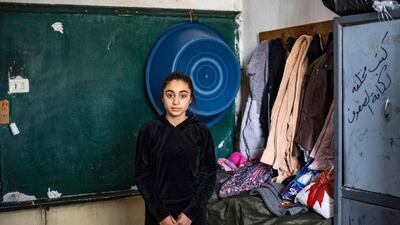
Liana Ali, 11, in the school building on the outskirts of Hassakeh. -

Manaf Mahmud, 11, pictured at the school near Hassakeh. Around four million people, at least half of them displaced, now live in the northern region. -
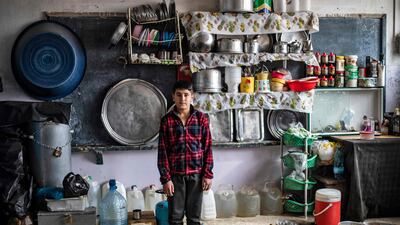
Ahmad Abderrazzak, 11, at the school near Hassakeh. -
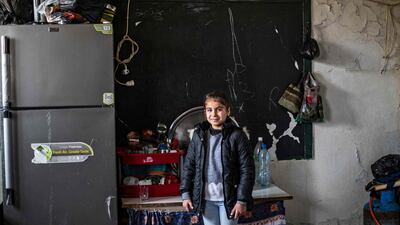
Fatima Barkal, 11, at the school near Hassakeh. -
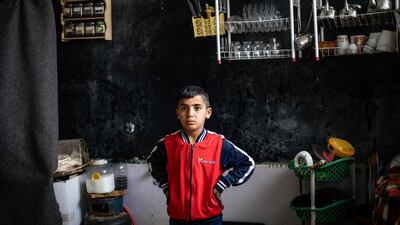
Ammar Al Khodr, 11, at the school near Hassakeh. -
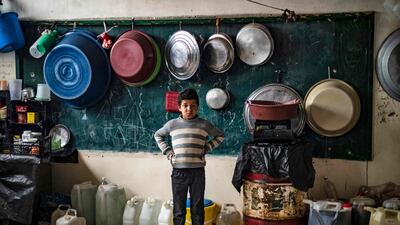
Majd Hassan, 11, at the school near Hassakeh, north-east Syria.



