

Last Saturday, legislators and rank-and-file members of Japan’s governing Liberal Democratic Party voted to pick Sanae Takaichi as their next leader. This means that if the 64-year-old MP wins a simple majority next week in both houses of the National Diet, as Japan’s Parliament is called, she will become the country’s first female prime minister.
High approval ratings for Ms Takaichi in two nationwide surveys conducted after the intra-party election tell us that the public's mood regarding its immediate future is one of cautious optimism. This shouldn’t surprise anyone.
If Ms Takaichi wins the Diet vote, she will not only break the proverbial glass ceiling but also replace the widely unpopular incumbent, Shigeru Ishiba. Another reason for heightened public expectations could be the much-touted economic goodie bag, full of tax breaks and policies aimed at stimulating growth, that she intends to unpack once in office.
But despite the LDP faithful rallying behind Ms Takaichi’s candidacy, and regardless of the uptick in public support for the prime minister-in-waiting, one can’t help but wonder whether this moment might also mark the beginning of the end of Japan’s most dominant party.
The LDP has in recent years become increasingly fractious and scandal ridden. It has cycled through four prime ministers in the past five years. Its overall approval ratings and its vote share in consecutive elections have been consistently underwhelming. Today, it doesn’t command a majority in either house of the Diet, and it runs a minority government along with its lone coalition partner, Komeito. It is in power only because the opposition is disunited.
However, it isn’t the number of MPs that raises doubts about the LDP’s long-term viability, but the broader political climate that has come to dominate many democracies globally in recent years.
Around the world, several moderate and catch-all parties like the LDP are facing an existential crisis, having constantly ceded ground to right-wing populist forces. The UK’s Conservatives, France’s Republicans and the Indian National Congress are notable examples of this global trend. Once firmly ensconced in government, some of them are today on the road to decline.

The LDP, a centre-right party that’s been in power for almost all of its 70-year existence, has also been trapped inside this populist tornado.
Recently founded movements like the Japan Innovation Party (2015), the Democratic Party for the People (2018) and Sanseito (2020) have an ideological affinity towards the LDP’s right flank. Key among them are broadly speaking socially conservative, wary of immigration and supportive of tax cuts. Some are even hawkish on national security and seek a more assertive Japan on the global stage.
Despite policy overlaps, however, some of these parties are purely populist both in style and substance, and don’t appear to be broadening their tents just yet. They are run by younger and savvier politicians, who have attracted droves of youngsters, fed up with politics as usual, to rallies and voting booths.
As is the case in the West, their rise has been attributed mostly to economic and social changes. Japan in recent years has been reeling from inflation, rise in living costs, slow growth, stagnant household wages and a lag in productivity. A culture war is also brewing over immigration. While foreigners make up only 3 per cent of its population, that figure is double what it was just over a decade ago – a discomfiting surge for an island nation as homogenous and inward-looking as Japan.
But the LDP’s decline in recent elections cannot fully be explained by these external circumstances. It is also the profound failure to address corruption within its ranks that has turned away so many of its supporters, particularly in light of two recent scandals.
One is the deep ties a number of LDP members were found to have with the Unification Church, a controversial South Korean-based religious movement that allegedly received preferential treatment in exchange for political donations – and eventually led to the assassination of former prime minister Shinzo Abe by an unemployed former soldier in 2022.
The second is a funding scandal that emerged a year later, in which major factions within the party were alleged to have broken the law by failing to report hundreds of millions of yen raised from selling tickets to fundraising events while allocating the missing money to dozens of legislators as kickbacks.
-

A man suspected of shooting former Japanese prime minister Shinzo Abe is tackled to the ground by police at Yamato Saidaiji Station in Nara. Abe was pronounced dead in hospital. AFP -

A man believed to be former Japanese prime minister Shinzo Abe is carried on a stretcher upon arrival at a hospital in Kashihara, Nara Prefecture, in western Japan. Reuters -

Police officers at the scene where Abe was shot at a political event in Nara on Friday. Bloomberg -

People watch TV news reports on Abe's condition after the shooting. AP -

The shooting shocked a nation where gun violence is rare. AP -

Abe suffered a cardiac arrest and was taken to the hospital. Reuters -

He was not showing any vital signs of life upon being admitted to hospital, officials said. AP -

He was shot during a campaign rally before Sunday's vote to elect politicians to Japan's upper house of Parliament. Reuters -
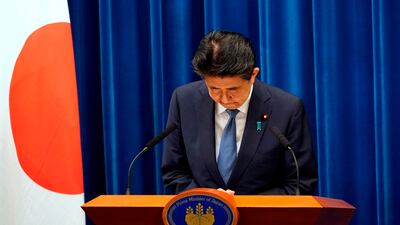
He stepped down as prime minister in 2020 due to health problems. Reuters -
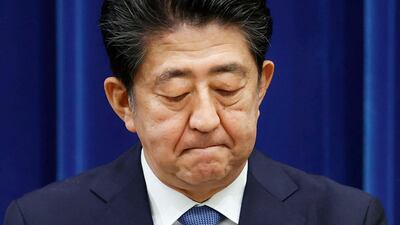
Abe's term made him Japan's longest-serving prime minister. AP


Failing to adequately address these and other internal issues is a key, yet underappreciated, reason for disaffected and disillusioned supporters looking elsewhere. Yet the LDP seems to focus a great deal more on treating the symptom rather than the disease. Instead of engaging in serious introspection, ushering in reforms to internal structures and thinking of fresh ideas to re-animate its voters, the party has chosen to co-opt its rivals’ populist politics by lurching further to the right.
This mostly explains why it has chosen as its leader Ms Takaichi, who – despite her origin story as a self-made female politician in a male-dominated profession – was easily the most hardline of the five candidates vying for the party’s top job last week.
Yet Ms Takaichi has been around long enough to know that, like Mr Abe, her ideological mentor, she too will need to temper her political instincts often, whether on foreign or domestic policy, and govern from the centre – thereby further disappointing far-right voters. At the same time, lack of majorities in the Diet will force her to indulge the same trio of populist parties that the LDP is trying to outdo – whether through co-option or competition – to pass important pieces of legislation. Talks to find accommodation are reportedly already under way.
The party’s rightward tilt, even as it attempts to retain its broad-based support, is bound to create unwelcome friction within and perhaps even fuel an identity crisis, which would be unprecedented.
But nothing is set in stone. Can the LDP still do better than its global contemporaries to stave off the populist surge? Will it give up so much space to its rivals as to become irrelevant one day? Or will it morph into a populist version of itself – like the Republican Party has under US President Donald Trump?
What the future holds for the party will depend on how Japan’s electorate evolves. But the LDP, more than any other force on the ground, still has agency to mould it in its favour.

