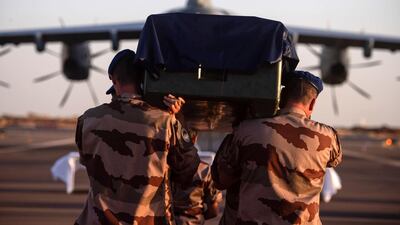
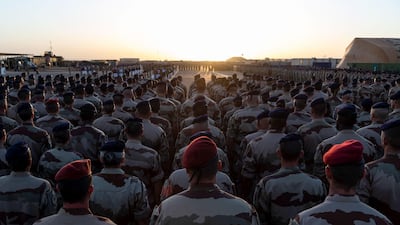
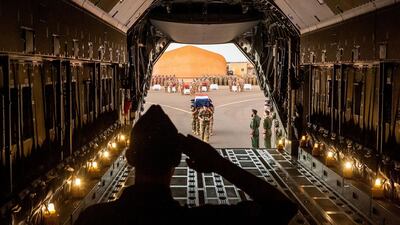
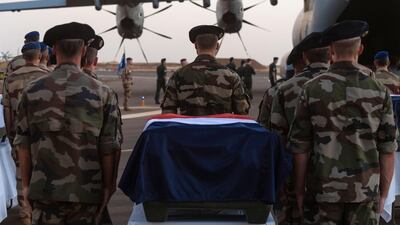
Last month, France’s armed forces finished dismantling their bases in Senegal, the last West African country to have hosted a permanent French military presence. The withdrawal marked the final chapter of a French retreat from the region that began in Mali in 2022 and was followed by closures in Burkina Faso, Chad and Niger.
At first, the pressure on Paris seemed to have been driven by the rise of new rulers in the Sahel and their growing frustrations with the French regional counterterrorism operation called Barkhane. However, the momentum eventually extended beyond the Sahel to include countries such as the Ivory Coast, Gabon and Senegal. Paris now maintains only one permanent military outpost in Africa – in Djibouti.
From a French standpoint, this highlights the necessity to reduce the country’s global military footprint. Given the refocus on European security amid the war in Ukraine, France could no longer afford this costly presence. As one high-ranking defence official told me last month, “the Ukraine war leaves us no bandwidth for anything else”.
France is not the only western power to withdraw from the region. Since last September, the US military has also left Niger. Like Paris, Washington’s presence in Africa is now limited to a base in Djibouti.
The departure of western forces from the Sahel and surrounding countries builds on a shared regional desire to part ways with former colonial powers and chart their own trajectories. But even as they begin new chapters, new questions emerge for their governments.
There is little doubt that western forces failed to defeat terrorist groups based in the region. But without their support, local militaries have struggled to stem the rising tide of extremism, forcing their political masters to turn elsewhere for help. Enter Russia and Turkey, both of which are providing security assistance to these countries, although the nature and extent of their respective partnerships remain unclear.
Russia initially increased its footprint in Africa primarily through the deployment of the Wagner Group in countries like the Central African Republic, Chad, Mali and Burkina Faso. However, after a failed mutiny led by the group’s founder, Yevgeny Prigozhin, against Moscow in August 2023, its influence has declined. Given the demands of the war in Ukraine, a surge in Russian troops in West Africa is unlikely. The Kremlin has instead sought to replace Wagner with a paramilitary group called the Africa Corps.
Meanwhile, Ankara’s ties with several West African countries have grown in earnest over the past three years, particularly in arms sales. Burkina Faso, Mali and Niger have procured the well-known Turkish Bayraktar TB2 drone, and Turkey’s defence industry has delivered armoured vehicles and light attack aircraft to local militaries. While it isn’t clear what role the Turkish private security company Sadat is playing in the region, Ankara has acknowledged having negotiated access to a military base in Chad. Nonetheless, this does not amount to a robust deployment of troops.
In other words, even as the aforementioned West African countries are diversifying their respective security arrangements, these new partnerships do not compensate for the co-operation frameworks they once had with western countries like France and the US.
In addition to the uncertainties of security assistance, the cutting of US development aid is equally worrisome. The current US administration’s decision to close USAID has had direct implications for West Africa, where governments rely heavily on foreign aid. More than a third of government spending in countries like Mali, Burkina Faso and Niger has traditionally come from international assistance.
History teaches us that the collapse of governance and the unchecked rise of terrorism in one region eventually spreads to others
The severe reduction of US support will undoubtedly affect the ability of these states to provide basic services. Underdevelopment and misgovernance are already fuelling the growth of terrorism in West Africa. For years, terrorist groups have found new recruits in the rural areas abandoned by local governments. For sure, the emphasis placed on military-centric responses by France and the US, through counterinsurgency operations, did not bring about enduring stability. But the inability of key West African governments to address the social and economic grievances of their populations perpetuates this predicament.
Today, all indicators point to an increase in terrorist attacks across West Africa.
In Burkina Faso, it is believed that groups like Al Qaeda and ISIS control 40 per cent of the territory. In Mali, military bases are constantly under attack from these groups. The rise of Jamaat Nusrat Al Islam Wal Muslimin – a coalition of extremist factions that includes a local branch of Al Qaeda – reflects this trend. Though JNIM emerged in Mali, it now conducts operations across the region, including in Togo, Benin and the Ivory Coast. JNIM claimed more than 240 attacks in the first half of this year alone, double the number for the same period last year.
None of this bodes well for West Africa, which can now be considered the centre of terrorist operations worldwide. For now, governments in the West and the Middle East may consider this to be a regional issue, and one that does not affect their security interests. However, history teaches us that the collapse of governance and the unchecked rise of terrorism in one region eventually spreads to others.
The rest of the world will do well to pay heed.

UAE currency: the story behind the money in your pockets
The%20specs%3A%202024%20Mercedes%20E200
%3Cp%3E%3Cstrong%3EEngine%3A%20%3C%2Fstrong%3E2.0-litre%20four-cyl%20turbo%20%2B%20mild%20hybrid%0D%3Cbr%3E%3Cstrong%3EPower%3A%20%3C%2Fstrong%3E204hp%20at%205%2C800rpm%20%2B23hp%20hybrid%20boost%0D%3Cbr%3E%3Cstrong%3ETorque%3A%20%3C%2Fstrong%3E320Nm%20at%201%2C800rpm%20%2B205Nm%20hybrid%20boost%0D%3Cbr%3E%3Cstrong%3ETransmission%3A%20%3C%2Fstrong%3E9-speed%20auto%0D%3Cbr%3E%3Cstrong%3EFuel%20consumption%3A%20%3C%2Fstrong%3E7.3L%2F100km%0D%3Cbr%3E%3Cstrong%3EOn%20sale%3A%20%3C%2Fstrong%3ENovember%2FDecember%0D%3Cbr%3E%3Cstrong%3EPrice%3A%20%3C%2Fstrong%3EFrom%20Dh205%2C000%20(estimate)%3C%2Fp%3E%0A
Starring: Jamie Foxx, Angela Bassett, Tina Fey
Directed by: Pete Doctor
Rating: 4 stars
Specs
Engine: 51.5kW electric motor
Range: 400km
Power: 134bhp
Torque: 175Nm
Price: From Dh98,800
Available: Now
Skoda Superb Specs
Engine: 2-litre TSI petrol
Power: 190hp
Torque: 320Nm
Price: From Dh147,000
Available: Now
UAE currency: the story behind the money in your pockets
Dengue%20fever%20symptoms
%3Cp%3EHigh%20fever%20(40%C2%B0C%2F104%C2%B0F)%3Cbr%3ESevere%20headache%3Cbr%3EPain%20behind%20the%20eyes%3Cbr%3EMuscle%20and%20joint%20pains%3Cbr%3ENausea%3Cbr%3EVomiting%3Cbr%3ESwollen%20glands%3Cbr%3ERash%26nbsp%3B%3C%2Fp%3E%0A
Jetour T1 specs
Engine: 2-litre turbocharged
Power: 254hp
Torque: 390Nm
Price: From Dh126,000
Available: Now
Company%C2%A0profile
%3Cp%3E%3Cstrong%3ECompany%20name%3A%20%3C%2Fstrong%3ELeap%0D%3Cbr%3E%3Cstrong%3EStarted%3A%20%3C%2Fstrong%3EMarch%202021%0D%3Cbr%3E%3Cstrong%3EFounders%3A%3C%2Fstrong%3E%20Ziad%20Toqan%20and%20Jamil%20Khammu%0D%3Cbr%3E%3Cstrong%3EBased%3A%3C%2Fstrong%3E%20Dubai%0D%3Cbr%3E%3Cstrong%3ESector%3A%20%3C%2Fstrong%3EFinTech%0D%3Cbr%3E%3Cstrong%3EInvestment%20stage%3A%20%3C%2Fstrong%3EPre-seed%0D%3Cbr%3E%3Cstrong%3EFunds%20raised%3A%3C%2Fstrong%3E%20Undisclosed%0D%3Cbr%3E%3Cstrong%3ECurrent%20number%20of%20staff%3A%20%3C%2Fstrong%3ESeven%3C%2Fp%3E%0A
The%20specs
%3Cp%3E%3Cstrong%3EEngine%3A%20%3C%2Fstrong%3E77kWh%202%20motors%0D%3Cbr%3E%3Cstrong%3EPower%3A%20%3C%2Fstrong%3E178bhp%0D%3Cbr%3E%3Cstrong%3ETorque%3A%20%3C%2Fstrong%3E410Nm%0D%3Cbr%3E%3Cstrong%3ERange%3A%20%3C%2Fstrong%3E402km%0D%3Cbr%3E%3Cstrong%3EPrice%3A%20%3C%2Fstrong%3EDh%2C150%2C000%20(estimate)%0D%3Cbr%3E%3Cstrong%3EOn%20sale%3A%20%3C%2Fstrong%3ETBC%3C%2Fp%3E%0A
Countries offering golden visas
UK
Innovator Founder Visa is aimed at those who can demonstrate relevant experience in business and sufficient investment funds to set up and scale up a new business in the UK. It offers permanent residence after three years.
Germany
Investing or establishing a business in Germany offers you a residence permit, which eventually leads to citizenship. The investment must meet an economic need and you have to have lived in Germany for five years to become a citizen.
Italy
The scheme is designed for foreign investors committed to making a significant contribution to the economy. Requires a minimum investment of €250,000 which can rise to €2 million.
Switzerland
Residence Programme offers residence to applicants and their families through economic contributions. The applicant must agree to pay an annual lump sum in tax.
Canada
Start-Up Visa Programme allows foreign entrepreneurs the opportunity to create a business in Canada and apply for permanent residence.
Secret Nation: The Hidden Armenians of Turkey
Avedis Hadjian, (IB Tauris)
Mercer, the investment consulting arm of US services company Marsh & McLennan, expects its wealth division to at least double its assets under management (AUM) in the Middle East as wealth in the region continues to grow despite economic headwinds, a company official said.
Mercer Wealth, which globally has $160 billion in AUM, plans to boost its AUM in the region to $2-$3bn in the next 2-3 years from the present $1bn, said Yasir AbuShaban, a Dubai-based principal with Mercer Wealth.
“Within the next two to three years, we are looking at reaching $2 to $3 billion as a conservative estimate and we do see an opportunity to do so,” said Mr AbuShaban.
Mercer does not directly make investments, but allocates clients’ money they have discretion to, to professional asset managers. They also provide advice to clients.
“We have buying power. We can negotiate on their (client’s) behalf with asset managers to provide them lower fees than they otherwise would have to get on their own,” he added.
Mercer Wealth’s clients include sovereign wealth funds, family offices, and insurance companies among others.
From its office in Dubai, Mercer also looks after Africa, India and Turkey, where they also see opportunity for growth.
Wealth creation in Middle East and Africa (MEA) grew 8.5 per cent to $8.1 trillion last year from $7.5tn in 2015, higher than last year’s global average of 6 per cent and the second-highest growth in a region after Asia-Pacific which grew 9.9 per cent, according to consultancy Boston Consulting Group (BCG). In the region, where wealth grew just 1.9 per cent in 2015 compared with 2014, a pickup in oil prices has helped in wealth generation.
BCG is forecasting MEA wealth will rise to $12tn by 2021, growing at an annual average of 8 per cent.
Drivers of wealth generation in the region will be split evenly between new wealth creation and growth of performance of existing assets, according to BCG.
Another general trend in the region is clients’ looking for a comprehensive approach to investing, according to Mr AbuShaban.
“Institutional investors or some of the families are seeing a slowdown in the available capital they have to invest and in that sense they are looking at optimizing the way they manage their portfolios and making sure they are not investing haphazardly and different parts of their investment are working together,” said Mr AbuShaban.
Some clients also have a higher appetite for risk, given the low interest-rate environment that does not provide enough yield for some institutional investors. These clients are keen to invest in illiquid assets, such as private equity and infrastructure.
“What we have seen is a desire for higher returns in what has been a low-return environment specifically in various fixed income or bonds,” he said.
“In this environment, we have seen a de facto increase in the risk that clients are taking in things like illiquid investments, private equity investments, infrastructure and private debt, those kind of investments were higher illiquidity results in incrementally higher returns.”
The Abu Dhabi Investment Authority, one of the largest sovereign wealth funds, said in its 2016 report that has gradually increased its exposure in direct private equity and private credit transactions, mainly in Asian markets and especially in China and India. The authority’s private equity department focused on structured equities owing to “their defensive characteristics.”
How has net migration to UK changed?
The figure was broadly flat immediately before the Covid-19 pandemic, standing at 216,000 in the year to June 2018 and 224,000 in the year to June 2019.
It then dropped to an estimated 111,000 in the year to June 2020 when restrictions introduced during the pandemic limited travel and movement.
The total rose to 254,000 in the year to June 2021, followed by steep jumps to 634,000 in the year to June 2022 and 906,000 in the year to June 2023.
The latest available figure of 728,000 for the 12 months to June 2024 suggests levels are starting to decrease.
How to protect yourself when air quality drops
Install an air filter in your home.
Close your windows and turn on the AC.
Shower or bath after being outside.
Wear a face mask.
Stay indoors when conditions are particularly poor.
If driving, turn your engine off when stationary.
Zayed Sustainability Prize