


For Robert Allen, a move to Abu Dhabi allowed him to connect the dots in his own history to the evolution of the Arab Gulf economy. The visiting global distinguished professor of economic history at NYU Abu Dhabi recently outlined some of the major themes that have shaped the local economy for centuries.
Speaking to The Economic History Podcast last week, Prof Allen made the point that export-oriented growth has always been the focus of the major phases of development: date cultivation, pearl fishing and oil extraction. In other words, while the local economy has been shaped by its natural environment since the 17th century, it has always been linked to a market elsewhere.
The professor is one of the most distinguished in the field of economic history. A loss for Nuffield College at the University of Oxford – when he had to accept mandatory retirement a decade ago – proved to be a gain for NYUAD.
Podcasts have assumed a central role in the media landscape by becoming the go-to source for current affairs and political interviews. The superb Economic History Podcast is a personal favourite, and Prof Allen’s appearance was an enlightening examination of his work since moving to the Gulf.
He pointed out that his family had ties to Salem, Massachusetts, which was the port that the date trade used to access the US markets. Culturally, the town celebrated the first arrival of date shipments. There was even a race to get the first shipment to the US after the building of the Suez Canal compressed the journey time to North America in the 1800s.
“When you look at dates, the prices shoot up, they double when the Suez Canal is opened,” Prof Allen told the podcast. “So there always had been an export trade of dates from Oman and Arabia to the US, and also I think to Western Europe, but it was fairly limited and they were very expensive. One thing that is important is that Salem, Massachusetts was an important American port for this.”
Date syrup or “dibs” became a big part of the American economy – so much so that the US Department of Agriculture sent a team of agents to Iraq and the Arabian Peninsula to bring back date plants. Once the date palms were cultivated in California, the trade suffered a grievous blow in the Gulf.
In parallel, the pearl industry was also hit hard by a development in Japan. The invention of cultured pearls resulted in a dramatic drop in price and the wind-down of the industry.
What the date and the pearl industries had in common was the unleashing of natural resources, the sea and the underground aquifers to generate exports that went around the world. Prof Allen notes that many of the large oil deposits in the region overlap with the aquifers, too, and now generate revenue from the ground.
Historical junctures are not new to the Gulf, which is poised to undergo another transformation as US President Donald Trump’s economic vision is set to reshape global trade. Mr Trump’s tariff policies are due to move to the next phase within days.
At the weekend, US Treasury Secretary Scott Bessent hinted that new trade deals could be announced soon, with a range of tariffs likely to be imposed on exports to America from August 1. He indicated there was progress with the EU, although he added that the 100 small countries with little or no trade with the US would get new tariff letters within days.
Where the policy eventually ends up remains highly uncertain, but it seems inevitable that the global supply chain – of which the Gulf countries are something of a buckle in the belt – will be substantially different by the end of Mr Trump’s second term.
One element of transformation that is likely to come to the fore is the data economy, for which the UAE is particularly geared up. Not only is the country the first to appoint a cabinet minister for AI, but its infrastructure advantages are beginning to tell.
-
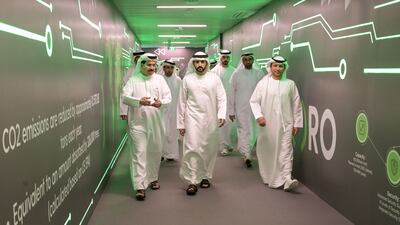
Sheikh Hamdan bin Mohammed, Crown Prince of Dubai and Chairman of The Executive Council of Dubai, on February 16 opened the green data centre of Data Hub Integrated Solutions (Moro Hub), a subsidiary of Digital Dewa. All photos: Wam -
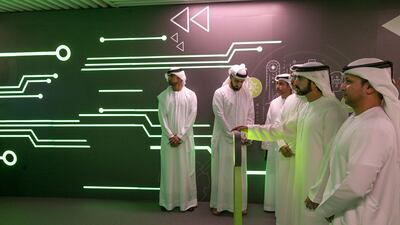
Sheikh Hamdan bin Mohammed opened the green data centre of Data Hub Integrated Solutions (Moro Hub). -
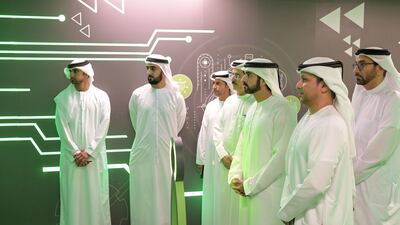
Sheikh Hamdan bin Mohammed opened the green data centre of Data Hub Integrated Solutions (Moro Hub). -
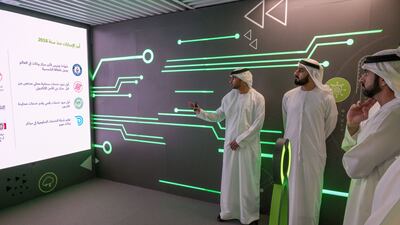
Sheikh Hamdan bin Mohammed opened the green data centre of Data Hub Integrated Solutions LLC (Moro Hub) -
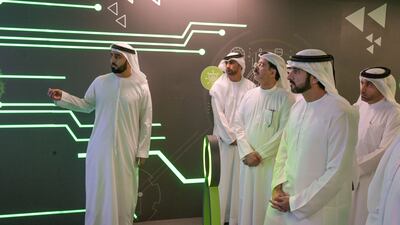
Sheikh Hamdan bin Mohammed opened the green data centre of Data Hub Integrated Solutions (Moro Hub). -
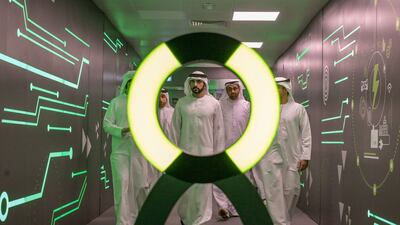
Sheikh Hamdan bin Mohammed opened the green data centre of Data Hub Integrated Solutions (Moro Hub). -
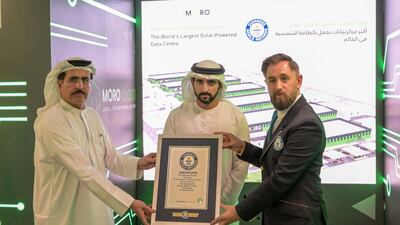
Sheikh Hamdan bin Mohammed opened the green data centre of Data Hub Integrated Solutions (Moro Hub). -
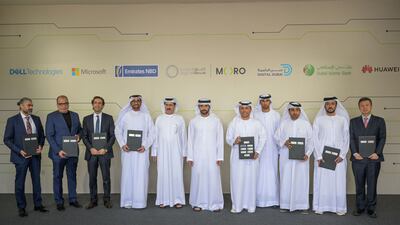
Sheikh Hamdan bin Mohammed opened the green data centre of Data Hub Integrated Solutions (Moro Hub). -
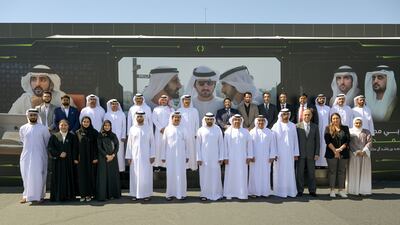
Sheikh Hamdan bin Mohammed opened the green data centre of Data Hub Integrated Solutions (Moro Hub).


The demise of former US president Joe Biden’s Inflation Reduction Act, as a result of the recent passage of the One Big Beautiful Bill Act, will have a substantial impact on the data industry’s evolution. There is an opportunity for countries like the UAE – which can produce limitless and cheap energy – to provide the capacity for processing that this industry needs.
Once again, the Arabian Peninsula’s natural environment has an opportunity to shape the development of a new era. The outcome of the growth of processing power is the generation of new revenue streams, the unleashing of local talent and the creation of a firm base for the region in the global economic landscape.
Future-proofing is a historical feature of the UAE and Gulf economies. This is why Prof Allen’s insights into the three big industries that made the Emirates prosperous and globally interconnected could hardly be timelier.

