When an entrepreneur establishes a new business, no matter how brilliant the idea, at some point they will need external investment for their company to grow. Victor Besa for The National
Omar Al-Ubaydli is a Bahraini economist and a columnist for The National
June 12, 2024
The Gulf economic visions seek to create vibrant private sectors free from dependence on income from hydrocarbons. During the transition, however, some governments are playing the role of lead venture capitalists in strategically important sectors such as renewable energy and civil aviation.
China’s experience suggests that this increasingly popular model of state capitalism has flaws that policymakers should be aware of as they restructure their economies.
When an entrepreneur establishes a new business, no matter how brilliant the idea, at some point they will need external investment for their company to grow and realise its potential. This capital often comes from private sources, as in the case of the billion-dollar venture capital and private equity funds that exist in California.
Alternatively, startups can look to the government for funding, either through direct capital injections, or indirectly via sovereign wealth funds.
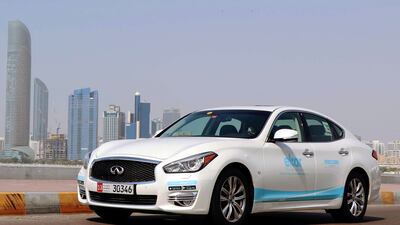
LinkedIn says UAE car-sharing platform ekar is the best start-up to work for in the UAE in 2023
Dubai-based Cafu, a fuel delivery service app, is second on the list for best start-up employers. Reem Mohammed/The National
In third place is sustainable active wear brand The Giving Movement. Photo: The Giving Movement
In fourth place is payments platform HubPay. Photo: HubPay
Abu Dhabi's AgriTech start-up Pure Harvest Smart Farms is in fifth place. Courtesy: Pure Harvest Smart Farms
Food and beverages platform Yolk Brands is ranked sixth. Photo: Yolk Brands
In seventh place is financial technology start-up and digital banking app YAP. Photo: YAP
At number eight is BNPL company Tabby. Courtesy Tabby
In ninth spot is Payments processor Nymcard. Photo: Nymcard
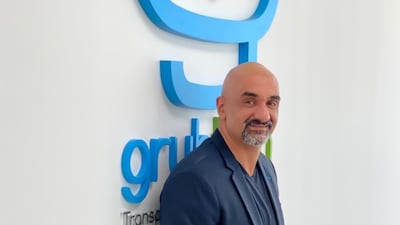
Mohamed Al Fayed, co-founder and chief executive of GrubTech, which is in tenth place. Photo: GrubTech
During the 1980s and 1990s, economists were highly sceptical about governments being able to make judicious investment decisions. Arab and Latin-American countries had experimented with state-led economies, yielding weak results. Most suffered from: low rates of economic growth, large budget deficits, spiralling government debt and perennial exchange rate crises became the norm.
The government’s ineffectiveness as the economy’s driving force was attributed to two key factors.
First, many government officials lacked the competence to steer these gigantic economies. This was not due to a lack of cognitive skills; rather, it was a reflection of the complexities of modern economies, and the need for private entrepreneurs on the frontline – who possess unique, nuanced knowledge, and who are motivated by profit – to be at the heart of decisions about where scarce capital needs to be directed.
China’s experience suggests that an increasingly popular model of state capitalism has flaws that policymakers should be wary of
The second was the threat of crony-capitalism, whereby sometimes officials were susceptible to corrupt decisions about how to allocate capital. Inefficient businesses that were politically connected managed to secure government support, resulting in stagnating economies and deteriorating state finances.
This “Washington Consensus” – referring to the notion the International Monetary Fund and World Bank used to hold, that the government should take a backseat – did not last long. The 2008 global financial crisis strongly pushed the pendulum back towards a belief in state-led capitalism as a sort of middle ground.
Those concerned about the government’s ability to steer the ship came to see it as the lesser of two evils, as globally the private sector’s rampant irresponsibility had almost brought the global financial system to collapse. The strong, positive contribution that China’s government had made to its own stellar growth also helped rehabilitate state-led capitalism.
It was at this point that the Gulf countries began to scribe their own economic visions. Inspired by the recent Chinese experience, and the historical experiences of countries such as Japan and South Korea, some governments sought to forge commercial ecosystems where the state would play the role of strategic venture capitalist.
The private sector’s business acumen was a welcome complement. However, some private fund managers suffer from flaws that make them ill-suited to lead the way in emerging sectors such as renewable energies and military manufacturing. The most salient is that often these investors are conditioned to favour projects that yield returns that will materialise within a maximum of five years, yet many of the benefits of technologies such as solar power take literally decades to arrive.
Moreover, sectors such as defence manufacturing require co-ordination between many related sectors, and usually it is only the government that possesses the authority and patience needed to get everyone pulling in the same direction.
The Covid-19 pandemic reinforced this mindset, as the Gulf governments gained confidence in their ability to manage systemic crises, and to guide the economy into the right sectors.
Yet a recent paper by Dr Emanuele Colonnelli (University of Chicago), Dr Bo Li (Peking University) and Dr Ernest Liu (Princeton University) suggests that some policymakers may wish to reassess their approach.
For the Gulf countries, there is a clear warning that the government’s role as a strategic venture capitalist may need to be modulated
Dr Colonnelli and his co-authors used advanced experimental and surveying techniques to understand the pros and cons of government involvement in investment decisions. By speaking to private investment funds and the businesses that seek capital, they arrived at two important conclusions.
First, the average Chinese business is wary of investors with government ties. Second, the companies that were most wary happened to be the best-performing private businesses – the ones that are most likely to create jobs and contribute to the growth of the economy.
Further analysis revealed reasoning that harked back to the Washington Consensus: political interference in decision-making – meaning civil servants instructing companies to make what could sometimes be commercially unwise decisions due to extraneous political considerations – is the leading reason why government capital is unattractive to private firms.
Moreover, according to the findings from Dr Colonnelli and his colleagues, private businesses lamented the lack of professionalisation of some civil servants attached to these investment funds, especially in cutting-edge sectors such as technology, where the consequences of ill-informed but overly confident functionaries interfering could be disastrous.
This is a clear warning that the government’s role as a strategic venture capitalist may need to be modulated. As the private sectors in these countries improve their capabilities, and they start to flourish in new sectors such as biotechnology and AI, there is a risk that the government will transition from being a nurturing parent to a suffocating in-law.
There are several indications that China’s government is not realising this quickly enough, and is being slow in reforming its approach. But by virtue of their small populations and young national histories, the Gulf governments exhibit high levels of agility, and so are better placed than any to adapt the role that the state plays in the economy in accordance with the evolving needs of the private sector.
At the heart is the ability to keep abreast of the latest research in economic development, and to rapidly absorb the lessons presented by scholars such as Dr Colonnelli and his colleagues.
Regional governments will do well to be cognisant of the fact that the answer to the question, “how involved should the government be in the economy”, is neither definitive nor stable.

MATCH INFO
Sheffield United 2 Bournemouth 1
United: Sharp (45 2'), Lundstram (84')
Bournemouth: C Wilson (13')
Man of the Match: Jack O’Connell (Sheffield United)
How to become a Boglehead
Bogleheads follow simple investing philosophies to build their wealth and live better lives. Just follow these steps.
• Spend less than you earn and save the rest. You can do this by earning more, or being frugal. Better still, do both.
• Invest early, invest often. It takes time to grow your wealth on the stock market. The sooner you begin, the better.
• Choose the right level of risk. Don't gamble by investing in get-rich-quick schemes or high-risk plays. Don't play it too safe, either, by leaving long-term savings in cash.
• Diversify. Do not keep all your eggs in one basket. Spread your money between different companies, sectors, markets and asset classes such as bonds and property.
• Keep charges low. The biggest drag on investment performance is all the charges you pay to advisers and active fund managers.
• Keep it simple. Complexity is your enemy. You can build a balanced, diversified portfolio with just a handful of ETFs.
• Forget timing the market. Nobody knows where share prices will go next, so don't try to second-guess them.
• Stick with it. Do not sell up in a market crash. Use the opportunity to invest more at the lower price.
Learn more about Qasr Al Hosn
In 2013, The National's History Project went beyond the walls to see what life was like living in Abu Dhabi's fabled fort:
March 15 - Australia, Melbourne; March 22 - Bahrain, Sakhir; April 5 - Vietnam, Hanoi; April 19 - China, Shanghai; May 3 - Netherlands, Zandvoort; May 20 - Spain, Barcelona; May 24 - Monaco, Monaco; June 7 - Azerbaijan, Baku; June 14 - Canada, Montreal; June 28 - France, Le Castellet; July 5 - Austria, Spielberg; July 19 - Great Britain, Silverstone; August 2 - Hungary, Budapest; August 30 - Belgium, Spa; September 6 - Italy, Monza; September 20 - Singapore, Singapore; September 27 - Russia, Sochi; October 11 - Japan, Suzuka; October 25 - United States, Austin; November 1 - Mexico City, Mexico City; November 15 - Brazil, Sao Paulo; November 29 - Abu Dhabi, Abu Dhabi.
'The worst thing you can eat'
Trans fat is typically found in fried and baked goods, but you may be consuming more than you think.
Powdered coffee creamer, microwave popcorn and virtually anything processed with a crust is likely to contain it, as this guide from Mayo Clinic outlines:
Baked goods - Most cakes, cookies, pie crusts and crackers contain shortening, which is usually made from partially hydrogenated vegetable oil. Ready-made frosting is another source of trans fat.
Snacks - Potato, corn and tortilla chips often contain trans fat. And while popcorn can be a healthy snack, many types of packaged or microwave popcorn use trans fat to help cook or flavour the popcorn.
Fried food - Foods that require deep frying — french fries, doughnuts and fried chicken — can contain trans fat from the oil used in the cooking process.
Refrigerator dough - Products such as canned biscuits and cinnamon rolls often contain trans fat, as do frozen pizza crusts.
Creamer and margarine - Nondairy coffee creamer and stick margarines also may contain partially hydrogenated vegetable oils.
Company name: Play:Date
Launched: March 2017 on UAE Mother’s Day
Founder: Shamim Kassibawi
Based: Dubai with operations in the UAE and US
Sector: Tech
Size: 20 employees
Stage of funding: Seed
Investors: Three founders (two silent co-founders) and one venture capital fund
Why it pays to compare
A comparison of sending Dh20,000 from the UAE using two different routes at the same time - the first direct from a UAE bank to a bank in Germany, and the second from the same UAE bank via an online platform to Germany - found key differences in cost and speed. The transfers were both initiated on January 30.
Route 1: bank transfer
The UAE bank charged Dh152.25 for the Dh20,000 transfer. On top of that, their exchange rate margin added a difference of around Dh415, compared with the mid-market rate.
Total cost: Dh567.25 - around 2.9 per cent of the total amount
Total received: €4,670.30
Route 2: online platform
The UAE bank’s charge for sending Dh20,000 to a UK dirham-denominated account was Dh2.10. The exchange rate margin cost was Dh60, plus a Dh12 fee.
Total cost: Dh74.10, around 0.4 per cent of the transaction
Total received: €4,756
The UAE bank transfer was far quicker – around two to three working days, while the online platform took around four to five days, but was considerably cheaper. In the online platform transfer, the funds were also exposed to currency risk during the period it took for them to arrive.
THE POPE'S ITINERARY
Sunday, February 3, 2019 - Rome to Abu Dhabi
1pm: departure by plane from Rome / Fiumicino to Abu Dhabi
10pm: arrival at Abu Dhabi Presidential Airport
Monday, February 4
12pm: welcome ceremony at the main entrance of the Presidential Palace
12.20pm: visit Abu Dhabi Crown Prince at Presidential Palace
5pm: private meeting with Muslim Council of Elders at Sheikh Zayed Grand Mosque
6.10pm: Inter-religious in the Founder's Memorial
Tuesday, February 5 - Abu Dhabi to Rome
9.15am: private visit to undisclosed cathedral
10.30am: public mass at Zayed Sports City – with a homily by Pope Francis
12.40pm: farewell at Abu Dhabi Presidential Airport
1pm: departure by plane to Rome
5pm: arrival at the Rome / Ciampino International Airport
Tax authority targets shisha levy evasion
The Federal Tax Authority will track shisha imports with electronic markers to protect customers and ensure levies have been paid.
Khalid Ali Al Bustani, director of the tax authority, on Sunday said the move is to "prevent tax evasion and support the authority’s tax collection efforts".
The scheme’s first phase, which came into effect on 1st January, 2019, covers all types of imported and domestically produced and distributed cigarettes. As of May 1, importing any type of cigarettes without the digital marks will be prohibited.
He said the latest phase will see imported and locally produced shisha tobacco tracked by the final quarter of this year.
"The FTA also maintains ongoing communication with concerned companies, to help them adapt their systems to meet our requirements and coordinate between all parties involved," he said.
The internal combustion engine is facing a watershed moment – major manufacturer Volvo is to stop producing petroleum-powered vehicles by 2021 and countries in Europe, including the UK, have vowed to ban their sale before 2040. The National takes a look at the story of one of the most successful technologies of the last 100 years and how it has impacted life in the UAE.
Favourite quote: "No one has ever become poor by giving"
What is a robo-adviser?
Robo-advisers use an online sign-up process to gauge an investor’s risk tolerance by feeding information such as their age, income, saving goals and investment history into an algorithm, which then assigns them an investment portfolio, ranging from more conservative to higher risk ones.
These portfolios are made up of exchange traded funds (ETFs) with exposure to indices such as US and global equities, fixed-income products like bonds, though exposure to real estate, commodity ETFs or gold is also possible.
Investing in ETFs allows robo-advisers to offer fees far lower than traditional investments, such as actively managed mutual funds bought through a bank or broker. Investors can buy ETFs directly via a brokerage, but with robo-advisers they benefit from investment portfolios matched to their risk tolerance as well as being user friendly.
Many robo-advisers charge what are called wrap fees, meaning there are no additional fees such as subscription or withdrawal fees, success fees or fees for rebalancing.
Brief scores:
Huesca 0
Real Madrid 1
Bale 8'
Mercer, the investment consulting arm of US services company Marsh & McLennan, expects its wealth division to at least double its assets under management (AUM) in the Middle East as wealth in the region continues to grow despite economic headwinds, a company official said.
Mercer Wealth, which globally has $160 billion in AUM, plans to boost its AUM in the region to $2-$3bn in the next 2-3 years from the present $1bn, said Yasir AbuShaban, a Dubai-based principal with Mercer Wealth.
“Within the next two to three years, we are looking at reaching $2 to $3 billion as a conservative estimate and we do see an opportunity to do so,” said Mr AbuShaban.
Mercer does not directly make investments, but allocates clients’ money they have discretion to, to professional asset managers. They also provide advice to clients.
“We have buying power. We can negotiate on their (client’s) behalf with asset managers to provide them lower fees than they otherwise would have to get on their own,” he added.
Mercer Wealth’s clients include sovereign wealth funds, family offices, and insurance companies among others.
From its office in Dubai, Mercer also looks after Africa, India and Turkey, where they also see opportunity for growth.
Wealth creation in Middle East and Africa (MEA) grew 8.5 per cent to $8.1 trillion last year from $7.5tn in 2015, higher than last year’s global average of 6 per cent and the second-highest growth in a region after Asia-Pacific which grew 9.9 per cent, according to consultancy Boston Consulting Group (BCG). In the region, where wealth grew just 1.9 per cent in 2015 compared with 2014, a pickup in oil prices has helped in wealth generation.
BCG is forecasting MEA wealth will rise to $12tn by 2021, growing at an annual average of 8 per cent.
Drivers of wealth generation in the region will be split evenly between new wealth creation and growth of performance of existing assets, according to BCG.
Another general trend in the region is clients’ looking for a comprehensive approach to investing, according to Mr AbuShaban.
“Institutional investors or some of the families are seeing a slowdown in the available capital they have to invest and in that sense they are looking at optimizing the way they manage their portfolios and making sure they are not investing haphazardly and different parts of their investment are working together,” said Mr AbuShaban.
Some clients also have a higher appetite for risk, given the low interest-rate environment that does not provide enough yield for some institutional investors. These clients are keen to invest in illiquid assets, such as private equity and infrastructure.
“What we have seen is a desire for higher returns in what has been a low-return environment specifically in various fixed income or bonds,” he said.
“In this environment, we have seen a de facto increase in the risk that clients are taking in things like illiquid investments, private equity investments, infrastructure and private debt, those kind of investments were higher illiquidity results in incrementally higher returns.”
The Abu Dhabi Investment Authority, one of the largest sovereign wealth funds, said in its 2016 report that has gradually increased its exposure in direct private equity and private credit transactions, mainly in Asian markets and especially in China and India. The authority’s private equity department focused on structured equities owing to “their defensive characteristics.”
hall of shame
SUNDERLAND 2002-03
No one has ended a Premier League season quite like Sunderland. They lost each of their final 15 games, taking no points after January. They ended up with 19 in total, sacking managers Peter Reid and Howard Wilkinson and losing 3-1 to Charlton when they scored three own goals in eight minutes.
SUNDERLAND 2005-06
Until Derby came along, Sunderland’s total of 15 points was the Premier League’s record low. They made it until May and their final home game before winning at the Stadium of Light while they lost a joint record 29 of their 38 league games.
HUDDERSFIELD 2018-19
Joined Derby as the only team to be relegated in March. No striker scored until January, while only two players got more assists than goalkeeper Jonas Lossl. The mid-season appointment Jan Siewert was to end his time as Huddersfield manager with a 5.3 per cent win rate.
ASTON VILLA 2015-16
Perhaps the most inexplicably bad season, considering they signed Idrissa Gueye and Adama Traore and still only got 17 points. Villa won their first league game, but none of the next 19. They ended an abominable campaign by taking one point from the last 39 available.
FULHAM 2018-19
Terrible in different ways. Fulham’s total of 26 points is not among the lowest ever but they contrived to get relegated after spending over £100 million (Dh457m) in the transfer market. Much of it went on defenders but they only kept two clean sheets in their first 33 games.
LA LIGA: Sporting Gijon, 13 points in 1997-98.
BUNDESLIGA: Tasmania Berlin, 10 points in 1965-66
Previous men's records
2:01:39: Eliud Kipchoge (KEN) on 16/9/19 in Berlin
2:02:57: Dennis Kimetto (KEN) on 28/09/2014 in Berlin
2:03:23: Wilson Kipsang (KEN) on 29/09/2013 in Berlin
2:03:38: Patrick Makau (KEN) on 25/09/2011 in Berlin
2:03:59: Haile Gebreselassie (ETH) on 28/09/2008 in Berlin
2:04:26: Haile Gebreselassie (ETH) on 30/09/2007 in Berlin
2:04:55: Paul Tergat (KEN) on 28/09/2003 in Berlin
2:05:38: Khalid Khannouchi (USA) 14/04/2002 in London
2:05:42: Khalid Khannouchi (USA) 24/10/1999 in Chicago
2:06:05: Ronaldo da Costa (BRA) 20/09/1998 in Berlin
The Great Derangement: Climate Change and the Unthinkable
Amitav Ghosh, University of Chicago Press
Three ways to boost your credit score
Marwan Lutfi says the core fundamentals that drive better payment behaviour and can improve your credit score are:
1. Make sure you make your payments on time;
2. Limit the number of products you borrow on: the more loans and credit cards you have, the more it will affect your credit score;
3. Don't max out all your debts: how much you maximise those credit facilities will have an impact. If you have five credit cards and utilise 90 per cent of that credit, it will negatively affect your score.
All ties are to be played the week commencing December 21.
Profile of RentSher
Started: October 2015 in India, November 2016 in UAE
Founders: Harsh Dhand; Vaibhav and Purvashi Doshi
Based: Bangalore, India and Dubai, UAE
Sector: Online rental marketplace
Size: 40 employees
Investment: $2 million
SERIES INFO
Schedule:
All matches at the Harare Sports Club
1st ODI, Wed Apr 10
2nd ODI, Fri Apr 12
3rd ODI, Sun Apr 14
4th ODI, Sun Apr 16
UAE squad
Mohammed Naveed (captain), Rohan Mustafa, Ashfaq Ahmed, Shaiman Anwar, Mohammed Usman, CP Rizwan, Chirag Suri, Mohammed Boota, Ghulam Shabber, Sultan Ahmed, Imran Haider, Amir Hayat, Zahoor Khan, Qadeer Ahmed
Zimbabwe squad
Peter Moor (captain), Solomon Mire, Brian Chari, Regis Chakabva, Sean Williams, Timycen Maruma, Sikandar Raza, Donald Tiripano, Kyle Jarvis, Tendai Chatara, Chris Mpofu, Craig Ervine, Brandon Mavuta, Ainsley Ndlovu, Tony Munyonga, Elton Chigumbura
UAE Premiership
Results
Dubai Exiles 24-28 Jebel Ali Dragons
Abu Dhabi Harlequins 43-27 Dubai Hurricanes
Fixture
Friday, March 29, Abu Dhabi Harlequins v Jebel Ali Dragons, The Sevens, Dubai
Mobile phone packages comparison
England's lowest Test innings
- 45 v Australia in Sydney, January 28, 1887
- 46 v West Indies in Port of Spain, March 25, 1994
6.30pm: Sheikh Zayed bin Sultan Al Nahyan Jewel Crown Prep Rated Conditions (PA) Dh 125,000 (T) 2,200m. Winner: Somoud, Richard Mullen, Jean de Roualle.
7pm: Wathba Stallions Cup Handicap (PA) Dh 70,000 (T) 1,600m. Winner: AF Arrab, Tadhg O’Shea, Ernst Oertel.
By committing to at least one of these daily, you can bring more gratitude into your life, says Ong.
During your morning skincare routine, name five things you are thankful for about yourself.
As you finish your skincare routine, look yourself in the eye and speak an affirmation, such as: “I am grateful for every part of me, including my ability to take care of my skin.”
In the evening, take some deep breaths, notice how your skin feels, and listen for what your skin is grateful for.
Focus on gratitude: And do so deeply, he says. “Think of one to three things a day that you’re grateful for. It needs to be specific, too, don’t just say ‘air.’ Really think about it. If you’re grateful for, say, what your parents have done for you, that will motivate you to do more for the world.”
Know how to fight: Shetty married his wife, Radhi, three years ago (he met her in a meditation class before he went off and became a monk). He says they’ve had to learn to respect each other’s “fighting styles” – he’s a talk it-out-immediately person, while she needs space to think. “When you’re having an argument, remember, it’s not you against each other. It’s both of you against the problem. When you win, they lose. If you’re on a team you have to win together.”