


What a difference a month makes. When India’s general election got under way on April 19, the popular assumption was that the Bharatiya Janata Party was primed for a third consecutive term in office.
The dominant narrative was that the BJP’s stated target of winning 400 of the 543 seats in the Lok Sabha, as the lower house of Parliament is called, was more than a slogan. Having won 282 and 303 seats in the 2014 and 2019 general elections respectively, Mission 400, as it was called, was daunting but quite possible.
However, with the election having now crossed the halfway mark, the question on the minds of many analysts has changed from “what will the BJP’s margin of victory be?” to “could the BJP actually lose?” This has prompted heated discussions and sweeping predictions on social media as well as some volatility in the stock markets.
It appears the aura of invincibility that once enveloped the governing party has faded in this election, but does that mean the BJP will finish second? Even if nothing can be taken for granted in a democracy, few serious students of politics would go so far as to suggest such an outcome.

That said, the BJP is facing serious headwinds that merit consideration.
One is the lower-than-anticipated turnout in the first four phases of voting. At 66.45 per cent, it is at least two percentage points lower than in 2019’s contest. This may not sound like much, but it translates to a few million fewer votes cast this time around. Lower turnouts usually bode well for governing parties as it suggests a lack of enthusiasm for removing the incumbent. However, BJP insiders are clearly worried that this is a trend that has taken root in several of their strongholds across northern and western India.
Rising temperatures at this time of year have reportedly been another factor behind this low turnout. That said, the weather has played a role in voter turnout since 2004, which was the year India began to hold general elections during the summer months. Another credible theory being discussed is voter apathy. This usually comes into play when the electorate is either unhappy about the leadership contest driving the election or unexcited by it.
-

Indian voters cast their ballots at a polling station in a school, in Samastipur, Bihar state. AP -
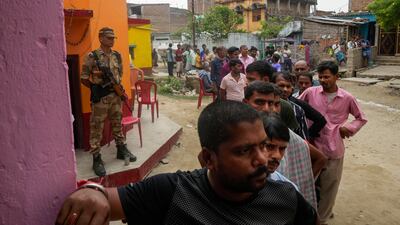
People wait to vote in Samastipur, in the fourth stage of India's general election. AP -
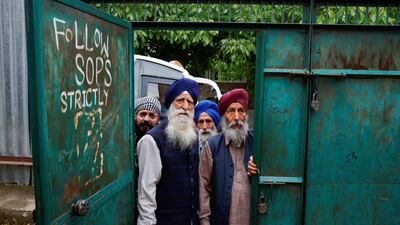
Voters gather at a polling station in the Pulwama district of southern Kashmir. Reuters -
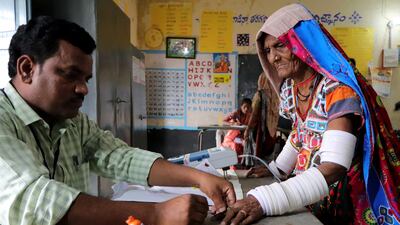
A tribal woman gets her finger inked before casting her vote in the Rangareddy district of southern Telangana state. Reuters -

A voter leaves a polling station in south Kashmir's Pulwama district. Reuters -
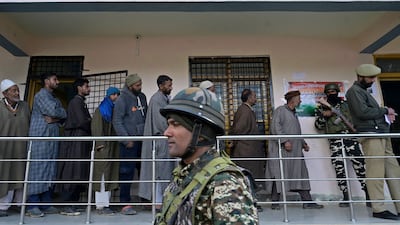
A soldier stands guard at a polling station in the Ganderbal district of north-east of Srinagar, Kashmir. AFP -
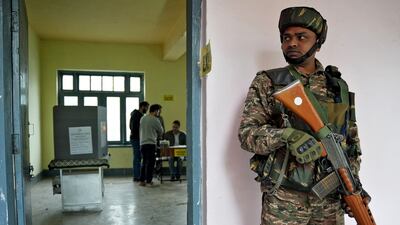
An Indian soldier in Srinagar. Violence was reported in some parts of the country during the fourth stage of the election. Reuters -

Voters queue outside a polling station in Kanpur, Uttar Pradesh. Bloomberg -

People wait to vote in Kanpur, Uttar Pradesh. Bloomberg -
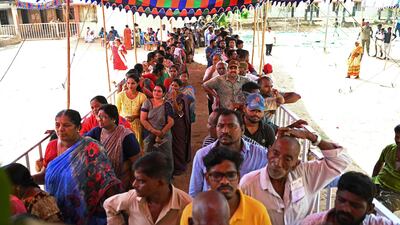
Voters in the Tirupati district of Andhra Pradesh state. Prime Minister Narendra Modi is aiming to secure a third term in office. AFP -
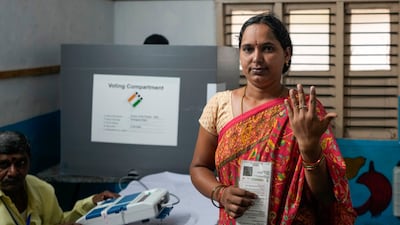
A woman leaves a polling station in Hyderabad. AP -

A Catholic nun registers to cast her ballot in Secunderabad, Telangana state. AFP -
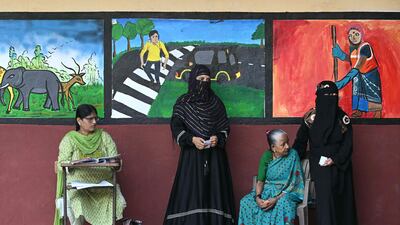
Voters wait to vote in the fourth phase of the election, in Karjat, Maharashtra state. AFP -

A woman leaves a polling station in Beed, Maharashtra. Reuters -
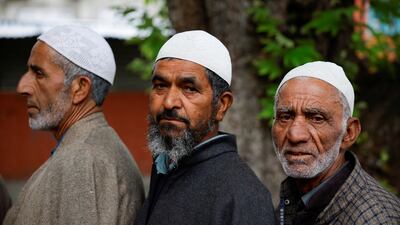
People queue to vote in south Kashmir's Pulwama district. Reuters -

A man checks the list of candidates at a polling station in Beed, Maharashtra. Reuters


Prime Minister Narendra Modi is still hugely popular, but he has been in power for a full decade – a period during which the average Indian has faced myriad economic challenges, ranging from price rises to unemployment. Yet in the eyes of many, the lack of a credible alternative to Mr Modi has been frustrating.
The BJP won’t admit this, but its own election campaign could partly be responsible for some of this apathy. Mission 400, according to some observers, appears to have lulled a sizable chunk of the party’s traditional voters into staying home on the assumption that the result is a foregone conclusion. But to take this proposition further, is it possible that the campaign has scared many swing voters into backing the opposition?
The “India” alliance, a group of 26 parties with the Congress at its core, has fumbled along the way ever since it came together last summer. However, one of its narratives – that has found traction among large sections of the electorate – is that the BJP would change the country’s constitution if it secured a supermajority.
This new constitution, according to Ashutosh, a prominent journalist and political activist, would be framed by those who “believe that affirmative action like reservations will be removed from the constitution if the BJP is back”. With most of India’s population belonging to marginalised sections of society, including “lower caste” and tribal groups, opposition leaders have been driving home this point, with many of them seen holding a copy of the constitution while doing so.
One of the primary reasons the BJP won big in the previous two general elections was that it found a national theme – such as the economy in 2014 and national security in 2019 – to sway even non-traditional voters, with Mr Modi featuring strongly in its programmes. This year, however, there has not been an overarching selling point for the BJP. In this absence, the India alliance has managed to localise the election, drawing voters’ attention to local candidates and issues, thereby diminishing Mr Modi’s prominence.
All this has forced the BJP to change tack. Instead of making the election a referendum on its own performance over the past decade, it is attempting to shift the focus to the opposition parties by, among other things, targeting their manifestos. In its bid to consolidate the Hindu vote, some leaders in the party have made fiery speeches against the country’s Muslim population. Police in the state of Karnataka opened a case against senior BJP leaders over a social media post that opposition leaders said “demonises Muslims”.
A recurring theme of some of this content is that the India alliance would create policies favouring religious minorities at the expense of the majority. Whether such tactics serve the BJP well is open to question, but it is amply clear that there is concern among its top ranks. And yet those who believe that defeat could be staring the party in the face should consider some hard numbers.
The opposition’s success in this year’s election rests on its ability to breach the BJP’s strongholds, especially in the north and west of India. What makes these constituencies particularly difficult to win is that in 2019, the BJP secured more than 50 per cent of the vote in more than 200 of them.
In other words, the India alliance has a lot of ground to cover for it to win any of these seats, without which it cannot come to power. It is also important to remember that 2019 was not a one-off success for the BJP; it was an improvement on its performance in 2014.
For the India alliance to win, then, it’s not enough for it to slow the BJP’s momentum, it must turn the tables in its favour. For this to happen, there needs to be significant pessimism about the government among the people. Whether this is the case right now is debatable.
None of this is to suggest that the opposition has zero chances of forming the next government. The challenge is not for it to win more seats than the BJP. Rather, it is whether it can limit Mr Modi’s party to fewer than the 272 seats required to form a government on its own.
Depending on how much the BJP’s seat share drops below 272 – if it does at all – the India alliance could have a chance to stake its claim to power by drawing in parties outside its coalition, including those currently allied with the BJP. It is this possibility, however faint it seems right now, that will give BJP strategists sleepless nights until June 4.

