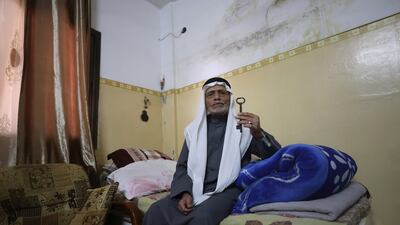
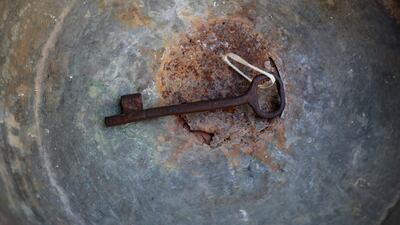
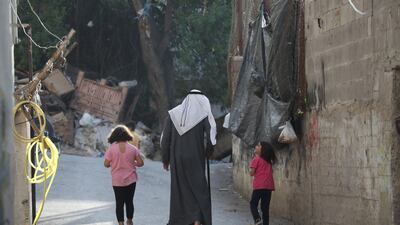
Land has always been central to the Palestinian national identity.
I learnt this lesson in 1971 when I spent time in Palestinian refugee camps in Lebanon and Jordan collecting people’s stories of the Nakba. Their memories of the homes and lands that they left behind, their deep longing to return, and their determination to keep alive their village culture were all deeply moving.
The powerful connection of Palestinians to their land became even more clear when I got to know and learn from the works of some of the great Palestinian poets such as Tawfiq Ziad and Mahmoud Darwish or the Palestinian artists like Ismail Shammout and Kamal Boullata. The images they created and the feelings they evoked have inspired generations.
You can often learn more about a people through the songs they sing, the stories they tell, or the art they love than you can from the political speeches of their leaders. In all of these forms of Palestinian popular culture, attachment to land looms large.
Palestinian refugees will recall their ancestral homes. Those whose lands have been confiscated by the Israelis will recall the simplicity of their village lives. The land that they nourished was where their histories are buried under the Earth waiting for a new spring in which to be born again. In short, their past lives, their present sorrows, and their hopes for the future are bound up in their attachment to their land.
Given this, it should be no surprise that Land Day (or Day in Defence of the Land) has become so important to Palestinians worldwide.
The history of this day is significant. The first Land Day was called in 1976 in response to the Israeli government’s plans to seize control of large areas of the Galilee region in order to expand the area’s Jewish population. Such seizures of Arab-owned lands to make way for Jewish immigration had been Israel’s modus operandi from the beginning of the state.
In the three decades before 1976, Israel had laid the foundation for their fledgling “Jewish state” by confiscating one and a half million acres of Arab-owned land and demolishing about 500 Palestinian villages – from which most of the Arab inhabitants had been expelled during the 1948 Nakba.
During those same three decades, the Palestinian citizens of Israel faced other significant hardships. They had emerged from the 1948 war shell-shocked from the horrors of the Nakba during which so many members of their families were forced to flee, so many others died, and much of their land, homes and businesses had been seized.
After the war, these Palestinians were subjected to restrictive Emergency Defence Laws under which the Israeli government imposed curfews, collective punishment, detention without charge and expulsion. Though nominally citizens of Israel, these Palestinians were, in reality, living under occupation in their own country.
It’s important to note that after the 1967 war, Israel applied these very same Emergency Defence Laws to the newly occupied territories.
Despite the hardships imposed upon them, the Palestinian citizens of Israel grew in confidence, political capacity and attachment to their Arab and Palestinian identity. They joined the Israeli political parties that would include them. They ran for, and won, elective office in the Arab towns and villages, and they organised in their own self-defence.
And so, when, in 1976, the government announced plans to issue new land expropriation orders in an effort to “Judaise” the Galilee, it was the proverbial “straw that broke the camel’s back”. They reacted by planning a huge nationwide general strike and protest march that would say “Enough!”.
Since the Israeli government was terrified of all forms of Arab resistance, it declared the protests to be illegal. Nevertheless, tens of thousands went on strike and peacefully marched. The day was marred by Israel’s violent response in which six Palestinian citizens were killed and more than a hundred wounded. This provoked outrage not only throughout the Palestinian community in Israel, but also among Palestinians in the 1967 occupied territories and those in the diaspora.
Every year since 1976, these March 30 Land Day protests have not only continued, but also spread throughout all of Palestine and in communities around the globe. They are a tribute to the continued Palestinian attachment to their land, their resilience, and their determination to rebuild their national community.
This year, Palestine’s Land Day fell on the Saturday between the Christian holy days of Good Friday and Easter Sunday. The convergence of these three days serves as a reminder of the ways in which the themes that they evoke have been essential components of the Palestinian national identity: attachment to their land, steadfastness despite losses endured, and belief in the promise of renewal.

Key facilities
- Olympic-size swimming pool with a split bulkhead for multi-use configurations, including water polo and 50m/25m training lanes
- Premier League-standard football pitch
- 400m Olympic running track
- NBA-spec basketball court with auditorium
- 600-seat auditorium
- Spaces for historical and cultural exploration
- An elevated football field that doubles as a helipad
- Specialist robotics and science laboratories
- AR and VR-enabled learning centres
- Disruption Lab and Research Centre for developing entrepreneurial skills
The rules on fostering in the UAE
A foster couple or family must:
- be Muslim, Emirati and be residing in the UAE
- not be younger than 25 years old
- not have been convicted of offences or crimes involving moral turpitude
- be free of infectious diseases or psychological and mental disorders
- have the ability to support its members and the foster child financially
- undertake to treat and raise the child in a proper manner and take care of his or her health and well-being
- A single, divorced or widowed Muslim Emirati female, residing in the UAE may apply to foster a child if she is at least 30 years old and able to support the child financially
THE SPECS
Engine: 1.5-litre
Transmission: 6-speed automatic
Power: 110 horsepower
Torque: 147Nm
Price: From Dh59,700
On sale: now
Roger Federer's 2018 record
Australian Open Champion
Rotterdam Champion
Indian Wells Runner-up
Miami Second round
Stuttgart Champion
Halle Runner-up
Wimbledon Quarter-finals
Cincinnati Runner-up
US Open Fourth round
Shanghai Semi-finals
Basel Champion
Paris Masters Semi-finals
Company Profile
Name: Thndr
Started: 2019
Co-founders: Ahmad Hammouda and Seif Amr
Sector: FinTech
Headquarters: Egypt
UAE base: Hub71, Abu Dhabi
Current number of staff: More than 150
Funds raised: $22 million
The%20specs
%3Cp%3E%3Cstrong%3EEngine%3A%3C%2Fstrong%3E%201.8-litre%204-cyl%20turbo%0D%3Cbr%3E%3Cstrong%3EPower%3A%20%3C%2Fstrong%3E190hp%20at%205%2C200rpm%0D%3Cbr%3E%3Cstrong%3ETorque%3A%3C%2Fstrong%3E%20320Nm%20from%201%2C800-5%2C000rpm%0D%3Cbr%3E%3Cstrong%3ETransmission%3A%20%3C%2Fstrong%3ESeven-speed%20dual-clutch%20auto%0D%3Cbr%3E%3Cstrong%3EFuel%20consumption%3A%3C%2Fstrong%3E%206.7L%2F100km%0D%3Cbr%3E%3Cstrong%3EPrice%3A%3C%2Fstrong%3E%20From%20Dh111%2C195%0D%3Cbr%3E%3Cstrong%3EOn%20sale%3A%20%3C%2Fstrong%3ENow%3C%2Fp%3E%0A
'HIJRAH%3A%20IN%20THE%20FOOTSTEPS%20OF%20THE%20PROPHET'
%3Cp%3E%3Cstrong%3EEdited%20by%3A%3C%2Fstrong%3E%20Idries%20Trevathan%3Cbr%3E%3Cstrong%3EPages%3A%3C%2Fstrong%3E%20240%3Cbr%3E%3Cstrong%3EPublisher%3A%3C%2Fstrong%3E%20Hirmer%20Publishers%3Cbr%3E%3Cstrong%3EAvailable%3A%3C%2Fstrong%3E%20Now%3C%2Fp%3E%0A
What is a robo-adviser?
Robo-advisers use an online sign-up process to gauge an investor’s risk tolerance by feeding information such as their age, income, saving goals and investment history into an algorithm, which then assigns them an investment portfolio, ranging from more conservative to higher risk ones.
These portfolios are made up of exchange traded funds (ETFs) with exposure to indices such as US and global equities, fixed-income products like bonds, though exposure to real estate, commodity ETFs or gold is also possible.
Investing in ETFs allows robo-advisers to offer fees far lower than traditional investments, such as actively managed mutual funds bought through a bank or broker. Investors can buy ETFs directly via a brokerage, but with robo-advisers they benefit from investment portfolios matched to their risk tolerance as well as being user friendly.
Many robo-advisers charge what are called wrap fees, meaning there are no additional fees such as subscription or withdrawal fees, success fees or fees for rebalancing.
Other simple ideas for sushi rice dishes
Cheat’s nigiri
This is easier to make than sushi rolls. With damp hands, form the cooled rice into small tablet shapes. Place slices of fresh, raw salmon, mackerel or trout (or smoked salmon) lightly touched with wasabi, then press, wasabi side-down, onto the rice. Serve with soy sauce and pickled ginger.
Easy omurice
This fusion dish combines Asian fried rice with a western omelette. To make, fry cooked and cooled sushi rice with chopped vegetables such as carrot and onion and lashings of sweet-tangy ketchup, then wrap in a soft egg omelette.
Deconstructed sushi salad platter
This makes a great, fuss-free sharing meal. Arrange sushi rice on a platter or board, then fill the space with all your favourite sushi ingredients (edamame beans, cooked prawns or tuna, tempura veggies, pickled ginger and chilli tofu), with a dressing or dipping sauce on the side.
AIDA%20RETURNS
%3Cp%3E%3Cstrong%3EDirector%3A%20%3C%2Fstrong%3ECarol%20Mansour%3C%2Fp%3E%0A%3Cp%3E%3Cstrong%3EStarring%3A%20%3C%2Fstrong%3EAida%20Abboud%2C%20Carol%20Mansour%3C%2Fp%3E%0A%3Cp%3E%3Cstrong%3ERating%3A%3C%2Fstrong%3E%203.5.%2F5%3C%2Fp%3E%0A
What are the GCSE grade equivalents?
- Grade 9 = above an A*
- Grade 8 = between grades A* and A
- Grade 7 = grade A
- Grade 6 = just above a grade B
- Grade 5 = between grades B and C
- Grade 4 = grade C
- Grade 3 = between grades D and E
- Grade 2 = between grades E and F
- Grade 1 = between grades F and G
The Sand Castle
Director: Matty Brown
Stars: Nadine Labaki, Ziad Bakri, Zain Al Rafeea, Riman Al Rafeea
Rating: 2.5/5
Fixtures:
Wed Aug 29 – Malaysia v Hong Kong, Nepal v Oman, UAE v Singapore
Thu Aug 30 - UAE v Nepal, Hong Kong v Singapore, Malaysia v Oman
Sat Sep 1 - UAE v Hong Kong, Oman v Singapore, Malaysia v Nepal
Sun Sep 2 – Hong Kong v Oman, Malaysia v UAE, Nepal v Singapore
Tue Sep 4 - Malaysia v Singapore, UAE v Oman, Nepal v Hong Kong
Thu Sep 6 – Final
BABYLON
%3Cp%3EDirector%3A%20Damien%20Chazelle%3C%2Fp%3E%0A%3Cp%3EStars%3A%20Brad%20Pitt%2C%20Margot%20Robbie%2C%20Jean%20Smart%3C%2Fp%3E%0A%3Cp%3ERating%3A%204%2F5%3C%2Fp%3E%0A
Living in...
This article is part of a guide on where to live in the UAE. Our reporters will profile some of the country’s most desirable districts, provide an estimate of rental prices and introduce you to some of the residents who call each area home.
Where to donate in the UAE
The Emirates Charity Portal
You can donate to several registered charities through a “donation catalogue”. The use of the donation is quite specific, such as buying a fan for a poor family in Niger for Dh130.
The General Authority of Islamic Affairs & Endowments
The site has an e-donation service accepting debit card, credit card or e-Dirham, an electronic payment tool developed by the Ministry of Finance and First Abu Dhabi Bank.
Al Noor Special Needs Centre
You can donate online or order Smiles n’ Stuff products handcrafted by Al Noor students. The centre publishes a wish list of extras needed, starting at Dh500.
Beit Al Khair Society
Beit Al Khair Society has the motto “From – and to – the UAE,” with donations going towards the neediest in the country. Its website has a list of physical donation sites, but people can also contribute money by SMS, bank transfer and through the hotline 800-22554.
Dar Al Ber Society
Dar Al Ber Society, which has charity projects in 39 countries, accept cash payments, money transfers or SMS donations. Its donation hotline is 800-79.
Dubai Cares
Dubai Cares provides several options for individuals and companies to donate, including online, through banks, at retail outlets, via phone and by purchasing Dubai Cares branded merchandise. It is currently running a campaign called Bookings 2030, which allows people to help change the future of six underprivileged children and young people.
Emirates Airline Foundation
Those who travel on Emirates have undoubtedly seen the little donation envelopes in the seat pockets. But the foundation also accepts donations online and in the form of Skywards Miles. Donated miles are used to sponsor travel for doctors, surgeons, engineers and other professionals volunteering on humanitarian missions around the world.
Emirates Red Crescent
On the Emirates Red Crescent website you can choose between 35 different purposes for your donation, such as providing food for fasters, supporting debtors and contributing to a refugee women fund. It also has a list of bank accounts for each donation type.
Gulf for Good
Gulf for Good raises funds for partner charity projects through challenges, like climbing Kilimanjaro and cycling through Thailand. This year’s projects are in partnership with Street Child Nepal, Larchfield Kids, the Foundation for African Empowerment and SOS Children's Villages. Since 2001, the organisation has raised more than $3.5 million (Dh12.8m) in support of over 50 children’s charities.
Noor Dubai Foundation
Sheikh Mohammed bin Rashid Al Maktoum launched the Noor Dubai Foundation a decade ago with the aim of eliminating all forms of preventable blindness globally. You can donate Dh50 to support mobile eye camps by texting the word “Noor” to 4565 (Etisalat) or 4849 (du).
Mission%3A%20Impossible%20-%20Dead%20Reckoning%20Part%20One
%3Cp%3E%3Cstrong%3EDirector%3A%3C%2Fstrong%3E%20Christopher%20McQuarrie%3Cbr%3E%3Cstrong%3EStars%3A%3C%2Fstrong%3E%20Tom%20Cruise%2C%20Hayley%20Atwell%2C%20Pom%20Klementieff%2C%20Simon%20Pegg%3Cbr%3E%3Cstrong%3ERating%3A%3C%2Fstrong%3E%204%2F5%3C%2Fp%3E%0A
How the UAE gratuity payment is calculated now
Employees leaving an organisation are entitled to an end-of-service gratuity after completing at least one year of service.
The tenure is calculated on the number of days worked and does not include lengthy leave periods, such as a sabbatical. If you have worked for a company between one and five years, you are paid 21 days of pay based on your final basic salary. After five years, however, you are entitled to 30 days of pay. The total lump sum you receive is based on the duration of your employment.
1. For those who have worked between one and five years, on a basic salary of Dh10,000 (calculation based on 30 days):
a. Dh10,000 ÷ 30 = Dh333.33. Your daily wage is Dh333.33
b. Dh333.33 x 21 = Dh7,000. So 21 days salary equates to Dh7,000 in gratuity entitlement for each year of service. Multiply this figure for every year of service up to five years.
2. For those who have worked more than five years
c. 333.33 x 30 = Dh10,000. So 30 days’ salary is Dh10,000 in gratuity entitlement for each year of service.
Note: The maximum figure cannot exceed two years total salary figure.