

In August 2017, my life took a harrowing turn when I was kidnapped by the Iranian regime and held hostage for a staggering four years and seven months.
The darkness of Tehran’s Evin Prison began turning into an everlasting bitter memory when I was finally released and returned home to the UK on March 16 last year. My release coincided with the payment of a £400 million ($485 million) UK debt to Iran, a chilling reminder of a tangled web of international diplomacy and personal suffering.
My time in Evin Prison can be divided into two distinct periods, each marked by its own set of horrors. During the first 116 days, I endured “white torture” – a form of sensory deprivation involving being held in an all-white cell – in two notorious interrogation centres.
The threats and intimidation reached a point where I made three desperate suicide attempts, convinced that my own existence posed the greatest threat to my family and that they would come to harm. I reasoned that my death would eliminate this problem.
The second period spanned a gruelling 1,561 days, during which I resided in the infamous Hall 12 of Wing 7 and Hall 1 of Wing 4. I shared my life with fellow inmates, some of whom faced long sentences, while others awaited a grim fate – a looming death sentence. Tragically, three of them were executed, with more awaiting their turn at the gallows.
What kept me tethered to sanity was physical activity, primarily running in the small prison yard, and finding purpose amid suffering through the words of Viktor Frankl in Man’s Search for Meaning. My dream, against all odds, became running the London Marathon, even if it meant doing so in my mid-seventies.
Since my release, I have embarked on a mission to raise awareness and advocate for those I left behind, ensuring that they are never forgotten. I have run in five events, including the 2022 and 2023 London Marathons. This is not only a personal triumph but also an act of solidarity with Iran’s Woman-Life-Freedom movement, born from the tragic murder of Mahsa Amini in September last year.
That movement remains just as important today as it was in the immediate aftermath of Ms Amini’s death. On October 1, witnesses in Tehran said Armita Geravand, a 16-year-old girl in Tehran, was beaten by police for refusing to wear a headscarf on public transport. Ms Geravand died in a hospital in the capital after 28 days of being in the ICU, according to state media.
Acts of solidarity are critical in efforts to continue highlighting the atrocities taking place in Iran. Innocent human beings are being used in “hostage diplomacy” as bargaining chips, either for money or to secure the release of terrorists imprisoned in the West.
The Iranian regime has demonstrated a disturbing pattern of taking hostages from various countries. Their actions have been facilitated by a lack of unity among nations in the West, as each one attempts to resolve hostage issues independently. This lack of unity has emboldened the regime, making it difficult to deter such heinous crimes. To halt this vicious cycle, nations must unite, enacting laws and punitive measures that impose substantial costs on the regime for its blatant disregard of human rights.
-
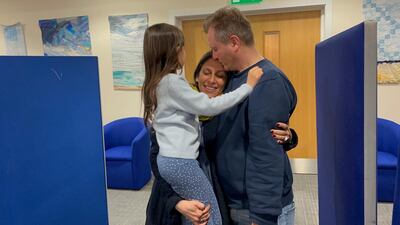
Nazanin Zaghari-Ratcliffe reunited with her husband, Richard Ratcliffe, and their daughter, Gabriella, after being held for six years in Iran. Photo: @TulipSiddiq via Twitter -
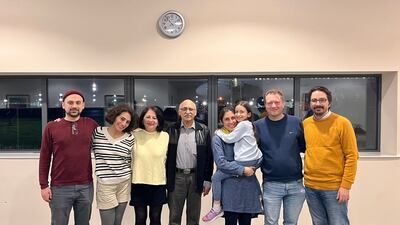
Ms Zaghari-Ratcliffe and Anoosheh Ashoori, centre, with their families. Photo: @lilika49 via Twitter -
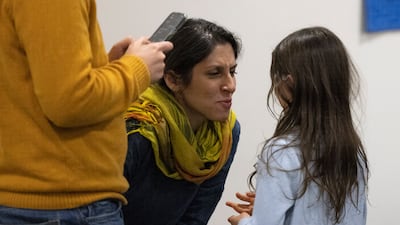
Nazanin Zaghari-Ratcliffe with her daughter at RAF Brize Norton airbase. EPA -
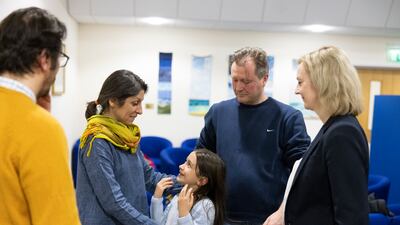
Nazanin Zaghari-Ratcliffe with her daughter Gabriella, husband Richard and British Foreign Secretary Liz Truss at RAF Brize Norton. EPA -
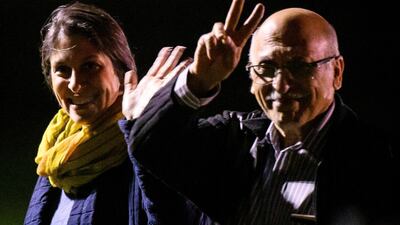
Nazanin Zaghari-Ratcliffe and Anoosheh Ashoori were released in March 2022. Reuters -
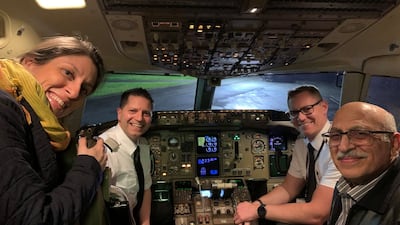
Ms Zaghari-Ratcliffe and Mr Ashoori with the cabin crew in Brize Norton. Reuters -
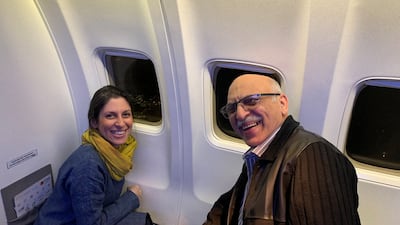
Ms Zaghari-Ratcliffe and Mr Ashoori as their plane flies over London. Reuters -
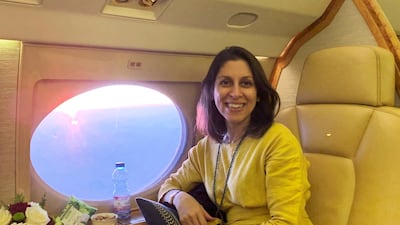
Ms Zaghari-Ratcliffe sits in a plane en route to London after taking off from Teheran. Reuters -
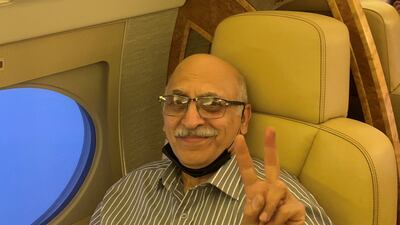
Mr Ashoori gestures as he sits in the plane heading to London. Reuters -
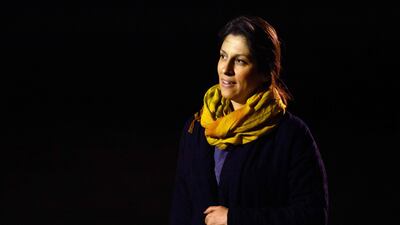
Ms Zaghari-Ratcliffe was arrested in Tehran in April 2016 as she prepared to fly back to the UK, having taken her daughter Gabriella to see relatives. AFP -
She was accused of plotting to overthrow the Iranian government and sentenced to five years in jail, spending four years in Tehran’s Evin Prison and one under house arrest. Photo: Tulip Siddiq / Twitter -
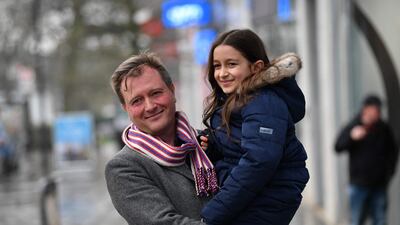
Richard Ratcliffe with daughter Gabriella outside their house in London on Wednesday. AFP -
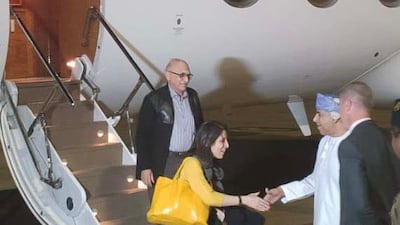
Ms Zaghari-Ratcliffe and Mr Ashoori arrive in Oman en route to the UK. Photo: @badralbusaidi / Twitter -
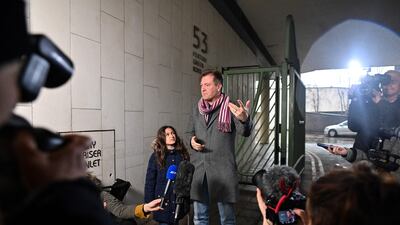
Mr Ratcliffe went on a hunger strike in October 2021 in protest at the UK government’s failure to secure his wife's release. AFP -
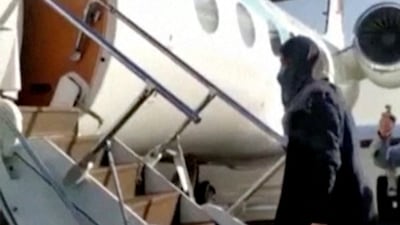
Ms Zaghari-Ratcliffe boards a plane as she prepares to leave Tehran. Reuters -
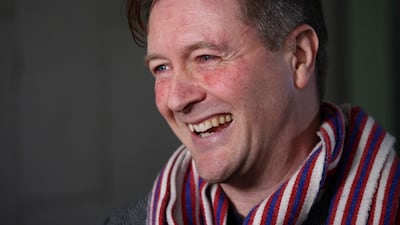
Mr Ratcliffe told the media that the family plan to find solace elsewhere for a few days. Reuters -
Gabriella was not yet two when her mother was arrested. Photo: Tulip Siddiq / Twitter


The normalisation of Iran’s hostage diplomacy is a worrisome trend because it continues to jeopardise the lives of innocent people and profoundly affect their families. I am deeply concerned that any funds gained through these transactions may be misused to fuel proxy wars or further suppress the Iranian population. Without global consensus and collective action, this unethical trade will persist, endangering countless lives.
Remaining indecisive on this issue allows the regime to grow bolder and expand its atrocities beyond its borders, as seen in Iraq, Syria, Yemen, Lebanon, and now Gaza. The consequences of inaction are clear. It is imperative that the international community acts swiftly and decisively to confront this threat to global peace.
During the first two painful years of my captivity, the UK’s Foreign, Commonwealth and Development Office advised us to refrain from going public. However, the Iranian regime eventually made my name public, recognising that my value as a bargaining chip would be lost without public knowledge of my plight. The Foreign Office also sought to discourage hostage families from staying in touch, fearing their unity might become burdensome.
Throughout these years, we received empty promises that the Foreign Office was doing everything in its power to secure our release. However, I firmly believe that the UK government could have made the decision to settle its outstanding debt much earlier than March 2022. This would have allowed me to return to my family and end our prolonged separation and my intense suffering much earlier.
While I criticise the UK government for its delayed actions, I am deeply grateful to the civil servants who worked tirelessly towards our freedom. It is essential that we acknowledge their dedication, even as we hold the government accountable for its overall handling of these complex situations.
My journey from captivity to advocacy has highlighted the urgent need for a co-ordinated international response to hostage-taking by the Iranian regime. We must work together to end this cruel practice, protect innocent lives and prevent the further escalation of conflict in the region and beyond.

