

Deterrence has dominated Israel’s Palestinian policy for decades, but the current conflict highlights the inevitable contest with escalation that this involves.
Even as these two drivers – deterrence and escalation – indicate the nature of the war and might point to its duration, the concentration on the suffering in Gaza and the deprivation of the siege dominate how this conflict is viewed around the world.
In clinical terms, what Israel is seeking to achieve with its military operations since October 7 is a restoration, or improvement, of the deterrence status beforehand. Statements from its leadership suggest that it seeks to remove Hamas operations from inside Gaza.
But even with the same goal, Israel’s previous wars with the group – since its withdrawal from the enclave on unilateral terms in 2005 – have been much more limited in scope.
And yet one aspect of this escalating need to crush Hamas is that the duration of the current conflict is likely to be much longer, alongside the far greater intensity than we have seen in the past.
All of Israel’s offensives on the territory of more than two million people have borne ominous names replete with heavy intent – starting with Operation Summer Rains in 2006, through Operation Cast Lead in 2008, Operation Pillar of Defence in 2012, Operation Protective Edge in 2014, and now Operation Iron Swords.
The trajectory of the conflict may have been shaped by these onslaughts, but the conflict itself had not fundamentally changed on October 7. Whether or not anything is different this time, therefore, rests on that interplay between deterrence and escalation.
-
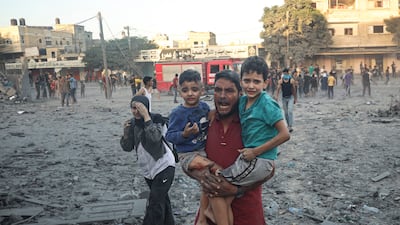
Palestinians cry as they walk away after an area hit by Israeli missiles in Rafah, the Gaza Strip. AP -
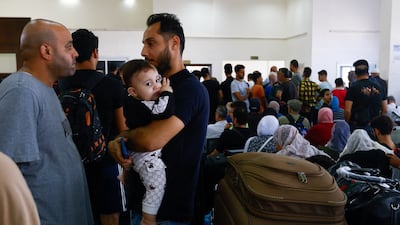
Palestinians with foreign passports wait for permission to leave Gaza at the Rafah border crossing with Egypt. Reuters -
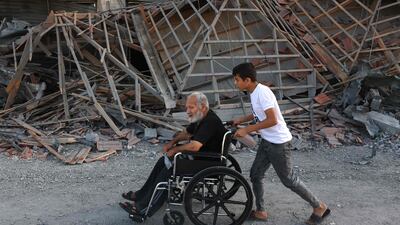
A Palestinian boy pushes a man on a wheelchair past debris in Rafah. AFP -

A paramedic holds an injured bird as he searches through buildings destroyed during Israeli air raids in Khan Younis, in the southern Gaza Strip. Getty Images -

Israeli soldiers take part in ground operations at a location given as Gaza. Reuters -
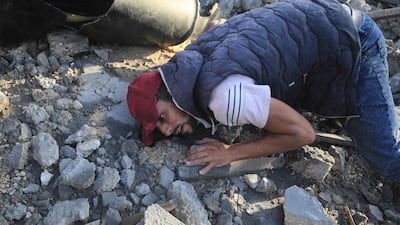
A man listens for any potential sounds of life following an Israeli air strike on the Maghazi refugee camp in Gaza. AFP -
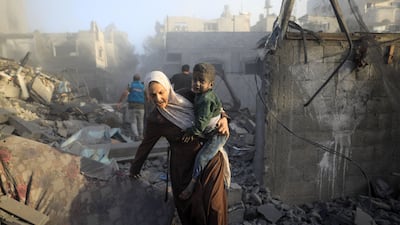
People flee after Israeli air strikes on the Maghazi refugee camp. AFP -

An Israeli soldier arranges artillery shells near the border with the Gaza Strip. AFP -

Relatives and friends of those kidnapped during the October 7 Hamas attack hold photos of their loved ones during a protest calling for their return outside Israel's parliament. AP -
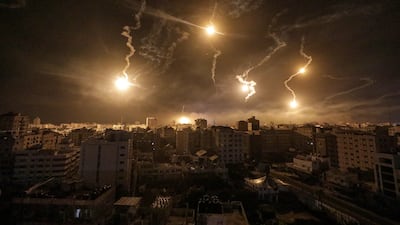
Israeli flares illuminate the sky over west Gaza in the northern Gaza Strip. EPA -
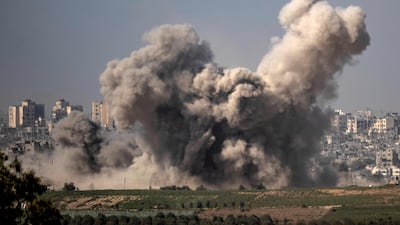
Smoke rises from northern Gaza after Israeli pounded the besieged enclave. AFP -

Ambulances queue at the Rafah border as they wait to cross into Gaza to transport the injured back to Egypt for treatment. Getty Images -

Women cry as one of them holds an injured toddler outside Shuhada Al Aqsa hospital after an Israeli bombardment of Deir Balah, in the central Gaza Strip. AFP -
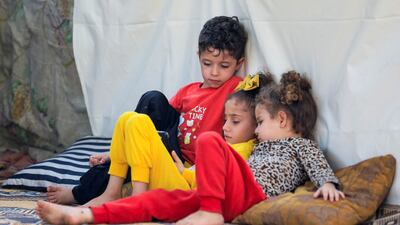
Displaced Palestinian children sit in a makeshift shelter at Al Shifa hospital, amid the Israel-Gaza war. Reuters -
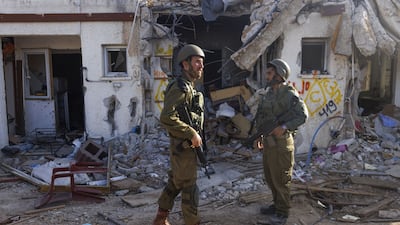
Israeli soldiers patrol outside a house destroyed during fighting with Hamas militants, in the kibbutz of Kfar Aza. Bloomberg -

Palestinians from Bureij refugee camp use Salah Al Din street as they flee the southern Gaza Strip. AP -
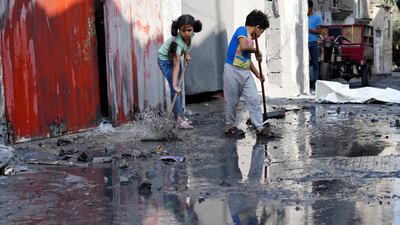
Palestinian children clean up outside their home after Israel struck Maghazi refugee camp in the Gaza Strip. AP -
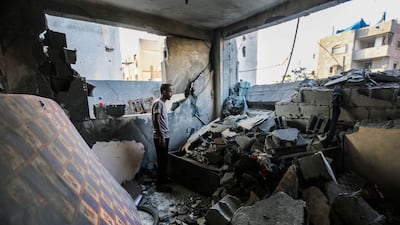
Khan Younis residents search through buildings destroyed during Israeli air raids. Getty Images -
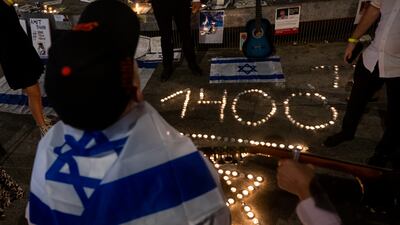
People take part in a candlelight vigil in Dizengoff Square, in Tel Aviv. Getty Images -
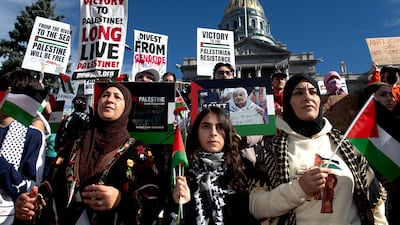
Demonstrators rally in support of Palestinians in Denver, Colorado. AFP -

Galya David, the mother of hostage Evyatar David, takes part in the 'Bring them home' event organised by the Greek Israeli Community in Athens. EPA -

Lebanese parademics show the blood-stained high-vis jackets of four of their colleagues wounded after their ambulances were hit in a strike on the Lebanese town of Tayr Harfa. AFP -
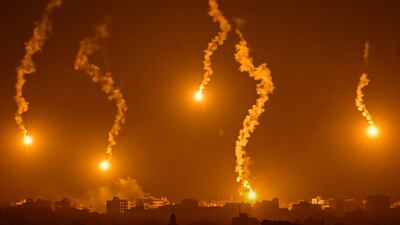
Flares are dropped by Israeli forces above Gaza, as seen from Sderot, near the border with the Palestinian enclave. AFP -

Israeli forces at a position along the the border with Gaza. AFP -

Palestinians search for bodies and survivors at Magazi refugee camp in Gaza after an Israeli air strike. Reuters -

Leaflets are dropped by the Israeli army over Gaza city asking people to evacuate towards the south of the Palestinian enclave. AFP -
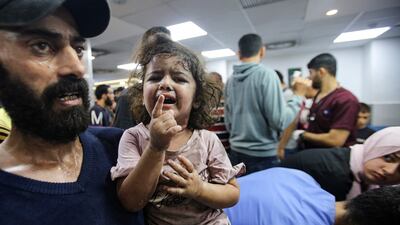
An injured toddler awaits treatment at the emergency ward of Al-Shifa Hospital following an Israeli strike, in Gaza city. AFP -

A Palestinian man wails amid a search for casualties after an Israeli strike on houses, at Magazi refugee camp, Gaza. Reuters -
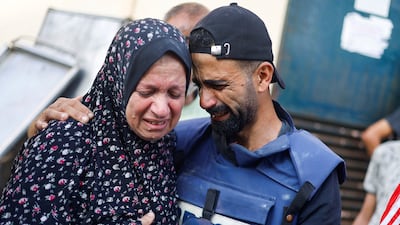
Anadolu news agency cameraman Mohammed El Aloul pictured after several of his children and siblings were killed in Israeli strikes. Reuters -

Israeli soldiers walk past debris and damaged buildings at a location given as Gaza by Israel's military. Reuters -

Protesters rally outside the White House in support of Palestinians in Gaza, Washington. Reuters -
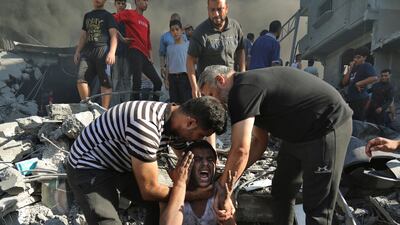
A man mourns after losing relatives following an Israeli air strike in Gaza city. AP -
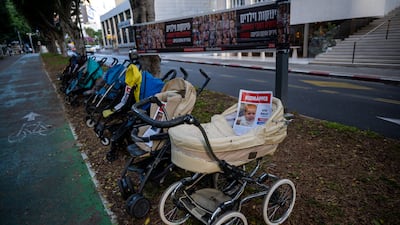
An art installation of prams with the faces of kidnapped children on display in Tel Aviv. Getty Images -

An Israeli woman calls for a ceasefire in the Gaza Strip. AP -

A Palestinian man stands on a collapsed building following a strike by the Israeli military on Khan Yunis in the southern Gaza Strip. AFP -
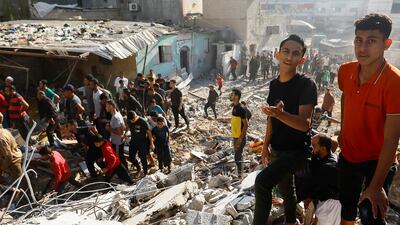
Palestinians gather at the site of Israeli strikes on a residential building in Khan Younis. Reuters -

Thousands of civilians, both Palestinians and Israelis, have died since October 7, 2023. AFP -

A Palestinian woman sits in the rubble as rescuers look for her relatives following the Israeli bombardment of Khan Younis. AFP -
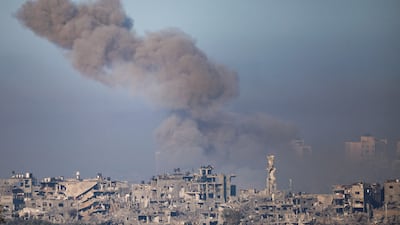
Smoke rises from Gaza as the conflict between Israel and Palestinian group Hamas continues. Reuters -

Mourners at the funeral of Druze Israeli Lt Col Salman Habaka in the village of Yanuh Jat, northern Israel. AP -
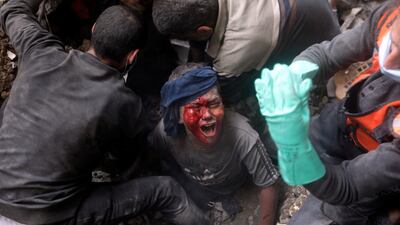
A Palestinian boy pulled from the rubble of a building following an Israeli air attack on Bureij refugee camp, in the Gaza Strip. AP -

A survivor calls from Nasser Hospital in Khan Younis following Israeli air attacks. EPA -
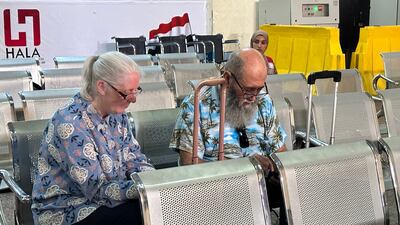
People wait on the Egyptian side of the border after passing the Rafah border crossing between the Gaza Strip and Egypt. EPA -
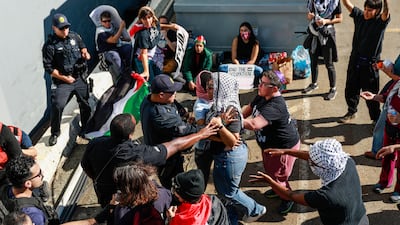
Pro-Palestinian supporters during a demonstration near a US military transport vessel at the Port of Oakland in California. AP


That is a depressing outlook for diplomacy and efforts at mediation centred on Gaza. The humanitarian needs – and under international law, these are immutably protected – are trammelled by the dynamic we are now seeing unfold from the command centres.
Just look at the TV sequencing on Friday when Hezbollah chief Hassan Nasrallah spoke while US Secretary of State Antony Blinken was in Israel. Mr Blinken made remarks about his talks with Israeli Prime Minister Benjamin Netanyahu.
Mr Blinken’s remarks in pursuit of a temporary pause on Friday and over the weekend show that America’s goals are shifting. After weeks of military operations, it seeks a window in the offensive to allow humanitarian aid and basic foodstuffs into Gaza. While not challenging Israel’s operations head on, the Americans are now requesting limits on actions on the ground.
Mr Netanyahu took to the airwaves to give not an inch to the US as it pushed for changes in Israel’s campaign. There would be not relenting until the hostages were returned, he said.
A line in Nasrallah’s remarks encapsulated the moment for me. He declared that the Lebanese front in the campaign was “open” and said he was speaking with “all transparency, clarity and ambiguity”. That is deterrence and escalation all in one to me – especially as the Hezbollah leader then said he may use his options “at any time”.
In fact, Israel’s deterrence in Gaza and Lebanon is built on common traits. It has withdrawn from both areas and built fences and cordons to seal off infiltration.
The advent of rocket and missile warfare has translated to the striking of its opponents or pursuit of retaliation and control over tunnels. Both these activities in areas where people live has inevitably meant innocent casualties. Deterrence has, therefore, been much harder to achieve.
In the case of Lebanon, there is the wider factor of Iran and Israel’s deterrence against Tehran. Ultimately, Hezbollah’s calculus is set by Iranian leaders’ calculation of how it might withstand a blowback from Israel if the conflict on the northern front goes beyond normalised parameters.

That is one reason why deterrence against Hezbollah has worked much better for Israel than it has with Hamas. The regular flashpoints with Hamas show that Israel’s grievances are much more direct, and that the deterrence factors are more fluid.
Escalation, on the other hand, means throwing out the normal trade-offs and taking on more risks. One Israeli source has said, for example, that there was a plan on Israeli command tables for a lightning offensive into Lebanon.
The goal of that would have been to catch Hezbollah unawares and achieve gains that would have forced the enemy to regroup. By pushing back, first the Israeli commanders would have hoped to insulate northern Israel from rocket and other attacks while the Gaza campaign was ongoing.
What it did, instead, was to evacuate key settlements along the border with Lebanon and restock the Iron Dome to ensure a cordon with the fighters to the north.
With Gaza, the strategy has been set out and draws comparisons with US-led operations against ISIS in Mosul and the American operations in Fallujah soon after the invasion of Iraq. For direct comparisons with Israel’s fight against the Palestinians, it is possible to go back to 1982 and its invasion of Lebanon that forced the PLO to flee to North Africa.
There is another factor beyond the twin forces of deterrence and escalation, and that is the pressure of social messaging and TV screens. Just about one month of images of death and destruction in Gaza has already passed.
Mr Netanyahu is staying the course and can rebuff even friends of Israel as close as Mr Blinken and his boss, Joe Biden. This state of affairs will become precarious at some point.
Deterrence and escalation cannot permanently exist in isolation from the toll of the damage inflicted and magnified on screens around the world.

