


In Montreal, there has been a lot of buzz around Cop15, a UN conference being hosted in the city that is about protecting and restoring biodiversity. This Conference of Parties (Cop) is different from the more notable one on climate change, which the UAE will be hosting in 2023, though the challenges facing climate change and biodiversity are linked.
Approximately one eighth of all plant and animal species are threatened with extinction for myriad man-made reasons that range from the over-exploitation of resources to deforestation. And as a single species perishes, the web of life we rely on unravels.
Biodiversity is the abundant mix of flora and fauna that make up our planet’s ecosystems. These ecosystems support our own species in many ways. Plants purify the air we breathe and filter water; bees are responsible for a quarter of our food supply, and $577 billion in crops; and even bacteria are important in helping to break down waste. We take many of the benefits we receive from biodiversity for granted. One economist who tried to put a price on it estimated it to be $33 trillion. We share the same atmosphere, so the world needs to unite to address these challenges for humanity’s future.
The organisers of Cop15, which ends on Monday, are hoping to get countries on board with committing to protect 30 per cent of our land and oceans by 2030. As in all these major conferences, in which all the world’s countries come together, the questions nearly always go back to finance: how do we protect countries’ biodiversity hotspots, such as the Amazon, without impacting the economy or asking those countries to carry the burden for other nations? One of the Cop15’s goals is to create a Global Biodiversity Framework, which would be an important international agreement.
-
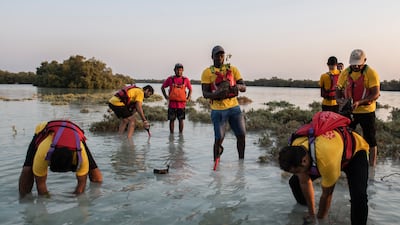
People plant mangroves during an event organised by Companies for Good on Jubail Island, Abu Dhabi. All photos: Vidhyaa Chandramohan -
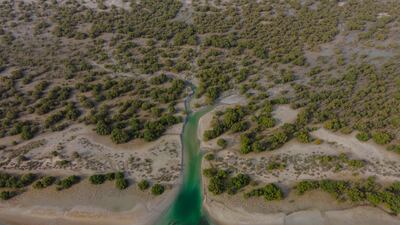
To fight climate change, the UAE is carrying out projects such as reducing emissions and planting mangroves. -
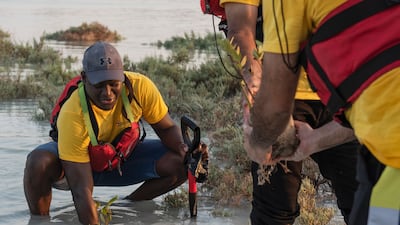
Mangroves, trees that survive in salty water, play an important part in the ecosystem. -
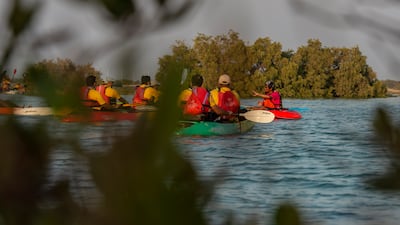
By 2030, the UAE intends to plant 100 million mangroves. -
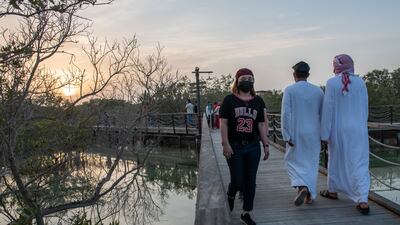
Visitors at Jubail Mangrove Park. Schools and businesses are planting saplings as part of the UAE's campaign. -
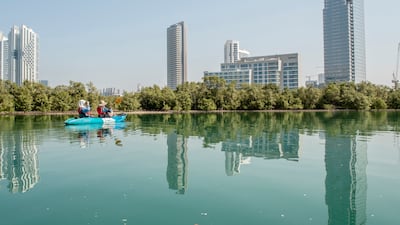
Volunteers during a mangrove clean-up organised by the World Wildlife Fund and Seahawk Abu Dhabi. -
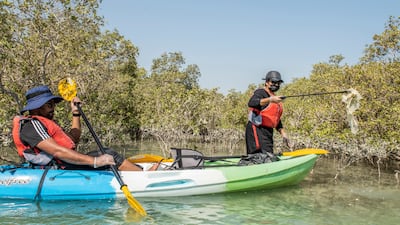
Young mangroves can be damaged by plastic and other waste dumped into the sea. -
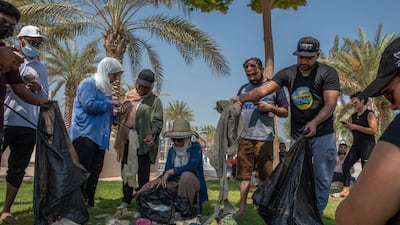
Volunteers sort rubbish gathered during a clean-up of mangroves in Abu Dhabi. -

After collecting debris from the mangroves, volunteers use an app to track their progress. -
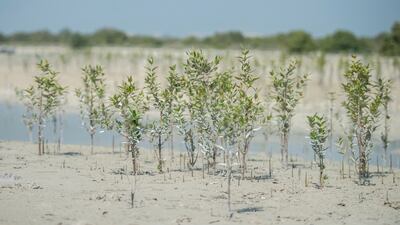
The grey mangrove is the species that grows extensively in UAE. -
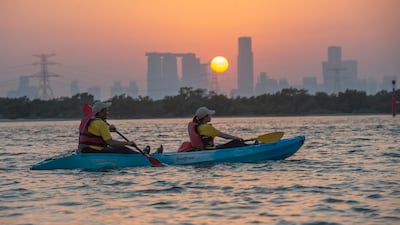
Visitors enjoy an evening paddle by the mangroves and a sunset view of Abu Dhabi.


Walking around the exhibition centre, I saw signs that pointed towards humans living in harmony with nature by 2050. It seemed like most societies have such a long way to go. Research has shown that indigenous people – who, although few in number, consist of 5 per cent of the world’s population – protect and conserve 80 per cent of the world’s biodiversity.
In the distance, I spotted a large piece of wood approximately a metre-and-a-half in diameter. It was called “the cookie”. Individuals were standing around it, listening to its origin story. It came from a forest in British Columbia, where many of the trees are a thousand years old. This one was 750. Ninety-seven per cent of the old-growth forest in British Columbia has been destroyed.
Coral reefs are important to life, too – particularly marine life. I recently went diving off the coast of my home city, Abu Dhabi, and witnessed first-hand the effects of climate change on our corals. On one of the corals I saw, which looked like a brain, one side was dead while the other was fighting to survive.
I am proud of the coral conservation work done in the UAE to fight this challenge, especially in Abu Dhabi. At Cop15, the Environment Agency – Abu Dhabi’s coastal and marine preservation programmes were ranked among the top 10 globally by the UN Environment Programme. Among their many activities, they have cultivated more than a million coral reef colonies. All the people working for nature are guardians of our future. They work tirelessly for our planet, and I am thankful for everything they do.
The time for strategic leadership and a refreshed vision is now. Joint actions from governments, businesses and the finance community are urgently required to reimagine our relationship with nature and to catalyse regeneration – especially to meet the target of conserving 30 per cent of land and marine ecosystems by 2030. As we go through various scientific reports and especially the findings presented by various global entities on nature and biodiversity, we soon realise that it is imperative for these groups to tackle the nature and climate crisis collaboratively and holistically. And we have seen during the pandemic how nature can thrive if we give it the space to regenerate.

It would be prudent to view nature and climate crises as two sides of the same coin and combine our net-zero strategies to work in tandem with protecting nature. This approach can be further developed by combining climate and nature-linked losses to existing climate change risks. Furthermore, it is vital that nature is placed at the centre of policy and regulations by governments, to empower and enable business and finance to drive activities aligned with nature restoration and regeneration and act to end the over-exploitation of nature, for example, through the provision of harmful subsidies.
It is also important that dialogues on nature and biodiversity must be facilitated across business and finance to adopt a regenerative model for nature. At the same time, financial institutions should integrate nature into financial decision making to embed relevant risks and ultimately support the transformation of the economy.
Lastly, as a society we must wake up to the truth of the various challenges we are experiencing regarding nature and biodiversity loss, and come together as individuals and as nations to take deliberate steps towards addressing the same.
With all the great work being done in the UAE and globally, there is a reason to be hopeful, but time is not on our side.

