


Irrespective of the results of Sunday’s parliamentary election in Lebanon, Hezbollah seems set to continue its decades-long project of expanding the powers of its “mini-state”, as it aims ultimately to seize control of all the levers of the Republic.
The Iranian-backed group, which doubles up as a militia and a political party, has always claimed to be driven by its so-called “resistance” to western influence, and that of Israel, in the Middle East. It has lately used this narrative of resistance, and the threat of violence, to warn Israel against drilling for oil and gas in the disputed maritime border area between the two countries.
Hezbollah leader Hassan Nasrallah pledged to block any extraction in the area unless its terms in the negotiations between Lebanon and Israel are met. Pro-Hezbollah newspaper Al-Akhbar even described it as the group’s “central priority” after the election. “The resistance stands ready to protect any decision by Lebanon to bring in international companies to carry out exploration,” Nasrallah said.
The problem with Hezbollah’s messaging, however, is that its priorities are not Lebanese in substance, but Iranian. And Nasrallah’s recent threats against those who want to disarm his group, a longstanding point of contention in Lebanese politics, is only a prelude to what he intends to do with these weapons – which is to seize the country’s national resources. Also to be taken seriously is Nasrallah’s constant caricaturising of the democratic process and the citizens’ right to choose their country’s path.
All the noise around the group’s weapons, as well as its own warnings against Israel, have come at a time when the international community is continuing to seek the revival of the 2015 nuclear deal between Iran and the five permanent members of the UN Security Council, plus Germany.
Hezbollah represents a priceless card for Iran’s all-powerful Islamic Revolutionary Guard Corps (IRGC). The group’s influence in Lebanon and the security threat it poses towards Israel, which also shares a land border with Lebanon, is useful for the Iranian regime – as is its ability to co-ordinate with Tehran-backed militias in other parts of the Arab world.
The Biden administration understands that the IRGC will not abandon its regional ambitions, and that Hezbollah is the region’s leading militia armed with an arsenal of rocketry. If Washington fulfils Tehran’s conditions for the sake of reviving their nuclear deal, the West will effectively be endorsing Hezbollah’s domination of Lebanese politics, which will eventually turn the country into an annex of the Iranian-backed resistance – irrespective of the West’s statements about elections and the democratic process.
Sunday’s election has provided the Lebanese people the opportunity to express their dissatisfaction with the ruling establishment as well as Hezbollah’s dominance. But no one, not least the people, should be under any illusion that change will begin and end at the ballot box. On the contrary, it is a long and difficult process that requires patience, persistence and perseverance.
The post-election period will require serious strategising on the part of Lebanon’s civil society on how to counter the schemes meant to efface the country’s sovereignty and continue the deliberate impoverishment of its people with the aim of subjugating them. Voting is a starting point towards seeking accountability, but it is the beginning, not the end of a winding road. Part of the reason for this is, of course, that the political establishment isn't going to readily concede its privileges.
Elections alone won’t be enough to set Lebanon on the right track again after years of economic mismanagement and the entrenchment of its political class. The international community needs to help, too, by applying more pressure than it usually does on Beirut to bring in reforms.
-

An electoral worker sits next to ballot boxes, at the Justice Palace, in Jdeideh. Reuters -

A soldier stands guard as ballots are counted at the Justice Palace. Reuters -

Jad Ghosn, an opposition candidate, gestures as people wait for the announcement of official election results, in Jdeideh. Reuters -
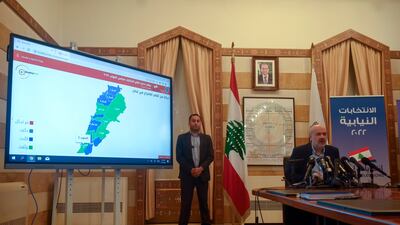
Lebanese Interior Minister Bassam Mawlawi announces the final results for some districts. EPA -

Opposition candidate Yassin Yassin gestures as he is greeted by supporters in Jeb Jennin, West Bekaa. Reuters -
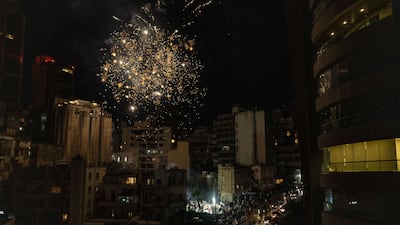
Supporters of the Lebanese Forces take to the streets during parliamentary elections in the Ashrafieh district of Beirut. Bloomberg -
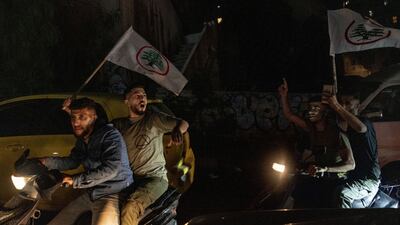
Lebanon headed to the polls with its economy in the grip of hyperinflation. Bloomberg -
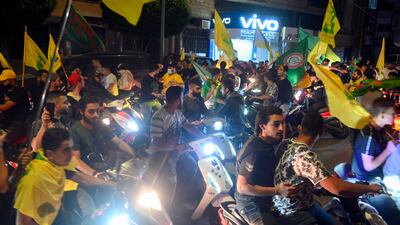
Lebanese youths supporting Hezbollah and Amal movement wave their party flags after parliamentary elections in a suburb of Beirut. EPA -
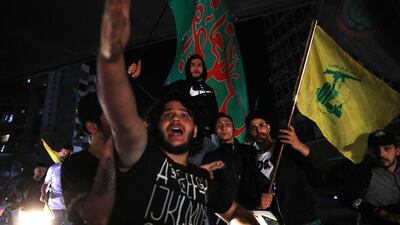
Supporters of Lebanon's Shiite groups Hezbollah and Amal lift their flags during a motorbike rally after voting. AFP -

Children swim in an inflatable pool that supporters of former prime minister Saad Hariri installed to illustrate their intention to boycott parliamentary elections in Beirut, Lebanon. AP Photo -
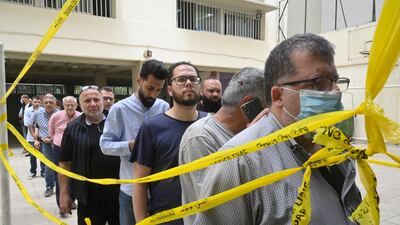
Voters queue to place their vote in parliamentary elections in Beirut, Lebanon. EPA -

Nabih Berri, Speaker of the Lebanese Parliament, stands in a polling booth to vote in Tebnin. Reuters -

Voters register at a polling station in Beirut. Bloomberg -
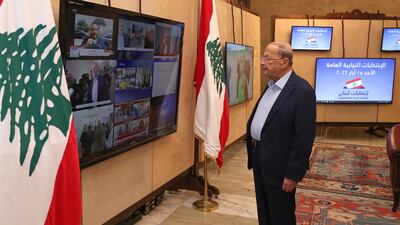
Lebanese President Michel Aoun follows the parliamentary elections on screens from the Presidential Palace in Beirut. AP -

A Lebanese woman shows her inked finger after she cast her vote at a polling station in Beirut. AP -
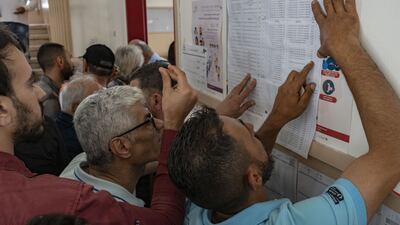
Voters look at a list of candidates at a polling station in Beirut. Bloomberg -

Lebanese policemen help a voter into a polling station in Beirut. AP -
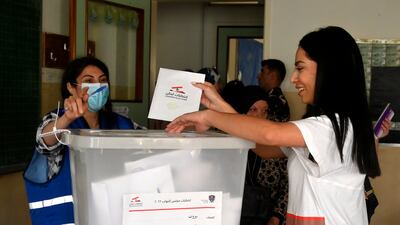
A Lebanese voter casts her ballot paper in Beirut. EPA -
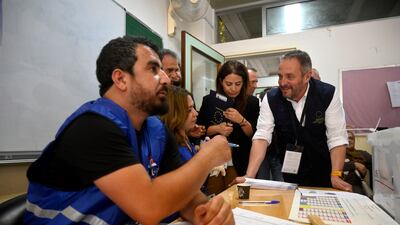
Gyorgy Holvenyi (R), chief observer of the European Union election observation mission, visits a polling station in Beirut. EPA -
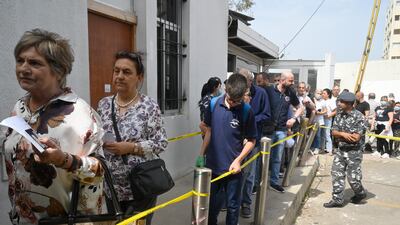
Lebanese people wait to vote during parliamentary elections in the capital city. EPA -
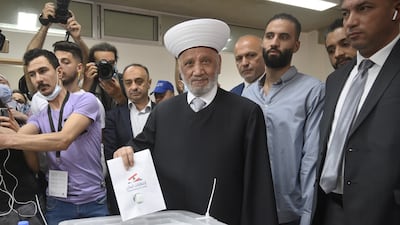
Sheikh Abdul Latif Derian, Grand Mufti of Lebanon, casts his ballot paper during parliamentary elections in Beirut. EPA -
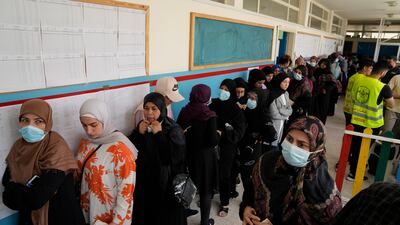
People queue to cast their votes in the Lebanese capital. AP -
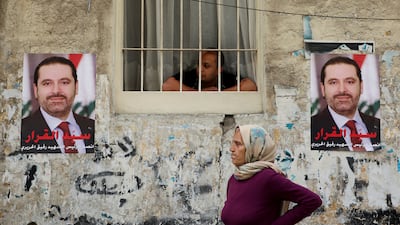
Posters in Al Tariq Al Jadida, Beirut, depict Lebanon’s former prime minister Saad Hariri. Reuters -
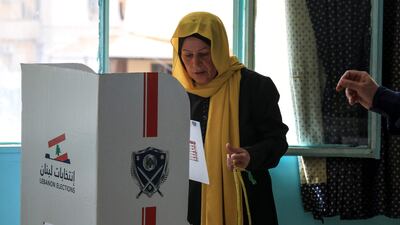
A woman prepares her ballot at a polling station in a southern suburb of Beirut. AFP -
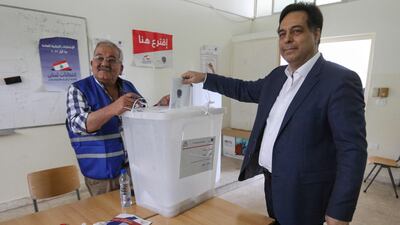
Former prime minister Hassan Diab, who succeeded Saad Hariri, casts his ballot in Beirut. AFP -

A voter checks lists for the parliamentary election at a polling station in the Lebanese capital Beirut. AFP -
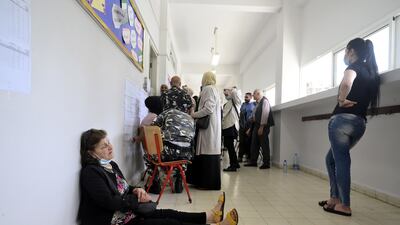
A woman waits to vote in Beirut. EPA -
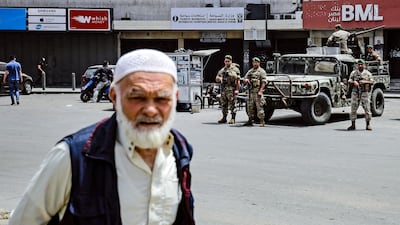
Security forces stand guard at Nur Square on the southern entrance of the northern Lebanese port city Tripoli. AFP -
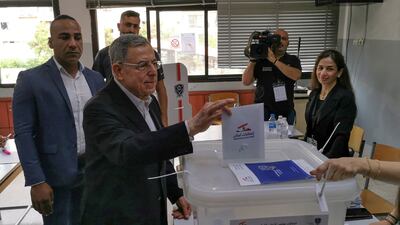
Former Lebanese prime minister Fouad Siniora casts his vote at a polling station during the parliamentary election, in Sidon, southern Lebanon. Reuters -
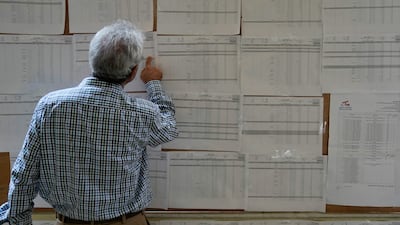
A man check voters' lists in the capital Beirut. AP -
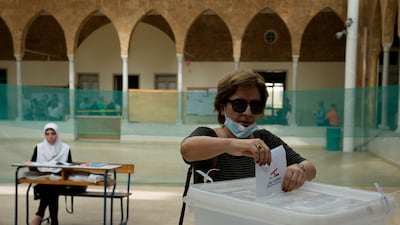
A woman votes in Lebanon's parliamentary elections in Beirut. AP -
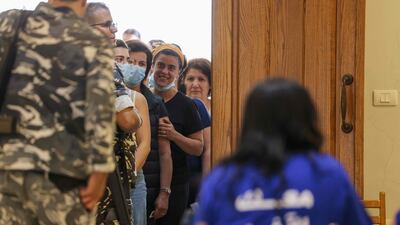
Police check the ID of voters outside a polling station near the Lebanese coastal city of Byblos (Jbeil), north of Beirut. AFP -

A voter dips her finger in ink after casting her ballot in the parliamentary election at a polling station near Byblos. AFP -
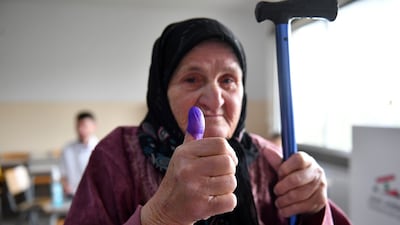
A Lebanese woman shows her ink-marked thumb after voting in Shmustar, Bekaa valley. EPA -
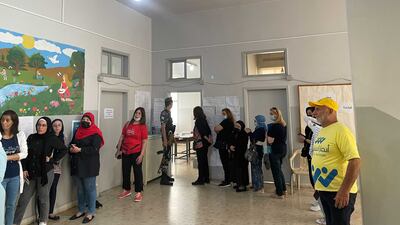
People queueing to vote at Ras El Nabeh Public School for Girls. Fatima Al Mahmoud/ The National


A longstanding problem has been the West’s proclivity to exclude Iran’s regional activities, some of which Hezbollah has had a hand in, from its nuclear negotiations with Tehran, concerned that this would amount to a deal-breaker. However, it is important for countries engaged in dialogue with the Iranian regime to raise this issue for the sake of long-term regional stability.
The international community may claim to be interested in preserving Lebanon’s independence and sovereignty. But, then, it must do more than simply “observe” the alleged human rights abuses by the ruling politicians, whose policies have impoverished more than half the country's population. Indeed, a report recently published by the UN’s special envoy on poverty, Olivier de Schutter, accusing the Lebanese government and Central Bank of violating human rights by destroying the economy in and of itself isn’t enough. The report must be sent to the UN Human Rights Council for further action to be taken.
Multilateral organisations, including the UN, the World Bank and the IMF, know who in Lebanon will block the preliminary $3 billion aid package conditioned on eight key reforms. They know who is already preventing reforms from happening and who is resisting the IMF’s conditions. They also know who disrupted the investigation into the Beirut Port blast in August 2020, which killed more than 200 people.
There is a need for all the stakeholders inside and outside Lebanon to activate local, regional and international options through a calculated strategy of accumulating legal, economic and political gains. This should be part of a clear mechanism and timeframe.
No matter the outcome of the election, it will be greatly undermined unless there is sufficient scrutiny of Hezbollah’s schemes, some of which are violent, to supplant Lebanon's sovereignty with its resistance movement. Indeed, these schemes – which include turning the country’s precious national resources into bargaining chips in the negotiations with Israel and international energy companies – will end up subjugating an entire country and its people.

