Yas Waterworld is using contactless technology to ease the visitor experience. Pawan Singh / The National


How to make tourist attractions fit for the post-Covid age


Mohamed Al Zaabi
Mohamed Al Zaabi
  • English
  • Arabic

November 18, 2021

The reasons why we love to travel are limitless. In the ancient past, it served a functional purpose, either to facilitate trade or discover new lands for resources. Now, it is so much more. Across the world, wonderfully diverse destinations have emerged, providing visitors with an eclectic mix of magical and memorable experiences.

In Abu Dhabi, an ambitious and relatively young emirate is rapidly becoming a world-class tourism destination, rivalling Singapore and Hong Kong, even providing an attractive alternative to traditional tourist hubs such as Orlando, Florida for those in the region who like to stay closer to home.

In the two decades to 2019, the UAE saw phenomenal growth in tourist numbers, rising 532 per cent to 21.5 million. Abu Dhabi accounted for more than half of that figure. Although visitor numbers understandably have decreased due to the Covid-19 pandemic, the future looks promising. Recently, the emirate eased health and safety measures for international tourists, whether they were here for leisure or business. In any case, the cooler months ahead have always signalled an influx in visitor footfall.

Keeping this in mind, companies that are tasked with accelerating the leisure and entertainment sector in Abu Dhabi, play a central role in diversifying the emirate’s economy to attract investment and spur growth. As part of this strategy, Abu Dhabi’s Yas Island has been transformed into a global tourist destination, featuring some of the emirate’s most visually appealing and immersive attractions.

  • Yas Bay Pier will be part of the Yas Bay district and will have many recreational possibilities, according to Miral. Courtesy Miral
    Yas Bay Pier will be part of the Yas Bay district and will have many recreational possibilities, according to Miral. Courtesy Miral
  • Miral describes Yas Arena as an epic centre of energy and entertainment. The multipurpose arena will have a capacity of 18,000. Courtesy Miral
    Miral describes Yas Arena as an epic centre of energy and entertainment. The multipurpose arena will have a capacity of 18,000. Courtesy Miral
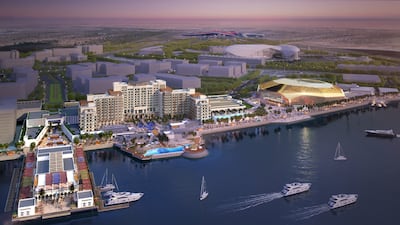
  • Hilton Family Resort and Beach Club will be one of two hotels located in Yas Bay. Courtesy Miral
    Hilton Family Resort and Beach Club will be one of two hotels located in Yas Bay. Courtesy Miral
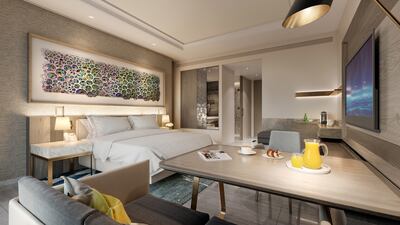
  • A rendering of a room at the Hilton Family Resort and Beach Club. The Hilton will be one of two hotels located in Yas Bay, one of three districts that will make up the new development.Courtesy Miral
    A rendering of a room at the Hilton Family Resort and Beach Club. The Hilton will be one of two hotels located in Yas Bay, one of three districts that will make up the new development.Courtesy Miral
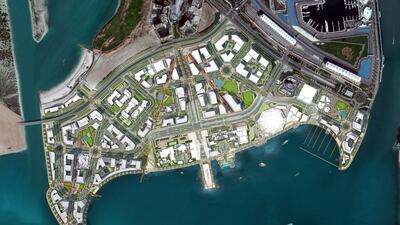
  • Rendering of Miral’s Dh12 billion development plan to transform the southern end of Yas Island in Abu Dhabi. Courtesy Miral
    Rendering of Miral’s Dh12 billion development plan to transform the southern end of Yas Island in Abu Dhabi. Courtesy Miral
  • Yas Bay Promenade will be part of the Yas Bay district, the public waterfront and entertainment area of the Dh12bn development. The promenade will include more than 50 food and beverage outlets and 20 retail outlets. Courtesy Miral
    Yas Bay Promenade will be part of the Yas Bay district, the public waterfront and entertainment area of the Dh12bn development. The promenade will include more than 50 food and beverage outlets and 20 retail outlets. Courtesy Miral

As the chief executive of Miral, the company tasked with developing Yas Island’s attractions, I believe “change accelerators” are vital ingredients in keeping up with the pace of change in response to the global pandemic.

Change is essential, but rarely easy. Staying competitive and agile amid constant disruption requires a commitment to continuous transformation. Identifying change accelerators in Abu Dhabi’s leisure and entertainment sector should be a high priority for everyone in the industry. Three core areas deserve the most attention.

One is embracing a greater role for technology, ranging from facial recognition to gamification, in developing the sector. Failure to build the necessary digital infrastructure to accommodate this shift will hamper progress. Consumers have high expectations for leading destinations to offer a truly integrated experience, requiring reliable infrastructure that is constantly reviewed and improved. The pandemic has also forced the adoption of innovative technologies to ensure that healthy and safety measures are implemented across tourist attractions. Contactless solutions, for example, deliver a seamless and experience that promotes guest safety and optimises well-being.

And visitors want this. Miral, for example, has implemented a technology called Facepass to improve the digital ecosystem and experiences available on Yas Island. Facepass is enabling our theme parks and attractions to offer advanced, contactless technology that address both digital innovation and safety concerns that stemmed from the pandemic. We have seen greater demand from visitors for this type of technology, clearly demonstrating that they are ready for innovative tools to add another dimension to their overall experience.

Ferrari World Abu Dhabi, Yas Waterworld and Warner Bros, all on Yas Island. Yas Island

Next, there needs to be an increased focus on meaningful connections. Following the emotional isolation created by early measures to fight the pandemic, consumers seem to be re-evaluating their priorities and focusing on activities that provide fulfilment. The entertainment industry needs to concentrate on how its products and services are serving guests’ values, not only through traditional means of entertainment but also connection and well-being. Unlocking growth for the industry is rooted in delivering lasting memories for visitors and tourists. Creating what we think of as customer value is, in essence, about generating joy.

It can happen in little, unexpected ways. One of the most defining moments for us was seeing a truly collaborative effort across multiple entities in Abu Dhabi to host a six-year-old American boy, Bridger Walker, and his family on Yas Island. Bridger made headlines in 2020 after bravely protecting his younger sister from a vicious dog attack and sustaining numerous injuries to his face. We wanted to reward him for his bravery and invited him to spend some time in the UAE capital. It was an unforgettable experience for everyone involved, and one that demonstrated the purpose and impact our industry can generate. It also highlighted that tourism and entertainment is a deeply personal experience that reaches out to people, however far away they may be.

Finally, we need to understand that new policies surrounding entry requirements for visitors from overseas are key to delivering efficient access to wider audiences. We are currently operating at a crucial juncture, where the current regulations are rapidly progressing and the future of tourism is in the process of being determined. Following the decline in the number of Covid-19 cases, Abu Dhabi recently eased entry requirements for both international and domestic travellers, and we continue to support this with safety measures. Operators need to do their part by providing a sense of consistency and act as a source of information to help guests navigate any areas of concern.

At the same time, those who work in the tourism and entertainment sector are facing unprecedented trials. Forecasting obstacles has never been more challenging, making it all the more important for companies to evaluate new opportunities and seize them wherever possible. Ours is now celebrating its 10-year anniversary, and looking ahead to the next decade we are already pivoting to become a data-driven organisation and invest in the digital foundation needed to harness big data and predictive analytical solutions. That is key to the customer-centric approach.

The future is ours to create, and it will inevitably be a brave new world. But whatever shape it takes, at its core will be a combination of memory and experience. How we bring those things alive is what travel, tourism and entertainment are all about.


The biog

Hobbies: Salsa dancing “It's in my blood” and listening to music in different languages

Favourite place to travel to: “Thailand, as it's gorgeous, food is delicious, their massages are to die for!”  

Favourite food: “I'm a vegetarian, so I can't get enough of salad.”

Favourite film:  “I love watching documentaries, and am fascinated by nature, animals, human anatomy. I love watching to learn!”

Best spot in the UAE: “I fell in love with Fujairah and anywhere outside the big cities, where I can get some peace and get a break from the busy lifestyle”

Cultural fiesta

What: The Al Burda Festival
When: November 14 (from 10am)
Where: Warehouse421,  Abu Dhabi
The Al Burda Festival is a celebration of Islamic art and culture, featuring talks, performances and exhibitions. Organised by the Ministry of Culture and Knowledge Development, this one-day event opens with a session on the future of Islamic art. With this in mind, it is followed by a number of workshops and “masterclass” sessions in everything from calligraphy and typography to geometry and the origins of Islamic design. There will also be discussions on subjects including ‘Who is the Audience for Islamic Art?’ and ‘New Markets for Islamic Design.’ A live performance from Kuwaiti guitarist Yousif Yaseen should be one of the highlights of the day. 

MATCH INFO

England 2
Cahill (3'), Kane (39')

Nigeria 1
Iwobi (47')

If you go:
The flights: Etihad, Emirates, British Airways and Virgin all fly from the UAE to London from Dh2,700 return, including taxes
The tours: The Tour for Muggles usually runs several times a day, lasts about two-and-a-half hours and costs £14 (Dh67)
Harry Potter and the Cursed Child is on now at the Palace Theatre. Tickets need booking significantly in advance
Entrance to the Harry Potter exhibition at the House of MinaLima is free
The hotel: The grand, 1909-built Strand Palace Hotel is in a handy location near the Theatre District and several of the key Harry Potter filming and inspiration sites. The family rooms are spacious, with sofa beds that can accommodate children, and wooden shutters that keep out the light at night. Rooms cost from £170 (Dh808).

Men's football draw

Group A: UAE, Spain, South Africa, Jamaica

Group B: Bangladesh, Serbia, Korea

Group C: Bharat, Denmark, Kenya, USA

Group D: Oman, Austria, Rwanda

Mercer, the investment consulting arm of US services company Marsh & McLennan, expects its wealth division to at least double its assets under management (AUM) in the Middle East as wealth in the region continues to grow despite economic headwinds, a company official said.

Mercer Wealth, which globally has $160 billion in AUM, plans to boost its AUM in the region to $2-$3bn in the next 2-3 years from the present $1bn, said Yasir AbuShaban, a Dubai-based principal with Mercer Wealth.

Within the next two to three years, we are looking at reaching $2 to $3 billion as a conservative estimate and we do see an opportunity to do so,” said Mr AbuShaban.

Mercer does not directly make investments, but allocates clients’ money they have discretion to, to professional asset managers. They also provide advice to clients.

“We have buying power. We can negotiate on their (client’s) behalf with asset managers to provide them lower fees than they otherwise would have to get on their own,” he added.

Mercer Wealth’s clients include sovereign wealth funds, family offices, and insurance companies among others.

From its office in Dubai, Mercer also looks after Africa, India and Turkey, where they also see opportunity for growth.

Wealth creation in Middle East and Africa (MEA) grew 8.5 per cent to $8.1 trillion last year from $7.5tn in 2015, higher than last year’s global average of 6 per cent and the second-highest growth in a region after Asia-Pacific which grew 9.9 per cent, according to consultancy Boston Consulting Group (BCG). In the region, where wealth grew just 1.9 per cent in 2015 compared with 2014, a pickup in oil prices has helped in wealth generation.

BCG is forecasting MEA wealth will rise to $12tn by 2021, growing at an annual average of 8 per cent.

Drivers of wealth generation in the region will be split evenly between new wealth creation and growth of performance of existing assets, according to BCG.

Another general trend in the region is clients’ looking for a comprehensive approach to investing, according to Mr AbuShaban.

“Institutional investors or some of the families are seeing a slowdown in the available capital they have to invest and in that sense they are looking at optimizing the way they manage their portfolios and making sure they are not investing haphazardly and different parts of their investment are working together,” said Mr AbuShaban.

Some clients also have a higher appetite for risk, given the low interest-rate environment that does not provide enough yield for some institutional investors. These clients are keen to invest in illiquid assets, such as private equity and infrastructure.

“What we have seen is a desire for higher returns in what has been a low-return environment specifically in various fixed income or bonds,” he said.

“In this environment, we have seen a de facto increase in the risk that clients are taking in things like illiquid investments, private equity investments, infrastructure and private debt, those kind of investments were higher illiquidity results in incrementally higher returns.”

The Abu Dhabi Investment Authority, one of the largest sovereign wealth funds, said in its 2016 report that has gradually increased its exposure in direct private equity and private credit transactions, mainly in Asian markets and especially in China and India. The authority’s private equity department focused on structured equities owing to “their defensive characteristics.”

World ranking (at month’s end)
Jan - 257
Feb - 198
Mar - 159
Apr - 161
May - 159
Jun – 162
Currently: 88

Year-end rank since turning pro
2016 - 279
2015 - 185
2014 - 143
2013 - 63
2012 - 384
2011 - 883

Updated: November 18, 2021, 5:52 AM