


At Unesco’s headquarters in Paris this week, the UAE secured a seat on the Intergovernmental Committee for the Safeguarding of the Intangible Cultural Heritage for the next four years.
This is the second time the UAE assumes this position, highlighting our extensive expertise in the areas covered by the 2003 Convention for the Safeguarding of Intangible Cultural Heritage. Between 2019 and 2023, the Emirates served on Unesco’s executive board, helping to advance the organisation’s cultural, scientific and educational goals and initiatives. The UAE is also currently serving on Unesco’s Intergovernmental Committee for the Protection and Promotion of the Diversity of Cultural Expressions since our nomination in 2021.
With this successful candidacy, it is fitting that we reflect on our nation’s dedication to preserving our cultural traditions. The UAE has long recognised the importance of preserving intangible cultural heritage, which serves as a repository of knowledge, values and practices passed down through generations. From the ancient art of falconry to Arabic calligraphy, whether it is the communal spirit of the majlis, the colourful intricacy of talli embroidery, or the age-old culinary tradition of preparing harees, these elements form the bedrock of Emirati identity and contribute to our nation's cultural richness.
-

Arabic calligraphy is the latest addition from the UAE, among other countries, to Unesco's intangible cultural heritage lists. AFP -
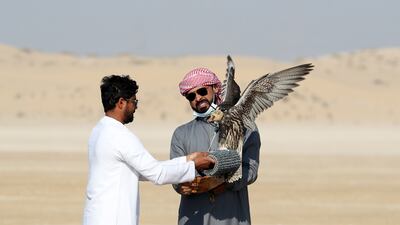
Falconry has been practised in the Arab region for 4,000 years, mainly by desert-dwelling Bedouins as an important form of hunting and fishing in a land with scarce natural resources. Pawan Singh / The National -

Learn more about al aflaj system in Al Ain in 'Emirates from Above', a National Geographic film. The traditional irrigation network system in the UAE has been added to Unesco's list. -
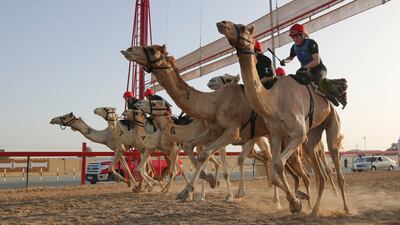
Camel racing, an age-old tradition in the region, is still as popular today. EPA -
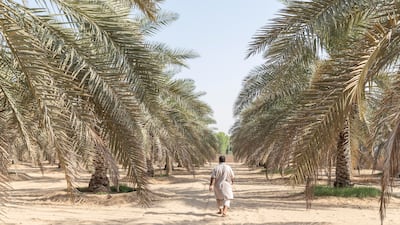
Date palms have been used for centuries for myriad purposes around the Gulf, including the UAE. It was added by Unesco in 2019. Antonie Robertson / The National -
Al azi poetry has been offered protected status by Unesco to develop a clear national identity in the UAE. -
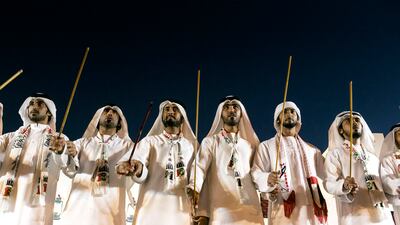
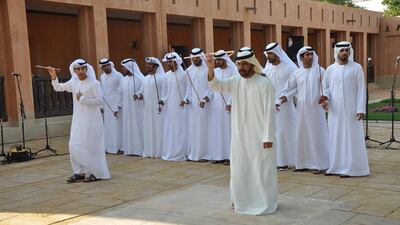
Al rafza is a traditional art form performed by men during special occasions, from weddings to national festivals. Reem Mohammed / The National -

The serving of Arabian coffee is a vital part of hospitality in the region and 'considered a ceremonial act of generosity', says the Unesco inscription. Khushnum Bhandari / The National -
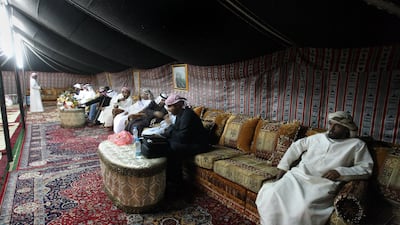
The majlis, a cultural and social space prevalent throughout the region, was added in 2015 on behalf of the UAE, Saudi Arabia, Oman and Qatar. Jaime Puebla / The National -
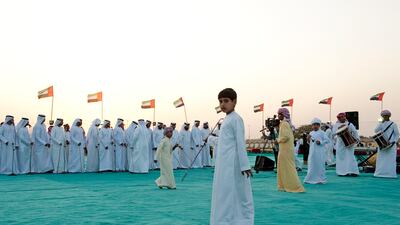
Al ayyala is a cultural performance practised in north-western Oman and throughout the UAE. It was added in 2014. -
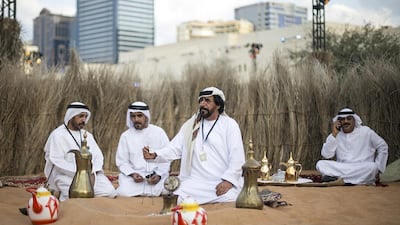
Al taghrooda, traditional Bedouin chanted poetry, was added in 2012. Mona Al Marzooqi / The National -
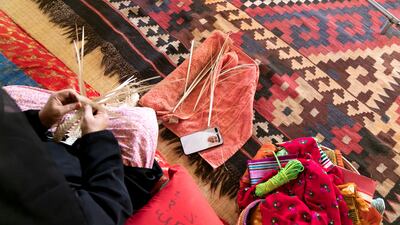
Sadu, a traditional weaving technique, is on the list twice, once for the UAE and once for Saudi Arabia and Kuwait. It was added for the UAE in 2011. Reem Mohammed / The National


Since 2011, the UAE has inscribed 15 elements on Unesco’s List of Intangible Cultural Heritage with the aim of ensuring better protection and awareness of their significance. This has been made possible by the collaborative efforts of the Ministry of Culture, the Department of Culture and Tourism – Abu Dhabi, and Dubai Culture. These efforts have positioned the UAE as a regional leader and one of the top 10 nations globally in cultural heritage preservation within Unesco’s framework.
At the heart of our candidacy to the Intergovernmental Committee for the Safeguarding of the Intangible Cultural Heritage lies a three-fold commitment.
Firstly, strengthening capacity is essential to ensure the effective safeguarding of intangible cultural heritage. Through strategic investment in education, training and research initiatives, we aim to empower communities to take ownership of their cultural traditions, ensuring that the transmission of traditions to future generations remains robust and sustainable.
The Emirates has a track record of supporting both tangible and intangible heritage, and our efforts extend beyond borders. In November 2022, the Ministry of Culture, in collaboration with the UAE’s National Commission for Education, Culture and Science, signed an agreement with the Islamic World Educational, Scientific and Cultural Organisation, or Icesco. This partnership aims to inscribe African heritage on the Representative Lists of the Intangible Cultural Heritage of Humanity of Icesco and Unesco. Through these initiatives, we continue to build capacity and foster a global appreciation of cultural preservation.
Second, in today’s interconnected yet fragmented world, promoting international exchange and mutual understanding is of utmost importance. Through multinational files, we aim to facilitate dialogue and co-operation among nations for a deeper appreciation of diverse and shared cultural expressions.
In 2021, falconry was inscribed on Unesco’s list through the largest multinational submission led by the UAE, with the participation of 23 fellow member states that share this heritage. This collaborative effort signifies our commitment to fostering global connections and celebrating diversity on an international level.
Third, protecting communities and practitioners of heritage lies at the core of our commitment. Recognising the invaluable role of local communities as custodians of intangible cultural heritage, we are dedicated to supporting their efforts, ensuring that they continue to thrive and flourish.
As climate change increasingly threatens our way of life, the need to protect intangible cultural heritage becomes even more critical. Traditional knowledge and practices embedded within our heritage offer sustainable solutions to environmental challenges. By preserving these cultural elements, we not only safeguard our heritage but also improve our resilience to climate change, thereby promoting sustainable development for future generations.
Over the past 50 years, the UAE has made significant strides in various fields while continuing to work to preserve and celebrate its diverse cultural legacies, ensuring they are passed down from one generation to the next in a sustainable manner. Our successful candidacy to the Intergovernmental Committee for the Safeguarding of the Intangible Cultural Heritage is a testament to our unwavering dedication to cultural preservation and progress.
We look forward to continuing to work with our partners and fellow member states to advance the objectives of the 2003 Convention, provide guidance on best practices and offer recommendations for safeguarding intangible cultural heritage. Most importantly, we remain dedicated to protecting and celebrating the UAE’s diverse cultural heritage.

