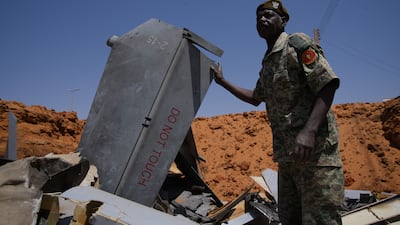

The UN on Friday called for an immediate halt to drone attacks in Sudan's civil war, warning that the weapons have become the leading cause of civilian casualties this year.
Fighting has intensified in recent weeks across the strategic Kordofan region, which connects eastern and western Sudan, as the Sudanese military and the Rapid Support Forces (RSF) battle for control of territory. Three and a half years of war has killed tens of thousands of people and forced millions from their homes.
Rosemary DiCarlo, UN undersecretary general for political and peacebuilding affairs, told the Security Council that a mutual ban on drones had the “potential to dramatically improve protection for civilians”.
“At a minimum, they [the warring parties] should agree on concrete commitments and operational arrangements to strictly regulate their drone use,” she said.
UN data shows that more than 1,100 people were killed by drone strikes across Sudan during the first half of this year.
Ms DiCarlo condemned an October 3 drone strike that hit two lorries contracted by the World Food Programme and killed a driver. The lorries were clearly marked and had the required travel permits, she said.
She also warned that Sudan's warring parties showed little willingness to negotiate an end to the conflict.
“They are not moving closer to dialogue,” she said. “On the contrary, they seem to believe that they can make greater gains on the battlefield and that continued external support will allow them to pursue their objectives by force.”
Her comments come after an air strike killed five children in a town controlled by the RSF in North Kordofan on Thursday, according to the Emergency Lawyers, a rights group monitoring abuses in Sudan’s conflict, who blamed the army for the attack.
Sudan’s army chief and de facto leader, Gen Abdel Fattah Al Burhan, said he had assured US President Donald Trump of his commitment to peace, despite months of stalled negotiations.
Britain’s deputy UN ambassador, Kate Foster, called for tougher sanctions against those supplying weapons to and financing Sudan’s warring parties.
“The external support sustaining this conflict needs to end,” Ms Foster told the council. “The advancing drone capabilities we are witnessing are procured, financed, transferred and sustained through networks outside of Sudan.”
She also called for changes to the Security Council’s sanctions regime.
“The Security Council Sudan sanctions regime needs to evolve to reflect how this war is being fought today,” she said. Ms Foster added that Britain supported strengthening sanctions to increase pressure on those supplying, financing and enabling the war.
US deputy ambassador to the UN Jeff Bartos called for an immediate humanitarian truce in Sudan and an expansion of the Security Council’s arms embargo, warning that continued weapon supplies were fuelling the conflict and undermining peace efforts.
“We need a humanitarian truce. Let me repeat that: we need a humanitarian truce,” Mr Bartos told the council. He said a ceasefire was essential to enable an inclusive political dialogue and transition to civilian-led government.
He said drone attacks and air strikes continued to kill and injure civilians daily, citing a strike on a displacement shelter in Blue Nile state last week, reportedly carried out by the RSF, that killed more than 30 displaced people.
“An expanded arms embargo will raise the cost of continued conflict and impede the ability of external actors to provide military support to the warring parties,” Mr Bartos said.
“The United States will continue to push to expand the sanctions regime to better reflect the realities of a conflict that now spans the entire country.”

