
The Iran war had cost the US taxpayer at least $38 billion by August 1 and expenses are projected to run at about $3 billion a month if the conflict continues, a new report has found.
The $38 billion tally reflects the costs of replacing expended munitions and equipment lost in battle, increased flying hours, other operations, and increased fuel costs, the Congressional Budget Office report on Pentagon spending on the war said in its report, released on Tuesday.
The figure is about square with the costs outlined by Defence Secretary Pete Hegseth to Congress in July.
The report from the CBO, a federal agency charged with providing budget and economic information to Congress, added that depending on the level of violence, the Pentagon's costs could come in at about $3 billion a month.
"Monthly costs could be higher still if the violence escalated further," it said.
The CBO report said its estimate does not include costs borne by other parts of the federal government, such as how the increased cost of fuel has affected various agencies. It also does not include costs already accounted for in the federal budget.
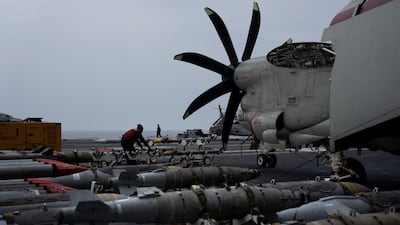
It highlighted that the main cost of the conflict has been the large expenditure of missile defence interceptors, which it said will leave the US with a reduced inventory "for several years".
"The shortfall would become especially problematic if a conflict arose with an opponent whose arsenal included large numbers of ballistic and cruise missiles," it added, pointing to the arms held by China.
The Pentagon inspector general's report, released last week, acknowledged "strategic inventory shortfalls" and industrial bottlenecks for resupply.
The shortfalls have been widely reported over the past several months, though President Donald Trump's administration has consistently rejected it. Mr Trump said said in a social media post last week that the US is “producing more exquisite and elite weapons than at any time in our history".
The Pentagon has announced tens of billions of dollars in production deals with defence contractors in recent weeks. Last month, it announced deals with Raytheon, Northrop Grumman and Lockheed Martin to boost production of missiles and missile parts.
Democratic Congressman Adam Smith, who sits on the House Armed Services Committee, called the war "disastrous".
“The American people, and a majority in Congress, have made it overwhelmingly clear that Trump’s war must end now," he said in a statement. "The longer it drags out, the more likely we will find ourselves embroiled in another prolonged war, which is precisely what Trump promised voters he would never do.”

