US President Donald Trump will address Congress on Tuesday in the annual State of the Union, a prime-time speech to highlight his achievements and outline his future agenda.
Since returning to the White House last year, Mr Trump, 79, has reshaped what it means – and what to expect – from a President using social media and off-the-cuff remarks to set policy and communicate directly with the public.
Mr Trump's job approval has remained consistently low. A recent Washington Post-ABC News-Ipsos poll found that only 39 per cent of voters approve of his performance. Recent surveys find significant disapproval among Americans on issues including the economy, tariffs and immigration.

State of the economy
Mr Trump has increased tariffs on steel, cars and electronics, saying it would take manufacturing back to the US and be a handy tool in foreign policy.
A major setback came when the Supreme Court ruled against one of his flagship tariff programmes last week. He responded by demanding more trade powers from Congress and promising an even broader tariff plan.
"As President, I do not have to go back to Congress to get approval of tariffs," Mr Trump wrote on Truth Social on Monday. "It has already been gotten, in many forms, a long time ago. They were also just reaffirmed by the ridiculous and poorly crafted Supreme Court decision."
The New York Times reported on Monday that the EU has paused the ratification of a trade deal with the US after the ruling.
With a Republican-controlled Congress, Mr Trump has largely concentrated power through executive action and loyalist appointments in key positions.
He passed a sweeping tax-cut bill that creates savings accounts for newborns, eliminates taxes on tips and adds deductions. These were funded by deep cuts to health care and food subsidy programmes for the poorest Americans.
The state of the economy will be critical as the nation heads into the November midterm elections, where historically the party of the sitting president loses seats in Congress.
Mr Trump has blamed his Democratic predecessor, Joe Biden, for high food and housing costs while taking credit for stock market gains and other economic improvements.
"Watch the State of the Union. We're going to be talking about the economy. We inherited a mess," Mr Trump said last week.
Nobel Peace Prize?
On foreign policy, he continues to insist he should have received the Nobel Peace Prize, claiming he ended eight wars around the world.
Despite promises to reduce US involvement conflicts overseas, his administration has carried out strikes in Yemen, Iran, Syria, Iraq and Nigeria.
Mr Trump claimed control of Venezuela’s oil reserves after ousting Nicolas Maduro and detaining him and his wife in a New York prison. He also threatened to take over Greenland.
In recent weeks, amid increasing warnings that he might order military strikes against Iran, he reinforced the US military presence in the Middle East.
He continues to put pressure on Tehran to reach a deal on the future of its nuclear programme.
In Gaza, he unveiled a plan last week pledging $17 billion in reconstruction under his Board of Peace initiative, although Israeli strikes continue there despite a ceasefire.
-
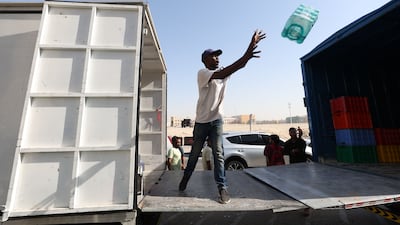
UAE charity The Giving Family prepares to hold an iftar event in Dubai's Al Quoz area. Chris Whiteoak / The National -
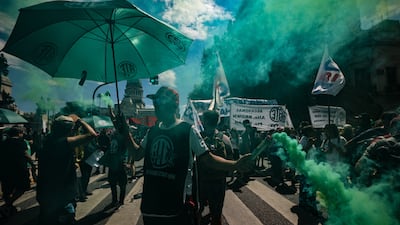
Protesters gather in Buenos Aires to show their opposition to a labour reform plan in Argentina. EPA -
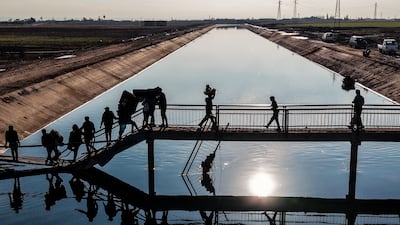
People flee a formerly Kurdish-controlled area of Aleppo, in Syria. Getty images -
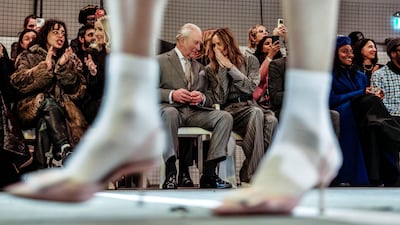
Britain's King Charles III attends the opening show of London Fashion Week. Reuters -
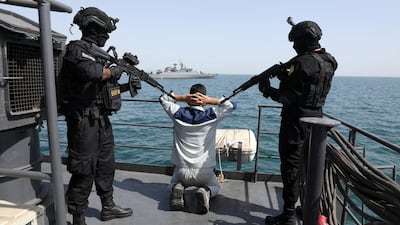
Members of the Iranian military take part in joint naval exercises with Russia, in southern Iran. Reuters -
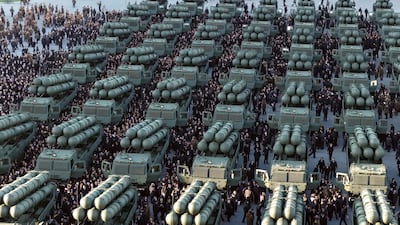
Rocket launchers are displayed during a ceremony in Pyongyang, North Korea. Reuters -
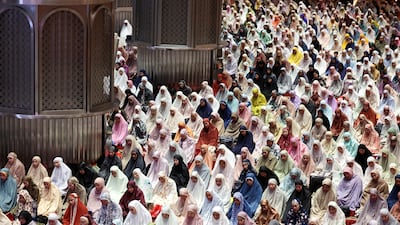
Indonesian women attend taraweeh prayers at the Great Mosque of Istiqlal, in Jakarta. Reuters -
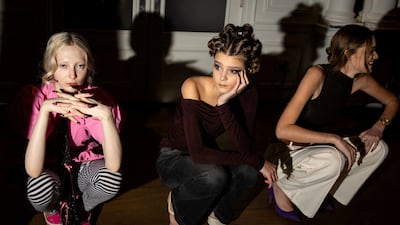
Models rest backstage before the Bibhu Mohapatra Fall and Winter 2026 show, at New York Fashion Week. Reuters -
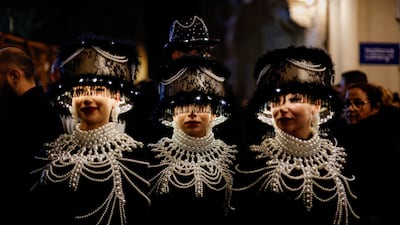
Revellers attend a carnival in the village of Ghaxaq, Malta. Reuters -
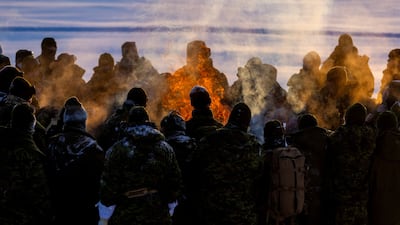
Canadian military personnel light a signal fire during an annual series of drills centred on the defence of the Canadian Arctic. Reuters -
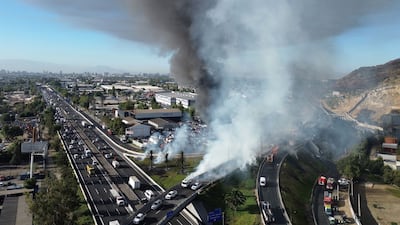
Smoke rises from the site of a gas lorry explosion in Santiago, Chile. AFP -
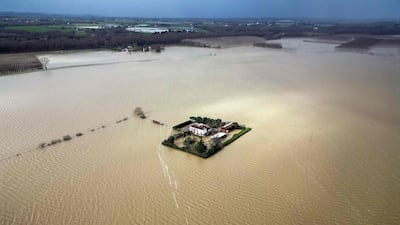
Flooding surrounds a house in the village of Couthures-sur-Garonne, in south-west France. AFP -
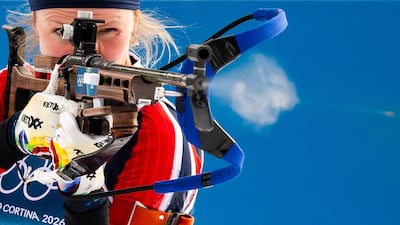
Norway's Karoline Offigstad Knotten shoots in the women's biathlon 4x6km relay event, at the Milano Cortina Winter Olympics. AFP -
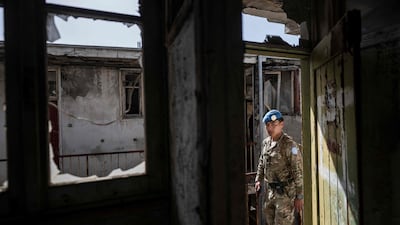
A member of the UN peacekeeping force in Cyprus patrols the buffer zone separating Cypriot territory and the breakaway Turkish Republic of Northern Cyprus. AFP -
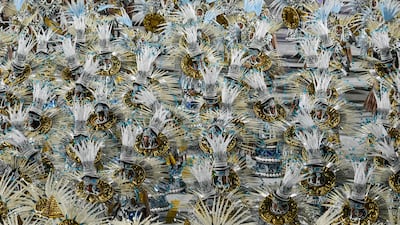
Members of the Paraiso do Tuiuti samba school perform at the Rio Carnival, in Brazil. AFP -
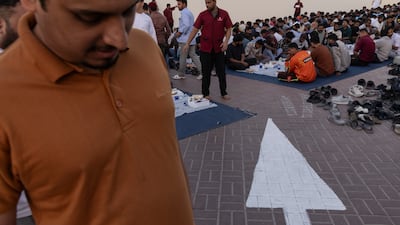
Muslims break their fast at Al Farooq Omar bin Al Khattab Mosque in Al Safa, Dubai. Antonie Robertson / The National -
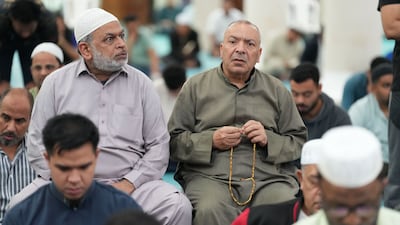
Worshippers attend morning prayers at Sheikh Hazza bin Sultan Mosque in Abu Dhabi. Pawan Singh for The National -
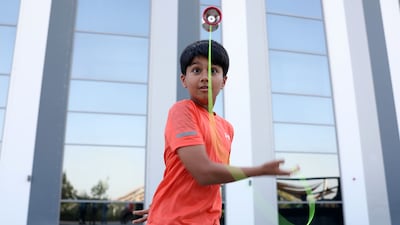
Ayaan Mendon, an 11-year-old Dubai resident who aims to climb the 7,100-metre Lenin Peak in Tajikistan this year. Chris Whiteoak / The National -
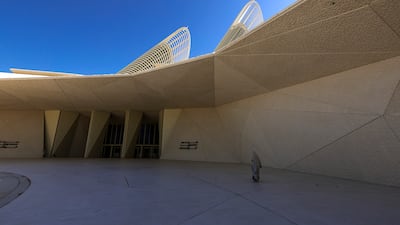
Zayed National Museum. Victor Besa / The National -
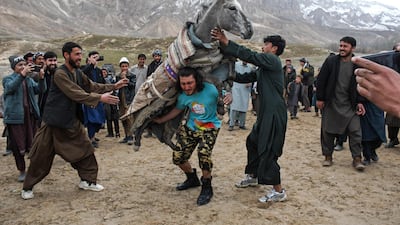
Afghan athlete Mudasir Tahiri, centre, carries a donkey on his shoulder to show his strength in the Nahr Shahi district of Balkh province. AFP -
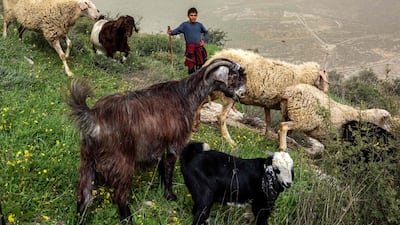
A young shepherd tends his flock in the hills near the village of Asira Al Shamaliya, north of Nablus in the occupied west bank, during a dust storm. AFP -
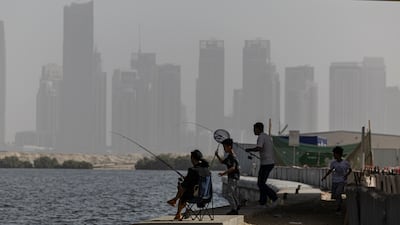
A family fishes off the breakwater along the Creek extension behind Business Bay on a hazy day in Dubai. Antonie Robertson/The National -
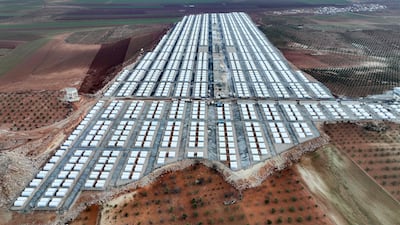
The Akbaran camp near Akhtarin in Aleppo province for people arriving from Al Hol camp in eastern Syria. AFP -
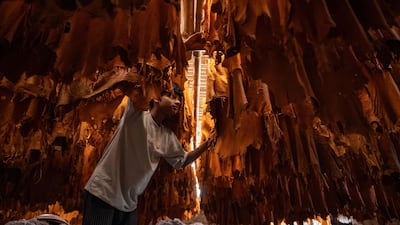
A Bangladeshi labourer inspects leather at a tannery in Dhaka. AFP -
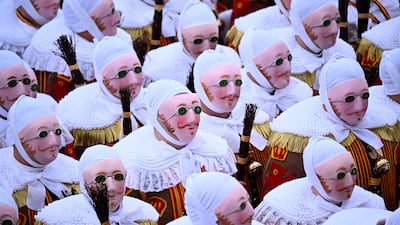
The Carnival of Binche in Hainaut, Belgium. AFP -
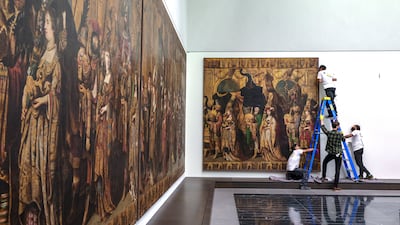
The restored Triumph of David artwork, inspired by the biblical tale of David and Goliath, is installed at Louvre Abu Dhabi. Victor Besa / The National -
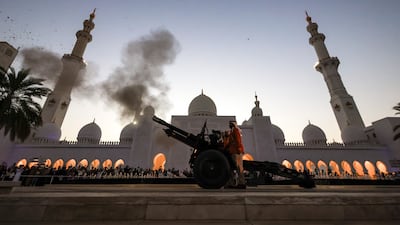
A cannon is fired at Sheikh Zayed Grand Mosque in Abu Dhabi to mark the first iftar of Ramadan. Victor Besa / The National -

Meta chief executive Mark Zuckerberg leaves court in Los Angeles, California, after taking the stand in a test case accusing social media platforms of being addictive for children. Reuters -

Members of the Iranian military take part in joint naval exercises with Russia in southern Iran. Reuters -
From top left, US envoy Jared Kushner, US Secretary of State Marco Rubio and U S Vice President JD Vance attend the inaugural meeting of the Board of Peace in Washington. Getty Images


Immigration
Under his "America First" agenda, immigration has become the centrepiece of Mr Trump's domestic policy.
He has expanded detention centres and sent thousands of immigration agents – often masked and in unmarked cars – to major cities to enforce mass deportations.
At least two Americans have been killed protesting against these actions, leading to larger demonstrations.
He has also cracked down on issuing visas, pausing immigration processing for people from 75 countries. Visa processing will be frozen indefinitely for applicants from countries including Somalia, Russia, Afghanistan, Brazil, Iran, Iraq, Egypt, Nigeria, Thailand and Yemen.
Mr Trump's State Department has boasted of revoking 100,000 visas since he returned to office, 8,000 of them belonging to students.
The Trump administration has said that its immigration enforcement is aimed at detaining the "worst of the worst". The White House on Monday declared February 22 as "National Angel Family Day", in remembrance of people killed by illegal immigrants.
Research shows that immigration does not correlate with higher crime rates, and some studies show that documented and undocumented immigrants are detained at a lower rate than Americans.
Democrats have debated how to respond to the State of the Union. Some plan silent defiance or to boycott the speech.
“The two options that are in front of us in our House are to either attend with silent defiance or to not attend and send a message to Donald Trump in that fashion," House minority leader Hakeem Jeffries said last week.
Several prominent Democrats are expected to hold a rival event at the National Mall, called the “People’s State of the Union"
“Trump is marching America towards fascism, and I refuse to normalise his shredding of our Constitution and democracy,” wrote Senator Chris Van Hollen.
Some Democrats may hold protest signs on the chamber floor or heckle Mr Trump during the speech.
After the address, Virginia’s Governor Abigail Spanberger will deliver the official Democratic rebuttal.