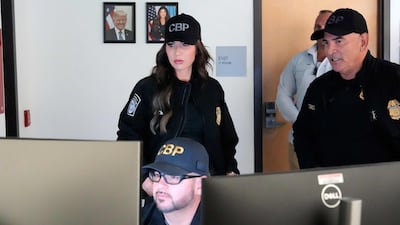
President Donald Trump's border clampdown has resulted in an increase in reports of tourists experiencing difficulties as they try to enter the US.
Canada, Denmark, Finland, France, Germany and the UK have all issued travel advisories noting the tough enforcement of US immigration rules, sometimes after their citizens were detained even with seemingly valid documents.
In one case, a German man on a tourist visa was detained for two weeks and then deported after trying to return to the US following a brief visit to Mexico. In another widely reported incident, a French scientist was denied entry after border agents looked at his phone.
Christopher Motta-Wurst, an immigration lawyer based in Seattle, shared some advice for travellers coming to the US.
What if a border guard agent stops me for questioning?
It is routine for US Customs and Border Patrol (CBP) agents to ask travellers about the reason for their visit, their planned length of stay and other basic questions. Always answer directly and honestly, Mr Motta-Wurst says.
“Oftentimes, if they're asking a question, they know the answer, or they probably know the answer. So don't lie,” he tells The National. “Answer the question that's asked. You don't have to go on a long soliloquy when they ask a question. If they ask a follow-up, then you answer that.”
Can they look at my phone?
Customs officers are allowed to look at your phone or laptop, but the likelihood they will do so is very low. Hundreds of thousands of travellers arrive at US points of entry each day and CBP has little time to carry out secondary screenings.
In fiscal year 2024, less than 0.01 per cent of arriving international travellers encountered by CBP at a port of entry had their electronic devices searched, the agency said.
US citizens arriving home can refuse to give CBP access to electronic devices, but border agents can take the items for further inspection.
“If you are worried about private information being viewed by CBP, don’t bring it in to the US,” Mr Motta-Wurst advises.
What about my social media activity?
Anyone applying for a US visa is subject to a review of their social media postings. Any content the US government deems sympathetic to groups such as Hamas can be disqualifying.
“This is not a new thing. You had to provide social media information for a while. It's just that the Department of State is looking into that more now, and the [Trump] administration has made very clear the things that if it sees [things it doesn't approve of] on social media, you will not be allowed into the US, or you may have your visa revoked,” Mr Motta-Wurst says.


