

As big national chains face a series of economic challenges, the next big thing in American coffee culture could be Yemeni cafes.
From bobo Berkeley in San Francisco, to sleepy suburban Ohio, Yemeni cafes are opening their doors at a breakneck pace, providing coffee, tea and socialising space to a growing number of customers.
Qahwah House is a franchise with a dozen cafes in several states in the Midwest and North-east.
On any given day, its three Dearborn, Michigan, branches are packed with customers – young and old – studying, socialising and reading the paper from morning until late at night.
“I saw that people here loved coffee and thought that if they tried the best quality and different styles, it could work as a business,” says owner Ibrahim Alhasbani, an eighth-generation Yemeni coffee farmer who moved to Michigan in 2016.
The rise of Yemeni cafe culture is happening at a time when industry powerhouses such as Starbucks are seeing declining sales. The company's perceived support for Israel, which the coffee chain denies, and its clashes with unions have fuelled an $11 billion market value loss in the US.
But for the growing legion of US-based Yemeni cafes, this is perhaps just a levelling of the playing field.
Mr Alhasbani married a Dearborn native, and after spending time in New York City, the family decided to move back to Michigan.
“The options for places for people to relax and meet up after work were a hookah bar or a restaurant,” he recalls of the scene in Dearborn in 2016. “If you don’t smoke and don’t want to eat, there were no other options.”
It was from Dearborn that he delved into the world of Yemeni coffee, for a time turning his dining room into a coffee lab, where he mixed and matched ingredients and flavours.
In 2017, the first Qahwah House opened its doors.
Each branch in the city meets a specific customer need, he says: the Schaefer Road cafe, the original branch, is chiefly grab and go; another, in west Dearborn, is orientated towards people who want to stay to chat, read or work into the early hours.
Yemeni coffee house in Dearborn, Michigan – in pictures
-
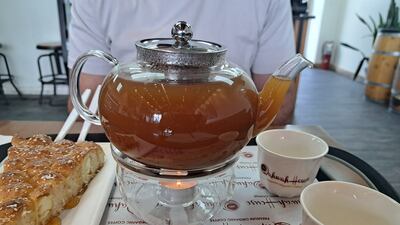
Among its most-popular beverages is Jubani coffee, named after the Yemeni city of Juban, which includes coffee husks, cardamon, ginger and cinnamon. -
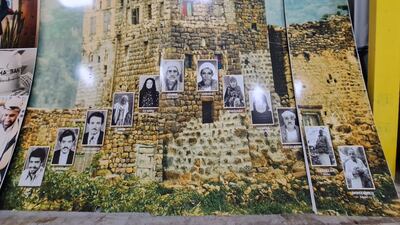
Coffee growing in Yemen goes back eight generations for the Alhasbani family. Stephen Starr / The National -
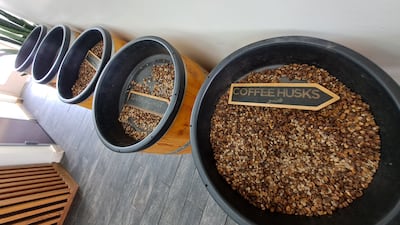
Ingredients on display at one of Qahwah House's 12 branches. Stephen Starr / The National -
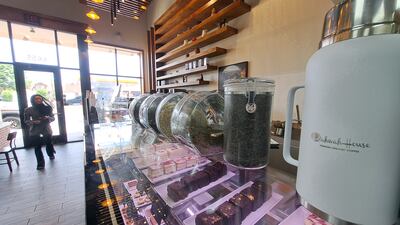
Qahwah House's Schaefer Road cafe, the original branch, is chiefly a 'grab and go' spot. Stephen Starr / The National -
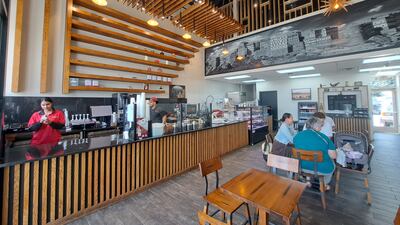
The first Qahwah House cafe opened in Dearborn in 2017. Stephen Starr / The National -
To meet demand, Qahwah House now has a roastery and bakery in Dearborn that ships products to branches around the country. Stephen Starr / The National -
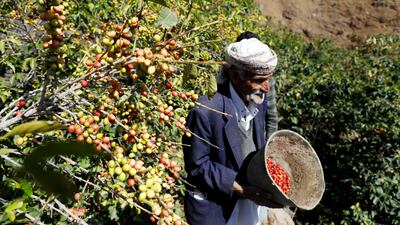
A farmer from Yemen's mountainous village of Haraaz reaps coffee beans from his farm during the harvest. Getty Images -
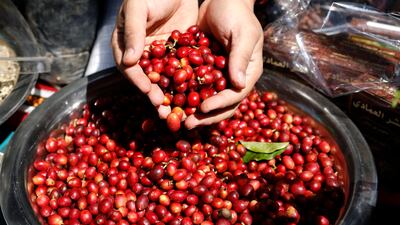
Fresh Arabica coffee beans in Sanaa. EPA -
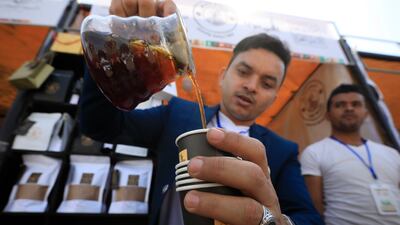
A barista serves Arabica coffee during an event in Sanaa. EPA -
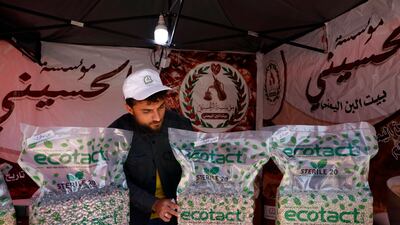
Different kinds of roasted coffee grains for sale during an event in Sanaa. EPA -

Arabica coffee grains on display at an outdoor market in Sanaa. EPA -
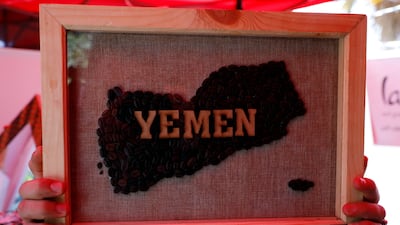
A map of Yemen made from roasted Arabica coffee beans on display at an outdoor market in Sanaa. EPA


Among its most popular beverages is Jubani coffee, named after the Yemeni city of Juban, and the blend includes coffee bean husks, cardamom, ginger and cinnamon.
To meet the growing demand, Qahwah House has its own roastery and warehouse, and even a bakery for its line of desserts.
Much like cafe culture in the Middle East, Yemeni cafes have become an important third place with the rise in work-from-home culture.
And unlike many low-budget, immigrant-owned Dearborn cafes and restaurants that, in past years, opened to solely serve the needs of the Arab-American community, the Yemeni cafes of today are huge, lavishly decorated spaces with themes and large menus, situated in some of the most sought-after locations in the US.
Two years ago, the first Delah Coffee cafe opened on the corner of 4th and Clara streets in downtown San Francisco.
“There were no Arabic coffee shops in the Bay Area, so when my uncle decided to open one, I said I’d follow him all the way,” says Omar Jahamee, who runs the chain of Arabic cafes alongside his uncle, Majed.
“We happened to open on the day the Golden State Warriors had their parade [after winning the NBA Championship],” says Mr Jahamee, originally from the Yemeni city of Rada’a.
“So, there were a lot of people.”
After coming to the US in 2013 when he was nine years old, Mr Jahamee became a barista at age 16. By 18, he was delving deep into the world of coffee, learning how to roast and import beans.
Today, Delah Coffee has three branches in the San Francisco Bay Area, with another opening this month and a fifth planned for Chicago later this year.
Mr Jahamee says his cafe’s teas and coffees are all equally popular, but beverages that include nutmeg, cloves and other spices are especially favoured.
“Our customer base is mixed: there’s a lot of Americans but a lot of Arabs as well because this is a place they can relate to,” he says.
Still, the speedy rise of Yemeni coffee has fuelled some challenges.
Qahwah House currently has 12 cafes across the country, a figure that’s set to grow to 25 by year’s end and to 100 in the next five years.
For Mr Alhasbani, family farms in Yemen can only supply enough coffee for 25 locations, meaning that soon, Qahwah House will have to find other sources of coffee in Yemen.
That’s a challenge, he says, since the popular stimulant qat is a favoured crop in Yemen due to its speed of growth and rapid return on investment.
“So, the challenge is trying to get farmers to switch from growing qat to coffee. We need to help them with that,” he says.
For others, finding a balance between pushing the boundaries of flavour and adhering to tradition is something to be mindful of.
“The biggest challenge is maintaining quality,” says Mr Jahamee. “Once you start playing with taste, that’s when things go downhill.”
Still, with demand for Yemeni coffee continuing on an upwards trajectory, the story of this Arabian bean’s American takeover is anything but over.

