

A 3,000-year-old Iron Age cemetery has been unearthed in Al Ain, offering a new perspective on the rich history of the UAE.
The necropolis was found close to the Qattara oasis, about 150km east of Abu Dhabi city.
Scores of graves were discovered along with ornate burial goods, such as drinking sets of spouted vessels, bowls and small cups. There were also gold beads, weaponry, pottery and personal items such as shell cosmetic containers, rings and bracelets.
The find sheds light on a skilled and sophisticated settlement and their burial traditions at the time when what is now Al Ain region was expanding and developing.
Announcing the news on Monday, Abu Dhabi's Department of Culture and Tourism (DCT) said it was the first major Iron Age cemetery found in the UAE and offers a rare insight into the region’s social, cultural and economic dynamics during a crucial phase in its development.
Uncovering the past
“This remarkable discovery transforms our understanding of the ancient Emirates and fills a critical gap in our knowledge of Iron Age burial traditions,” said Mohamed Al Mubarak, chairman of the DCT.
“It offers tangible evidence that brings us closer to the lives, beliefs and cultural evolution of those who lived here 3,000 years ago. Furthermore, these findings reinforce our commitment to preserving, protecting and promoting Abu Dhabi’s cultural heritage, ensuring that its rich history continues to inspire future generations. As we uncover more about our past, we not only strengthen our cultural identity but also share our story with the world.”
The discovery was made as part of the "funerary landscapes of Al Ain project" established in 2024 to investigate the growing number of prehistoric tombs found during archaeological monitoring of construction work at the border fence with Oman. About 30 graves have been found so far but the eventual figure is thought to be much higher.
“You look at it and it seems like ‘Oh, it's just holes on the ground,' but ... it's so unique and it will provide us so much information," Tatiana Valente, archaeologist at the DCT, told The National.
“That is why it makes it so amazing. It's impressive and the kind of materials that we find, some of them are quite unique, so … it's like unique versions that we have never seen before."
Unravelling the story of the UAE
Archaeologists are now piecing together a picture of a sophisticated settlement of people skilled in copper smelting and jewellery making.
The tombs were built by first digging a shaft about two metres deep and then digging sideways to create an oval burial chamber. The lack of grave markers on the surface could explain why Iron Age tombs have never been found before in the region.

Finds of burial goods and jewellery that adorned the bodies are striking, with expertly crafted copper drinking vessels, shaving razors and gold beads buried beside the bodies. It draws back the curtain on a funerary landscape of rituals, offerings to the dead and food for the journey to the afterlife.
One striking piece is a copper cup with a small bird fixed to one side. “This is the masterpiece,” said Ms Valente. “This very, very tiny cup. You see the bird here – it was cast and just forged into the side of the vessel.”
When in use, the cup would have been polished, gleaming and possibly richly decorated. Other vessels found with long copper spouts could suggest their use in ritual offerings, but this is not clear yet.
Tests will also be carried out on the sediment inside the vessels to try to determine what it might be.
Golden era

Another find is a gold bead decorated with tiny drops of gold that almost appear like grapes with another a gold nose ring that was moulded around what is thought to be a piece of clay.
“Every new discovery is a reason for the significance of preservation of these sites,” said Saif Albusaeedi, Emirati assistant archaeologist at the DCT, who has also worked at the site.
Mr Albusaeedi said he showed the nose ring to his grandmother and she recognised the design. "She knew it instantly,” he added. “There is a rich history and heritage here.”
What is further being explored is if travelling artisans visited these communities as similar pieces have been found across the modern-day UAE and Oman.
Al Ain is an area of rich archaeological significance. Evidence of human life stretches back to the Neolithic period and and parts of the finds there are under Unesco World Heritage site protection.
The Iron Age was a time of increasing sophistication in modern-day Al Ain. It was during this era that the falaj system – a type of underground aqueduct - was developed, bringing supplies of water from the mountains to irrigate land.
This set in motion a sustained period of agricultural expansion and intensification that created the oasis landscape of towns and farming community. It is thought this knowledge helped the construction of the graves as they knew the composition of the soil and how to work it. Iron Age villages, forts, temples, aflaj (individual water channels) and ancient palm gardens have been found there but Iron Age cemeteries have remained elusive.
“We don't know if there was even a hierarchy of settlements - possibly - but we're still trying to figure that out,” Ms Valente said.
“And then a huge, huge agricultural landscape that just spread out as much as they could [with] a huge population for sure," she said, stating a population figure would be hard to confirm.
It is also thought that communities traded with others, even from across the region as Iranian artefacts have been found. “There was lots of exchange, not just of goods but most likely even of ideas and influences," Ms Valente added.
Over time some of the graves were looted and there is disintegration, but significant amounts of material remain to paint a picture of the lives led.
Typically, there is one body in each tomb but some have double burials – adult and child. It is still not clear why there was a move from collective burials to individual graves. More research is needed into why but it could be related to changes in social hierarchies. What is also known is that these people had respect for their dead.
“They would know where the tombs were and very likely they will also come to continue doing some funerary rituals even after the person died," Ms Valente said. "They definitely have a lot of respect for their dead.”
The Iron Age in this region is something of a misnomer as they there were a phase behind and started using iron later.
For Ms Valente, it is a project that ranks among the highest achievements of her career. “We are putting the puzzle together slowly, piece by piece," she said.
Digs at the site have now closed for the season but it is hoped to resume them later. The human remains had been disturbed by ancient looters and were found in a fragile condition. A team of forensic archaeologists including an osteoarchaeologist was present to ensure the remains were treated with respect.
Radiocarbon tests will be conducted along with isotope analysis of the bones that can determine who ate meat and who did not.
Laboratory analysis will reveal information regarding age, gender, and health, while the ancient DNA could cast light on family relationships and migration movements.
“It is a privilege to be an Emirati archaeologist and be part of this rich history,” said Mr Albusaeedi, noting the discoveries were filling the gaps in Emirati history.
“The leadership really cares about this history and are trying to protect and preserve it.”
Iron Age cemetery discovered in Al Ain - in pictures
-
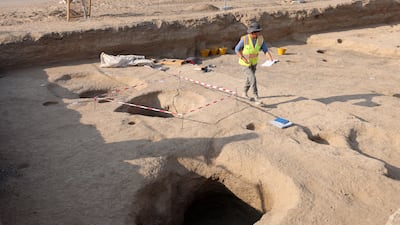
The discovery of an Iron age cemetery in Al Ain, Abu Dhabi, will transform understanding of the UAE, its history and people, archaeologists say. All photos: Chris Whiteoak / The National -

Saif Albusaeedi, Emirati assistant archaeologist at the Department of Culture and Tourism, said finds at the site in Al Ain struck chords with modern Emiratis -
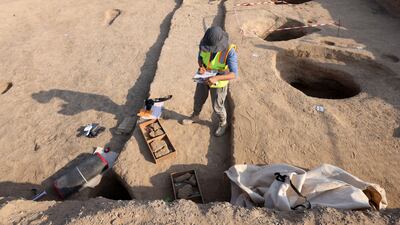
Discoveries at the Iron Age cemetery in Al Ain prompted questions about trade between what is now the UAE and Oman -
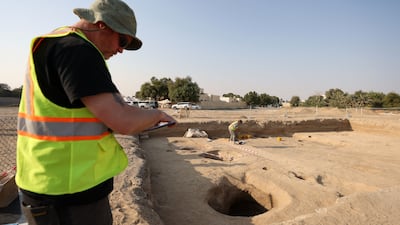
Research at the site is providing answers about ancient Al Ain's history and posing more questions -
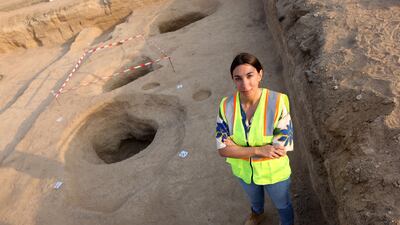
Tatiana Valente, archaeologist with DCT, says the Al Ain discoveries rank among the highest achievements of her career so far -
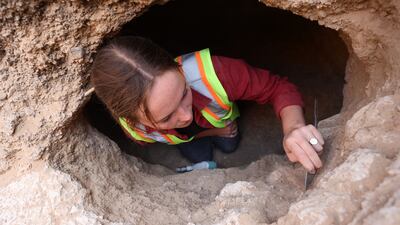
Excavation of the Iron Age cemetery in Al Ain was not a simple matter of digging down -
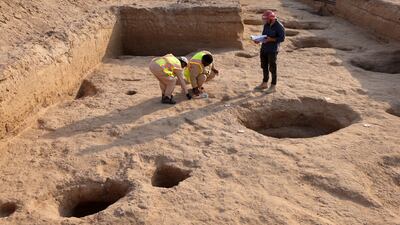
Iron age cemetery discovered in Al Ain, Abu Dhabi -
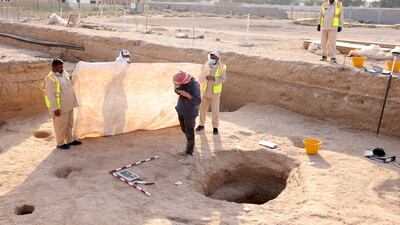
Laboratory analysis of burials will tell investigators more about the age, gender, and health of the people there, while DNA might shed light on families and migration movements -
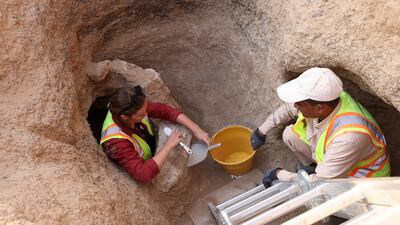
Osteoarchaeologist Mikaila Walker at work in Al Ain -
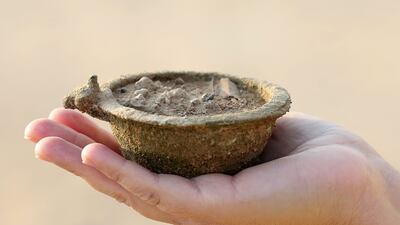
Small copper cup. Iron age cemetery discovered in Al Ain, Abu Dhabi. Chris Whiteoak / The National -
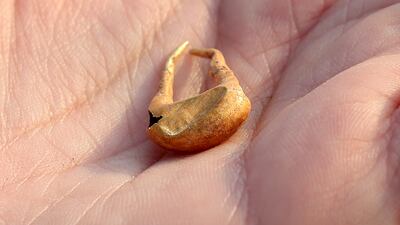
Gold nose ring from the Iron Age cemetery dig in Al Ain -
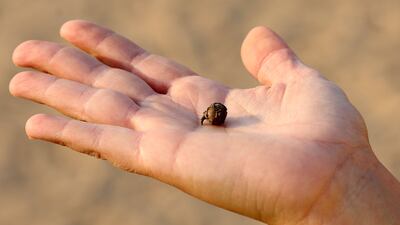
Gold bead. Iron age cemetery discovered in Al Ain, Abu Dhabi. Chris Whiteoak / The National



