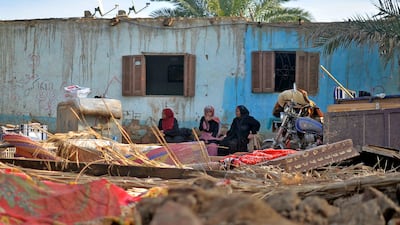
It is hoped modern technology can help improve crop yields in the region. Reuters

How technology is helping Gulf farmers extend their growing seasons


Daniel Bardsley
  • English
  • Arabic

The climate in the Middle East can be far from ideal for growing crops.

There are high temperatures, water scarcity and salty soils, and conditions are becoming ever harder with the region warming twice as a fast as the world as a whole.

According to figures published by the International Energy Agency, there was an average temperature increase of 0.46ºC per decade between 1980 and 2022 in the region.

In some areas rainfall is becoming scarcer or less predictable, even though climate change is also leading to an increase in extreme flooding events.

This is at a time when world populations are increasing, with The Washington Institute for Near East Policy think tank reporting forecasts that the GCC’s population will increase from around 59 million in 2022 to 84 million in 2100.

“A country like the UAE, which imports between 80 to 90 per cent of its calories, has very specific challenges, both from a food supply perspective as well as from a local food production perspective,” said Sami Joost, head of public affairs, communication and open innovation for the Middle East at Bayer, the German pharmaceutical and biotechnology company.

“We’re looking at a country with approximately one per cent available land with a high level of humidity, depending on the season, and a hot and dry climate in conjunction with a rapid population growth rate.”

Sami Joost, head of public affairs, communication and open innovation for the Middle East at German pharmaceutical and biotechnology company Bayer. Photo: Bayer

What are the options?

The UAE and other Gulf nations, such as Saudi Arabia and Qatar, have secured farmland abroad to safeguard their food security.

At home, they have invested in technologies such as hydroponics and vertical farming – in which plants are grown in optimal artificial conditions so water use can be minimised and yields maximised.

Other technologies, some of which have emerged from the region, are helping to insulate farmers from some of the ever-growing challenges to agriculture posed by climate change.

SecondSky technology, which has roots in Saudi Arabia, offers farmers the chance to have greenhouses that let through the light needed for photosynthesis, but block some of the heat.

This is achieved by applying a specially-made film to the roofs of greenhouses and similar facilities. It has been patented by AgTech start-up Iyris, which is based in the UAE, Saudi Arabia and the US.

“If you can reduce the heat load, you can make plants healthier and more productive across a range of environmental conditions,” said Iyris executive chairman John Keppler.

Iyris, which began sales about a year ago, recently announced that it had raised $16 million from investors.

With four out of five farms being “low technology”, Mr Keppler said farmers could earn their money back within a year with the technology because, for example, the growing season could start earlier and finish later.

At a project in Tabuk, Saudi Arabia, a farmer was still growing fresh cucumbers in mid-July, while nearby producers, without Iyris’s film, had stopped in June, Mr Keppler said.

“You’re able to grow the crop cycle window to a longer period of time,” he said. “That generally translates into higher yields because you’re growing for longer, but more important and more immediate is the reduction in water usage and energy to the extent that folks are using mechanical cooling.”

Water usage can fall by 30 to 40 per cent, Mr Keppler said, something that might be particularly useful in the Middle East.

“When you document the water savings, the energy savings, this can transform what had been a fairly challenged farming environment,” he said.

Seed trials

Companies such as Bayer are improving the genetics of crops so that they are better able to cope with extreme weather of the kind found in the Gulf region.

In partnership with Silal, a UAE agritech firm, Bayer is running seed trials of more than 40 varieties of tomato, cucumber, melon, eggplant and red pepper in greenhouses and open fields.

“What we really want to understand is how these crops are performing in terms of fruit size, fruit weight, shelf life, fruit quality, as well as potentially assessing if there’s an opportunity to extend breeding cycles for these crops, which is important if you consider stepping up or increasing efficiency when it comes to local food production,” Mr Joost said.

Improved crop varieties may result from traditional breeding techniques or genetic engineering.

Dr Sarah Garland, founder and executive director of the Triple Helix Institute for Agriculture, Climate and Society, a non-profit organisation, described genetic engineering as “an important tool” for developing crops able to cope with extreme heat and drought.

“For example, scientists in Argentina developed drought-tolerant wheat by inserting a gene from sunflower into the wheat genome that helps the plant’s response to a lack of water,” she said. “This wheat was first approved for cultivation in Argentina in 2020 and has since been given the green light for commercialisation in multiple countries.”

Artificial intelligence

Another approach comes from using digital technology to optimise farming operations.

FarmERP, an Indian-based company, offers such technology in more than 30 countries including the UAE and, like Bayer, works with Silal.

“With new AI and machine-learning tools … it helps improve the predictability of the farms,” said Sanjay Borkar, the company’s co-founder and chief executive.

Technology such as a mobile app, available in Arabic, can help farmers to improve the efficiency of farming, and Mr Borkar said his firm’s technology operated across all steps in the farming supply chain.

“We help the farms to optimise their resources like manpower, machines, labour, inputs – fertilisers, chemicals, water. This will definitely improve the margins, the profits,” he said.

Customised advisory information, devised using artificial intelligence, can indicate, for example, the optimum water and nutrition requirements for crops, based on factors such as the weather.

“It helps in providing the pest and disease detection or pest and disease prediction based on satellite imagery as well as future weather data,” Mr Borkar said.

As well as potentially increasing yields, and making it possible to cope with harsher climatic conditions, the technology can reduce a farmer's contribution to climate change.

It can calculate how much carbon is isolated through practices such as agroforestry – by mixing crops with trees – compared to the amount emitted by chemicals, fertilisers and fuels.

“Agriculture today is a significant contributor to climate change, yet there are ways to make farming part of the solution,” Mr Joost said.

“[This] is why we need to drive a shift to regenerative agriculture practices that ‘produce more with less, while restoring more’, a concept that is highly relevant and applicable to the Middle East in light of regional food security concerns.”

The impact of climate change on the Middle East – in pictures

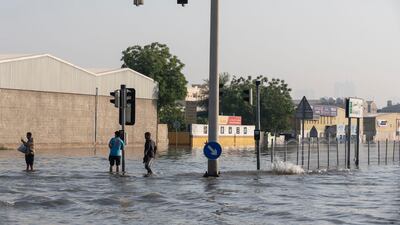
  • Flooding in the Al Barsha area of Dubai. Chris Whiteoak / The National
    Flooding in the Al Barsha area of Dubai. Chris Whiteoak / The National
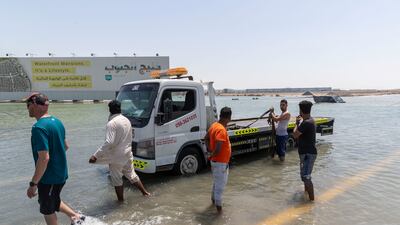
  • Vehicles being recovered near Al Maktoum airport in Dubai. Antonie Robertson / The National
    Vehicles being recovered near Al Maktoum airport in Dubai. Antonie Robertson / The National
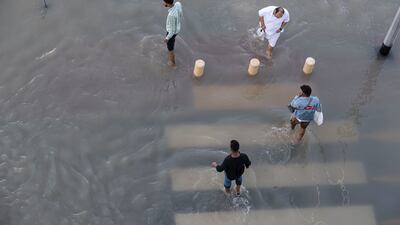
  • Flooding in the Al Barsha area of Dubai. Chris Whiteoak / The National
    Flooding in the Al Barsha area of Dubai. Chris Whiteoak / The National
  • Flooding along Sheikh Zayed Road in Dubai. Antonie Robertson / The National
    Flooding along Sheikh Zayed Road in Dubai. Antonie Robertson / The National
  • Flooding along Sheikh Zayed Road in Dubai. Antonie Robertson / The National
    Flooding along Sheikh Zayed Road in Dubai. Antonie Robertson / The National
  • Cars move through floodwater in Al Qudra, Dubai. Chris Whiteoak / The National
    Cars move through floodwater in Al Qudra, Dubai. Chris Whiteoak / The National
  • Flooding on Dubai's Al Khail Road. Chris Whiteoak / The National
    Flooding on Dubai's Al Khail Road. Chris Whiteoak / The National
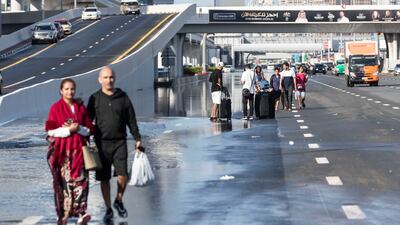
  • People abandon their cars on Sheikh Zayed Road due to heavy rain. Antonie Robertson/The National
    People abandon their cars on Sheikh Zayed Road due to heavy rain. Antonie Robertson/The National
  • Flooding on Al Khail Road. Chris Whiteoak / The National
    Flooding on Al Khail Road. Chris Whiteoak / The National
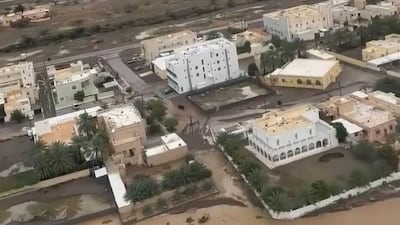
  • Flooding in Oman. Photo: Royal Oman Police
    Flooding in Oman. Photo: Royal Oman Police
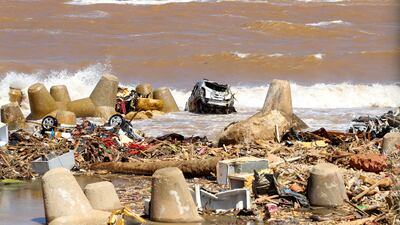
  • A damaged car in Derna, Libya. Reuters
    A damaged car in Derna, Libya. Reuters
  • A destroyed vehicle in Derna. AFP
    A destroyed vehicle in Derna. AFP
  • Abdul Salam Ibrahim Al-Qadi walks on rubble in front of his house, searching for his missing father and brother, in Derna. Reuters
    Abdul Salam Ibrahim Al-Qadi walks on rubble in front of his house, searching for his missing father and brother, in Derna. Reuters
  • An aerial view of the destruction in Derna. Reuters
    An aerial view of the destruction in Derna. Reuters
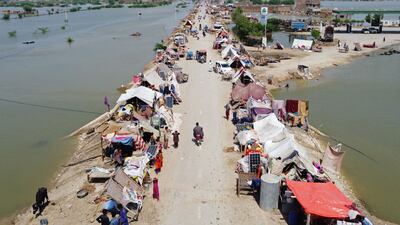
  • Flood-affected people taking refuge in a makeshift camp after heavy monsoon rains in Jaffarabad district of Balochistan province. AFP
    Flood-affected people taking refuge in a makeshift camp after heavy monsoon rains in Jaffarabad district of Balochistan province. AFP
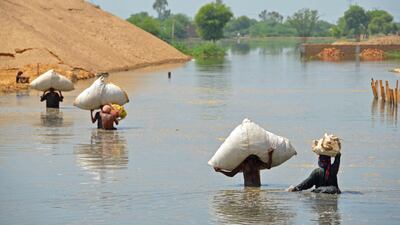
  • Internally displaced flood-affected people shift husk for their animals in a flood-hit area following heavy rains in Dera Allah Yar in Balochistan. AFP
    Internally displaced flood-affected people shift husk for their animals in a flood-hit area following heavy rains in Dera Allah Yar in Balochistan. AFP
  • The aftermath of flooding in Egypt's southern city of Aswan, 920 kilometres south of the capital. AFP
    The aftermath of flooding in Egypt's southern city of Aswan, 920 kilometres south of the capital. AFP
  • The Nile River from the top of Famine Stela, or Rock of Starvation, Egypt. Reuters
    The Nile River from the top of Famine Stela, or Rock of Starvation, Egypt. Reuters
  • Volunteers search for people in need following heavy rainfall in east Mosul, Iraq, in March 2020. Reuters
    Volunteers search for people in need following heavy rainfall in east Mosul, Iraq, in March 2020. Reuters
  • People clean up after floods in Duhok, Iraq, on March 19. Reuters
    People clean up after floods in Duhok, Iraq, on March 19. Reuters
Liz%20Truss
%3Cp%3EMinisterial%20experience%3A%20Current%20Foreign%20Secretary.%0D%3Cbr%3E%0DWhat%20did%20she%20do%20before%20politics%3F%20Worked%20as%20an%20economist%20for%20Shell%20and%20Cable%20and%20Wireless%20and%20was%20then%20a%20deputy%20director%20for%20right-of-centre%20think%20tank%20Reform.%0D%3Cbr%3E%0DWhat%20does%20she%20say%20on%20tax%3F%20She%20has%20pledged%20to%20%22start%20cutting%20taxes%20from%20day%20one%22%2C%20reversing%20April's%20rise%20in%20National%20Insurance%20and%20promising%20to%20keep%20%22corporation%20tax%20competitive%22.%3C%2Fp%3E%0A
Company%20profile
%3Cp%3E%3Cstrong%3EName%3A%3C%2Fstrong%3E%20Homie%20Portal%20LLC%3C%2Fp%3E%0A%3Cp%3E%3Cstrong%3EStarted%3A%3C%2Fstrong%3E%20End%20of%202021%C2%A0%3C%2Fp%3E%0A%3Cp%3E%3Cstrong%3EFounder%3A%20%3C%2Fstrong%3EAbdulla%20Al%20Kamda%C2%A0%3C%2Fp%3E%0A%3Cp%3E%3Cstrong%3EBased%3A%3C%2Fstrong%3E%20Dubai%3C%2Fp%3E%0A%3Cp%3E%3Cstrong%3ESector%3A%3C%2Fstrong%3E%20FinTech%C2%A0%3C%2Fp%3E%0A%3Cp%3E%3Cstrong%3EInitial%20investment%3A%3C%2Fstrong%3E%20Undisclosed%C2%A0%3C%2Fp%3E%0A%3Cp%3E%3Cstrong%3ECurrent%20number%20of%20staff%3A%3C%2Fstrong%3E%2014%C2%A0%3C%2Fp%3E%0A%3Cp%3E%3Cstrong%3EInvestment%20stage%3A%20%3C%2Fstrong%3ELaunch%C2%A0%3C%2Fp%3E%0A%3Cp%3E%3Cstrong%3EInvestors%3A%3C%2Fstrong%3E%20Self-funded%3C%2Fp%3E%0A
The specs

Engine: 4.0-litre V8 twin-turbocharged and three electric motors

Power: Combined output 920hp

Torque: 730Nm at 4,000-7,000rpm

Transmission: 8-speed dual-clutch automatic

Fuel consumption: 11.2L/100km

On sale: Now, deliveries expected later in 2025

Price: expected to start at Dh1,432,000

Avatar: Fire and Ash

Director: James Cameron

Starring: Sam Worthington, Sigourney Weaver, Zoe Saldana

Rating: 4.5/5

Results

6.30pm: The Madjani Stakes (PA) Group 3 Dh175,000 (Dirt) 1,900m

Winner: Aatebat Al Khalediah, Fernando Jara (jockey), Ali Rashid Al Raihe (trainer).

7.05pm: Maiden (TB) Dh165,000 (D) 1,400m

Winner: Down On Da Bayou, Royston Ffrench, Salem bin Ghadayer.

7.40pm: Maiden (TB) Dh165,000 (D) 1,600m

Winner: Dubai Avenue, Fernando Jara, Ali Rashid Al Raihe.

8.15pm: Handicap (TB) Dh190,000 (D) 1,200m

Winner: My Catch, Pat Dobbs, Doug Watson.

8.50pm: Dubai Creek Mile (TB) Listed Dh265,000 (D) 1,600m

Winner: Secret Ambition, Tadhg O’Shea, Satish Seemar.

9.25pm: Handicap (TB) Dh190,000 (D) 1,600m

Winner: Golden Goal, Pat Dobbs, Doug Watson.

The biog

Simon Nadim has completed 7,000 dives. 

The hardest dive in the UAE is the German U-boat 110m down off the Fujairah coast. 

As a child, he loved the documentaries of Jacques Cousteau

He also led a team that discovered the long-lost portion of the Ines oil tanker. 

If you are interested in diving, he runs the XR Hub Dive Centre in Fujairah


UNSC Elections 2022-23

Seats open:

  • Two for Africa Group
  • One for Asia-Pacific Group (traditionally Arab state or Tunisia)
  • One for Latin America and Caribbean Group
  • One for Eastern Europe Group

Countries so far running: 

  • UAE
  • Albania 
  • Brazil 

In 2018, the ICRC received 27,756 trace requests in the Middle East alone. The global total was 45,507.


There are 139,018 global trace requests that have not been resolved yet, 55,672 of these are in the Middle East region.


More than 540,000 individuals approached the ICRC in the Middle East asking to be reunited with missing loved ones in 2018.


The total figure for the entire world was 654,000 in 2018.

About Housecall

Date started: July 2020

Founders: Omar and Humaid Alzaabi

Based: Abu Dhabi

Sector: HealthTech

# of staff: 10

Funding to date: Self-funded

Company%20profile
%3Cp%3E%3Cstrong%3EName%3A%3C%2Fstrong%3E%20Belong%3Cbr%3E%3Cstrong%3EBased%3A%3C%2Fstrong%3E%20Dubai%3Cbr%3E%3Cstrong%3EFounders%3A%3C%2Fstrong%3E%20Michael%20Askew%20and%20Matthew%20Gaziano%3Cbr%3E%3Cstrong%3ESector%3A%3C%2Fstrong%3E%20Technology%3Cbr%3E%3Cstrong%3ETotal%20funding%3A%3C%2Fstrong%3E%20%243.5%20million%20from%20crowd%20funding%20and%20angel%20investors%3Cstrong%3E%3Cbr%3ENumber%20of%20employees%3A%3C%2Fstrong%3E%2012%3C%2Fp%3E%0A
Rocketman

Director: Dexter Fletcher

Starring: Taron Egerton, Richard Madden, Jamie Bell

Rating: 3 out of 5 stars 

Specs
Engine: Electric motor generating 54.2kWh (Cooper SE and Aceman SE), 64.6kW (Countryman All4 SE)
Power: 218hp (Cooper and Aceman), 313hp (Countryman)
Torque: 330Nm (Cooper and Aceman), 494Nm (Countryman)
On sale: Now
Price: From Dh158,000 (Cooper), Dh168,000 (Aceman), Dh190,000 (Countryman)
Key developments in maritime dispute

2000: Israel withdraws from Lebanon after nearly 30 years without an officially demarcated border. The UN establishes the Blue Line to act as the frontier. 

2007: Lebanon and Cyprus define their respective exclusive economic zones to facilitate oil and gas exploration. Israel uses this to define its EEZ with Cyprus

2011: Lebanon disputes Israeli-proposed line and submits documents to UN showing different EEZ. Cyprus offers to mediate without much progress.

2018: Lebanon signs first offshore oil and gas licencing deal with consortium of France’s Total, Italy’s Eni and Russia’s Novatek.

2018-2019: US seeks to mediate between Israel and Lebanon to prevent clashes over oil and gas resources.

COMPANY PROFILE
Name: Kumulus Water
 
Started: 2021
 
Founders: Iheb Triki and Mohamed Ali Abid
 
Based: Tunisia 
 
Sector: Water technology 
 
Number of staff: 22 
 
Investment raised: $4 million 
The specs

Engine: 3.8-litre V6

Power: 295hp at 6,000rpm

Torque: 355Nm at 5,200rpm

Transmission: 8-speed auto

Fuel consumption: 10.7L/100km

Price: Dh179,999-plus

On sale: now 

Total eligible population

About 57.5 million people
51.1 million received a jab
6.4 million have not

Where are the unvaccinated?

England 11%
Scotland 9%
Wales 10%
Northern Ireland 14% 

The biog

Name: Atheja Ali Busaibah

Date of birth: 15 November, 1951

Favourite books: Ihsan Abdel Quddous books, such as “The Sun will Never Set”

Hobbies: Reading and writing poetry

AS IT STANDS IN POOL A

1. Japan - Played 3, Won 3, Points 14

2. Ireland - Played 3, Won 2, Lost 1, Points 11

3. Scotland - Played 2, Won 1, Lost 1, Points 5

Remaining fixtures

Scotland v Russia – Wednesday, 11.15am

Ireland v Samoa – Saturday, 2.45pm

Japan v Scotland – Sunday, 2.45pm

'Brazen'

Director: Monika Mitchell

Starring: Alyssa Milano, Sam Page, Colleen Wheeler

Rating: 3/5

Updated: September 02, 2024, 6:30 AM