


An Abu Dhabi astronomer has discovered a giant asteroid believed to be the size of at least six Burj Khalifas, but the good news is it poses no threat to Earth.
Mohammad Shawkat Odeh, director of the emirate's International Astronomical Centre said the space rock was estimated to be between 5km and 10km in diameter, dwarfing Dubai's 830-metre tall Burj Khalifa.
He identified the asteroid while examining data captured by the Pan-STARRS 2 telescope at Haleakala Observatory in Hawaii.
"At this point, what we know is that it is a faint asteroid and not a bright one. Hence, we do not know much about its parameters including its size," he told The National.
"We think it is of normal size with a diameter of anything between five to 10 km."
He said the asteroid orbits the Sun once every four years at a distance of approximately 375 million km, and had been photographed several times before its discovery, with earlier observations dating to 2006.
The initial discovery certificate for the asteroid, temporarily named '2022 UY56', has been issued to Mr Odeh.
The International Astronomical Union will later assign a permanent name and officially recognise the discoverer after completing extensive observations and allowing for precise orbital calculations.
No danger to life on Earth

The asteroid discovery, Mr Odeh explained, is a significant topic in astronomy as scientists are always concerned these rocky objects could pose a danger to Earth.
He added that the '2022 UY56' follows a somewhat elliptical orbit and is not harmful to the Earth.
"It is located between Mars and Jupiter in the asteroid belt where 90 per cent of asteroids are usually found," he said.
The discovery followed the meticulous analysis of astronomical images provided by a Nasa-supported programme and in collaboration with global partners, including Hardin-Simmons University in Texas and the Catalina Sky Survey project, International Astronomical Centre President Khalfan bin Sultan Al Nuaimi announced on Monday.
Khadijah Ahmad, Operations Manager at Dubai Astronomy Group, said the discovery of the new asteroid will encourage more people to search for asteroids.
While space research and asteroid discovery are growing fields in the UAE, she said the number of people actively involved in this field is still relatively small.
Watch: Asteroid samples brought back to Earth
"The discovery by Mr Odeh is particularly unique and highlights the impact of dedicated individuals in advancing asteroid discovery and bridging the gap in funding and resources," said Ms Ahmad.
She said the Astronomy Group offers courses in archival data mining through platforms like Galaxy Zoo, Nasa's Planetary Data System and AstroData among others, where people can search for their own asteroids using both human input and automated tools. "While AI tools are commonly used, the human eye offers better insights."
The impressive find comes as the UAE seeks to deepen its knowledge of asteroids.
Emirates Mission to the Asteroid Belt (EMA) is scheduled for launch in 2028.
Supported by the $1 billion UAE Space Fund, the mission will take 13 years, including a six-year spacecraft development phase followed by a seven-year journey to the asteroid belt.
The MBR Explorer spacecraft will undertake a five-billion-km voyage, and will conduct close fly-bys of seven asteroids, with the first expected encounter in February 2030, marking the beginning of an extensive exploration mission.
Nasa asteroid smashes into asteroid - in pictures
-
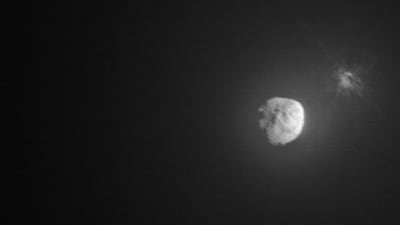
The first images that show the moment Nasa’s Dart spacecraft crashed into an asteroid have been released. Photo: Italian Space Agency / Nasa -
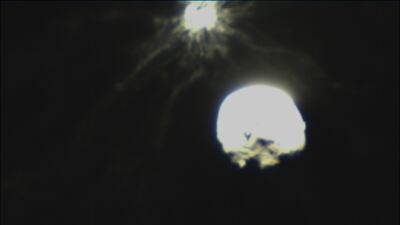
Nasa’s Double Asteroid Redirection Test (Dart) spacecraft targeted a binary asteroid system and smashed into Dimorphos – which orbits a larger asteroid, Didymos, to see if it can shift it slightly off course. Photo: Italian Space Agency / Nasa -
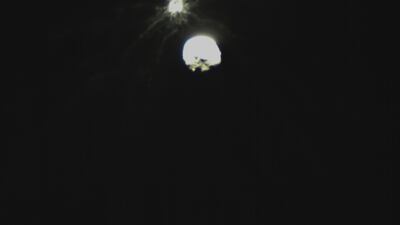
The pictures were captured by Italian Space Agency’s LiciaCube, a small cube satellite, that was released by the Dart spacecraft on September 11. Photo: Italian Space Agency / Nasa -
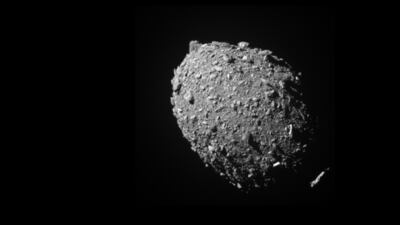
Viewers across the world got a point of view of the spacecraft the moment it crashed into the asteroid on September 27, 2022, at a speed of 24,000km an hour — fast enough to travel from New York to Paris in 15 minutes. Photo: Nasa -
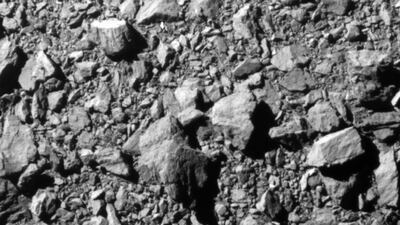
The collision on Tuesday was part of a planetary defence test by the US space agency, and the asteroid posed no threat to Earth. Photo: Nasa



