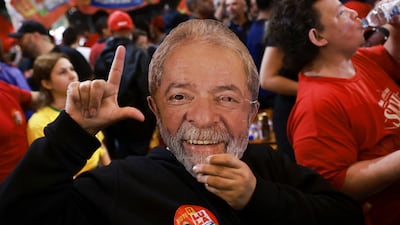
Brazilian President Luiz Inacio Lula da Silva won a historic fourth term on Sunday, the country's electoral court said, in a shock result that defied polls, precedent and global anti-incumbent sentiment to put the brakes on a wave of right-wing election victories across Latin America.
Mr da Silva, a symbol of the global left and the most dominant force in Brazilian politics this century, defeated Senator Flavio Bolsonaro, the eldest son of former President Jair Bolsonaro.
The senator, who led the election's first round but lost in the runoff by over 4 million votes, said he would ask for the result to be annulled due to a Sunday Supreme Court ruling that extended voting for two hours.

Bolsonaro's refusal to concede defeat has echoes of his father's reaction after losing to Mr da Silva in 2022. Former President Jair Bolsonaro never accepted his loss and was later given a 27-year sentence for plotting a coup to remain in power.
The scale of Flavio Bolsonaro's loss to Mr da Silva — by more than twice his father's losing margin — and the fact his campaign also asked for an extension due to rains in the south, make any annulment unlikely, analysts said.
For Mr da Silva, his victory marks another comeback in a career full of them. The 80-year-old was jailed from 2018 to 2019 on corruption charges that were later overturned, paving the way for him to beat Jair Bolsonaro in the 2022 election.

He becomes the first candidate since Brazil's return to democracy in the 1980s to be elected after finishing second in the first round.
Previously president from 2003 to 2011, he campaigned this year on a potent mix of pragmatism and populism that has shaped his career in national politics for half a century, rolling out a slew of reforms aimed at improving the lives of workers and poor Brazilians.
These gained steam with late-campaign pledges that ranged from free nationwide weekend public transport, which has to be formally submitted to Congress, to a 15 percent increase in his trademark welfare program that is already being implemented.
Mr da Silva also championed a constitutional amendment that became Brazil's biggest labor reform in decades, which passed with wide support in Congress.
With agencies

