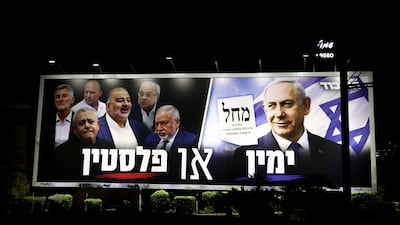

In a week’s time, Israelis will head to the polls in what many are calling the most important election in its history.
Despite the usual ups and downs of the Israeli news cycle, polls have remained largely stable for months: neither Prime Minister Benjamin Netanyahu’s bloc nor that of his main opponent, Gadi Eisenkot, is near a majority.
Israeli voters are bracing themselves. There is a widespread feeling that this polling stalemate in such a divided country, combined with regional tension and hostility, could make for a busy week.
The average of the past three surveys conducted by Israel’s mainstream pollsters puts Mr Eisenkot on 52 seats, one ahead of Mr Netanyahu.
That means 17 unaligned seats are up for grabs, fuelling speculation that the next government will be formed after coalition negotiations, which could take months.
If there is no agreement on a coalition, another election will be held. This has happened many times in Israel’s recent history.
However, the election results could be decisive. Opinion polls are far from foolproof, and in any case not all indicate a stalemate. A smaller group of less mainstream surveys published by right-wing news channels place Mr Netanyahu’s bloc in a better position, with Channel 14 forecasting a one-seat majority in a poll on Sunday. It still charts a gradual decline in support for the coalition over recent weeks.

Many voters are highlighting Mr Netanyahu's formidable ability as a politician. His talent for creating unlikely coalitions and undermining opponents is clear.
Israel’s military is on high alert, and there are fears of another round of fighting with Iran, possibly even before polls open, creating more uncertainty that could well favour Mr Netanyahu. US President Donald Trump’s endorsement of him on Sunday was a surprise, which could reinforce the incumbent's credentials as a statesman for some voters.
There is one clear path to victory for the mainstream opposition bloc – joining forces with Israel’s Arab parties. Many opposition parties, including Mr Eisenkot’s, have said they will not form a government with parties that typically represent the country's Palestinians, who make up about 20 per cent of the population.
With polls suggesting a significant increase in turnout among Palestinian citizens, the group could become too significant to ignore.
If Mr Eisenkot does find a way to make them part of his coalition, or the more likely option of a support-from-outside arrangement, the far-right would erupt. In that event, he may be described as a traitor and some of his current bloc partners might walk out.

