


Up to 400,000 Syrian refugees in Lebanon may be set to return home under a UN-backed plan providing financial incentives, according to a document seen by The National.
Under the scheme endorsed by the Lebanese government, thousands have already registered to leave this week aided by $500 for each family, Lebanon’s Social Affairs Minister Haneen Sayed said.
Reuters reported the minister as saying Syrians will be provided with $100 before departing in addition to $400 for each family upon arrival in Syria.
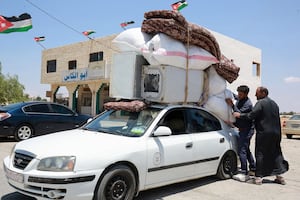
Transport costs are also covered, while border fees and fines for overstaying in Lebanon have been waived, a Lebanese security official, who spoke on condition of anonymity, told The National.
Last week, Lebanon’s General Security Directorate – the country’s primary intelligence body concerned with foreigners – implemented a three-month scheme to waive all fines related to entry and residency violations in a bid to encourage refugees to return to their home countries.
“In a best-case scenario, up to 400,000 Syrians, including 5,000 PRS [Palestinian refugees from Syria], may voluntarily return from Lebanon by the end of 2025,” says a copy of the Lebanon Response Plan seen by The National.

That number would constitute around 25 per cent of Lebanon’s Syrian refugee population. Already, the document said, more than 123,000 Syrians have departed – around 65,000 of whom were verified by the UN refugee agency as having travelled home.
The Lebanese government is prioritising the closure of informal tented settlements – unofficial refugee camps where around 200,000 refugees live, the Lebanese security official told The National.
More than six million Syrians fled their country in the years after 2011 during a 13-year civil war. The vast majority sought refuge in nearby countries Turkey, Lebanon and Jordan.
Lebanon took in the highest concentration per capita, hosting 1.5 million refugees – accounting for around 25 per cent of Lebanon's population.
Returning to Syria was previously viewed as unsafe during the war due to fears of prosecution by the Assad regime. Former president Bashar Al Assad was toppled in December by Islamist insurgents and since taking over, the new government has said all Syrians are welcome home.
Syria is in need of major reconstruction, with much of the country struggling with a lack of basic infrastructure and services such as water and electricity.

