

Voters in southern Lebanon cast their ballots on Saturday in municipal elections, despite the near-daily Israeli bombardment of the area and continued occupation of five border points.
Residents exercised their democratic right in the region that has been devastated by Israel's war on the country and in defiance of the constant threat.
Israel continues to bomb south Lebanon almost every day despite a tenuous ceasefire agreed with the Iran-backed militant group Hezbollah last November.
There has been an increase in the violence in the days up to the polls, which are widely seen as a referendum on Hezbollah's political popularity.
“After the war, I felt I had to vote, because I feel responsible for my country,” said Mohammad Al Ayan, 38. He was voting for the first time in his home village of Jwaya, one of the dozens of south Lebanon villages shattered by Israel's war.
Jwaya, around 15km from the border, was regularly targeted during the war and was where one of Hezbollah’s senior commanders was killed. Some of the buildings remain flattened.
Driving in, Mr Al Ayan ran across old friends with the roads jammed outside the voting centres – which had the Lebanese Army outside keeping security.
"Make sure you vote for this one," said one person as he handed a list of candidates to Mr Al Ayan.
-
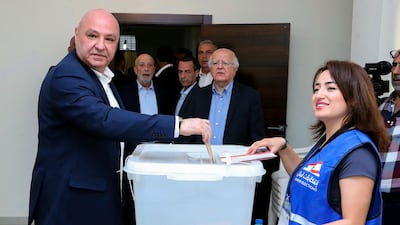
Lebanon's President Joseph Aoun casts his vote in his native town of Aishiyeh in southern Lebanon during the first round of municipal elections. AFP -

A Hezbollah member who was wounded by a pager explosion casts his vote at a polling station during municipal elections in Nabatieh. AP -
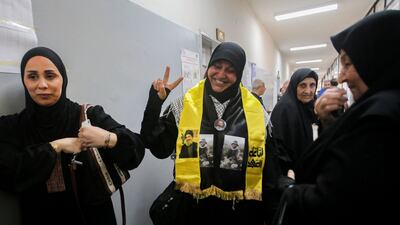
Hassan Nasrallah flashes the V for victory sign at a polling station in Nabatieh. AFP -
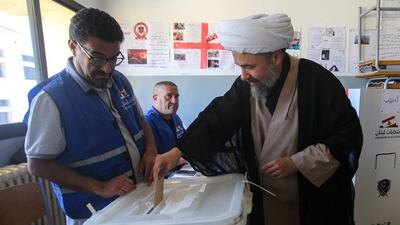
A man casts his vote at a polling station in Nabatieh. AFP -

Despite a rise in Israeli strikes, Hezbollah chief Naim Qassem called on supporters to go out to the polls and secure a 'resounding' victory. AFP -

Lebanese army soldiers stand guard as people arrive to vote at a polling station in Nabatieh. AFP -

A man casts his vote at a polling station in Nabatieh. AFP -
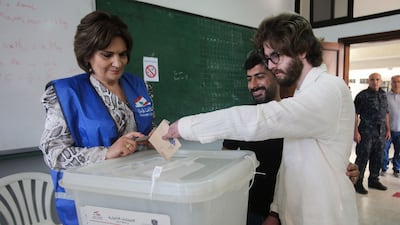
A man casts his vote at a polling station. AFP -
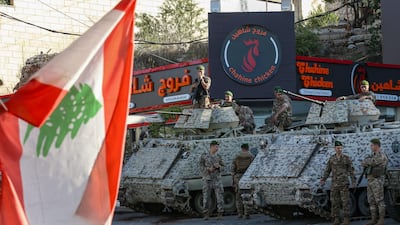
Lebanese army soldiers stand guard near a polling station in Nabatieh. AFP -
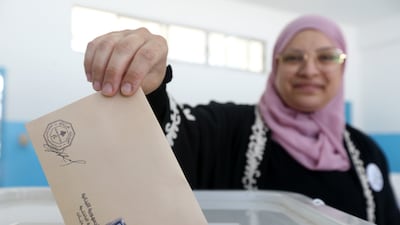
A Lebanese woman casts her ballot during the municipal elections at a polling station in the southern port city of Sidon. EPA -
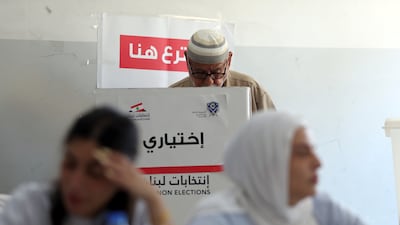
A Lebanese man casts his ballot in Sidon. EPA


“It’s more important because of the situation we [experienced]. I feel happy because I believe the south will never die. Look at the cars, the people, everyone is coming,” said Mr Al Ayan.
He said that two days ago, there was a huge bombing campaign across south Lebanon “but the people don’t care and I am one of them”.
“They want to show everyone, the people of the south, that they will never be scared of anyone, they will never die,” he added.
Hezbollah heartland
South Lebanon remains a stronghold of Hezbollah support, and in many of the areas hardest hit by Israel’s military campaign, the outcome of the elections is a foregone conclusion.
Such is the enduring popularity of Hezbollah that no formal voting for the municipal elections took place in some areas and the joint list between Hezbollah and its Shiite ally, the Amal Movement, ran unopposed.
Hezbollah, once a dominant force in Lebanon, has suffered significant setbacks. Israel's bombardment of Lebanon in pursuit of Hezbollah has killed the group's long-time leader Hassan Nasrallah and key commanders, destroyed its infrastructure and infiltrated its security apparatus.
But it remains a potent force and for many in the south they have continued with their support.
"We voted because we trust Hezbollah. We want to show the Israelis that we still support the group," said Zainab Saideh after casting her ballot in Jwaya.
Under the ceasefire terms, the group is required to withdraw its troops north of the Litani River and dismantle any remaining military infrastructure in the south. International pressure is also mounting for the full disarmament of Hezbollah and other armed factions across all Lebanese territory.
Some residents of the border villages that were completely destroyed cast their votes in nearby cities.
Long-delayed democratic process
Saturday’s elections marked the fourth round of municipal voting, staggered across Lebanon since early May. This is the first time since 2016 that municipal elections have been held, after repeated delays due to financial, political and security crises.
In Ain Ebel, a Christian-majority village only 2km from the Israeli border, mayoral elections were held, but not municipal council polls, as only one list was submitted.
While the village was spared the scale of destruction that obliterated many neighbouring towns, it was still targeted by Israeli air strikes. For those who stayed, life has meant enduring the constant sound of drones and shelling.
However, mayor Imad Lallous said: “The situation is good, we have no problems here in Ain Ebel. It's good to come and see the area.”
Among those who went to the polls in south Lebanon was President Joseph Aoun, who cast his vote in Al Aaishiyah in Jezzine District.
"The will of life is stronger than death and the will of construction is stronger than destruction," he said.
Ahmed Al Hajjar, the Minister of Interior and Municipalities, visited the town of Marjaayoun and praised people's resilience and “adherence to democracy through their votes”.

