


In the first of a new series, The National looks at the ways Gulf nations have touched the lives of people around the world …
The afternoon of March 11, 2011, will never be forgotten by the people of Japan’s north-east Tohoku region.
An earthquake, measured as the fourth most powerful yet recorded, hit 72km from the coast, triggering a 40-metre tsunami wave travelling at speeds of 700kph which reached 10km inland.
Nearly 20,000 people died, mostly by drowning. At least 120,000 buildings were destroyed and 280,000 badly damaged, including the Fukushima nuclear power plant, which came close to complete meltdown. In addition to the human and environmental toll, the cost of reconstruction was estimated at a staggering $235 billion.
Just a month later, the Japanese government received an unexpected gift. It came in the form of an aid package worth about $524 million and consisting of five million barrels of crude oil. The donor was Kuwait, more than 13,000km away, and it was the largest from a single country.

A history of friendship
Why oil, and why Kuwait? The answer lies more than 50 years ago. Japan, a wealthy and powerful country with a rich cultural history, is nevertheless heavily dependent on oil imports, having few reserves of its own.
It was a major reason behind the Japanese attack on Pearl Harbour, which drew the US into the Second World War. Japan, desperately short of fuel, planned to strike to the west to occupy the oilfields of what were then British Malaya and the Dutch East Indies. Sinking its Pacific fleet, Japan believed, would neutralise any American hostile response.
The postwar recovery period also saw the countries of the Arabian Gulf emerge as powerhouses in oil and gas. Kuwait exported its first shipment of oil in 1946 and, by 1961, when the country became independent, was producing seven per cent of the world’s output.
Rebuilding its shattered economy, Japan looked to the Gulf for its oil supply. Kuwait granted Japan’s Arabian Oil Company (Aramco Japan) concession rights in 1958 and Tokyo was among the first countries to recognise Kuwait’s independence.
Following the invasion of Kuwait by Iraq in August 1990, Japan immediately called for Saddam Hussein to withdraw, imposing economic sanctions even before the UN. After the war, Tokyo gave $13 billion towards the cost of reconstruction and sent mine sweepers from its navy to help clear Gulf waters.
Mutual respect and gratitude
Kuwait’s generous response to the Tohoku earthquake and tsunami was well received in Japan. Dispatching the first shipment of oil in October, 2011, Kuwait’s then minister for planning and development, Abdulwahab Al Haroun offered his condolences, saying: “The support from Kuwait demonstrates our appreciation for the past support from Japan to our country and friendship between the two countries.”
“We also remember that, during the Iraqi invasion, Japan stood by Kuwait in the liberation war in 1991.”
The following year saw a state visit to Japan by the late Sheikh Sabah Al Sabah, former emir of Kuwait, with another, personal donation of $5 million to help rebuild the worst-hit areas.
In 2014, thanks to the donation by Sheikh Sabah, an aquarium in Fukushima wrecked by flood waters reopened, along with a memorial park dedicated to the friendship with Kuwait and featuring a stone monument carved with the Arabic word for peace, “salam”.
Japan still marks Kuwait’s generosity. In 2021, the Sanriku Railway, badly damaged in the disaster and now fully restored thanks to the proceeds of the donated oil, added decorative plaques featuring Kuwaiti colours to its new carriages.
The Fukushima disaster – in pictures
-
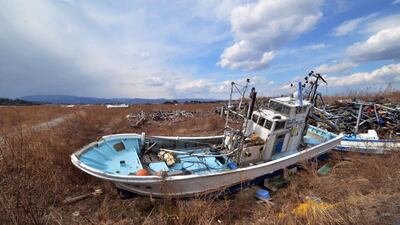
-
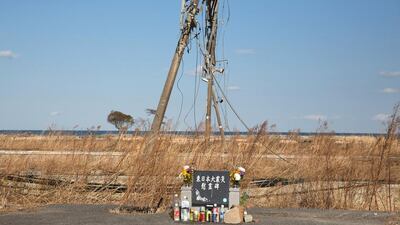
A memorial to victims is placed at Tomioka station, about 10 kilometres from the Fukushima Daiichi nuclear power plant. Ken Ishii / Getty Images -
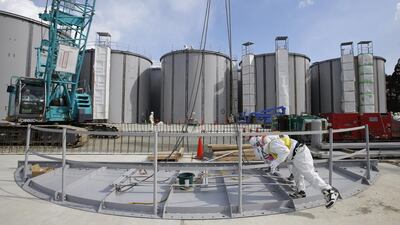
A worker wearing protective suits and masks welds storage tanks for radioactive water in the J1 area of the Fukushima Daiichi nuclear power plant. Toru Hanai / AFP -
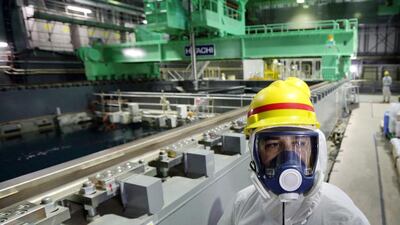
A man wearing a protective suit and a mask walks in front of a fuel handling machine inside the number four reactor of the Fukushima Daiichi nuclear power plant. Tomohiro Ohsumi / Bloomberg News -
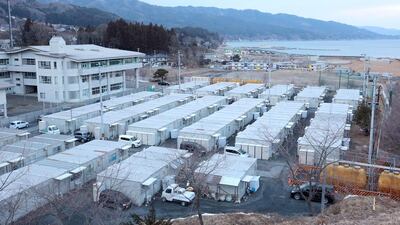
Temporary houses stand in Otsuchi, Iwate. Groundwork is still not finished for most of the homes due to be rebuilt, in Iwate prefecture and elsewhere. Yuriko Nakao / Getty Images -
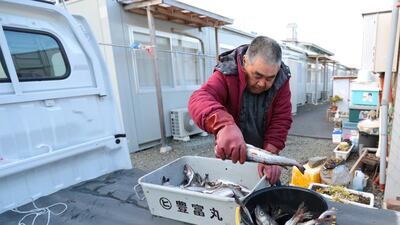
Satoru Miura puts fish inside a bucket to give out to his neighbours outside his temporary house in Otsuchi of Iwate prefecture. Yuriko Nakao / Getty Images -
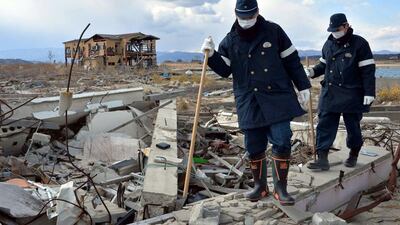
Police officers look for any sign of missing people three years after the disaster in Namie, near the stricken Fukushima Daiichi nuclear plant. Yoshikazu Tsuno / AFP -
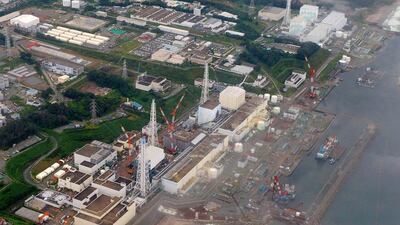
A bird’s eye view of the stricken Fukushima Daiichi nuclear power plant. Kyodo News / AP Photo -
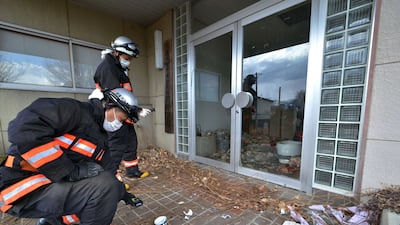
Firefighters check radiation levels at a community centre in Namie. Yoshikazu Tsuno / AFP -
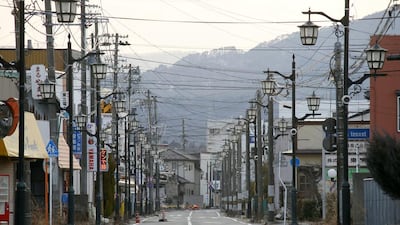
An empty street in the entry-restricted town of Namie. Kimimasa Mayama / EPA -
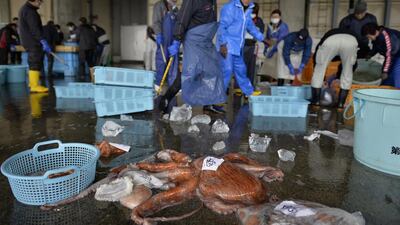
Employees sort out the catch from an experimental fishing at Onahama fishing port in Iwaki. Samples taken from the catch are tested for radioactive contamination before being sold on the local market. Franck Robichon / EPA -
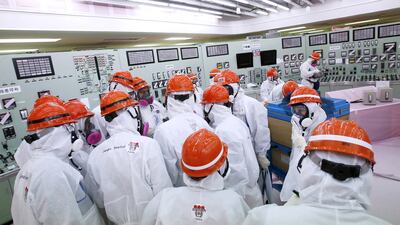
Members of the media visit the central control room for the No. 1 and No. 2 reactors at the Fukushima Daiichi nuclear power plant. Toru Hanai / Reuters -
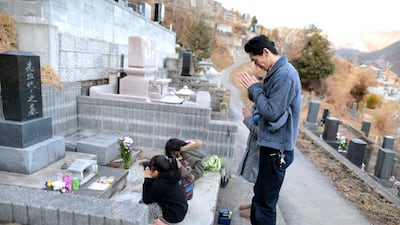
Family members offer prayers for relatives who lost their lives in the tsunami three years ago. Yuriko Nakao / Getty Images -
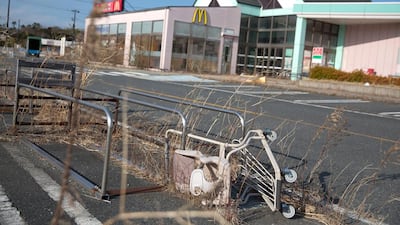
An abandoned supermaket, located about 10 kilometres from the Fukushima Daiichi nuclear power plant, in Tomioka, Fukushima Ken Ishii / Getty Images -
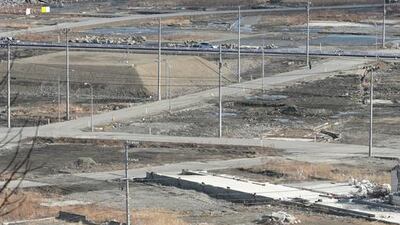
An elderly woman walks along a street where buildings were washed away by the tsunami three years ago in Otsuchi of Iwate prefecture. Yuriko Nakao / Getty Images



