

Ro Mujif Khan, 27, knows the pain of living like a refugee and worse: not existing in the eyes of a state. The Rohingya man is a stateless refugee who arrived in Bangladesh in 2017 after fleeing a genocidal campaign by the military in Myanmar.
“It is difficult for people to understand the pain of not being recognised by the country you were born in,” Mr Khan, told The National.
Around 4.4 million people around the world are stateless like him and exist in a vacuum in official records. Statelessness is when a person is not recognised as the citizen of any country. It occurs for a wide range of reasons – from communities being stripped of their citizenship, to indigenous minorities being excluded, and countries declaring independence.
“Being stateless means, I do not have access to higher education, health care or government jobs. I do not have a passport. Nor can I apply for one,” said Mr Khan. “I cannot even open a bank account to receive a salary or payment for the freelance work that I do.”
The world has taken important steps to reduce statelessness in the past 10 years, but new conflicts and displacement around the world could make the group grow again, a UN official told The National.
While there is no “direct correlation” between conflict and statelessness, refugees are at risk of losing their documents in conflict, explained Ruvendrini Menikdiwela, Assistant High Commissioner for Protection at the UN’s refugee agency (UNHCR).
This puts them and their children at risk of statelessness. “Refugees fleeing conflict may not be able to establish a nationality or legal identity in their countries of asylum,” Ms Menikdiwela told The National.

Violence blamed
A new report marking UNHCR’s 10-year campaign to end statelessness, warns against this risk as new conflicts emerge and endure. “As regional crises intensify, it’s more important than ever to ensure that forcibly displaced people are protected from statelessness and its resulting marginalisation,” the report warns.
States hosting refugees from neighbouring countries tend not to question the identities of the people fleeing into their land, but problems arise when they seek asylum in a third country, Ms Menikdiwela said. “But when these refugees go further afield, and go much more towards the global north or to destination countries elsewhere, the issue of establishing their identity and their nationality does become a problem.”
Children born as refugees also risk losing out on birth certificates and registration necessary for citizenship.
Chad, which hosts around one million displaced people from conflicts in Sudan, the Central African Republic and Cameroon, has issued more than 120,000 birth certificates to displaced people since 2019, according to the report.
But it still reports that 22 per cent of households in 2023 did not have documents. Last year, the government of Chad issued 42,945 birth certificates to refugees, internally displaced and host-community children.
The largest stateless population to be affected by conflict is the Rohingyas, a Muslim ethnic minority in Myanmar who were stripped of their citizenship in 1982 and then expelled in 2017. Mr Khan says all the basic rights that other people take for granted were denied to him in Myanmar. But as a stateless refugee in Bangladesh, he says experiencing similar or worse challenges is a double burden.
The Rohingya Advocacy and Awareness Association (RAAA) that he founded in 2019 is calling on the international community to pressure Myanmar to give citizenship rights to his people. He wants to go home, with full rights as a citizen of Myanmar, but the continuing civil war has worsened the plight of Rohingya and also further dimmed the possibility of their citizenship.
“As the conflict rages on, Rohingyas' future still remains uncertain. I do not want my three-year-old son to grow up as stateless,” said Mr Khan.
Solvable crisis
Statelessness is a “a largely invisible crisis: that of millions of people around the world living in the shadows, without a nationality, unable to assert their most basic human rights”, said agency’s High Commissioner Filippo Grandi to mark the report’s launch.
But it is also “one of the most solvable issues”. “All it needs is a little bit of political will and the commitment to enacting change,” Ms Menikdiwela said.

This could mean introducing laws and directives that address statelessness, or ensuring those laws are properly applied, she explained. “All it sometimes needs is literally, a stroke of pen on paper. That’s what we’re trying to do, convince governments that this is not really necessarily a complicated issue, it just needs a little bit of goodwill.”
More than half a million stateless people have acquired a nationality in the last 10 years, according to UNHCR’s latest data.
Ms Menikdiwela says the overall numbers of those without nationality could be much higher. “That data covers only about half of the 193 member states around the world, so the real numbers are probably significantly higher,” she said.
Many children are born stateless in countries where citizenship can only be passed on through the father – including in the Middle East.
Indigenous communities have typically been at risk of statelessness. Marginalised tribes living in the remote Likouala region of the Republic of the Congo have struggled to register their children at birth. This limits their ability to enrol them at school, access health structures or secure steady jobs. The government launched a countrywide campaign to issue birth certificates including to indigenous people in 2020.
More than 30,300 birth certificates have been delivered to people at risk of statelessness since 2018, including 5,300 to highly at-risk indigenous people, according to UNHCR data. Yet around 200,000 individuals, including 25,000 indigenous people remain at risk today.
Indigenous communities in the Republic of the Congo – in pictures
-
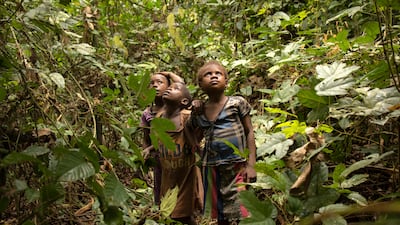
Indigenous children in the Republic of the Congo. They go into the forest every day to collect cassava and Koko leaves, as well as asparagus and mushrooms which they eat with their families. They do not know their age and have never had an identity document, which makes it harder for them to register in school and receive an education. All photos: UNHCR / Helene Caux -
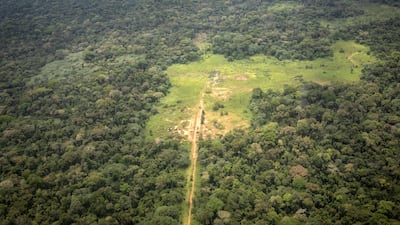
Part of the equatorial forest in the north of the Republic of the Congo. In West and Central Africa, an estimated 900,000 indigenous people live across Cameroon, the Central African Republic, the Democratic Republic of the Congo, the Republic of the Congo and Gabon -
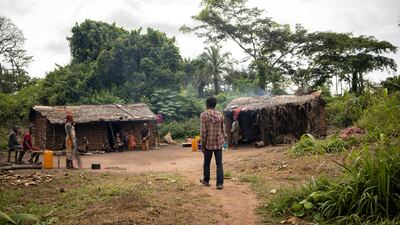
Indigenous people in the village of Kpakaya from the Likouala region of the Republic of Congo. Most do not have papers which limits their ability to enrol their children in school, access health structures or secure steady jobs. Helene Caux. -
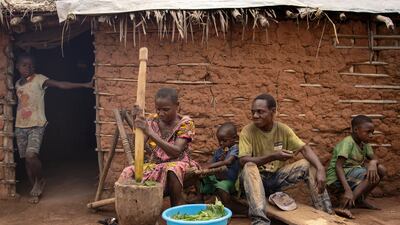
An indigenous woman crushes Koko leaves in a traditional wooden container as her husband and children look on -
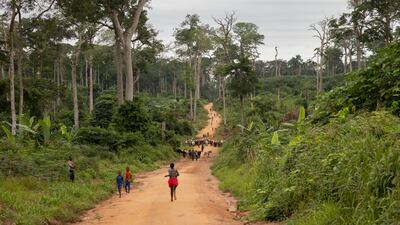
The main road in the village of Kpakaya. Indigenous families are deeply affected by the gradual erosion of their ancestral way of life, due in particular to the increasing exploitation of the forest by various logging companies -
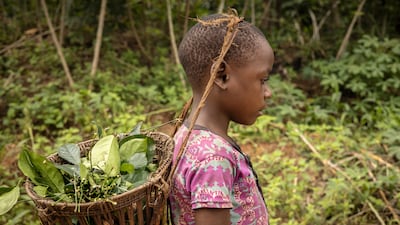
A young girl carries a basket full of Koko leaves on her back -

Henriette Moumgombe and her husband Bernard Bomboua return home with their two children and three of their friends after foraging for mushrooms, asparagus, and caterpillars in the forest -
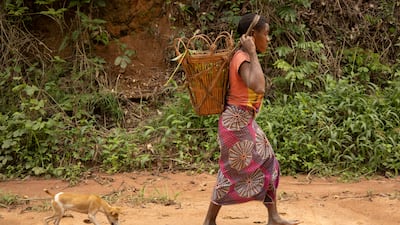
'I go to collect Koko leaves every morning in the forest and I come back to Kpakaya to sell them to the villagers so that I can buy oil with the money to cook the cassava,' says Henriette. 'My greatest wish is for my children to be able to go to school. I never went. I never had a document proving who I was' -
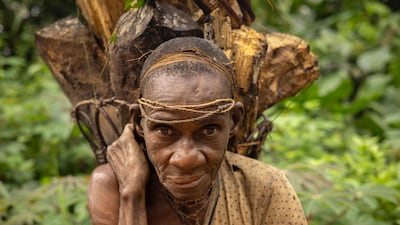
Veronique carries wood taken from an abandoned tree trunk, for her son and his family to build furniture for their home. She believes she is about 75 years old but has never had any identity document issued


Stateless journeys
Discrimination and civil wars can render a person stateless but so too can the trends of history. In the former Soviet Union, independence in the 1990s meant that many people were left without proper documentation until only recently. This is something that is still blighting the lives of a surprising number of people.
Karina Ambartsoumian-Clough went to the United States from Ukraine in 1996, when she was eight years old. She said that after Ukrainian independence, her parents were denied citizenship because of their mixed Armenian-Ukrainian ethnicity.
She was also not eligible for US citizenship because her parents entered America as illegal migrants. “I did not even know I was stateless. I always thought I was 'undocumented',” Ms Ambartsoumian-Clough told The National.
“It was only when my family's asylum claims were dismissed and the judge asked us to go to the Ukrainian embassy to 'self deport', I discovered, when I was just 13, that the country did not recognise me as a citizen either,” she said.

Since 2012, she has lived in the US under a special status, known as Deferred Action for Childhood Arrivals (DACA), which provides a temporary reprieve from deportation. But without a legal ID or Social Security number, Ms Ambartsoumian-Clough say she could not get state benefits such as health care or find employment. After enrolling at university, she was forced to leave her course after one year because of her lack of documents. “That was the darkest chapter of my life,” she said.
Ms Ambartsoumian-Clough has been applying for asylum since she turned 18, but her applications have been rejected. She married a US citizen, Kevin Clough, 10 years ago but is still struggling to acquire American citizenship due to her “unique status”.
Mr Clough, from Philadelphia, says he has worried for years that his wife will get deported or detained. DACA offers protection “but it’s also a political lightning rod, so it could easily be taken away in the near future”, Mr Clough wrote in a 2022 column in the Philadelphia Inquirer.
UNHCR estimates that there are 218,000 people potentially stateless or at risk of statelessness living across all 50 states in the US.
United Stateless, an advocacy group that Ms Ambartsoumian-Clough jointly founded with seven other stateless people, is campaigning for Congress to pass the Stateless Protection Act, which would introduce a protected status, permanent residency and a pathway to citizenship.
“It is beyond belief that in this time and age, there are still people who are struggling to get recognised. We are committed to end statelessness forever,” said Ms Ambartsoumian-Clough.
Breakthrough decisions
A few countries have made breakthroughs in abolishing or dramatically reducing their stateless populations in the decade since UNHCR launched its campaign.
Kyrgyzstan became the first country to resolve all known cases of statelessness this year, in a process to naturalise 13,700 stateless people that began five years ago. Vietnam addressed statelessness among former Cambodian refugees. Kenya granted nationality to members of three minority groups.
Missing identity documents is not a reason for countries to turn down asylum seekers, Ms Menikdiwela warned.
“We would definitely take strong exception if governments were to require a form of legal ID as a prerequisite for entering an asylum system,” she said. “Asylum seekers, even if they travel into a country regularly, even if they don't have the proper documentation, need to have their claims heard in order to make sure that we are not returning people to countries where they could face persecution or torture.”


