


The Iranian government is using criminal networks within Sweden to carry out violent acts against other states, groups and individuals, the Swedish intelligence service Sapo has said.
Intelligence officials said Iran had recently attacked the interests of other states in Sweden – specifically Israel – and also sought to act against Iranian dissident groups and individuals from the Iranian diaspora.
“The security service can now confirm that criminal networks in Sweden are proxies that Iran uses,” said Daniel Stenling, head of counter-intelligence at Sapo.
Swedish Foreign Minister Tobias Billstrom said his ministry had summoned Iran's charge d'affaires for talks on Friday “to express how seriously we view this information”.
“Sweden will not be a platform where state actors use criminal networks to promote their own interests,” he said.
The announcement came two weeks after night-time gunfire was reported outside Israel's embassy in Stockholm, and four months after police found a live grenade in the grounds of the Israeli compound.
Iran's Foreign Ministry did not immediately respond.
“The Iranian regime is using criminal networks in Sweden to carry out acts of violence against other states, groups or people in Sweden that it considers a threat,” said Sapo.
It cited in particular “Israeli and Jewish interests, targets and operations in Sweden”.
Swedish newspaper Dagens Nyheter on Thursday cited documents from Israel's intelligence agency Mossad as saying that the head of the Swedish gang Foxtrot, Rawa Majid, and his arch-rival Ismail Abdo, head of the Rumba gang, had both been recruited by the Iranian regime.

DN said the Mossad documents showed that Majid – a Swedish-Turkish dual citizen nicknamed the “Kurdish Fox” – was recently arrested in Iran and ordered to co-operate with the Iranian regime or go to jail.
Swedish media meanwhile reported this week that Abdo, who also holds Turkish citizenship, was recently arrested in Turkey and was released shortly afterwards on bail, despite an international arrest warrant.
Swedish Prime Minister Ulf Kristersson said at the time that Abdo's release was “frustrating”.
Asked whether the Swedish intelligence agency's information about Iran came solely from Mossad, Swedish Justice Minister Gunnar Strommer said: “I feel very confident about the information our authorities have.”
Mahsa Amini protests in Iran and around the world – in pictures
-
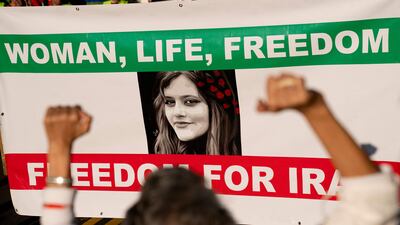
Demonstrators chant slogans during the March of Solidarity for Iran in Washington. AFP -
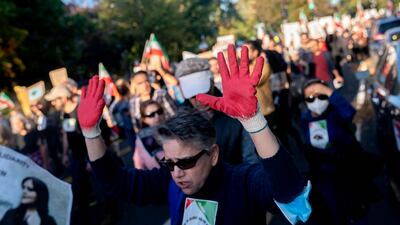
Another group of demonstrators at the march. AFP -
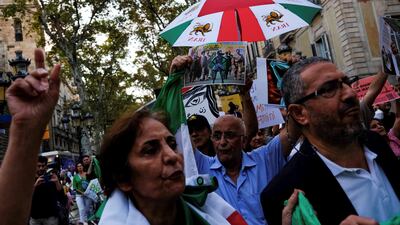
A protest in support of Iranian women in Barcelona. Reuters -
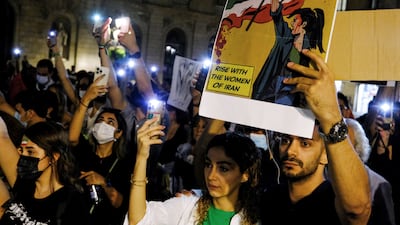
Iranian citizens and locals joined in the Barcelona protest. Reuters -
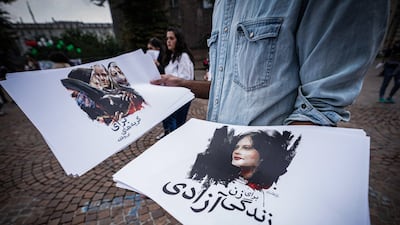
People attend a demonstration in solidarity with Mahsa Amini and other Iranian women in Castello Square, Turin. EPA -
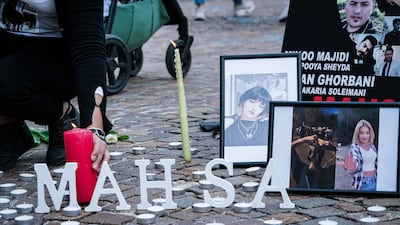
A person places a candle during the demonstration in Turin. EPA -
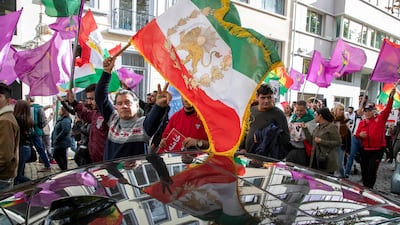
A protester holds a pre-Islamic Revolution Iranian flag during a demonstration in Brussels in support of the Iranians fighting for their freedom. AFP -
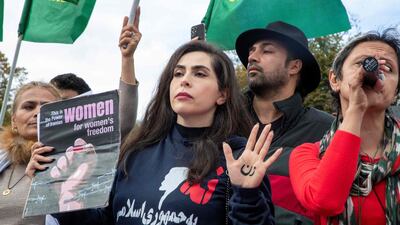
A protester wearing a top with a logo that reads 'No to an Islamic state" as she takes part in a rally in support of the Iranian people, in Brussels. AFP -
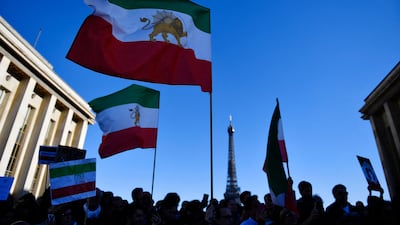
People wave the Shah-era Iranian flag during a protest in Paris. AFP -
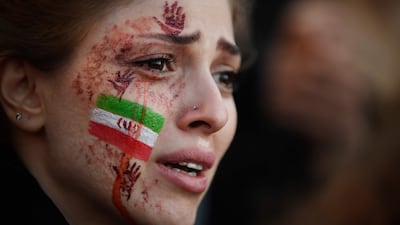
A woman shows her true colours in the protest against the Iranian government, in Paris. AFP -
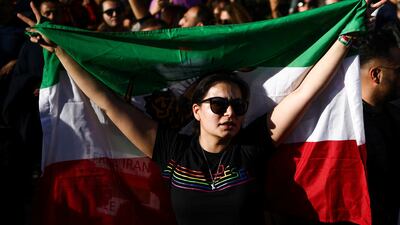
A woman holds a flag, as people protest against the Iranian regime outside Iran's embassy in central London. Reuters -
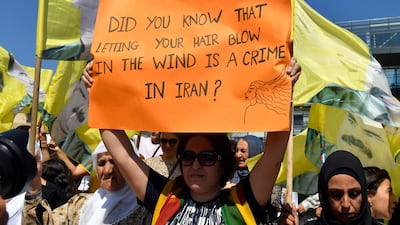
Supporters of the Kurdistan Workers' Party (PKK) carry placards and wave party flags in Beirut, during a protest against the death of Ms Amini. EPA -
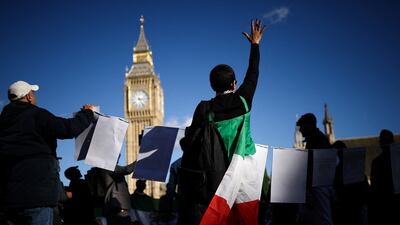
People demonstrate against the Iranian government outside the Houses of Parliament in London following the death of Amini. Reuters -
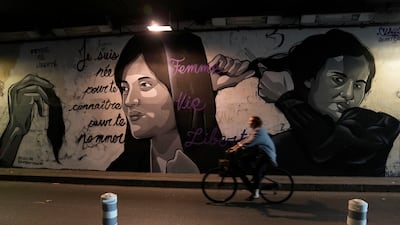
A mural in Paris depicts women cutting their hair to show support for Iranian protesters. AP -
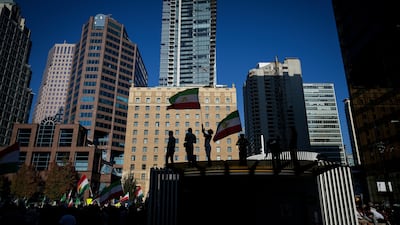
People take part in a rally against the Iranian government in Vancouver, Canada, on Saturday. AP -
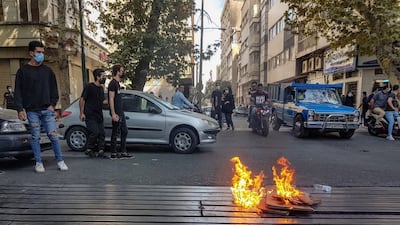
Protesters take to the streets of Tehran. EPA -
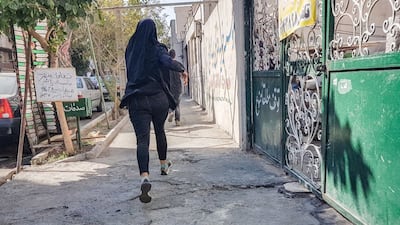
Iranian protesters run after clashing with with police. EPA -
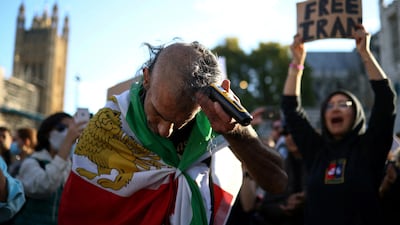
A protester shaves their head outside the Houses of Parliament in London. Reuters -
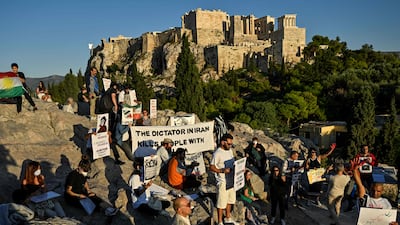
Iranians living in Athens hold a protest in solidarity. AFP -
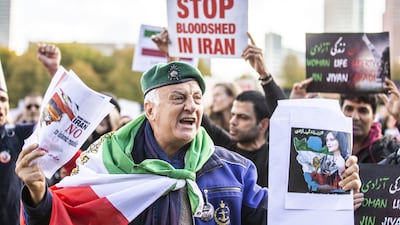
People take part in a rally in The Hague. AFP -
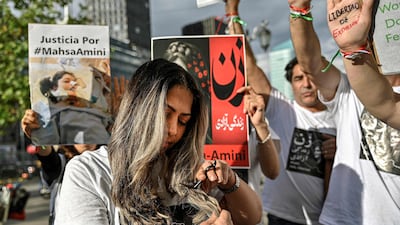
A woman cuts her hair during a demonstration in Santiago, Chile, by feminist groups and Iranian migrants in support of Iranian women following the death of Amini. AFP -
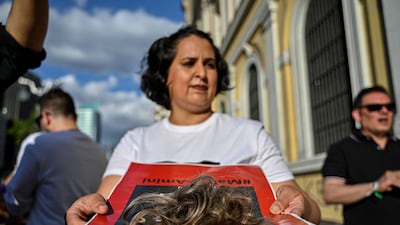
Members of feminist groups and Iranian migrants during the protests in Santiago. AFP -
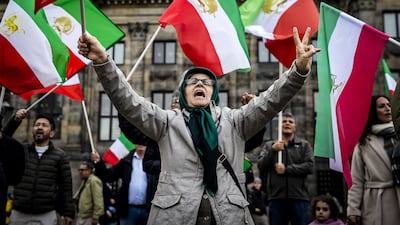
Iranian activists shout slogans during a protest against the government in Tehran, in Amsterdam, The Netherlands. EPA -
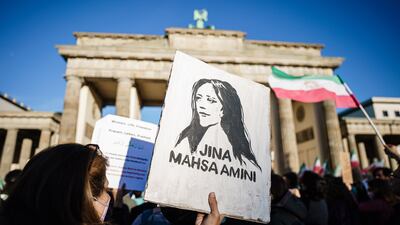
A protester holds a painted portrait of Mahsa Amini in Berlin, Germany. EPA -
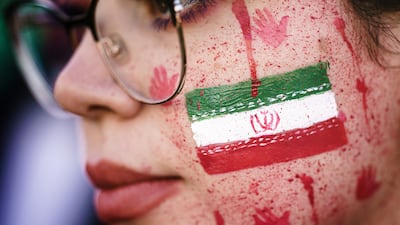
A protester shows red paint on her face, resembling blood splatters and bloody handprints next to the national Iranian emblem, during a rally in Berlin. EPA -
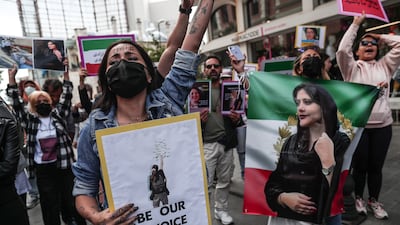
Iranian protesters shout slogan during a protest in Istanbul, Turkey. EPA -
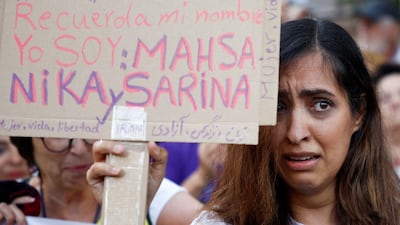
A woman holds a sign during a protest against the Iranian government, in front of the country's embassy in Madrid, Spain. The protests were triggered by the death of a young Iranian woman, Mahsa Amini, in police custody. Reuters -
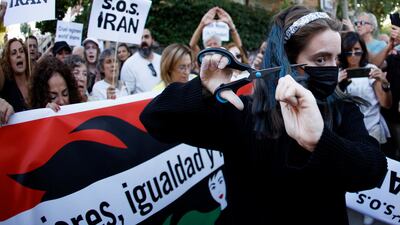
A woman cuts her hair during the protest in front of the Iranian embassy in Madrid. Reuters -
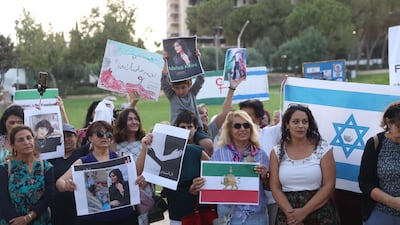
Israelis show their support for women in Iran as they hold up placards of Amini during a protest in Jerusalem. EPA -
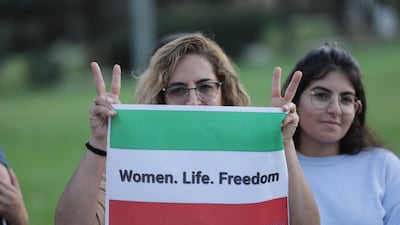
Amini, 22, was arrested in Tehran on September 13, 2022, by the morality police. She fell into a coma while in police custody and was declared dead on September 16. EPA -
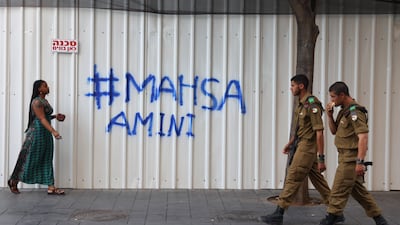
People walk by graffiti in support of the protests triggered by Amini's death, in Jerusalem. EPA -
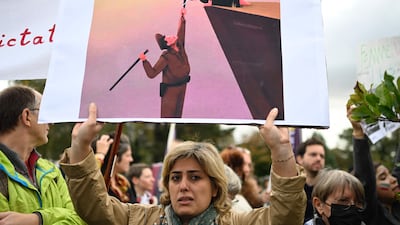
A protest in Nantes, western France, after the death of Amini in Iranian police custody. AFP -
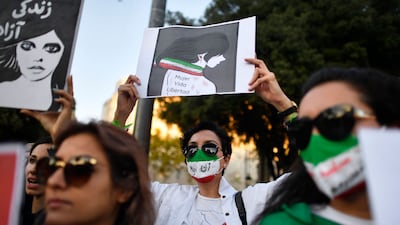
Women gather for a demonstration in Barcelona, Spain. AFP -
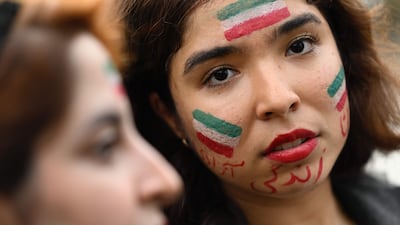
Demonstrators in Nantes. Amini's death has sparked a global protest movement. AFP -
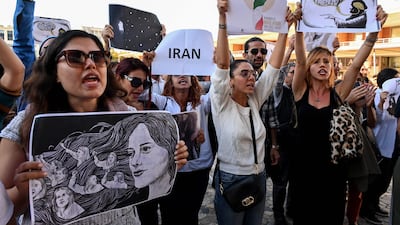
Women protest outside the town hall in in Montpellier, southern France. AFP -
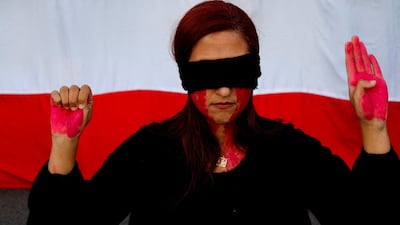
A woman at a protest in Catalunya Square, Barcelona. Reuters -
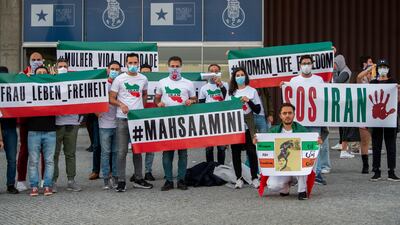
Campaigners and football fans protest at a Champions League match between Porto and Bayer Leverkusen at the Dragao stadium in Portugal. EPA -
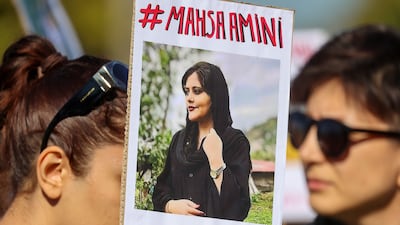
People hold placards during a demonstration in solidarity with the Iranian people near the European Parliament in Strasbourg, France. EPA -
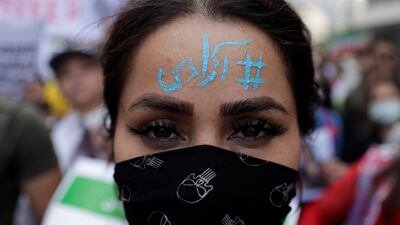
An Iranian woman living in Turkey with 'Freedom' written on her forehead takes part in a protest near the Iranian consulate in Istanbul. Reuters -
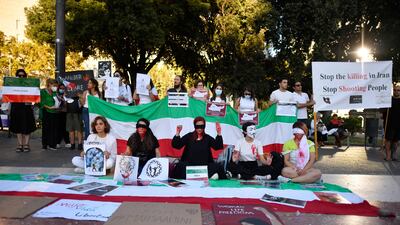
In Barcelona, protesters take part in a demonstration in support of Iranian women. AFP -
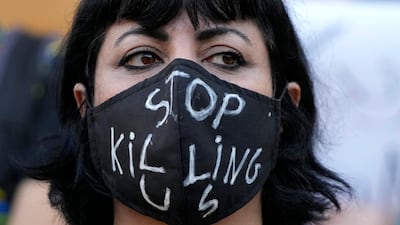
A Lebanese activist takes part in a protest in Beirut, triggered by the death of Amini, 22. AP -
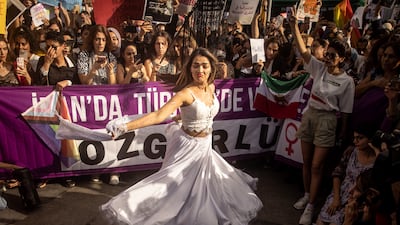
A Turkish protester takes off her head scarf while giving a performance in Instanbul during a protest against Iran over Amini's death. Getty -

A woman in Istanbul cuts her hair during a protest against Iran. Getty -
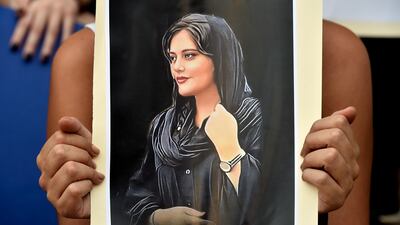
A Lebanese activist holds a poster depicting Amini during a protest in Beirut organised by feminist groups in support of women protesters in Iran. EPA -
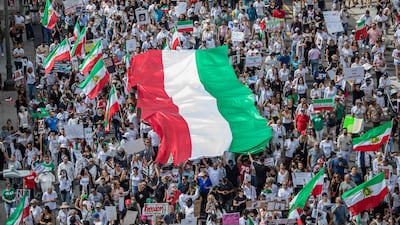
Demonstrators in Los Angeles, California, hold the Iranian flag during a protest against the government in Tehran. AFP -
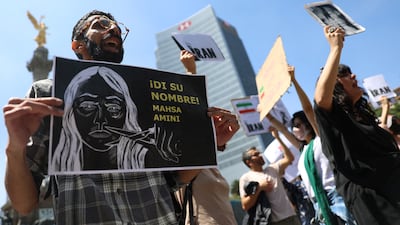
Demonstrators hold placards in Mexico City during a protest against Iran. Reuters -
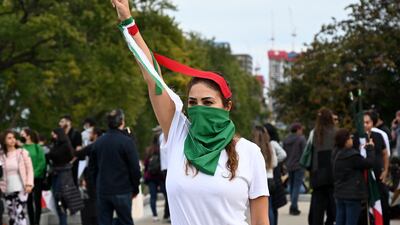
People demonstrate in Montreal, Canada, during a protest triggered by Amini's death. AFP -
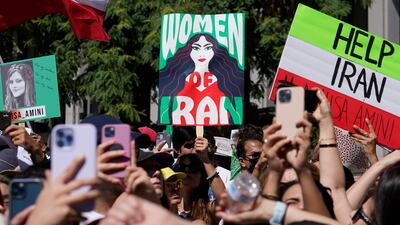
Iranian Americans participate in a rally in central Los Angeles, in solidarity with women in Iran. AP -
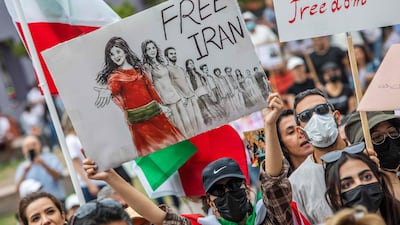
Demonstrators march during a protest in Los Angeles, California. AFP -
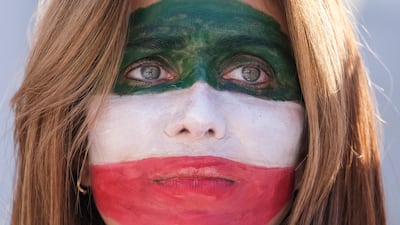
A woman with the colours of the Iranian flag painted on her face participates in a rally as thousands demonstrate in support of Iranian women in Los Angeles. EPA -
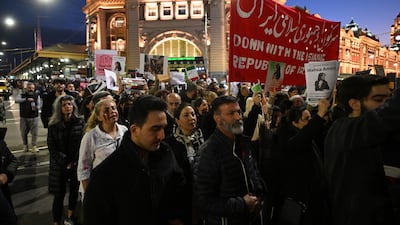
Australians protest over Amini's death in Melbourne. EPA -
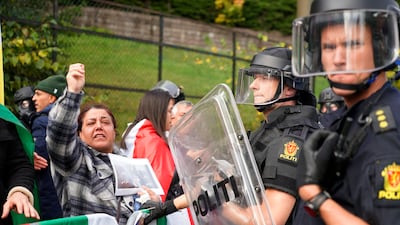
Police block protesters from entering Iran's embassy in Oslo, Norway. EPA -
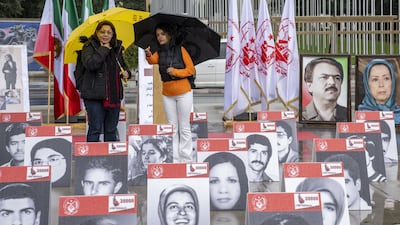
Demonstrators in front of the European headquarters of the UN in Geneva, Switzerland, during a rally against Iran. EPA -
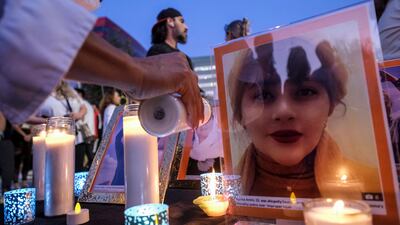
A candlelight vigil for Amini in Los Angeles. AFP -
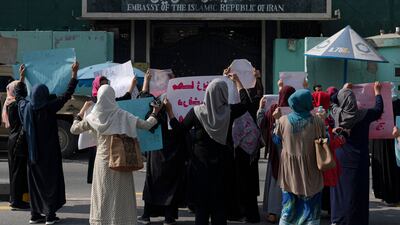
Afghan women hold placards as they take part in a protest in front of the Iranian embassy in Kabul. AFP -
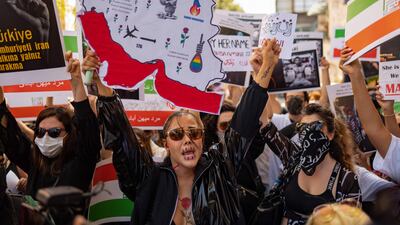
Protestors take part in a rally outside the Iranian consulate in Istanbul. AFP -
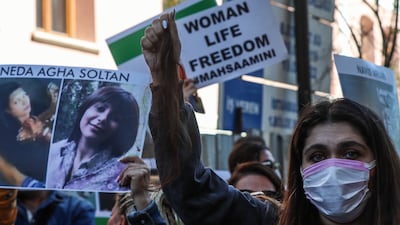
An Iranian woman shows a lock of hair she cut off during a protest outside the Iranian consulate in Istanbul. EPA -
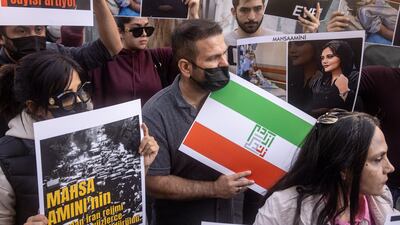
Demonstrators outside the Iranian consulate in Istanbul. Getty -
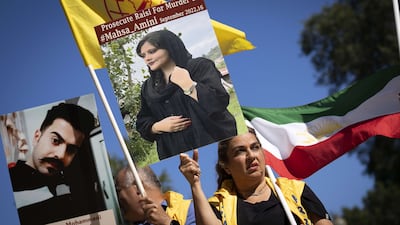
Iranian Americans rally on Capitol Hill in Washington to show support for protesters in Iran. AFP -
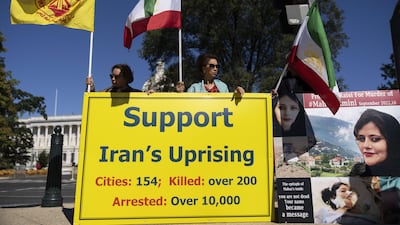
Protesters on Capitol Hill hold a sign condemning the crackdown by Tehran. AFP -
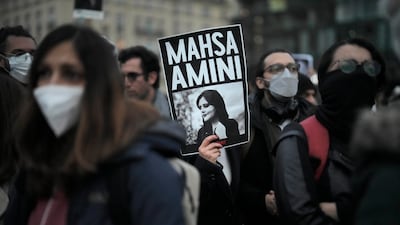
German demonstrators gather in Berlin after the death of Amini in Iranian police custody. AP -
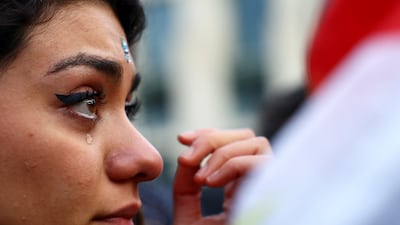
A protester cries during a rally in Berlin. Reuters -
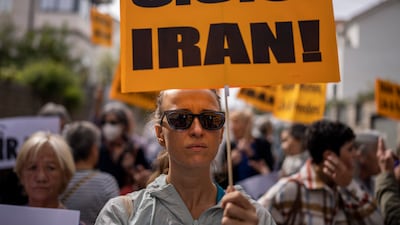
A demonstration in Madrid, Spain. Thousands have gathered in cities across Europe to support protests in Iran. AP -
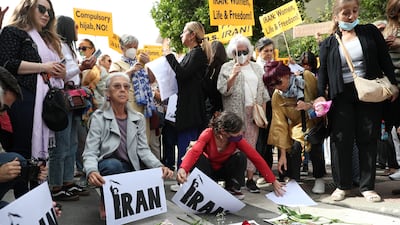
Demonstrators gather outside the Iranian embassy in Madrid. Reuters -
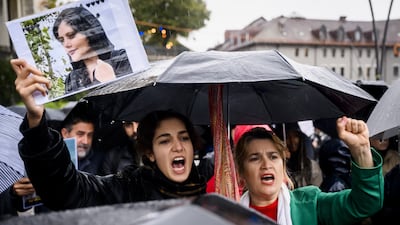
People take part in a protest in Lausanne, Switzerland. EPA -
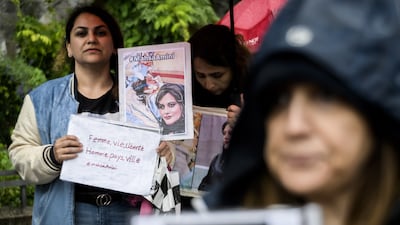
Protesters hold signs featuring images of Amini during the protest in the western Swiss city. EPA -
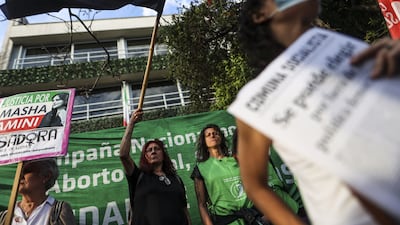
Demonstrators in front of the Iranian embassy in Buenos Aires, Argentina. EPA -
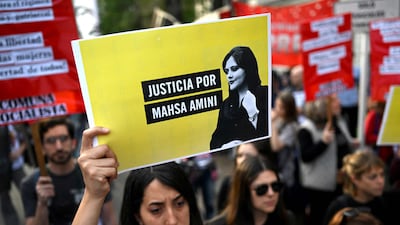
An activist outside the Iranian embassy in Buenos Aires, Argentina, with a sign that reads 'Justice for Mahsa Amini'. AFP -
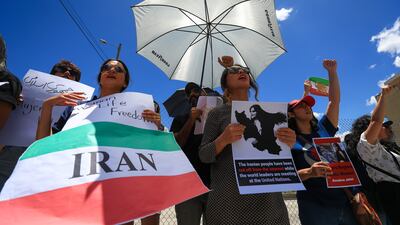
A demonstration against violence in Iran is held in Quito, Ecuador. The Iranian community in Ecuador protested outside the Iranian embassy. EPA -
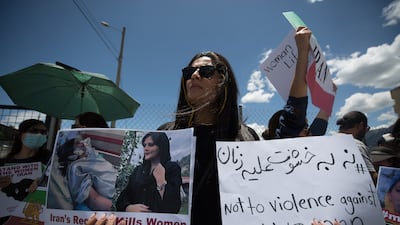
Protesters at a demonstration outside the Iranian embassy in Quito, Ecuador. EPA


“Iran has previously used violence in other countries in Europe in a bid to silence critical voices and perceived threats against its regime,” said Sapo.
“Our assessment is that this is a regional conflict that has spread globally and now also includes Sweden as an arena for this conflict,” Mr Stenling said.
“Very young individuals, even children, can be used to carry out Iranian activities that threaten security in Sweden.”
Sapo said it was collaborating with the police, military and international allies “to meet the threat from Iran”.
The Scandinavian country has struggled to contain surging gang violence in recent years, with shootings and bombings now weekly occurrences.
The gang violence was originally linked to control over the drugs market, but was “changing shape very quickly”, the deputy head of the Swedish Police National Operations Division, Hampus Nygards, said.
The networks have increasingly recruited ever-younger youths and children eager to gain status and earn quick money, well aware they cannot be jailed if under the age of 15.
Swedish police increased security around Israeli and Jewish interests following the suspected shooting near Israel's embassy in Stockholm and the discovery of the grenade outside the same embassy in January.
Sapo declined to comment on specific attacks but according to a statement obtained by Reuters from an Israeli official, the January incident was carried out by a criminal gang on behalf of Iran.
Relations between Sweden and Iran have deteriorated since a Swedish court in July 2022 handed down a life sentence against a 63-year-old Iranian former prison official, Hamid Noury, for crimes committed during a 1988 purge of dissidents.
As Noury's trial got under way, Iran arrested Swedish EU diplomat Johan Floderus in April 2022, accusing him of spying for Israel, an offence that carries a potential death penalty.
Governments and human rights groups have accused Tehran of engaging in “hostage diplomacy”.
No date has been set for the verdict in Floderus's case.
The security service said the terrorism threat level assessment remained at four on a scale of five. It was raised to four in 2023, after Quran burnings by people in Sweden outraged Muslims in a number of countries and triggered threats.

