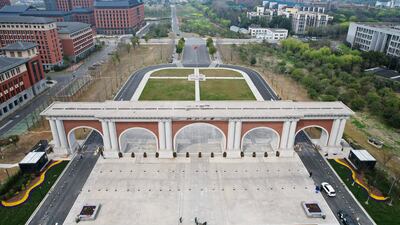
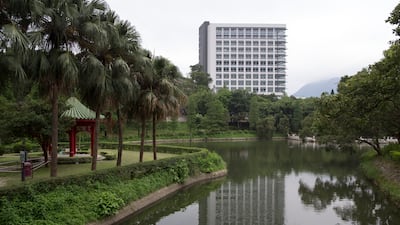
More Indian universities than ever before are now considered among the best new institutions in the world, with 55 ranking in the Times Higher Education Young University Rankings 2024, which features 673 establishments.
Increased participation in the voluntary survey, education reforms, and greater investment in research led to the increase in India's tally, which is up from 45 last year and 26 in 2020.
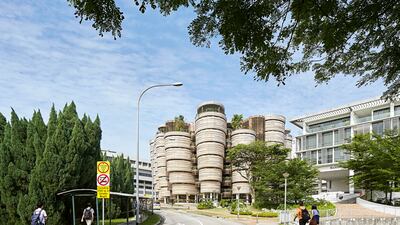
The Young University Rankings focuses on institutions that are 50 years old or younger, with Nanyang Technological University in Singapore topping the list for the second year in a row.
We have seen more focus on internationalisation and more awareness of international visibility
Phil Baty,
Times Higher Education’s chief global affairs officer
Phil Baty, Times Higher Education’s chief global affairs officer, said: "What we can see very clearly this year is that the stunning rise of Asia in global rankings is not just restricted to its older, established universities.
"The continent is highly dynamic, with a wide range of young, rising star universities emerging in places like India, Pakistan and Turkey."
There has been a resurgence particularly among Indian institutions, Mr Baty said.
"We've seen a significant increase in Indian universities wanting to be ranked," he added.
“In the last decade, we've seen a very significant shift of Indian universities wanting to join the international benchmarking system, and wanting to compare themselves globally. That is a major phenomenon.
“From the New Education Policy reforms and a commitment to reform in India, we've seen improvements in performance. The NEP reforms did, and have, put a focus on building research capacity."
Breaking new ground
India's New Education Policy was announced in 2020 and took effect in the 2023-2024 academic year.
It included syllabus updates, a restructuring of the grade system and removing the concept of rote learning, a traditional method of education focusing on memorisation skills and repetition instead of understanding a subject.
The reforms also focused on removing boundaries between academic disciplines and encouraged universities to offer multi-disciplinary courses.
"We have seen more focus on internationalisation and more awareness of international visibility, international reputation and brand and international networks. Also, some of the smaller younger universities are able to concentrate on niche strengths," Mr Baty said.
"The kind of investment we've seen in China and in east Asia is much greater than in southern Asia, I think China has had more than 30 years of very, very strong investment in top universities."
Two universities in the top 100
Indian universities such as Mahatma Gandhi University, established in 1983, ranked among the top 100 in the world, higher than Auckland University of Technology, Middlesex University, Bournemouth University and University of California, Merced.
Mahatma Gandhi University ranked 81st, a drop from 77th last year, and was the highest-ranked higher education institution in the country.
Anna University, set up in 1978, entered the top 100 with a ranking of 96, after placing among the best 250 universities worldwide last year.
Mr Baty said the list was a dynamic one looking at younger universities, with an interesting mix of different types of institutions including those in the private sector.
"India, I think needs to improve on internationalisation,” said Mr Baty.
"I think we're seeing that happening more. We're seeing the NEP reforms are starting to help Indian universities be a bit more connected internationally.
"This list is inherently very dynamic because it looks at universities under the age of 50. That means that every single year, we have universities dropping out because they reached the age of 51.
"In the overall World Rankings analysis last year, we did make some methodological changes and this ranking is a subset of the world rankings."
The latest Times Higher Education Arab University Rankings ranked universities based on indicators such as teaching, research quality, research environment, international outlook and industry.
Early days to determine progress
Senthil Nathan, managing director and co-founder of Edu Alliance, a higher education consultancy based in the UAE and US, said that while universities were consistently improving, it was still early days to determine whether they had really made progress.
“As these universities have been in the Times Higher Education ranking process only for a few years, it is not clear whether these progressive jumps are indicative of authentic progress in research efforts or due to these universities submitting data and evidence with a better understanding of the ranking requirements,” said Mr Nathan.
“In another five years of consistent submissions, the picture could become clearer."
Six Indian Institutes of Technology, India’s premier engineering institutes, have boycotted the Times Higher Education ranking since 2020 over issues of transparency.
Mr Nathan said voluntary participation in the rankings can lead to a lack of consistency.
“There is no consistency in the ranking because many leading universities are boycotting the ranking process,” he said.
"The current world ranking models are too biased towards research output that demands very high investments in research, which most of the universities in the developing world cannot afford – and do not need to do.
"High-research investments are to be underwritten by the governments and eventually the costs cascade down to students and society that can ill-afford such high costs for higher education when these young people really need affordable but skill-developing higher education for productive career and life."
He said India now had its own national ranking framework which was not voluntary and any university that was part of India's University Grants Commission needed to participate in it.
Asian universities dominate young university rankings
Asian universities dominated the rankings as their tally nearly doubled in five years, climbing from 165 in 2020 to 327 in 2024.
Turkey has 58 universities represented, up from 47 last year and just 23 in 2020, while Iran has 46 universities, up from 39 last year and 20 in 2020, and Pakistan has 33 universities this year up from 22 last year.
Overall, in second place was Paris Sciences et Lettres – PSL Research University Paris, which moved up one place from last year.
The collegiate university was formed in 2010 with the aim of becoming one of the world’s leading research universities.
The Hong Kong University of Science and Technology, which was second last year, has moved down one place this year to third. The university, established in 1991, is one of the best in Hong Kong and focuses on science and technology education.
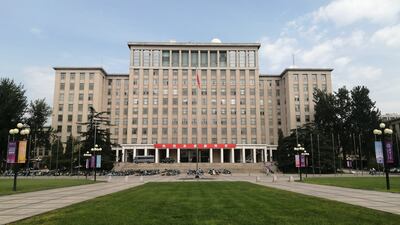
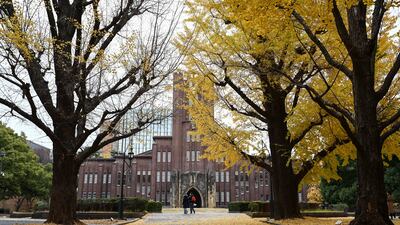
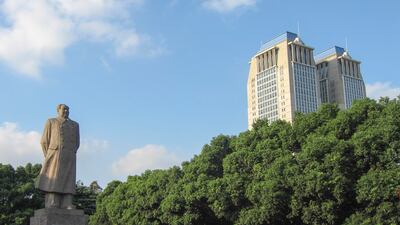
Asian universities overtaking top US Ivy League colleges - in pictures
The specs: 2018 Nissan Patrol Nismo
Price: base / as tested: Dh382,000
Engine: 5.6-litre V8
Gearbox: Seven-speed automatic
Power: 428hp @ 5,800rpm
Torque: 560Nm @ 3,600rpm
Fuel economy, combined: 12.7L / 100km
MATCH INFO
Manchester United 2 (Heaton (og) 42', Lindelof 64')
Aston Villa 2 (Grealish 11', Mings 66')
Ten tax points to be aware of in 2026
1. Domestic VAT refund amendments: request your refund within five years
If a business does not apply for the refund on time, they lose their credit.
2. E-invoicing in the UAE
Businesses should continue preparing for the implementation of e-invoicing in the UAE, with 2026 a preparation and transition period ahead of phased mandatory adoption.
3. More tax audits
Tax authorities are increasingly using data already available across multiple filings to identify audit risks.
4. More beneficial VAT and excise tax penalty regime
Tax disputes are expected to become more frequent and more structured, with clearer administrative objection and appeal processes. The UAE has adopted a new penalty regime for VAT and excise disputes, which now mirrors the penalty regime for corporate tax.
5. Greater emphasis on statutory audit
There is a greater need for the accuracy of financial statements. The International Financial Reporting Standards standards need to be strictly adhered to and, as a result, the quality of the audits will need to increase.
6. Further transfer pricing enforcement
Transfer pricing enforcement, which refers to the practice of establishing prices for internal transactions between related entities, is expected to broaden in scope. The UAE will shortly open the possibility to negotiate advance pricing agreements, or essentially rulings for transfer pricing purposes.
7. Limited time periods for audits
Recent amendments also introduce a default five-year limitation period for tax audits and assessments, subject to specific statutory exceptions. While the standard audit and assessment period is five years, this may be extended to up to 15 years in cases involving fraud or tax evasion.
8. Pillar 2 implementation
Many multinational groups will begin to feel the practical effect of the Domestic Minimum Top-Up Tax (DMTT), the UAE's implementation of the OECD’s global minimum tax under Pillar 2. While the rules apply for financial years starting on or after January 1, 2025, it is 2026 that marks the transition to an operational phase.
9. Reduced compliance obligations for imported goods and services
Businesses that apply the reverse-charge mechanism for VAT purposes in the UAE may benefit from reduced compliance obligations.
10. Substance and CbC reporting focus
Tax authorities are expected to continue strengthening the enforcement of economic substance and Country-by-Country (CbC) reporting frameworks. In the UAE, these regimes are increasingly being used as risk-assessment tools, providing tax authorities with a comprehensive view of multinational groups’ global footprints and enabling them to assess whether profits are aligned with real economic activity.
Contributed by Thomas Vanhee and Hend Rashwan, Aurifer
Water waste
In the UAE’s arid climate, small shrubs, bushes and flower beds usually require about six litres of water per square metre, daily. That increases to 12 litres per square metre a day for small trees, and 300 litres for palm trees.
Horticulturists suggest the best time for watering is before 8am or after 6pm, when water won't be dried up by the sun.
A global report published by the Water Resources Institute in August, ranked the UAE 10th out of 164 nations where water supplies are most stretched.
The Emirates is the world’s third largest per capita water consumer after the US and Canada.
Expert advice
“Join in with a group like Cycle Safe Dubai or TrainYAS, where you’ll meet like-minded people and always have support on hand.”
Stewart Howison, co-founder of Cycle Safe Dubai and owner of Revolution Cycles
“When you sweat a lot, you lose a lot of salt and other electrolytes from your body. If your electrolytes drop enough, you will be at risk of cramping. To prevent salt deficiency, simply add an electrolyte mix to your water.”
Cornelia Gloor, head of RAK Hospital’s Rehabilitation and Physiotherapy Centre
“Don’t make the mistake of thinking you can ride as fast or as far during the summer as you do in cooler weather. The heat will make you expend more energy to maintain a speed that might normally be comfortable, so pace yourself when riding during the hotter parts of the day.”
Chandrashekar Nandi, physiotherapist at Burjeel Hospital in Dubai
Fight card
1. Bantamweight: Victor Nunes (BRA) v Siyovush Gulmamadov (TJK)
2. Featherweight: Hussein Salim (IRQ) v Shakhriyor Juraev (UZB)
3. Catchweight 80kg: Rashed Dawood (UAE) v Khamza Yamadaev (RUS)
4. Lightweight: Ho Taek-oh (KOR) v Ronald Girones (CUB)
5. Lightweight: Arthur Zaynukov (RUS) v Damien Lapilus (FRA)
6. Bantamweight: Vinicius de Oliveira (BRA) v Furkatbek Yokubov (RUS)
7. Featherweight: Movlid Khaybulaev (RUS) v Zaka Fatullazade (AZE)
8. Flyweight: Shannon Ross (TUR) v Donovon Freelow (USA)
9. Lightweight: Mohammad Yahya (UAE) v Dan Collins (GBR)
10. Catchweight 73kg: Islam Mamedov (RUS) v Martun Mezhulmyan (ARM)
11. Bantamweight World title: Jaures Dea (CAM) v Xavier Alaoui (MAR)
12. Flyweight World title: Manon Fiorot (FRA) v Gabriela Campo (ARG)
Who's who in Yemen conflict
Houthis: Iran-backed rebels who occupy Sanaa and run unrecognised government
Yemeni government: Exiled government in Aden led by eight-member Presidential Leadership Council
Southern Transitional Council: Faction in Yemeni government that seeks autonomy for the south
Habrish 'rebels': Tribal-backed forces feuding with STC over control of oil in government territory
Who was Alfred Nobel?
The Nobel Prize was created by wealthy Swedish chemist and entrepreneur Alfred Nobel.
- In his will he dictated that the bulk of his estate should be used to fund "prizes to those who, during the preceding year, have conferred the greatest benefit to humankind".
- Nobel is best known as the inventor of dynamite, but also wrote poetry and drama and could speak Russian, French, English and German by the age of 17. The five original prize categories reflect the interests closest to his heart.
- Nobel died in 1896 but it took until 1901, following a legal battle over his will, before the first prizes were awarded.
The biog
Name: Salvador Toriano Jr
Age: 59
From: Laguna, The Philippines
Favourite dish: Seabass or Fish and Chips
Hobbies: When he’s not in the restaurant, he still likes to cook, along with walking and meeting up with friends.
LIVING IN...
This article is part of a guide on where to live in the UAE. Our reporters will profile some of the country’s most desirable districts, provide an estimate of rental prices and introduce you to some of the residents who call each area home.
Timeline
2012-2015
The company offers payments/bribes to win key contracts in the Middle East
May 2017
The UK SFO officially opens investigation into Petrofac’s use of agents, corruption, and potential bribery to secure contracts
September 2021
Petrofac pleads guilty to seven counts of failing to prevent bribery under the UK Bribery Act
October 2021
Court fines Petrofac £77 million for bribery. Former executive receives a two-year suspended sentence
December 2024
Petrofac enters into comprehensive restructuring to strengthen the financial position of the group
May 2025
The High Court of England and Wales approves the company’s restructuring plan
July 2025
The Court of Appeal issues a judgment challenging parts of the restructuring plan
August 2025
Petrofac issues a business update to execute the restructuring and confirms it will appeal the Court of Appeal decision
October 2025
Petrofac loses a major TenneT offshore wind contract worth €13 billion. Holding company files for administration in the UK. Petrofac delisted from the London Stock Exchange
November 2025
180 Petrofac employees laid off in the UAE
Zodi%20%26%20Tehu%3A%20Princes%20Of%20The%20Desert
%3Cp%3E%3Cstrong%3EDirector%3A%20%3C%2Fstrong%3EEric%20Barbier%26nbsp%3B%3C%2Fp%3E%0A%3Cp%3E%3Cstrong%3EStarring%3A%20%3C%2Fstrong%3EYoussef%20Hajdi%2C%20Nadia%20Benzakour%2C%20Yasser%20Drief%3C%2Fp%3E%0A%3Cp%3E%3Cstrong%3ERating%3A%3C%2Fstrong%3E%204%2F5%3C%2Fp%3E%0A