Tunisia surveys its migratory birds - in pictures
-
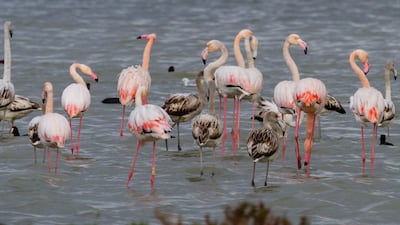
Adult and juvenile greater flamingos feed in Tunisian waters over the winter before undertaking their migration to parts of the northern Mediterranean in the spring. Photo: Hichem Azafzaf -

The survey has produced one of the most complete pictures of global ecological change in recent decades. Photo: Hichem Azafzaf -

More than 100 species of birds winter on the southern shores of the Mediterranean Sea. Tunisia’s salt marshes are particularly fertile feeding grounds for wading birds. Photo: Hichem Azafzaf -

About 380,000 waterfowl visit Tunisia every winter to feast on brine shrimp, insects, fish and other small organisms in the muddy marshes all along the country's coast. Photo: Hichem Azafzaf -

A marsh harrier searches for prey in the tall grass of one of Tunisia’s 'sebkhas', or salt lakes, as a group of flamingos forages on the muddy bottom. Photo: Hichem Azafzaf -

Census-takers track more than a hundred species of birds that winter in the wetlands of Tunisia. The National / Erin Clare Brown -
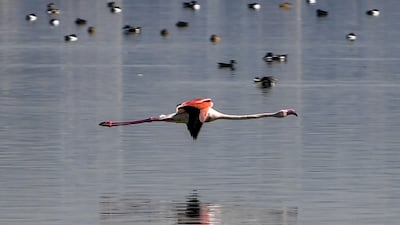
A flamingo flies over the Sijoumi mudflat on the southern outskirts of Tunisia's capital Tunis. AFP -

Pink flamingos take off from a lake in Gammarth on the outskirts of Tunis. AFP -

Pink flamingos feed in a lake in Gammarth. AFP


Most popular today

