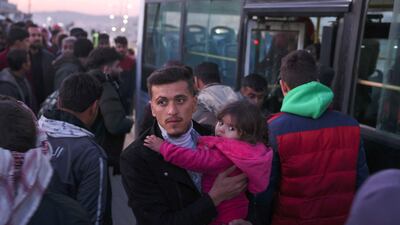
Syrian refugees living in Turkey take a bus through the northern Bab al-Hawa border crossing, on February 17, 2023, as they return to Syria in the aftermath of a deadly earthquake. - Turkey this week allowed Syrians under its protection who hold ID cards from one of the quake-hit provinces to leave for between three and six months, a rule change designed to reunite families on both sides of the border hit by the February 6 disaster, which has killed more than 41,000 people and displaced millions across both countries. (Photo by Omar HAJ KADOUR / AFP)
Syrian refugees living in Turkey take a bus through the northern Bab al-Hawa border crossing, on February 17, 2023, as they return to Syria in the aftermath of a deadly earthquake. - Turkey this week

Syrian refugees return home after Turkey earthquake


  • English
  • Arabic

Thousands of Syrian refugees in Turkey are returning to rebel-held areas of their country after the February 6 earthquake that caused widespread devastation on both sides of the border.

Turkish authorities said refugees who entered north-west Syria would have the right to return for up to six months, prompting many Syrians to cross the border to check on relatives.

Officials gave no figures for the number of people entering at the Bab Hamam crossing into Idlib, but said 4,600 Syrians had passed through the Bab al Hawa crossing since Turkey announced the offer on Wednesday.

"I haven't seen my family for four years, as I live alone in Turkey," Youssef Qramo said after crossing into Syria's north-west Idlib region.

"The situation in Turkey is miserable in the areas where the earthquake hit," he told Reuters

Mr Qramo, who had been living in the city of Gaziantep, said people were staying in tents in the cold and rain. As well as the harsh winter weather, Syrians had faced hostility, he said.

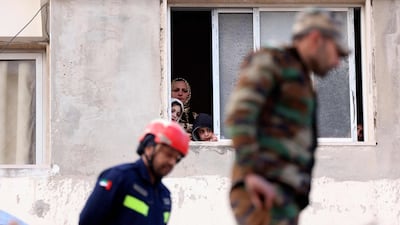
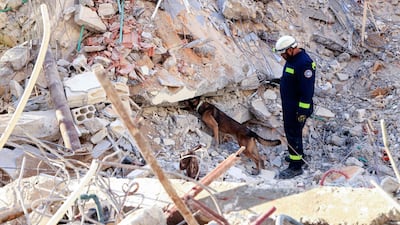
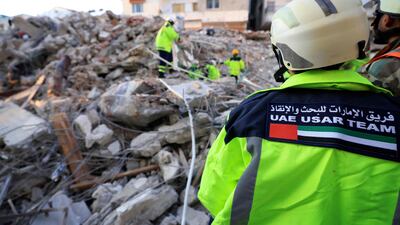
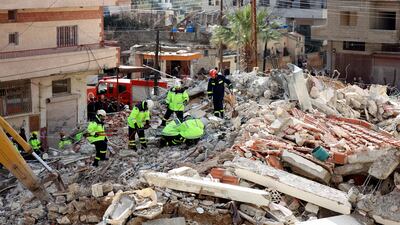
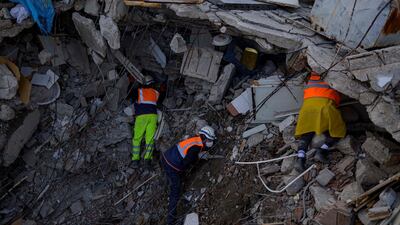
  • Emirati rescuers search for survivors amid the rubble of a collapsed building in Latakia, northwest of the Syrian capital, following the deadly earthquake. All photos: AFP
    Emirati rescuers search for survivors amid the rubble of a collapsed building in Latakia, northwest of the Syrian capital, following the deadly earthquake. All photos: AFP
  • An Emirati rescuer, accompanied by a Syrian soldier, searches for survivors
    An Emirati rescuer, accompanied by a Syrian soldier, searches for survivors
  • Aftershocks following the February 6 earthquake have added to the death toll
    Aftershocks following the February 6 earthquake have added to the death toll
  • Rescuers sift through rubble in Jableh
    Rescuers sift through rubble in Jableh
  • The 7. 8-magnitude earthquake has caused widespread disruption in Syria
    The 7. 8-magnitude earthquake has caused widespread disruption in Syria
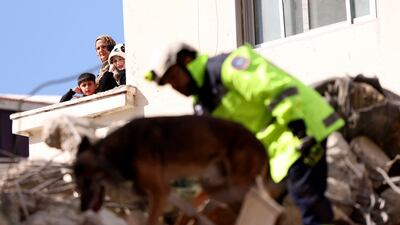
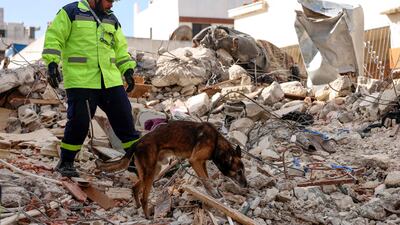
  • A rescue dog joins the search
    A rescue dog joins the search
  • Emirati rescuers sift through the rubble
    Emirati rescuers sift through the rubble
  • An Emirati rescuer, with the help of a dog, searches for survivors
    An Emirati rescuer, with the help of a dog, searches for survivors
  • Emirati rescuers sift through the rubble
    Emirati rescuers sift through the rubble

Even before the earthquake, the 3.6 million Syrian refugees in Turkey had encountered growing resentment from Turks struggling with a rising cost of living and sometimes blaming the influx from Syria for their economic woes.

In Gaziantep, Mr Qramo said police had moved Syrians out of a mosque where they were sheltering to make way for Turkish families. Several Turks in other quake-hit towns and cities have accused Syrians of robbing damaged shops and homes.

"The situation is very tough for Syrians," he said.

Mansour Hamoud, who was living in the Turkish port city of Iskenderun, said he had been sleeping in a park after his home was destroyed.

"I decided to come back and live in my country. Dead or alive, I prefer to be with my family," he said.

Around four million people live in north-west Syria under the control of armed rebels opposed to President Bashar Al Assad's government. The United Nations say most of them were dependent on aid even before the latest disaster.

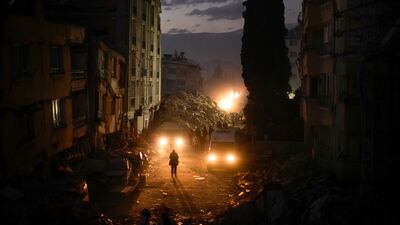
  • A woman walks among destroyed buildings in Hatay, Turkey. Getty Images
    A woman walks among destroyed buildings in Hatay, Turkey. Getty Images
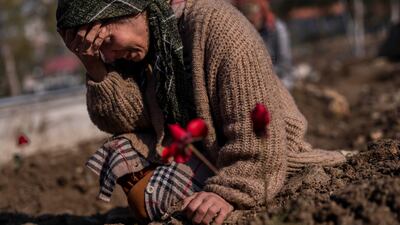
  • A woman mourns a relative during the burial of one of the earthquake victims in Antakya, southeastern Turkey. AP Photo
    A woman mourns a relative during the burial of one of the earthquake victims in Antakya, southeastern Turkey. AP Photo
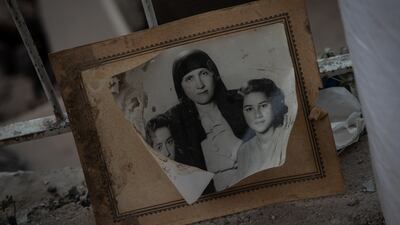
  • A family photo is seen amid the rubble in Hatay. Getty Images
    A family photo is seen amid the rubble in Hatay. Getty Images
  • Syrian refugees in Turkey return to their home country following the deadly earthquake. AFP
    Syrian refugees in Turkey return to their home country following the deadly earthquake. AFP
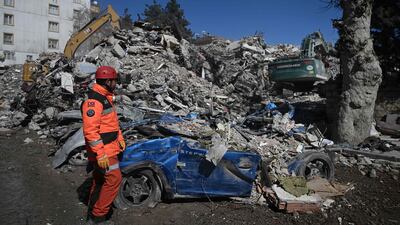
  • Members of NGOs Deathcare Embalming Team and Turkish Kurt-Ar inspect the bucket of an excavator as they search for bodies in Kahramanmaras, Turkey. AP Photo
    Members of NGOs Deathcare Embalming Team and Turkish Kurt-Ar inspect the bucket of an excavator as they search for bodies in Kahramanmaras, Turkey. AP Photo
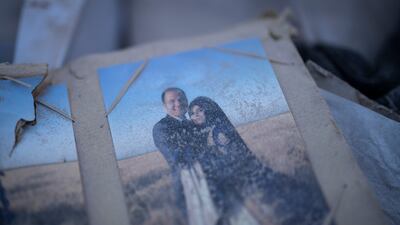
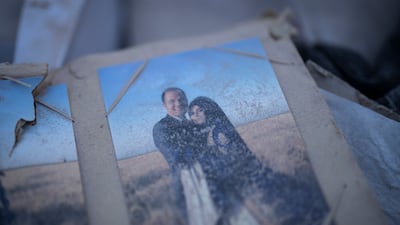
  • Dust covers a family photo album found in Antakya. AP Photo
    Dust covers a family photo album found in Antakya. AP Photo
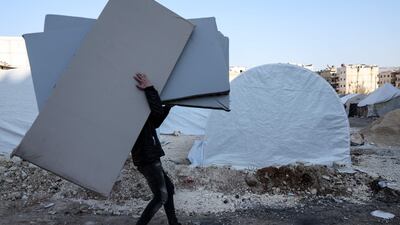
  • A man made homeless by the 7.8-magnitude quake carries mattresses distributed by an NGO at a makeshift camp in Afrin, in Syria's Aleppo province. AFP
    A man made homeless by the 7.8-magnitude quake carries mattresses distributed by an NGO at a makeshift camp in Afrin, in Syria's Aleppo province. AFP
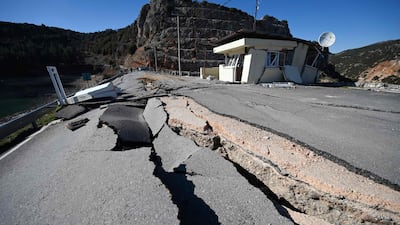
  • A cracked road near the quake’s epicentre in Kahramanmaras, Turkey. AFP
    A cracked road near the quake’s epicentre in Kahramanmaras, Turkey. AFP
  • A rescuer stands near the site where Aleyna Olmez, 17, was rescued from the rubble of a collapsed building in Kahramanmaras, about 10 days after the quake struck. AFP
    A rescuer stands near the site where Aleyna Olmez, 17, was rescued from the rubble of a collapsed building in Kahramanmaras, about 10 days after the quake struck. AFP
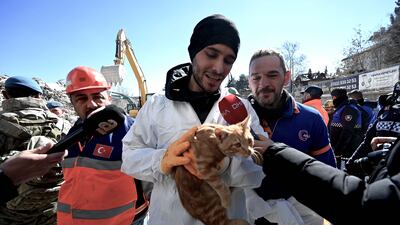
  • A rescuer holds a cat after it was rescued from the ruins of a collapsed building in Kahramanmaras. AFP
    A rescuer holds a cat after it was rescued from the ruins of a collapsed building in Kahramanmaras. AFP
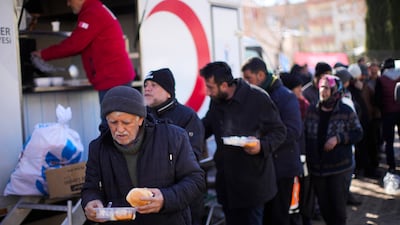
  • Quake survivors queue for food amid the rubble in Kahramanmaras. Reuters
    Quake survivors queue for food amid the rubble in Kahramanmaras. Reuters
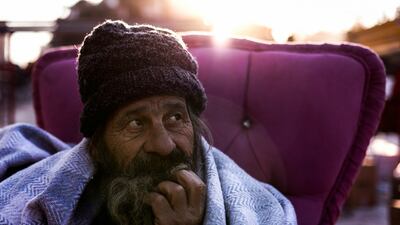
  • Bedran, a local resident who lost his house in the earthquake, keeps warm in Antakya, Turkey. Reuters
    Bedran, a local resident who lost his house in the earthquake, keeps warm in Antakya, Turkey. Reuters
  • A girl carries a box of water bottles next to a damaged mosque in Antakya. Reuters
    A girl carries a box of water bottles next to a damaged mosque in Antakya. Reuters
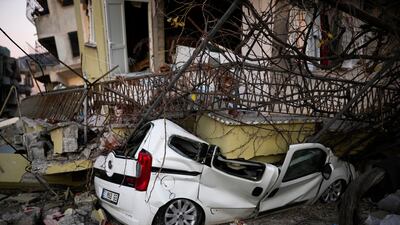
  • A car lies crushed by parts of a badly damaged building in Samandag, Turkey. AP
    A car lies crushed by parts of a badly damaged building in Samandag, Turkey. AP
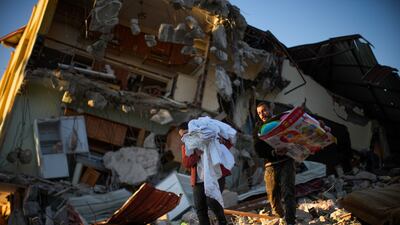
  • Residentes remove their belongings from their destroyed house in Samandag. AP
    Residentes remove their belongings from their destroyed house in Samandag. AP
  • Aleyna Olmez, 17, is rescued after being trapped for 10 days in Kahramanmaras. Getty
    Aleyna Olmez, 17, is rescued after being trapped for 10 days in Kahramanmaras. Getty
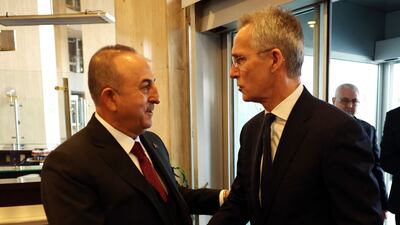
  • Turkish Foreign Minister Mevlut Cavusoglu, left, with Nato Secretary General Jens Stoltenberg in Ankara. AFP
    Turkish Foreign Minister Mevlut Cavusoglu, left, with Nato Secretary General Jens Stoltenberg in Ankara. AFP
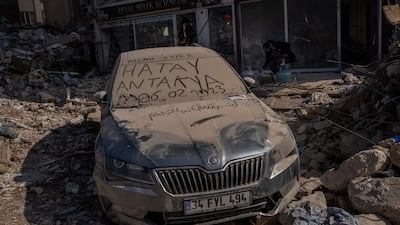
  • A message scrawled on a car covered in dust from collapsed buildings in Antakya, Turkey. AP
    A message scrawled on a car covered in dust from collapsed buildings in Antakya, Turkey. AP
  • Destruction in Antakya. AP
    Destruction in Antakya. AP
  • A cracked road leads to a flooded area in Antakya. AP
    A cracked road leads to a flooded area in Antakya. AP
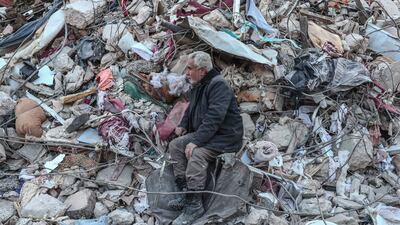
  • A man looks bewildered at the site of collapsed buildings in Hatay, Turkey. EPA
    A man looks bewildered at the site of collapsed buildings in Hatay, Turkey. EPA
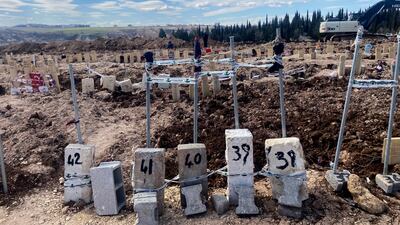
  • Numbered stones near graves of earthquake victims at a cemetery in Adiyaman, Turkey. EPA
    Numbered stones near graves of earthquake victims at a cemetery in Adiyaman, Turkey. EPA
  • A makeshift camp set up amid the rubble in Antakya, south of Hatay. AFP
    A makeshift camp set up amid the rubble in Antakya, south of Hatay. AFP
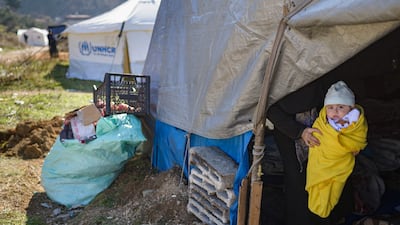
  • A woman holds her baby inside a tent in a camp in Antakya, Hatay. AFP
    A woman holds her baby inside a tent in a camp in Antakya, Hatay. AFP
  • Greek and Turkish rescuers are at work to extract bodies of victims from the rubble in Antakya. AFP
    Greek and Turkish rescuers are at work to extract bodies of victims from the rubble in Antakya. AFP
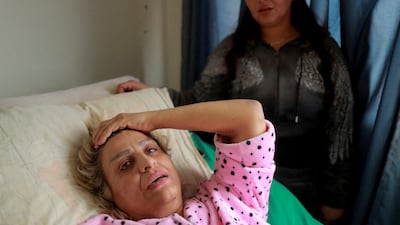
  • Samar Hamouda, 44, recalls her experience of the earthquake destroying her home, at Tishreen Hospital in Latakia, Syria. Reuters
    Samar Hamouda, 44, recalls her experience of the earthquake destroying her home, at Tishreen Hospital in Latakia, Syria. Reuters
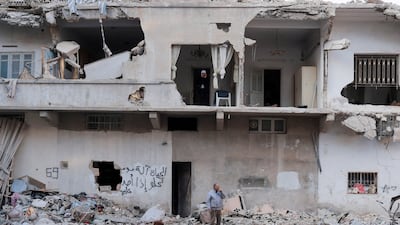
  • A damaged house in Jableh, Syria. Reuters
    A damaged house in Jableh, Syria. Reuters
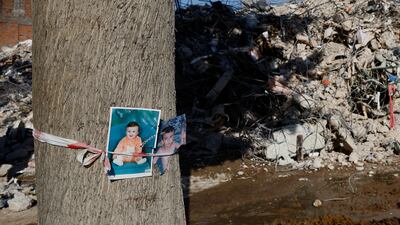
  • Photos of missing children left in hope in Kahramanmaras, Turkey. Reuters
    Photos of missing children left in hope in Kahramanmaras, Turkey. Reuters
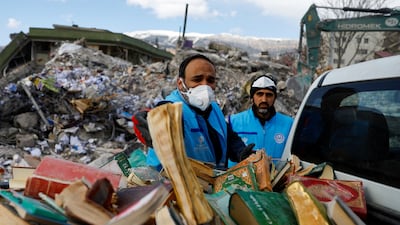
  • People collect copies of holy books from the rubble in Kahramanmaras. Reuters
    People collect copies of holy books from the rubble in Kahramanmaras. Reuters
  • Rescuers search for survivors under the rubble of a collapsed building in Kahramanmaras. Reuters
    Rescuers search for survivors under the rubble of a collapsed building in Kahramanmaras. Reuters
  • People carry a bodybag as residents wait for their relatives to be pulled out from the rubble in Hatay. AFP
    People carry a bodybag as residents wait for their relatives to be pulled out from the rubble in Hatay. AFP
  • Dust covers a family photo album found in the debris of a building in Antakya. AP
    Dust covers a family photo album found in the debris of a building in Antakya. AP
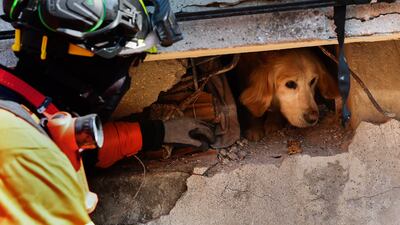
  • Portuguese rescue team members try to free the dog named Tarcin from the rubble in Antakya in Hatay. EPA
    Portuguese rescue team members try to free the dog named Tarcin from the rubble in Antakya in Hatay. EPA
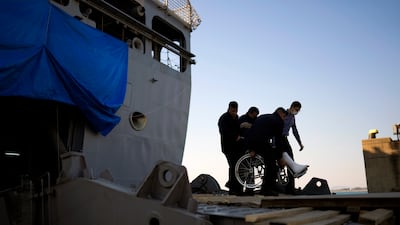
  • An injured survivor at a makeshift hospital set up at Turkish Bayraktar warship anchored near Iskenderun city, southern Turkey. AP
    An injured survivor at a makeshift hospital set up at Turkish Bayraktar warship anchored near Iskenderun city, southern Turkey. AP
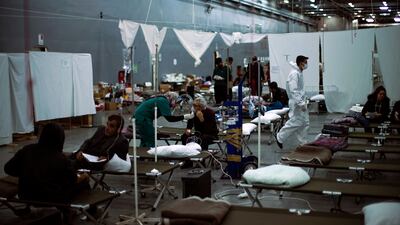
  • A makeshift hospital set up at Turkish Bayraktar warship anchored near Iskenderun city, southern Turkey. AP
    A makeshift hospital set up at Turkish Bayraktar warship anchored near Iskenderun city, southern Turkey. AP
  • Britain's King Charles III (C) meets with members of the Turkish diaspora community who have been collecting, packaging and organising the transportation of food, blankets and warm clothing for people who have recently been affected by the earthquakes in Turkey and Syria, during a visit to the West London Turkish Volunteers, in Hounslow, greater London. AFP
    Britain's King Charles III (C) meets with members of the Turkish diaspora community who have been collecting, packaging and organising the transportation of food, blankets and warm clothing for people who have recently been affected by the earthquakes in Turkey and Syria, during a visit to the West London Turkish Volunteers, in Hounslow, greater London. AFP
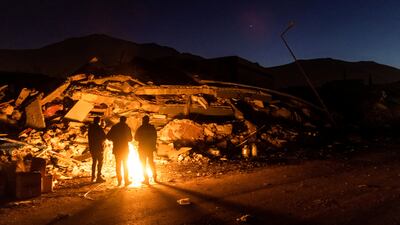
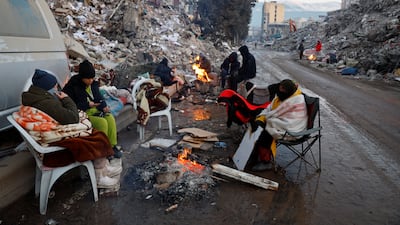
  • People stand by the fire next to the ruins of a collapsed building in Elbistan, Turkey. Reuters
    People stand by the fire next to the ruins of a collapsed building in Elbistan, Turkey. Reuters
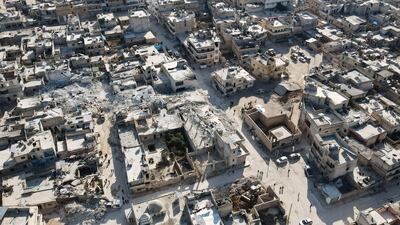
  • Destroyed buildings in Syria's rebel-held village of Atarib, in the north-western Aleppo province. AFP
    Destroyed buildings in Syria's rebel-held village of Atarib, in the north-western Aleppo province. AFP
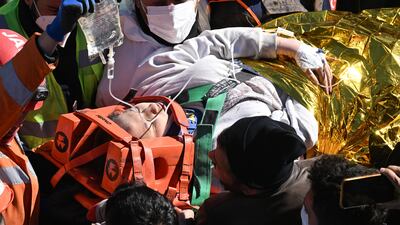
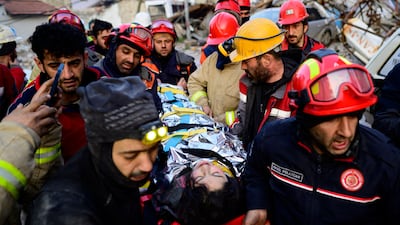
  • Rescuers carry Fatma, 15, who was pulled out from the rubble in Hatay, Turkey. Reuters
    Rescuers carry Fatma, 15, who was pulled out from the rubble in Hatay, Turkey. Reuters
  • A displaced woman receives food inside a stadium in Kahramanmaras, Turkey. Reuters
    A displaced woman receives food inside a stadium in Kahramanmaras, Turkey. Reuters
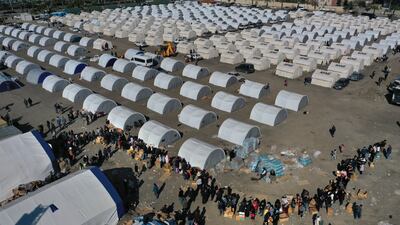
  • People lineup to receive aid supplies at a makeshift camp in Iskenderun city in southern Turkey. AP
    People lineup to receive aid supplies at a makeshift camp in Iskenderun city in southern Turkey. AP
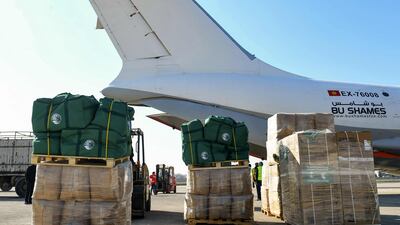
  • Humanitarian aid provided by Saudi Arabia for survivors of the February 6 earthquake are unloaded at Aleppo Airport in northern Syria. AFP
    Humanitarian aid provided by Saudi Arabia for survivors of the February 6 earthquake are unloaded at Aleppo Airport in northern Syria. AFP
  • Turkish President Recep Tayyip Erdogan addresses the World Government Summit in Dubai via video link. Antonie Robertson/The National
    Turkish President Recep Tayyip Erdogan addresses the World Government Summit in Dubai via video link. Antonie Robertson/The National
  • A man walks between trains being using as shelters in Iskenderun, southern Turkey. AP Photo
    A man walks between trains being using as shelters in Iskenderun, southern Turkey. AP Photo
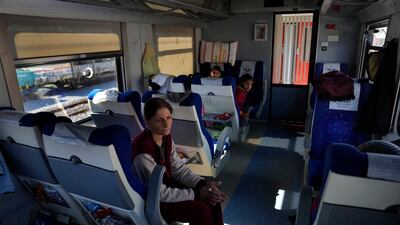
  • A woman and children inside a train being used as shelter after the earthquake, in Iskenderun. AP Photo
    A woman and children inside a train being used as shelter after the earthquake, in Iskenderun. AP Photo
  • Tents erected in a school yard for Syrians who have lost their homes after the deadly quake, in the rebel-held town of Harem in Syria. Reuters
    Tents erected in a school yard for Syrians who have lost their homes after the deadly quake, in the rebel-held town of Harem in Syria. Reuters
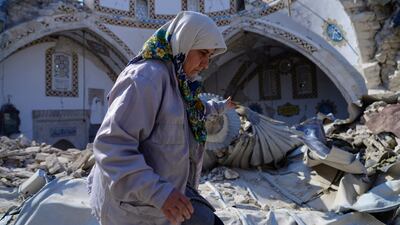
  • A woman walks by the destroyed Habib-i Neccar mosque in the historic southern city of Antakya in Hatay, Turkey. AFP
    A woman walks by the destroyed Habib-i Neccar mosque in the historic southern city of Antakya in Hatay, Turkey. AFP
  • Rescuers pull out a 12-year-old Syrian girl, Cudi, from the rubble in Hatay. AFP
    Rescuers pull out a 12-year-old Syrian girl, Cudi, from the rubble in Hatay. AFP
  • Amar, a Syrian refugee living in Turkey, looks on as search for survivors continues in Kahramanmaras. Reuters
    Amar, a Syrian refugee living in Turkey, looks on as search for survivors continues in Kahramanmaras. Reuters
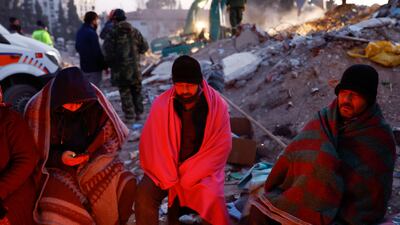
  • Displaced people keep warm by a fire in Kahramanmaras, Turkey. Reuters
    Displaced people keep warm by a fire in Kahramanmaras, Turkey. Reuters
  • Earthquake survivors receive distributed meals in Golbasi, Turkey. AP
    Earthquake survivors receive distributed meals in Golbasi, Turkey. AP
  • A woman stands amid boxes of donated clothes in Golbasi, Turkey. AP
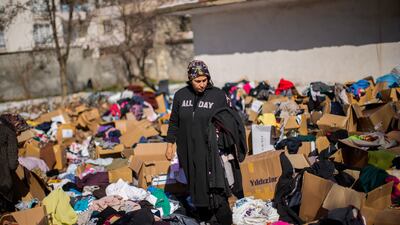
    A woman stands amid boxes of donated clothes in Golbasi, Turkey. AP
  • A man walks near a damaged building that leans on a neighbouring house in Golbasi, Turkey. AP
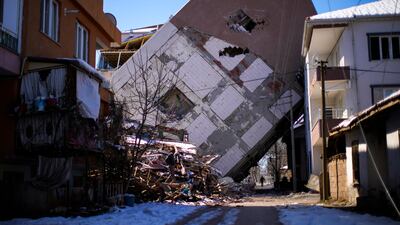
    A man walks near a damaged building that leans on a neighbouring house in Golbasi, Turkey. AP
  • UN emergency relief co-ordinator Martin Griffiths stands amid quake-damaged buildings in Aleppo, Syria. Reuters
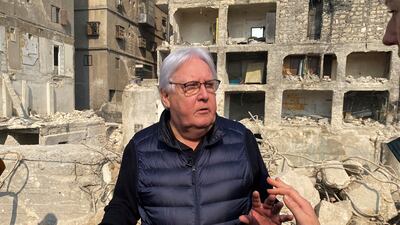
    UN emergency relief co-ordinator Martin Griffiths stands amid quake-damaged buildings in Aleppo, Syria. Reuters
  • Delegates observe a moment of silence for the Turkey–Syria earthquake before the start of the World Government Summit in Dubai. Pawan Singh / The National
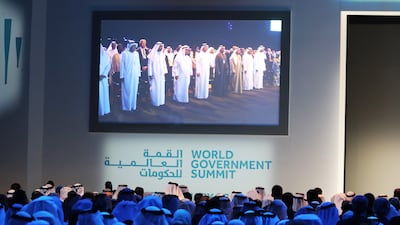
    Delegates observe a moment of silence for the Turkey–Syria earthquake before the start of the World Government Summit in Dubai. Pawan Singh / The National
  • People keep warm by a fire as the search for survivors continues a week after the earthquake in Kahramanmaras, Turkey. Reuters
    People keep warm by a fire as the search for survivors continues a week after the earthquake in Kahramanmaras, Turkey. Reuters
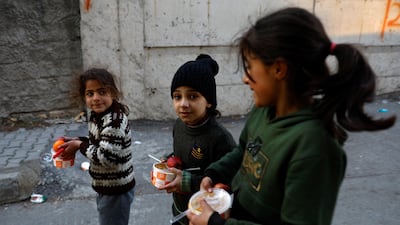
  • A child receives food in Kahramanmaras, Turkey. Reuters
    A child receives food in Kahramanmaras, Turkey. Reuters
  • A dog is seen through a glass door in Kahramanmaras, Turkey. Reuters
    A dog is seen through a glass door in Kahramanmaras, Turkey. Reuters
  • Children walk in the street with food boxes in Kahramanmaras, Turkey. Reuters
    Children walk in the street with food boxes in Kahramanmaras, Turkey. Reuters
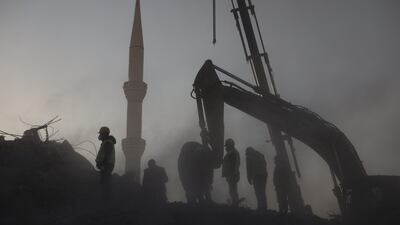
  • A minaret stands as the sun rises over the earthquake-hit city of Kahramanmaras, Turkey. Reuters
    A minaret stands as the sun rises over the earthquake-hit city of Kahramanmaras, Turkey. Reuters

The 7.8 magnitude earthquake levelled thousands of building in Turkey and northern Syria, leaving millions homeless in freezing winter temperatures. The death toll had passed 38,000 in Turkey and 5,800 in Syria by Friday, 11 days after the earthquake. The disaster sparked a worldwide humanitarian response, although aid has been slower to reach Syria.

Anas Haj Qadro, who was in the badly affected Turkish city of Antakya when the earthquake struck, said he had decided to live with his family in Idlib until some normality returned.

With reporting from Reuters

Mercer, the investment consulting arm of US services company Marsh & McLennan, expects its wealth division to at least double its assets under management (AUM) in the Middle East as wealth in the region continues to grow despite economic headwinds, a company official said.

Mercer Wealth, which globally has $160 billion in AUM, plans to boost its AUM in the region to $2-$3bn in the next 2-3 years from the present $1bn, said Yasir AbuShaban, a Dubai-based principal with Mercer Wealth.

Within the next two to three years, we are looking at reaching $2 to $3 billion as a conservative estimate and we do see an opportunity to do so,” said Mr AbuShaban.

Mercer does not directly make investments, but allocates clients’ money they have discretion to, to professional asset managers. They also provide advice to clients.

“We have buying power. We can negotiate on their (client’s) behalf with asset managers to provide them lower fees than they otherwise would have to get on their own,” he added.

Mercer Wealth’s clients include sovereign wealth funds, family offices, and insurance companies among others.

From its office in Dubai, Mercer also looks after Africa, India and Turkey, where they also see opportunity for growth.

Wealth creation in Middle East and Africa (MEA) grew 8.5 per cent to $8.1 trillion last year from $7.5tn in 2015, higher than last year’s global average of 6 per cent and the second-highest growth in a region after Asia-Pacific which grew 9.9 per cent, according to consultancy Boston Consulting Group (BCG). In the region, where wealth grew just 1.9 per cent in 2015 compared with 2014, a pickup in oil prices has helped in wealth generation.

BCG is forecasting MEA wealth will rise to $12tn by 2021, growing at an annual average of 8 per cent.

Drivers of wealth generation in the region will be split evenly between new wealth creation and growth of performance of existing assets, according to BCG.

Another general trend in the region is clients’ looking for a comprehensive approach to investing, according to Mr AbuShaban.

“Institutional investors or some of the families are seeing a slowdown in the available capital they have to invest and in that sense they are looking at optimizing the way they manage their portfolios and making sure they are not investing haphazardly and different parts of their investment are working together,” said Mr AbuShaban.

Some clients also have a higher appetite for risk, given the low interest-rate environment that does not provide enough yield for some institutional investors. These clients are keen to invest in illiquid assets, such as private equity and infrastructure.

“What we have seen is a desire for higher returns in what has been a low-return environment specifically in various fixed income or bonds,” he said.

“In this environment, we have seen a de facto increase in the risk that clients are taking in things like illiquid investments, private equity investments, infrastructure and private debt, those kind of investments were higher illiquidity results in incrementally higher returns.”

The Abu Dhabi Investment Authority, one of the largest sovereign wealth funds, said in its 2016 report that has gradually increased its exposure in direct private equity and private credit transactions, mainly in Asian markets and especially in China and India. The authority’s private equity department focused on structured equities owing to “their defensive characteristics.”

COMPANY%20PROFILE
%3Cp%3E%3Cstrong%3ECompany%20name%3A%3C%2Fstrong%3E%20OneOrder%3Cbr%3E%3Cstrong%3EStarted%3A%3C%2Fstrong%3E%20March%202022%3Cbr%3E%3Cstrong%3EFounders%3A%3C%2Fstrong%3E%20Tamer%20Amer%20and%20Karim%20Maurice%3Cbr%3E%3Cstrong%3EBased%3A%3C%2Fstrong%3E%20Cairo%3Cbr%3E%3Cstrong%3ENumber%20of%20staff%3A%20%3C%2Fstrong%3E82%3Cbr%3E%3Cstrong%3EInvestment%20stage%3A%3C%2Fstrong%3E%20Series%20A%3C%2Fp%3E%0A
Updated: February 18, 2023, 12:40 PM