Lebanon's 'village of roses' - in pictures
-
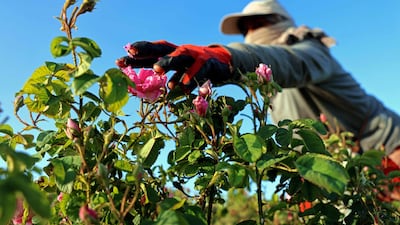
The rose harvest 'gives you strength to carry on', says Leila Al Dirani, picking the flowers from her family's land in the village of Qsarnaba in Lebanon. All photos: AFP -

The oil derived from the famed Damask rose - named after the ancient city of Damascus on the other side of the mountain range separating Lebanon and Syria - is a staple of perfumers -

The flowers are believed to have infection-fighting and relaxant properties, while rose water is drunk across the Middle East, used in sweets such as Turkish delight and employed to scent mosques -

After a morning collecting roses, the workers in Qsarnaba drop their fragrant bundles at a warehouse in the village -

Zahraa Sayed Ahmed - whose first name means 'flower' - buys the raw materials to produce her rose water, syrup, tea and jam -

For four years she has processed the petals at her home, using a traditional metal still that originally belonged to her grandfather -

A kilogram of petals makes half a litre of rose water -

Zahraa says every home in the village has its own still. 'The production of rose water is a part of our heritage,' she says -

The rose season lasts for a busy few weeks in Qsarnaba -

Hassan Al Dirani, 25, has been picking the flowers alongside his mother, Leila, because they could not afford to employ extra workers amid low production -

The harvest has lost about 80 percent of its value because of Lebanon's economic crisis, says local official Daher Al Dirani -

'But the roses help people put food on the table,' he adds


Most popular today

