


Lebanese authorities have summoned relatives of the victims of the deadly Beirut port explosion after clashes with security forces outside the Justice Palace on Tuesday.
The relatives were protesting over the lack of progress in the investigation, which is currently stalled.
Some demonstrators managed to break through one of the Justice Palace gates and clashed with security personnel.
The National also witnessed projectiles, including rocks and a traffic cone, being thrown at the building and smashing windows.
Among those summoned were William Noun and Peter Bou Saab, whose brothers, both firefighters, died in the blast. Mr Bou Saab’s father was also summoned.
Family members of the victims of the blast demonstrated outside the Justice Palace again on Thursday.
More than 215 people died, thousands were injured and many parts of Beirut were severely damaged following the August 4, 2020 blast. I happened after a huge stock of ammonium nitrate that had been stored at the port for years caught fire.
An investigation by Judge Tarek Bitar, the second official to take on the case, has been on hold for more than a year due to legal challenges from former Cabinet ministers he sought to question.
Lebanese judicial officials, including Justice Minister Henry Khoury, have looked into the possibility of appointing a secondary judge while Mr Bitar's investigation is blocked.
But this has been seen by some as yet another way for top officials to evade justice in Lebanon’s politically charged judiciary.
-

Fahed Abu Salah’s film 'Beirut After the Blast' aims to highlight how the healing process for many people is being strained by the lack of accountability. All Photos: MContent -

It features interviews with several people affected by the blast, as well as with activists trying to secure justice for the victims. -
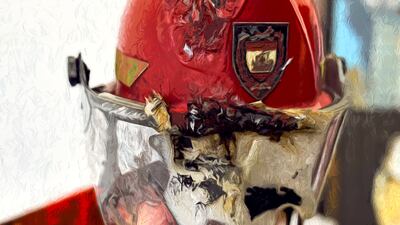
The film also honours the firefighters who died trying to contain the fire that led to the blast. -
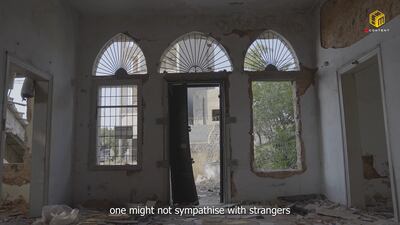
The documentary was filmed over the course of 50 days and aims to show the humanitarian issues caused by the blast. -

A shorter director’s cut of the documentary was shown in the metaverse in an event at the Waldorf Astoria Hotel in the DIFC. -

Abu Salah says it was also important for him that the documentary makes it to MContent and the 'cineverse', to encourage other Arab filmmakers to make use of the metaverse as well.


The blast is seen as a symptom of decades of corruption and mismanagement by Lebanon's elite, who are also blamed for an economic crisis that started in 2019.
It has plunged much of the population into poverty, wiped more than 95 per cent of the value of the local currency against the dollar and led to widespread shortages of medicines, clean water, electricity and other basic essentials.

