• Bassam Al Sheikh Hussein, an armed man who took hostages at a Federal Bank branch in Beirut, sits in a police car after his arrest. AFP
    Bassam Al Sheikh Hussein, an armed man who took hostages at a Federal Bank branch in Beirut, sits in a police car after his arrest. AFP
  • He was arrested as he left the bank. EPA
    He was arrested as he left the bank. EPA
  • He held several customers hostage as he demanded the return of his bank deposits so that he could pay his father's medical bills. AFP
    He held several customers hostage as he demanded the return of his bank deposits so that he could pay his father's medical bills. AFP
  • A woman who was held hostage inside the Federal bank of Lebanon enters a car after her release. Reuters
    A woman who was held hostage inside the Federal bank of Lebanon enters a car after her release. Reuters
  • Mr Al Sheikh Hussein was reportedly armed with a rifle and is said to have doused the interior of the bank with petrol. AP
    Mr Al Sheikh Hussein was reportedly armed with a rifle and is said to have doused the interior of the bank with petrol. AP
  • A woman held hostage in the bank cries. AP
    A woman held hostage in the bank cries. AP
  • The siege ended without violence eight hours later on Thursday when the gunman reportedly left the bank and was arrested. Reuters
    The siege ended without violence eight hours later on Thursday when the gunman reportedly left the bank and was arrested. Reuters
  • Many sympathised with Mr Al Sheikh Hussein and took part in protests outside the bank as they denounced local lenders and chanted 'We are all Bassam'. AP
    Many sympathised with Mr Al Sheikh Hussein and took part in protests outside the bank as they denounced local lenders and chanted 'We are all Bassam'. AP
  • Lebanese bank customers stand near the bank where the armed man took customers and employees hostage. EPA
    Lebanese bank customers stand near the bank where the armed man took customers and employees hostage. EPA
  • A Lebanese security official said Mr Al Sheikh Hussein was threatening to set himself ablaze unless he received his savings. AP
    A Lebanese security official said Mr Al Sheikh Hussein was threatening to set himself ablaze unless he received his savings. AP
  • The demonstrations grew more heated, with protesters facing off against security forces dressed in riot gear. AP
    The demonstrations grew more heated, with protesters facing off against security forces dressed in riot gear. AP
  • Army soldiers, behind, and security forces, front, stand guard outside the bank in Beirut. AFP
    Army soldiers, behind, and security forces, front, stand guard outside the bank in Beirut. AFP
  • The incident is the latest between local banks and angry depositors unable to access their savings because of informal capital controls. Jamie Prentis / The National
    The incident is the latest between local banks and angry depositors unable to access their savings because of informal capital controls. Jamie Prentis / The National
  • At least two shots were heard after the man entered the branch just before noon, according to witnesses and local media. Some customers managed to escape before he shut the branch doors. AP
    At least two shots were heard after the man entered the branch just before noon, according to witnesses and local media. Some customers managed to escape before he shut the branch doors. AP
  • The Lebanese Red Cross on standby outside the bank, which was cordoned off by security forces. Reuters
    The Lebanese Red Cross on standby outside the bank, which was cordoned off by security forces. Reuters
  • Lebanon’s National News Agency reported that Mr Al Sheikh Hussein was demanding to withdraw $210,000 and had threatened to set himself ablaze and kill everyone at the bank. Reuters
    Lebanon’s National News Agency reported that Mr Al Sheikh Hussein was demanding to withdraw $210,000 and had threatened to set himself ablaze and kill everyone at the bank. Reuters
  • His father was in hospital and required $50,000 worth of treatment, according to the Association of Depositors in Lebanon. Reuters
    His father was in hospital and required $50,000 worth of treatment, according to the Association of Depositors in Lebanon. Reuters

Web outages on cards as Lebanon telecom minister says talks still on to end Ogero strike


Jamie Prentis
  • English
  • Arabic

A days-long strike by employees of Lebanon's state-owned internet provider that has led to service failures throughout the country is expected to continue.

"We agreed that it's going to take a little bit of time to get things sorted out, meaning probably not before middle of next week," caretaker Telecommunications Minister Johnny Corm told The National, after a three-and-a-half-hour meeting with the syndicate representing Ogero's employees.

The employees, who walked off their jobs on Tuesday, are demanding higher salaries amid an economic meltdown that has led the dollar value of wages to collapse.

"I don't think the internet will go out completely, Mr Corm said in a phone interview. "But there will be no contact with customers."

There are reports that the mobile phone networks operated by providers Alfa and MTC Touch have been affected.

"I think that we're safe in a sense that we're not going to be disconnected from the rest of the world," Mr Corm said. "And hopefully businesses will not suffer as a consequence during this negotiation period. But I'm very hopeful that it should all be settled."

Internet outages are expected to affect more parts of the country as Ogero's private electricity generators run out of fuel.

Ogero Chairman Imad Kreidieh told The National this week that the internet blackouts would not have been as widespread if there had been more state electricity on the grid.

State utility Electicite Du Liban provides only a couple of hours of power a day, if that.

Ogero in recent years has faced problems maintaining its infrastructure and being able to afford fuel for its generators.

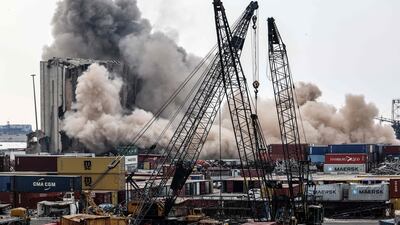
  • A cloud of smoke and dust rises after part of the grain silos at Beirut's port collapsed on Sunday, days before the country marked the second anniversary of a deadly explosion at the site. AFP
    A cloud of smoke and dust rises after part of the grain silos at Beirut's port collapsed on Sunday, days before the country marked the second anniversary of a deadly explosion at the site. AFP
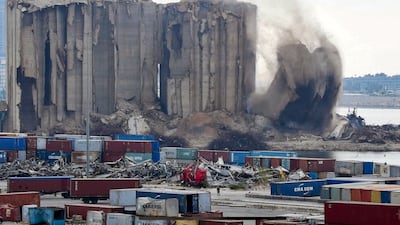
  • The collapse was due to a fire that has been burning since the beginning of July. AP
    The collapse was due to a fire that has been burning since the beginning of July. AP
  • The grain silos were severely damaged in the 2020 explosion at the port that killed at least 190 people. EPA
    The grain silos were severely damaged in the 2020 explosion at the port that killed at least 190 people. EPA
  • There were no reports of deaths or injuries after the partial collapse. EPA
    There were no reports of deaths or injuries after the partial collapse. EPA
  • Other parts of the silos that remain standing are at risk of collapsing. Reuters
    Other parts of the silos that remain standing are at risk of collapsing. Reuters
  • Lebanese activists confront soldiers guarding the entrance of the country's parliament building during a demonstration in Beirut on Thursday. AFP
    Lebanese activists confront soldiers guarding the entrance of the country's parliament building during a demonstration in Beirut on Thursday. AFP
  • An activist raises her hands during a protest in Beirut on Thursday. EPA
    An activist raises her hands during a protest in Beirut on Thursday. EPA
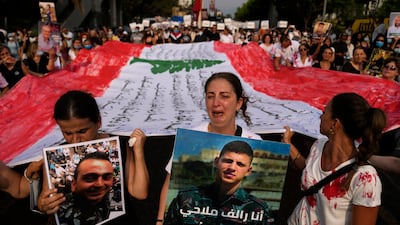
  • Relatives of the victims of the deadly 2020 Beirut port explosion mark the second anniversary of the blast in Beirut, Lebanon. AP
    Relatives of the victims of the deadly 2020 Beirut port explosion mark the second anniversary of the blast in Beirut, Lebanon. AP
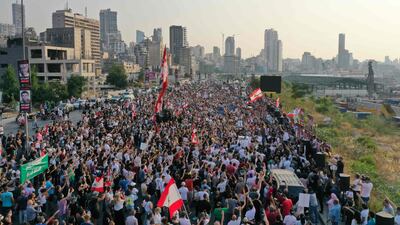
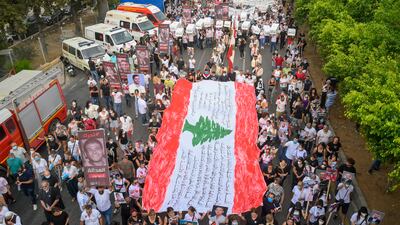
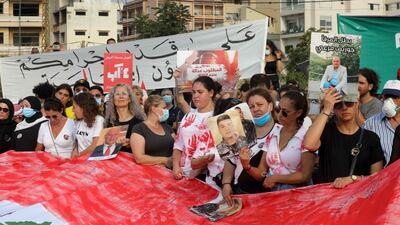
  • Protesters and relatives of the victims of the blast hold up Lebanese flags as they march in Beirut's port area on Thursday. AFP
    Protesters and relatives of the victims of the blast hold up Lebanese flags as they march in Beirut's port area on Thursday. AFP
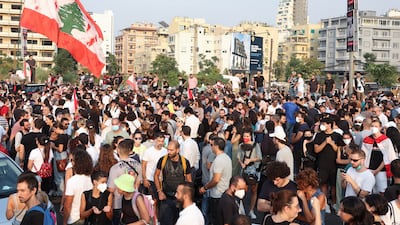
  • Demonstrators gather as Lebanon marks the second anniversary of the Beirut port explosion. Reuters
    Demonstrators gather as Lebanon marks the second anniversary of the Beirut port explosion. Reuters
  • People hold the Lebanese flag during a march to the Beirut port. EPA
    People hold the Lebanese flag during a march to the Beirut port. EPA
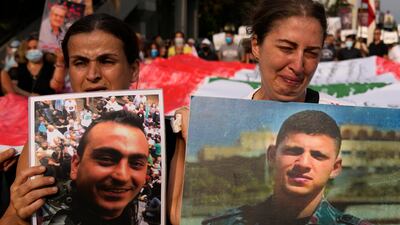
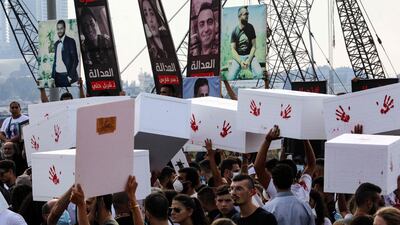
  • People hold portraits of loved ones who died in the explosion. AP
    People hold portraits of loved ones who died in the explosion. AP
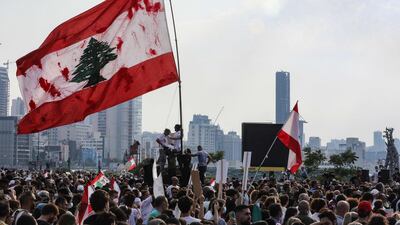
  • Activists and relatives of the victims raise a national flag smeared with red paint during the protest. AFP
    Activists and relatives of the victims raise a national flag smeared with red paint during the protest. AFP
  • Activists and relatives of the victims carry makeshift coffins as they march in Beirut. AFP
    Activists and relatives of the victims carry makeshift coffins as they march in Beirut. AFP
  • On August 4, 2020, the dockside blast of haphazardly stored ammonium nitrate killed more than 200 people. AFP
    On August 4, 2020, the dockside blast of haphazardly stored ammonium nitrate killed more than 200 people. AFP
  • Lebanese national flags fly at half-mast outside the presidential palace as Lebanon marks the two-year anniversary of the August 2020 Beirut port explosion, in Baabda, Lebanon. Reuters
    Lebanese national flags fly at half-mast outside the presidential palace as Lebanon marks the two-year anniversary of the August 2020 Beirut port explosion, in Baabda, Lebanon. Reuters
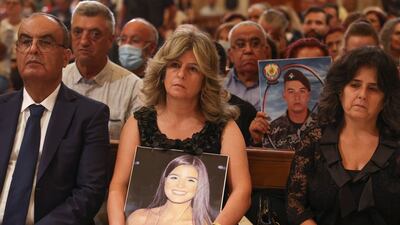
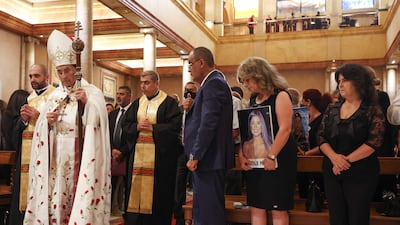
  • Families of victims of the August 2020 Beirut port explosion attend a mass held by Maronite Patriarch Bechara Boutros Al-Rai as Lebanon marks the two-year anniversary of the explosion, in Beirut Lebanon. Reuters
    Families of victims of the August 2020 Beirut port explosion attend a mass held by Maronite Patriarch Bechara Boutros Al-Rai as Lebanon marks the two-year anniversary of the explosion, in Beirut Lebanon. Reuters
  • Families of victims of the August 2020 Beirut port explosion attend a mass held by Maronite Patriarch Bechara Boutros Al-Rai as Lebanon marks the two-year anniversary of the explosion, in Beirut Lebanon. Reuters
    Families of victims of the August 2020 Beirut port explosion attend a mass held by Maronite Patriarch Bechara Boutros Al-Rai as Lebanon marks the two-year anniversary of the explosion, in Beirut Lebanon. Reuters

Lebanon is in the middle of an economic collapse, which first became apparent in 2019, that has been described by the World Bank as one of the worst in modern history. Much of the population has been plunged into poverty, the local currency has lost more than 90 per cent of its value and there are widespread shortages of basic essentials.

Inflation is rampant and public sector employees — such as those at Ogero — have not had their salaries adjusted to reflect the new reality.

Many public sector workers have been on strike for nearly two months as they seek better employment conditions.


Updated: September 02, 2022, 11:30 AM