

The whereabouts of Lebanon’s embattled central bank governor, Riad Salameh, were unclear on Wednesday, one day after a controversial failed raid on his homes and office by one of the country’s security agencies, with local newspapers warning of a “civil war” should he be arrested.
There was no answer when The National rang the doorbell at his main residence, a large modern beige house surrounded by thick hedges and palm trees in the upmarket small residential town of Rabieh, a half-hour drive north-east of Beirut.
A policeman from the Internal Security Forces acknowledged the home belonged to Mr Salameh before entering the premises. Voices could be heard from inside its courtyard, which was blocked off by thick black curtains. A lone hand appeared to be fastening them tighter to the gate in an attempt to avoid being seen.
This was reportedly the scene of a tense stand-off on Tuesday between state security and the ISF, a reflection of deep divisions in the crisis-hit country over the fate its central bank governor amid a severe economic meltdown.
State security raided Mr Salameh’s office in Beirut, his home in Rabieh and another house in the coastal town of Safra, to force him to be questioned by judge Ghada Aoun after he failed to respond to her summons three times. But Mr Salameh was nowhere to be found.
poet
Mr Salameh, 71, has come under intense scrutiny since the country’s financial collapse in 2019 which pushed over three-quarters of the country into poverty. Two judges are investigating the veteran millionaire governor in Lebanon and at least five European countries have launched probes in the past 18 months over suspicions of money laundering.
Yet Mr Salameh has strong backers inside Lebanon, including Prime Minister Najib Mikati and veteran Parliament speaker Nabih Berri. The central bank governor is part of a team negotiating a bail-out package with the IMF.
Mr Salameh's political supporters accused Ms Aoun of working under direct orders from President Michel Aoun, a critic of the governor. The president and his political party repeatedly rejected such claims in the past two days.
Quoting anonymous political sources, daily newspaper Al Joumhouria wrote on Wednesday that Mr Salameh’s “provocative” arrest could “lead to a civil war”.
In an apparent sign of Mr Salameh’s influence, an employee of Rabieh’s municipality continued to drive away when hailed by The National to confirm his house’s location. “I didn’t want them to know that I spoke to you,” he said, once he had stopped his car about 50 metres from the central bank governor’s house.
Media reports alleged that the ISF had barred State Security officers from entering the premises during their attempted raid. The ISF rejected the reports and said in a statement that its officers had been stationed “some time ago” in front of the central bank governor’s house for his security.
‘No-one knows where he is’
The controversy worsened on Wednesday, when Ms Aoun, the judge, charged the director general of the ISF with “obstructing the implementation of a judicial warrant and breaching the duties of his job,” a judicial source told Lebanese daily newspaper L’Orient Today.
Meanwhile, Mr Salameh reportedly attended a central council meeting at the Banque du Liban on the same day. “He continues life as if nothing happened,” said an informed source who declined to be identified.
Reuters news agency also reported that Mr Salameh attended meetings at the central bank on Wednesday.
The National tried to contact the director general of the Economy Ministry. He is required by law to attend central council meetings, which set monetary and credit policies of the central bank. But the director general, Mohammad Abi Haidar, said he could not confirm or deny claims that Mr Salameh attended a central council meeting because such matters are confidential. The anonymous source disputed this, arguing that only the resolutions of the central council are secret.
At a stakeout by the imposing bank building, hoping for the chance to glimpse Mr Salameh coming in or out, The National consulted the court of public opinion to while away the time. It was a hung jury.
-
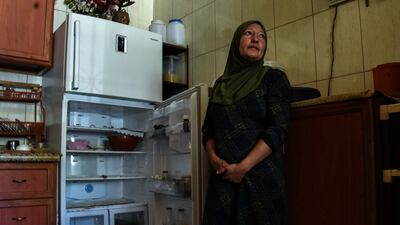
Rweida Mohammed stands next to her almost empty fridge that is warm inside due to prolonged power cuts. Elizabeth Fitt for The National -
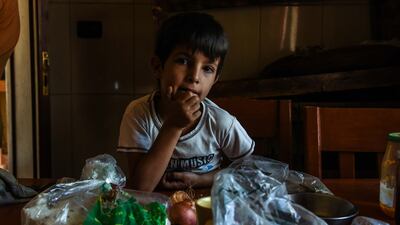
Hamid Khodor sits despondently in the kitchen. There is no electricity to keep food fresh in the fridge and freezer, no cooking gas for the stove and not much to eat except what the family can grow in the garden. Elizabeth Fitt for The National -

The Khodor family is relying on homegrown vegetables. Elizabeth Fitt for The National -
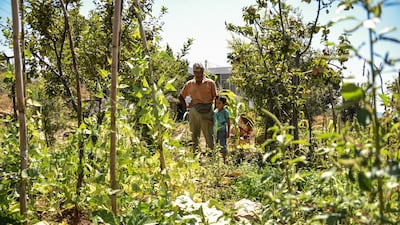
Talal Khodor with his son, Omar, in their vegetable garden. The family is relying on homegrown vegetables to feed themselves during Lebanon's economic collapse. Elizabeth Fitt for The National -
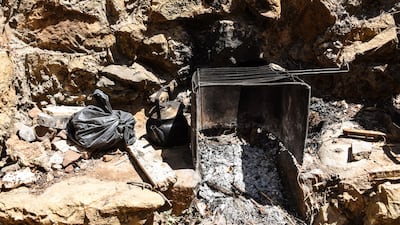
Rweida Mohammed uses a makeshift grill to cook for the family. Since gas for the kitchen stove became so scarce in Lebanon, the family can't get hold of any. Elizabeth Fitt for The National -
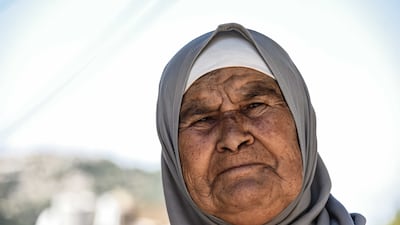
Talal Khodor's mother is frustrated by the ongoing situation. Elizabeth Fitt for The National -
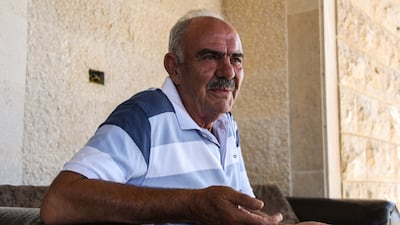
There are few options left to help Mohammed Hazim provide for his family. Elizabeth Fitt for The National -
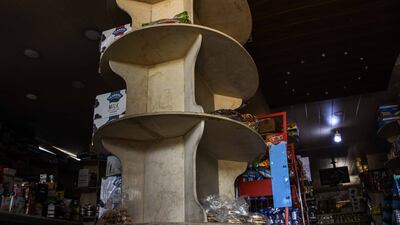
Shelves that usually display bread have been empty for days in the village store. Elizabeth Fitt for The National -
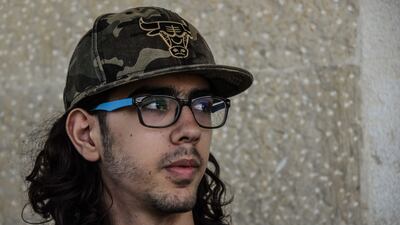
Mohammed Hazim's son, Ziad, waits for his exam results. He had to study using his father's mobile phone. Elizabeth Fitt for The National -
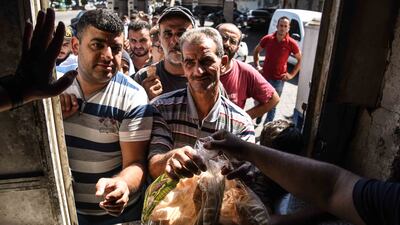
People queue for bread as shortages continue. Elizabeth Fitt for The National -
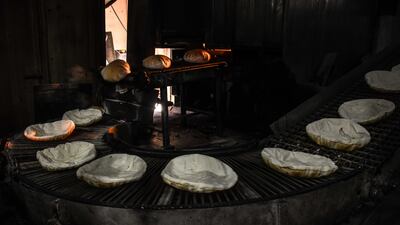
The manager at Tarik Al Ridani bakery says it is one of only two producers still operational in the city and with two tonnes of flour left, it will soon run out of bread. Elizabeth Fitt for The National -
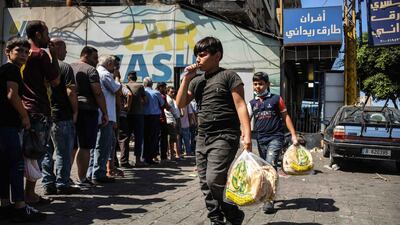
These boys are among the lucky few that have found bread before stocks run out. Elizabeth Fitt for The National -

Ogero, Lebanon's state-run telecoms provider, has a mast in Hrar, but connection speeds are often very slow. Elizabeth Fitt for The National


Tamer Shreif, a poet, said that Mr Salameh “stole people’s money,” echoing oft-heard sentiment during anti-government protests that spread through the country in late 2019, at the start of the crisis.
“No-one knows where [Mr Salameh] is because the state is divided between those who are with him and those who are against him. Some are protecting him and some are out to get him,” Mr Shreif said.
Sitting in front of a small shop near the central bank, an elderly man disagreed. “For me, Riad Salameh is a respectable and clean man. He is a victim of the Lebanese political class,” said the man. He declined to give his name, saying he was a journalist.
The man believed that Mr Salameh had decided to stay put until Ms Aoun’s subpoena was resolved. “This arrest attempt is a manoeuvre, a game,” he said.
Mr Salameh’s press office did not answer several requests for comment. An employee of Mr Salameh’s office at the central bank’s headquarters in Beirut said she was unaware of the governor’s whereabouts when The National called. She advised to send an email. It received no response.

