

Freezing temperatures and snowstorms have worsened living conditions across Lebanon, where most people are already struggling to survive the country’s economic crisis.
Few can afford fuel for heating or electricity amid widespread power cuts, forcing many to burn waste, plastic, or even their own clothes.
“The situation is catastrophic,” said Ali Awada, a coffee shop owner in the eastern town of Baalbek. “People are burning plastic. People are burning shoes,” he said. “It’s unbelievable.”
The crisis has exacerbated already stark inequalities. “The rich and thieves keep warm. The poor struggle to fill a small water bottle with fuel and watch it burn all night, drop by drop,” said Mr Awada.
Last November, the UN special rapporteur on poverty blasted “outrageous levels of inequality.” Politicians are widely considered to be responsible for the country’s two-year long economic crisis, described by the rapporteur as a “human-made disaster.”
-
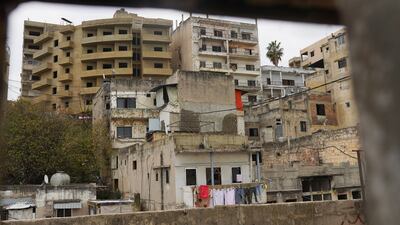
Tripoli in northern Lebanon is home to one of the country's largest populations of Syrian refugees, nine out of 10 of whom live in extreme poverty. All photos: Getty Images -
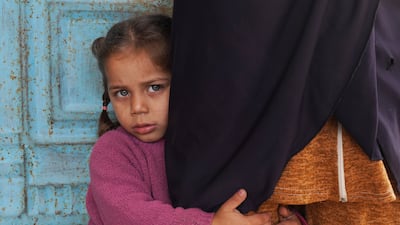
A Syrian girl holds on to her mother. -

Girls play with dolls in their building compound. -

Toys at the home of a Syrian refugee family. -

Aisha Mohammed Ali, 25, a mother of five who is a refugee from Aleppo, Syria, assists one of her daughters, who has asthma. -
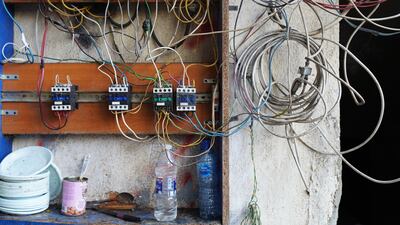
Electricity switches in a building where Syrian and Palestinian refugees live. -
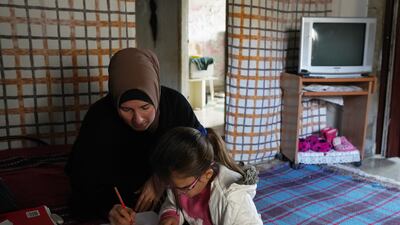
A mother helps her only daughter with writing at their home. -
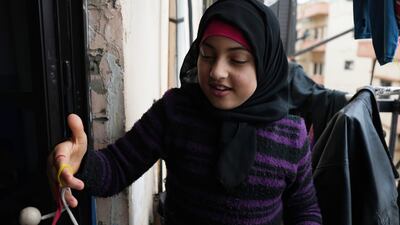
Children play at their home. -
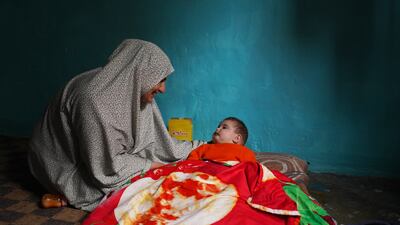
Mariam Ahmad, a Syrian refugee from Aleppo, smiles as she looks at her child at her home. -

A Syrian refugee stands by his cart where he sells corn, beans, pomegranate and other snacks by the sea.


The government has failed to help people in Baalbek, forcing some to cut trees near the city of around 100,000 people to keep warm, Mr Awada told The National.
“The country and its people need support, but it shouldn’t be sent to the state and ministers who steal from us,” said Mr Awada, echoing widespread mistrust with the country’s leadership.
The cost of a tonne of wood is now equivalent to five times the minimum wage, selling for 3 million Lebanese pounds ($120) while 20 litres of diesel is now nearly 10 times what it cost three years ago.
Lebanon’s eastern, impoverished region of the Bekaa hosts close to 40 per cent of the Syrian refugees in the country. There are around one million Syrians living in Lebanon, one sixth of the country’s total population. Most of them fled the Syrian civil war which started in 2011.
As Lebanon’s economic crisis worsens amid political paralysis and bickering, an increasing number of Lebanese are living in dismal conditions close to those of refugee populations.
“This is a much harsher winter season than previous ones because of the economic crisis, which has made prices soar,” said Paula Barrachina Esteban, head of communications for UNHCR in Lebanon. “The situation is not only dire for refugees. Lebanese families are also suffering this winter.”
“In the Bekaa, we’re seeing refugee settlements filled with snow. Many houses have been flooded by the rain. Houses have water leaks. Refugee settlements are made of tents made of very flimsy materials like tarpaulin and pieces of wood,” said Ms Esteban.
Ms Esteban said that she spoke to a single mother of four in Bekaa who has been sleeping on a wet mattress for several days, trying to dry it out in the sun during the day.
-
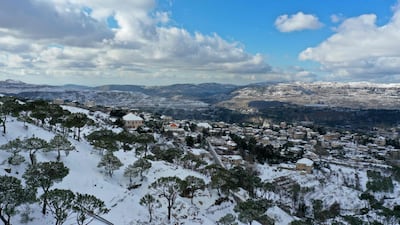
A snow-clad village in the Chouf district of Mount Lebanon governorate, about 52km south-east of Beirut. AFP -
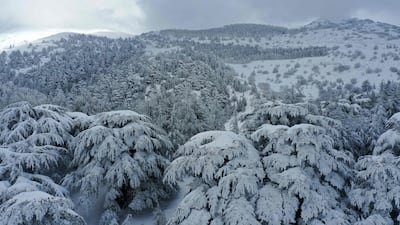
Cedar trees are blanketed in snow in Lebanon. AFP -

A man walks in the snow in Erbil, Iraq. AP Photo -
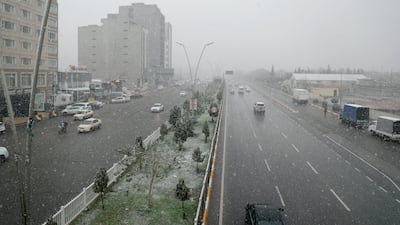
Snow fills the air in Erbil. AP Photo -
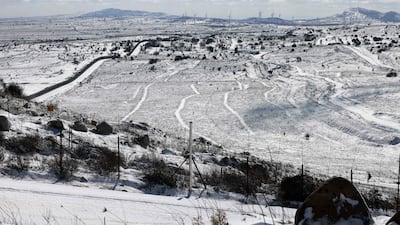
Israel's border with Syria is covered with snow, near the Druze town of Masada. AFP -
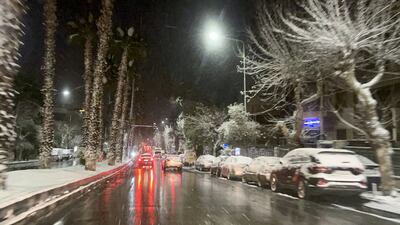
Syrians drive their cars on a street as snow falls over Damascus. AFP -
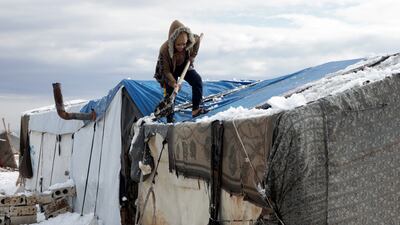
A child removes snow from the top of a tent at a camp for internally displaced people in the northern Aleppo countryside, Syria. Reuters -
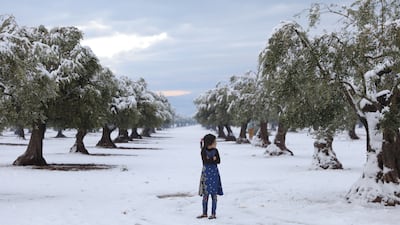
A child stands in the snow in Salat Zagrous, a camp for internally displaced people, in northern Syria. EPA -
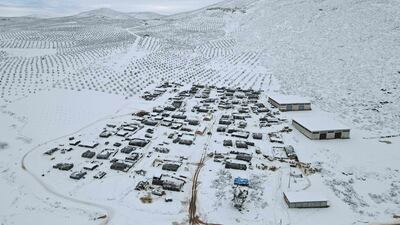
A camp for internally displaced people in the town of Raju in the rebel-controlled northern countryside of Syria's Aleppo province. AFP -
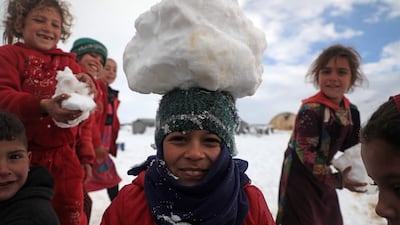
Children at a camp for internally displaced people in Raju have fun in the snow. AFP -
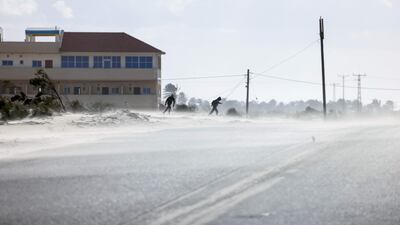
A windy day in Khan Younis, in the southern Gaza Strip. AFP -

Reindeer in the Israel-annexed Golan Heights. AFP -
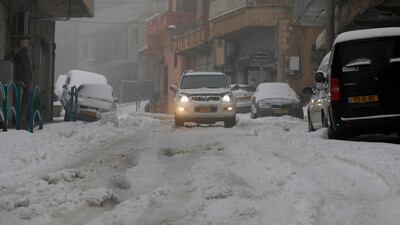
The Druze town of Majdal Shams in the Golan Heights. AFP -
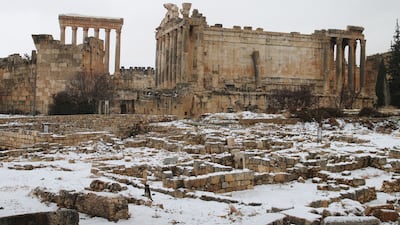
The Roman ruins at Baalbek in the eastern Bekaa Valley, Lebanon. AFP -

Snow-covered houses in the town of Sohmor, western Bekaa, Lebanon. Reuters -
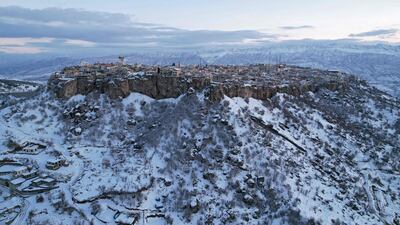
Amadiyah, a town built 1,400 metres above sea level and located about 75km north of the city of Dohuk, in the autonomous Iraqi Kurdistan region. AFP -
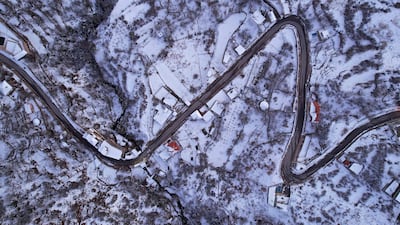
Snow-covered mountains around the town of Amadiyah. AFP -
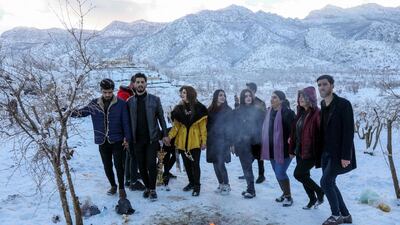
Iraqi Kurds perform a traditional dance near Safin Mountain, close to the city of Irbil, the capital of Iraq's northern Kurdish autonomous region. AFP -
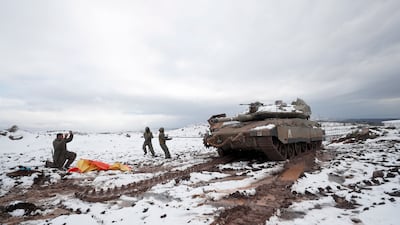
Israeli armored corps soldiers, fix their tank chains during snowstorm near the Israel-Syrian border in the annexed Golan Heights, near the Druze village of Majdal Shams. EPA -
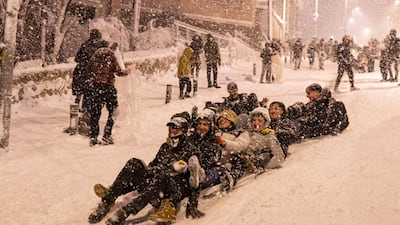
Children slide on the snow at the Kucukcekmece district in Istanbul. AFP -
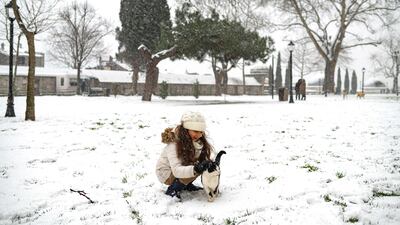
A child plays with a cat in a snowy park near of the Suleymaniye mosque in Istanbul. AFP -
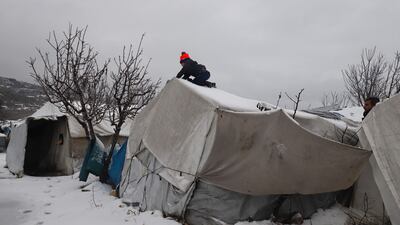
A young Syrian boy clears the snow covering a tent at a camp for internally displaced people, near the city of Jisr al-Shugur on the border with Turkey, in the Idlib governorate of northwestern Syria. AFP


“Many refugees have put old car tyres they found on the street or buckets on top of the tarpaulin roofs to stop the wind from blowing the roof off, but because the structure of the roof and of homes are so weak, the water is leaking in and many refugees are now living in houses that are flooded,” Ms Esteban said.
Even in Beirut, which is comparatively warmer than the Bekaa at around 8°C at night, heating homes is a struggle. Some heat water on gas stoves or take cold showers.
“It’s very cold, and there’s only a few hours of electricity a day,” said Hussein, a Syrian doorman who works and lives in central Beirut with his family of eight children.
The collapse of the state-run national electricity company has pushed most people to rely on expensive private generators, but their output is not always powerful enough to turn on electric heaters.
“We wear a lot of clothes,” said Hussein. “We dress the children well and they’re OK. Thank God.”

