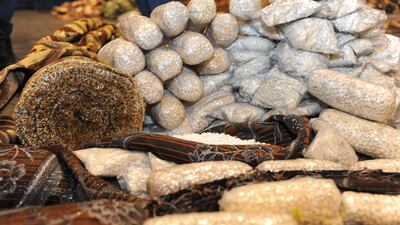
Twenty-seven drug smugglers have been killed by the Jordanian military, a statement by authorities said on Thursday.
The suspects, who were reportedly armed, had tried to cross from Syria into the kingdom under the cover of heavy snow and poor visibility.
The authorities did not give details on where or how the smugglers were killed.
The announcement was made 11 days after smugglers operating from Syrian regime areas killed two Jordanian soldiers at the border.
Their deaths stoked public concern about the activities of smugglers on the borders who are feeding a Captagon trade worth up to $4 billion a year.
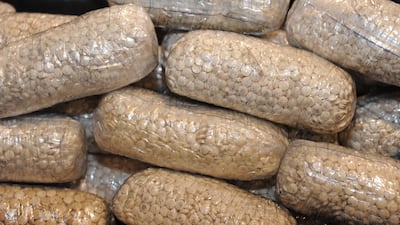
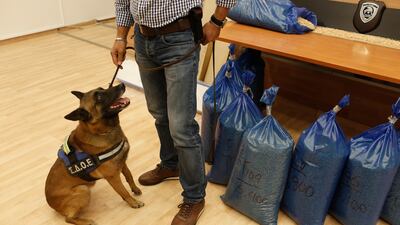
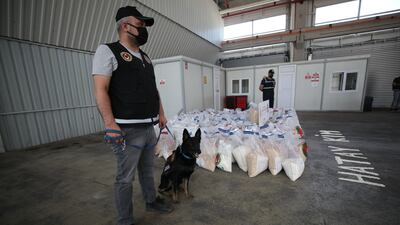
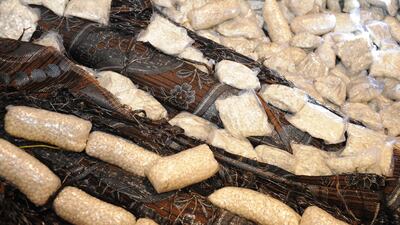
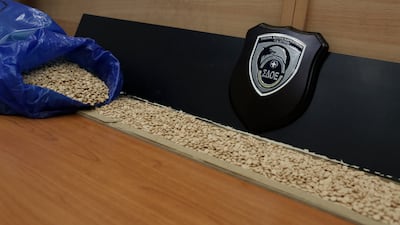
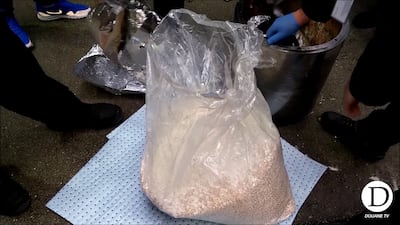
Official state television quoted an official from the military as saying that a large quantity of drugs was found after it "engaged" with smugglers who were supported by armed groups.
The military did not release photos of their bodies.
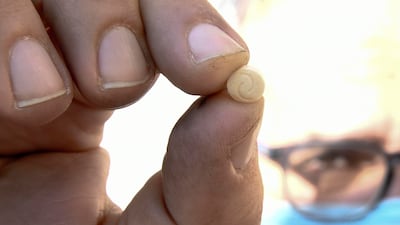
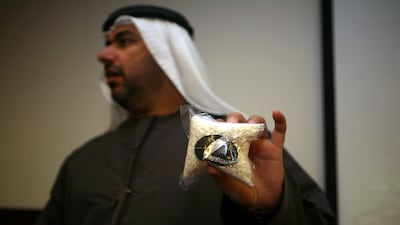
The smuggling of drugs, particularly Captagon, from Syrian regime areas has accelerated in the past year.
Jordan is a consumer as well as a main transit centre for Captagon into inner Arabia.
“The search operations are still under way to make sure the area is free of persons or drug substances,” the official said.
Snow fell overnight in Amman and on parts of semi-mountainous desert regions at the border with Syria.
Relatives of the two soldiers who were killed on January 16 said their unit was ambushed in a desolate area on the border with Syrian regime territory, near the city of Mafraq in northern Jordan.
The army responded to the killings by saying it has toughened its rules of engagement with smugglers to allow troops to pursue them. But it did not say whether this could involve crossing into Syrian territory.
Curbing drug flows from regime areas in Syria has been the rationale behind Jordanian policy in the past two years to accommodate the Assad regime, but there have been few signs the volumes have lessened.
Arab security officials say the drug rings are concentrated in southern Syria and are supported by pro-Iranian militias, namely the Shiite group Hezbollah, and the Fourth Division, a praetorian guard led by President Bashar Al Assad's brother Maher.
At the end of last year Jordan eased restrictions at Nasib, the main land crossing with Syria.
The foreign ministers of the two countries met in September for the first time since the outbreak of the Syrian revolt against five decades of Assad family rule in March 2011.
After the two soldiers were killed this month, Jordanian Foreign Minister Ayman Al Safadi said the kingdom has become a target of drug rings based in Syria.
“Jordan has become targeted on its northern border by drug merchants,” Mr Safadi said.
Referring to the rapprochement with the Assad regime, he said Jordan’s foreign policy was “aimed at preserving our national interests”.

Who's who in Yemen conflict
Houthis: Iran-backed rebels who occupy Sanaa and run unrecognised government
Yemeni government: Exiled government in Aden led by eight-member Presidential Leadership Council
Southern Transitional Council: Faction in Yemeni government that seeks autonomy for the south
Habrish 'rebels': Tribal-backed forces feuding with STC over control of oil in government territory
Mercer, the investment consulting arm of US services company Marsh & McLennan, expects its wealth division to at least double its assets under management (AUM) in the Middle East as wealth in the region continues to grow despite economic headwinds, a company official said.
Mercer Wealth, which globally has $160 billion in AUM, plans to boost its AUM in the region to $2-$3bn in the next 2-3 years from the present $1bn, said Yasir AbuShaban, a Dubai-based principal with Mercer Wealth.
“Within the next two to three years, we are looking at reaching $2 to $3 billion as a conservative estimate and we do see an opportunity to do so,” said Mr AbuShaban.
Mercer does not directly make investments, but allocates clients’ money they have discretion to, to professional asset managers. They also provide advice to clients.
“We have buying power. We can negotiate on their (client’s) behalf with asset managers to provide them lower fees than they otherwise would have to get on their own,” he added.
Mercer Wealth’s clients include sovereign wealth funds, family offices, and insurance companies among others.
From its office in Dubai, Mercer also looks after Africa, India and Turkey, where they also see opportunity for growth.
Wealth creation in Middle East and Africa (MEA) grew 8.5 per cent to $8.1 trillion last year from $7.5tn in 2015, higher than last year’s global average of 6 per cent and the second-highest growth in a region after Asia-Pacific which grew 9.9 per cent, according to consultancy Boston Consulting Group (BCG). In the region, where wealth grew just 1.9 per cent in 2015 compared with 2014, a pickup in oil prices has helped in wealth generation.
BCG is forecasting MEA wealth will rise to $12tn by 2021, growing at an annual average of 8 per cent.
Drivers of wealth generation in the region will be split evenly between new wealth creation and growth of performance of existing assets, according to BCG.
Another general trend in the region is clients’ looking for a comprehensive approach to investing, according to Mr AbuShaban.
“Institutional investors or some of the families are seeing a slowdown in the available capital they have to invest and in that sense they are looking at optimizing the way they manage their portfolios and making sure they are not investing haphazardly and different parts of their investment are working together,” said Mr AbuShaban.
Some clients also have a higher appetite for risk, given the low interest-rate environment that does not provide enough yield for some institutional investors. These clients are keen to invest in illiquid assets, such as private equity and infrastructure.
“What we have seen is a desire for higher returns in what has been a low-return environment specifically in various fixed income or bonds,” he said.
“In this environment, we have seen a de facto increase in the risk that clients are taking in things like illiquid investments, private equity investments, infrastructure and private debt, those kind of investments were higher illiquidity results in incrementally higher returns.”
The Abu Dhabi Investment Authority, one of the largest sovereign wealth funds, said in its 2016 report that has gradually increased its exposure in direct private equity and private credit transactions, mainly in Asian markets and especially in China and India. The authority’s private equity department focused on structured equities owing to “their defensive characteristics.”
Company%C2%A0profile
%3Cp%3E%3Cstrong%3ECompany%20name%3A%20%3C%2Fstrong%3ELeap%0D%3Cbr%3E%3Cstrong%3EStarted%3A%20%3C%2Fstrong%3EMarch%202021%0D%3Cbr%3E%3Cstrong%3EFounders%3A%3C%2Fstrong%3E%20Ziad%20Toqan%20and%20Jamil%20Khammu%0D%3Cbr%3E%3Cstrong%3EBased%3A%3C%2Fstrong%3E%20Dubai%0D%3Cbr%3E%3Cstrong%3ESector%3A%20%3C%2Fstrong%3EFinTech%0D%3Cbr%3E%3Cstrong%3EInvestment%20stage%3A%20%3C%2Fstrong%3EPre-seed%0D%3Cbr%3E%3Cstrong%3EFunds%20raised%3A%3C%2Fstrong%3E%20Undisclosed%0D%3Cbr%3E%3Cstrong%3ECurrent%20number%20of%20staff%3A%20%3C%2Fstrong%3ESeven%3C%2Fp%3E%0A
Skewed figures
In the village of Mevagissey in southwest England the housing stock has doubled in the last century while the number of residents is half the historic high. The village's Neighbourhood Development Plan states that 26% of homes are holiday retreats. Prices are high, averaging around £300,000, £50,000 more than the Cornish average of £250,000. The local average wage is £15,458.
The%20Emperor%20and%20the%20Elephant
%3Cp%3E%3Cstrong%3EAuthor%3A%20%3C%2Fstrong%3ESam%20Ottewill-Soulsby%3C%2Fp%3E%0A%3Cp%3E%3Cstrong%3EPublisher%3A%20%3C%2Fstrong%3EPrinceton%20University%20Press%3C%2Fp%3E%0A%3Cp%3E%3Cstrong%3EPages%3A%20%3C%2Fstrong%3E392%3C%2Fp%3E%0A%3Cp%3E%3Cstrong%3EAvailable%3A%20%3C%2Fstrong%3EJuly%2011%3C%2Fp%3E%0A
SPEC%20SHEET%3A%20SAMSUNG%20GALAXY%20Z%20FOLD%204
%3Cp%3E%3Cstrong%3EMain%20display%3A%3C%2Fstrong%3E%207.6%22%20QXGA%2B%20Dynamic%20Amoled%202X%2C%202176%20x%201812%2C%2021.6%3A18%2C%20374ppi%2C%20HDR10%2B%2C%20up%20to%20120Hz%3C%2Fp%3E%0A%3Cp%3E%3Cstrong%3ECover%20display%3A%3C%2Fstrong%3E%206.2%22%20HD%2B%20Dynamic%20Amoled%202X%2C%202316%20x%20904%2C%2023.1%3A9%2C%20402ppi%2C%20up%20to%20120Hz%3C%2Fp%3E%0A%3Cp%3E%3Cstrong%3EProcessor%3A%3C%2Fstrong%3E%20Qualcomm%20Snapdragon%208%2B%20Gen%201%2C%204nm%2C%20octa-core%3B%20Adreno%20730%20GPU%3C%2Fp%3E%0A%3Cp%3E%3Cstrong%3EMemory%3A%3C%2Fstrong%3E%2012GB%3C%2Fp%3E%0A%3Cp%3E%3Cstrong%3ECapacity%3A%3C%2Fstrong%3E%C2%A0256%2F512GB%20%2F%201TB%3C%2Fp%3E%0A%3Cp%3E%3Cstrong%3EPlatform%3A%3C%2Fstrong%3E%20Android%2012%2C%20One%20UI%204.1.1%3C%2Fp%3E%0A%3Cp%3E%3Cstrong%3EMain%20camera%3A%3C%2Fstrong%3E%20Triple%2012MP%20ultra-wide%20(f%2F2.2)%20%2B%2050MP%20wide%20(f%2F1.8)%20%2B%2010MP%20telephoto%20(f%2F2.4)%2C%20dual%20OIS%2C%203x%20optical%20zoom%2C%2030x%20Space%20Zoom%2C%20portrait%2C%20super%20slo-mo%3C%2Fp%3E%0A%3Cp%3E%3Cstrong%3EVideo%3A%3C%2Fstrong%3E%208K%4024fps%2C%204K%4030%2F60fps%2C%20full-HD%4030%2F60fps%2C%20HD%4030fps%3B%20slo-mo%4060%2F240%2F960fps%3B%20HDR10%2B%3C%2Fp%3E%0A%3Cp%3E%3Cstrong%3ECover%20camera%3A%3C%2Fstrong%3E%2010MP%20(f%2F2.2)%3C%2Fp%3E%0A%3Cp%3E%3Cstrong%3EInner%20front%20camera%3A%3C%2Fstrong%3E%20Under-display%204MP%20(f%2F1.8)%3C%2Fp%3E%0A%3Cp%3E%3Cstrong%3EBattery%3A%3C%2Fstrong%3E%204400mAh%2C%2025W%20fast%20charging%2C%2015W%20wireless%20charging%2C%20reverse%20wireless%20charging%2C%20'all-day'%20life%3C%2Fp%3E%0A%3Cp%3E%3Cstrong%3EConnectivity%3A%3C%2Fstrong%3E%205G%3B%20Wi-Fi%2C%20Bluetooth%205.2%2C%20NFC%20(Samsung%20Pay)%3C%2Fp%3E%0A%3Cp%3E%3Cstrong%3EI%2FO%3A%3C%2Fstrong%3E%20USB-C%3C%2Fp%3E%0A%3Cp%3E%3Cstrong%3ECards%3A%3C%2Fstrong%3E%20Nano-SIM%20%2B%20eSIM%3B%202%20nano-SIMs%20%2B%20eSIM%3B%202%20nano-SIMs%3C%2Fp%3E%0A%3Cp%3E%3Cstrong%3EColours%3A%3C%2Fstrong%3E%20Graygreen%2C%20phantom%20black%2C%20beige%2C%20burgundy%20(online%20exclusive)%3C%2Fp%3E%0A%3Cp%3E%3Cstrong%3EIn%20the%20box%3A%3C%2Fstrong%3E%20Fold%204%2C%20USB-C-to-USB-C%20cable%3C%2Fp%3E%0A%3Cp%3E%3Cstrong%3EPrice%3A%3C%2Fstrong%3E%20Dh6%2C799%20%2F%20Dh7%2C249%20%2F%20Dh8%2C149%3C%2Fp%3E%0A