


The chances of more violence erupting between Iraq's rival Shiite factions are high amid uncertainty over the country's political future, particularly if caretaker Prime Minister Mustafa Al Kadhimi carries out his threat to step down, analysts have said.
At least 30 people, mostly supporters of influential cleric Moqtada Al Sadr, were killed in clashes with armed groups in the capital this week after he announced he was quitting politics.
Mr Al Sadr was frustrated in his attempts to form a government after a general election last October, despite his bloc emerging with the largest number of seats.
The cleric's followers surrounded Parliament in protest since late July, as Mr Al Sadr pressed for dissolution of the assembly and fresh elections.
His rivals in the Iran-aligned Co-ordination Framework alliance have insisted a government should be formed and there is no need for another vote.
-
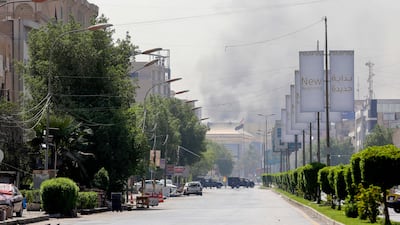
Smoke billows in the background in the capital Baghdad during an army-imposed nationwide curfew a day after 23 supporters of powerful Shiite leader Moqtada Al Sadr were shot dead during fighting in Baghdad's Green Zone. AFP -
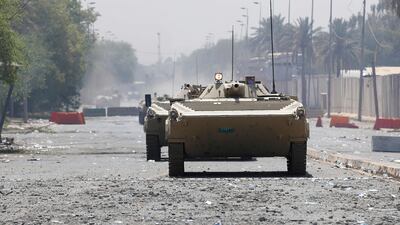
Iraqi armoured security vehicles clash with Saraya Al Salam (Peace Brigade), the military wing affiliated with Mr Al Sadr, as fighting between rival Iraqi forces resumed in Baghdad. AFP -
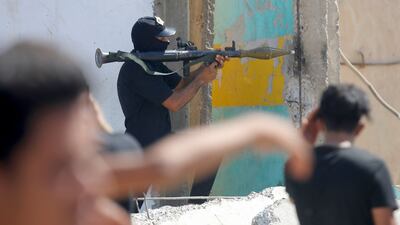
An armed member of the Peace Brigade aims a rocket-propelled grenade during clashes with Iraqi security forces in Baghdad's Green Zone. AFP -
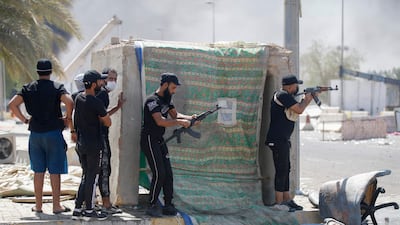
Armed members of the Peace Brigade during clashes in Baghdad's Green Zone. AFP -
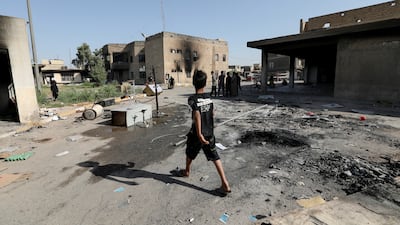
A boy walks near the office of Badr Organisation, which was burnt by supporters of Mr Al Sadr in Baghdad. Reuters -
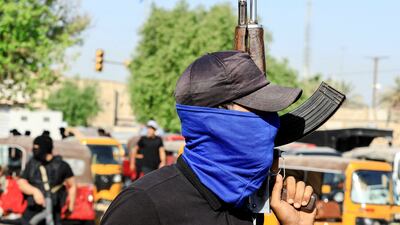
Members of Mr Al Sadr's Peace Brigade. Reuters -
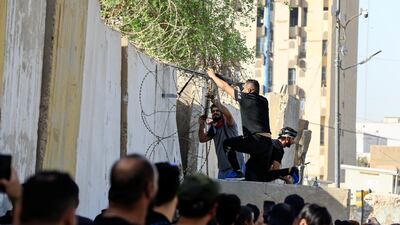
Mr Al Sadr's fighters fire their weapons. Reuters -
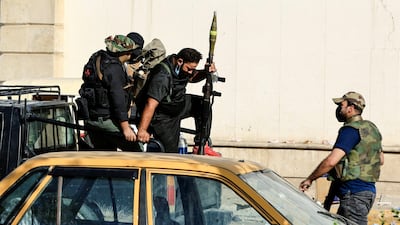
Peace Brigade fighters near the Green Zone. Reuters -
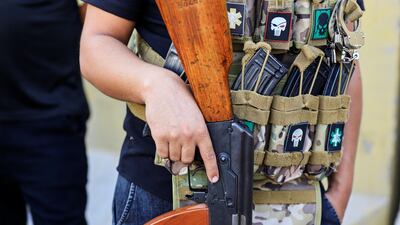
Ready to fight, a member of the Peace Brigade is laden with ammunition in Baghdad. Reuters -
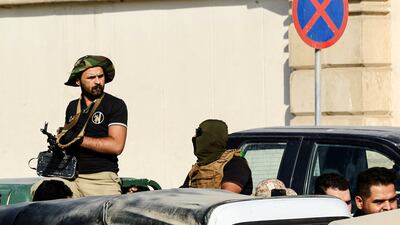
Sadrists gather during clashes with the Iraqi security forces. Reuters -
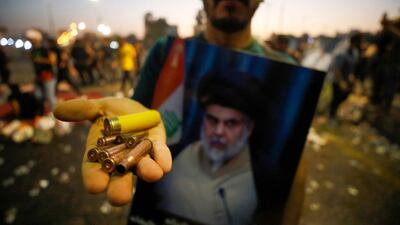
A supporter of Mr Al Sadr carries bullet casings and a spent shotgun shell in the Green Zone. AFP -
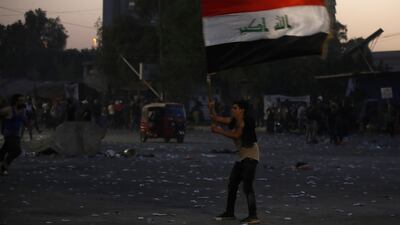
An Al Sadr supporter waves the Iraqi flag in Baghdad after the powerful Shiite cleric announced his retirement from politics. AFP -
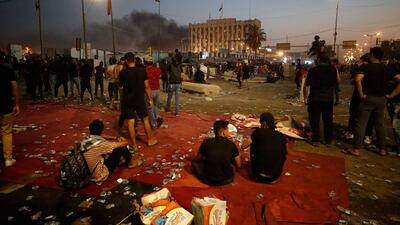
Dozens of angry supporters of Mr Al Sadr stormed the Republican Palace, a ceremonial building in the fortified Green Zone. AFP -
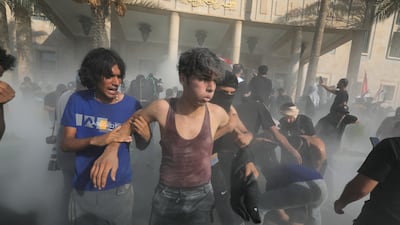
Supporters of Mr Al Sadr help injured protesters during clashes with riot police in Baghdad. EPA -
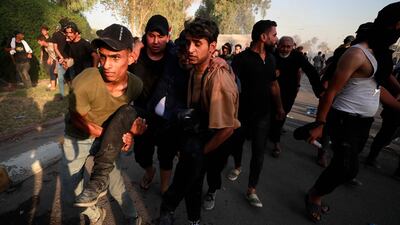
The Iraqi army has announced a Baghdad-wide curfew. AFP -
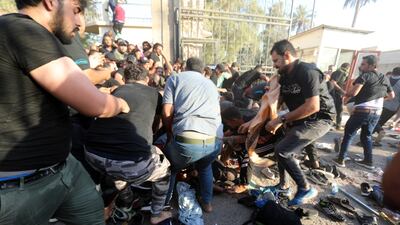
Supporters of Mr Al Sadr assist protesters injured during clashes with security forces near the prime minister's office in Baghdad. EPA -
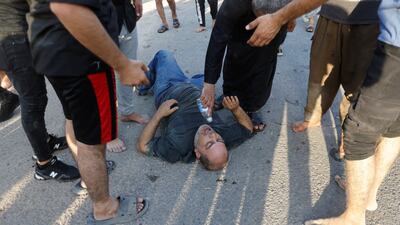
An injured supporter of Mr Al Sadr is given water during a protest in the Green Zone in Baghdad. Reuters -

Supporters of Mr Al Sadr gather in the Green Zone. AFP -
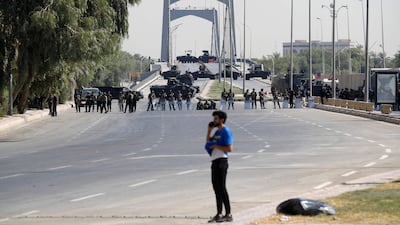
Iraqi police try to block the entrance to the Green Zone. AFP -
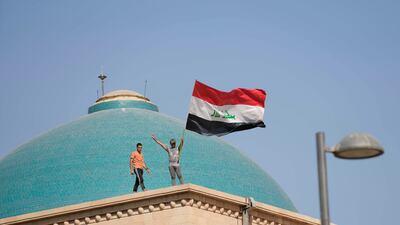
Supporters of Mr Al Sadr wave an Iraqi flag from the roof of the government palace during a demonstration in Baghdad. AP -
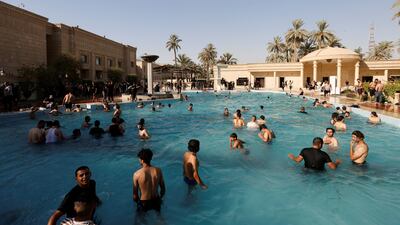
Mr Al Sadr's supporters swim amid a protest at the Republican Palace in the Green Zone in Baghdad. Reuters -
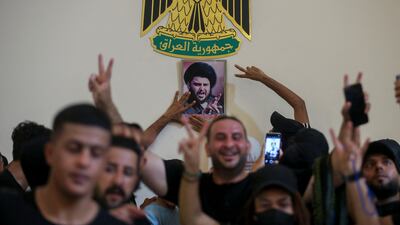
Mr Al Sadr's supporters make their feelings known through gestures inside the palace. Reuters -
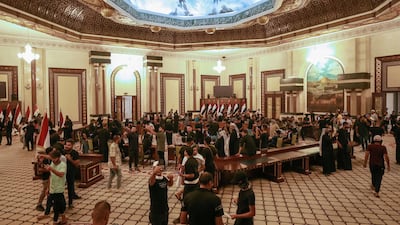
Dozens of angry supporters of Mr Al Sadr gather inside the palace in the capital Baghdad's Green Zone shortly after he said he was quitting politics. AFP -
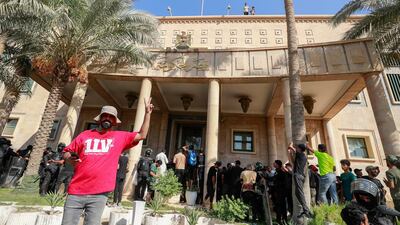
Supporters of the powerful cleric stormed the Republican Palace, a ceremonial building in the fortified Green Zone, a security source said. AFP -
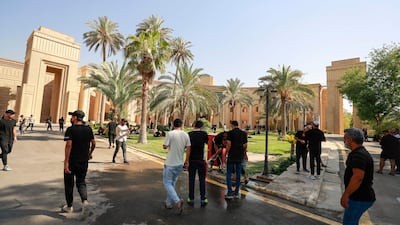
Clashes occurred between the protesters and security troops inside the palace. AFP -
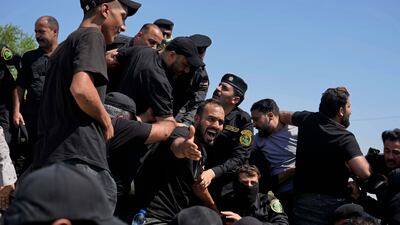
Iraqi security forces try to prevent protesters from entering the Federal Court during a demonstration in Baghdad. AP -
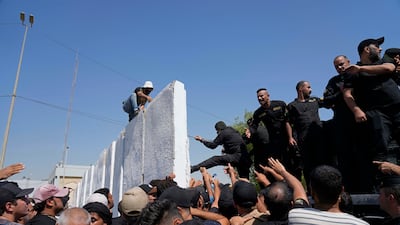
Since the end of July, Mr Al Sadr's followers have encamped around parliament, blocking access to critical government buildings. AP -
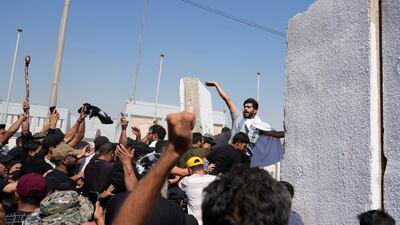
Supporters of Mr Al Sadr try to remove concrete barriers in the Green Zone area of Baghdad. AP -
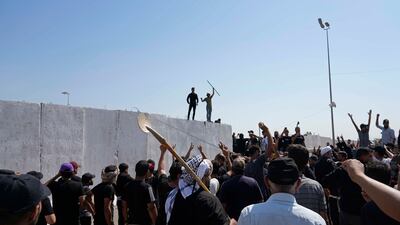
Iraqi security forces called for calm after the protesters entered the Green Zone. AP -

Iraqi security forces announced a nationwide curfew starting at 3.30pm local time following the protests. AP


Omar Al Nidawi, an analyst with the NGO Enabling Peace in Iraq Centre, told The National that the situation was "as unpredictable as it gets".
"The possibility for another flare-up remains high because Mr Al Sadr remains agitated, and is obviously far from being retired from politics," he said.
On Thursday, clashes broke out in the south between the Saraya Al Salam militia, which is linked to Mr Al Sadr, and the Iran-backed Asaib Ahl Al Haq militia, leaving at least four fighters dead.
The leader of the Asaib, Qais Al Khazali, is part of the Co-ordination Framework political bloc.
Mr Al Sadr “does not seem to have a vision for a feasible way out of this predicament,” Mr Al Nidawi said.
The cleric commands a thousands-strong militia and has millions of loyal supporters across the country. His opponents, longtime allies of Tehran, control dozens of paramilitary groups that have been heavily armed and trained by Iranian forces.
What if the PM steps down?
A tipping point in the deadlock could be if Mr Al Kadhimi steps down, which he has said he might do if violence breaks out again.
“It is possible that if the violence gets really bad then Al Kadhimi might feel that there is a lot of pressure and just resign,” Sajad Jiyad, an Iraqi political analyst, told The National.
If he does, then “it might avoid the scene where the Parliament has to elect a new president and government,” said Mr Jiyad, who is based in Baghdad and is a fellow at the Century Foundation.
President Barham Salih, who is also serving in a caretaker capacity after Parliament failed to elect a president, could nominate a new prime minister so that Iraq might have a caretaker and temporary government, the analyst said.
Mr Al Sadr's bloc no longer has representation in Parliament after he asked his MPs to resign in June.
Mr Al Kadhimi's threat to step down puts more pressure on Mr Al Sadr, said Mr Al Nidawi.
“If Mr Al Kadhimi steps down then the Framework and the Patriotic Union of Kurdistan [a Kurdish party aligned with the Framework] would gain a great advantage,” he said.
Under the constitution, Mr Salih would have to take over the prime minister’s duties and then nominate a candidate for the position within 15 days.
“But in reality, the deadlock means a political agreement on a new prime minister would be extremely difficult. As a result, Mr Salih could stay in the prime minister role indefinitely, which would favour the Framework-PUK camp, who would thus have little incentive to make concessions to accommodate Mr Al Sadr’s conditions,” Mr Al Nidawi said.
If the Framework attempts to ignore the influential cleric and vote on a prime minister-designate named by Mr Salih, "that would undoubtedly provoke a significant reaction from Mr Al Sadr", he said.
Ultimately, Mr Al Kadhimi's resignation might “undermine the credibility of what remains of the government, and leave Mr Al Sadr with even fewer non-violent options for influencing the shape of the next government”.
What next for Iraq?
Any further political steps would require Parliament to convene.
Mr Al Sadr on Tuesday called for calm and asked his supporters to leave Baghdad's Green Zone, where state institutions are located, clearing the way for Parliament to meet and resume the process of government formation.
"The next step is to nominate a president and once that is done, then he would choose the nominee of the largest political bloc in Parliament to form a government," Mr Jiyad said.
However, the Parliament has missed several deadlines to meet this constitutional criteria.
"Right now there is a case in the Supreme Court to say Parliament is not able to meet and do its job, and to try to convince the court to dissolve the Parliament and hold new elections," Mr Jiyad said.
"Constitutionally we are in unknown territory as to who has the power to move things forward," he said.
The court has postponed its hearing of the case until September 7.
"The court by nature cannot dissolve Parliament," Mr Jiyad said
"Only the parliament can dissolve itself."

