A 3,400-year-old city emerges from the Tigris River - in pictures
-
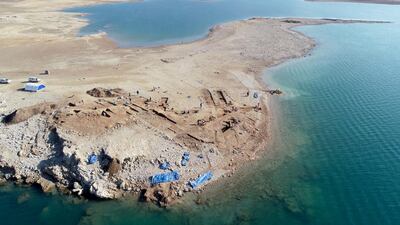
Drought in Iraq has revealed a 3,400 city beneath the waters of a dam on the Tigris River. -
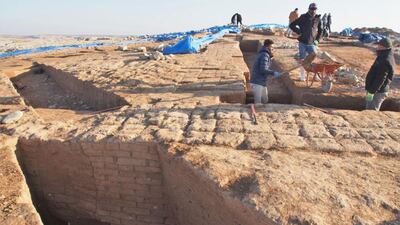
The ruins of a Bronze Age palace and other monumental buildings were revealed as the Mosul reservoir dried up. -
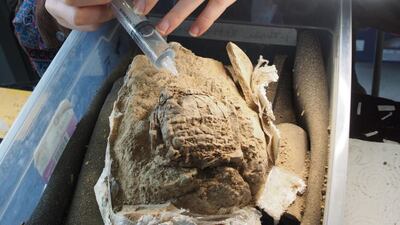
The site at Kemune, underwater since the dam was filled in the 1980s, yielded many treasures to archaeologists. -
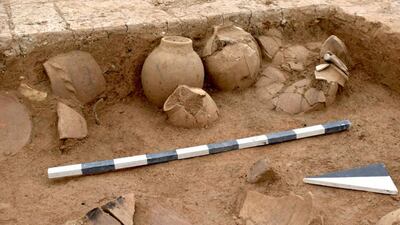
Archaeologists found five ceramic vessels containing more than 100 cuneiform tablets. -
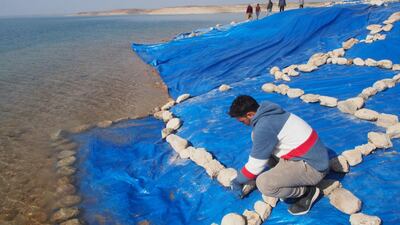
Buildings were excavated then covered with plastic sheeting and covered with gravel before the water level rose again. -
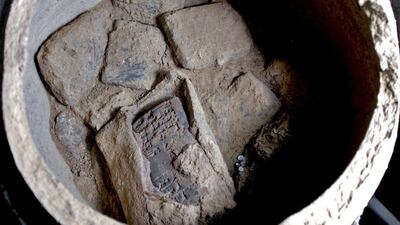
Cuneiform tablets from the site. -
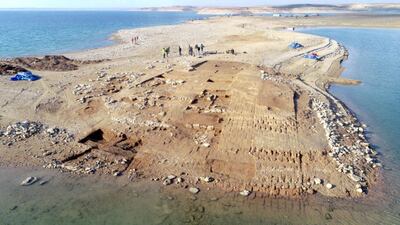
The reservoir has now been filled again, once again submerging the ancient city. -
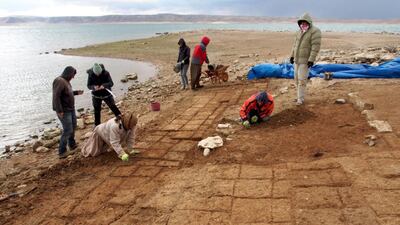
The UN says Iraq is most vulnerable country in the world to the effects of climate change. -
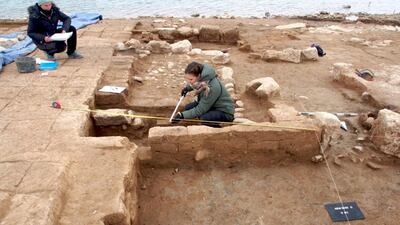
Time to investigate the site was limited as the reservoir level rose. -
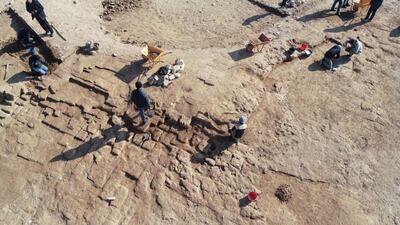
But investigators were able to map it for the first time. -
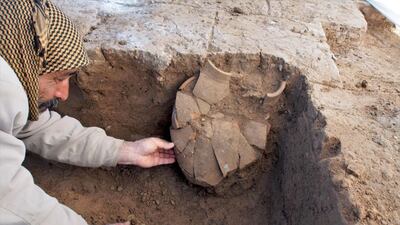
The city is located at Kemune in the northern Kurdistan Region of Iraq. -

It is thought that the ruins could belong to Zakhiku, capital of the Mittani Empire that ruled the Tigris River area between 1550 and 1350 BC.


Most popular today

